
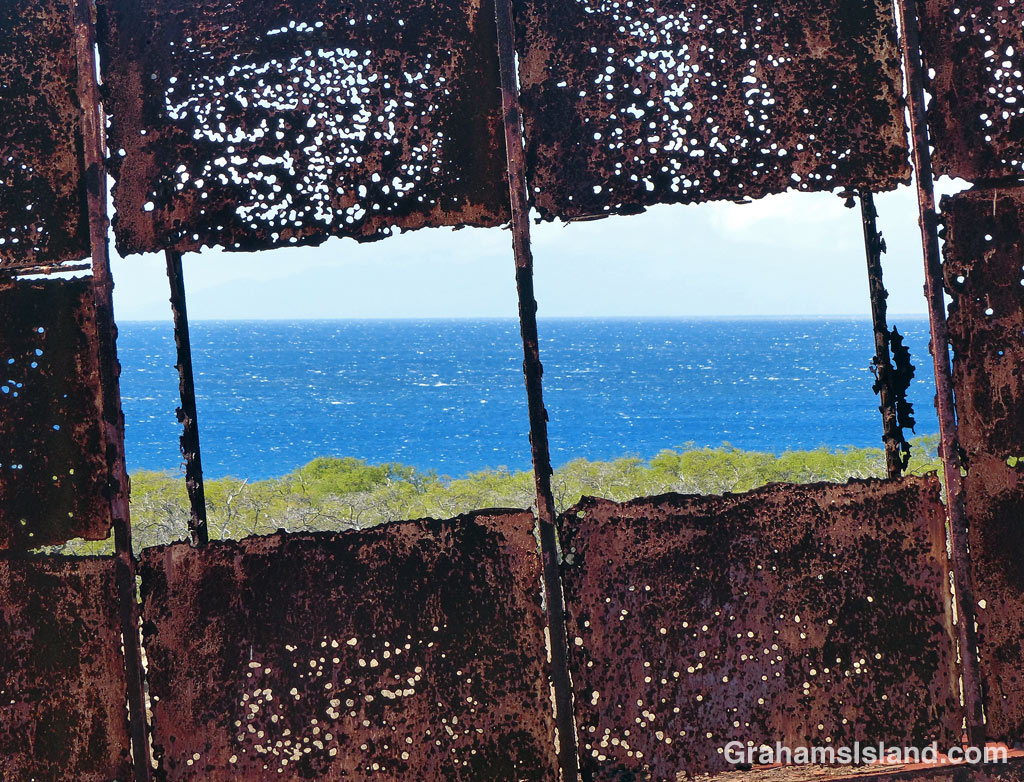
A view of the ocean as seen through a trailer, shot through with rust and perhaps a few bullet holes.
Silver hookfish
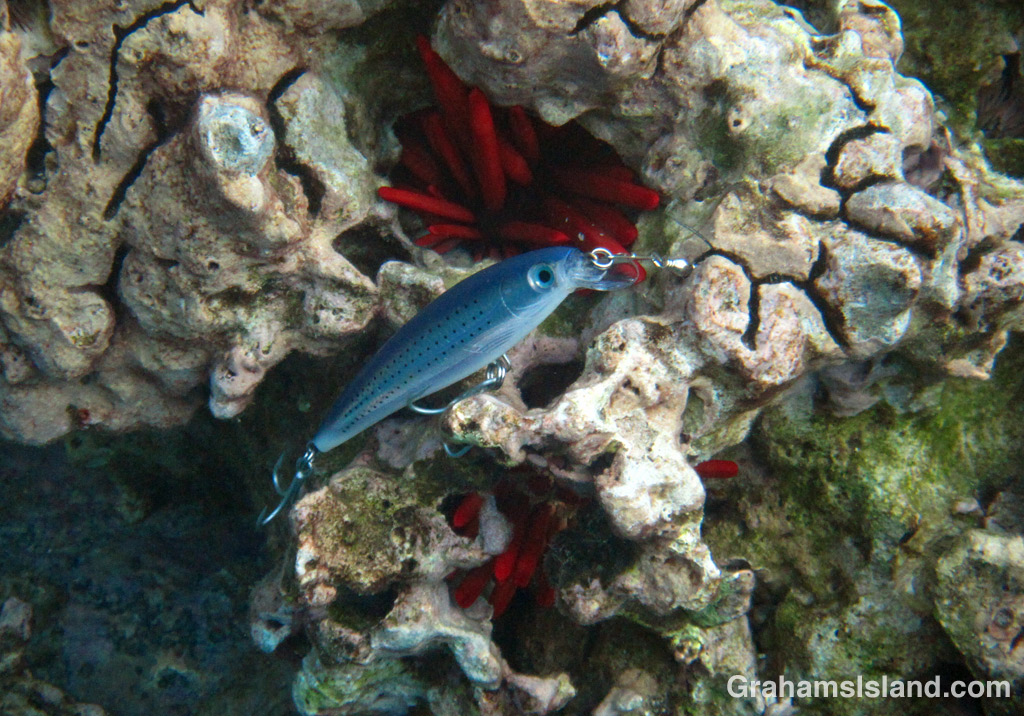
The silver hookfish is fairly common in coastal waters here. It spends much of its time slowly cruising shallow waters in search of prey, usually much larger fish than itself. On occasion, the silver hookfish will rest for an extended time on a patch of coral or rock as seen here. Sometimes they can even be seen leaping through the air like flying fish.
While humans aren’t their usual prey, curious or gullible people, lured by its glittering appearance, are sometimes snagged by one of the hookfish’s several barbs. This can be a painful experience, sometimes requiring medical treatment.
Silver hookfish are not recommended for human consumption, since they’re extremely tough and may contain concentrations of toxins, which can impair perceptivity.
Castaway?
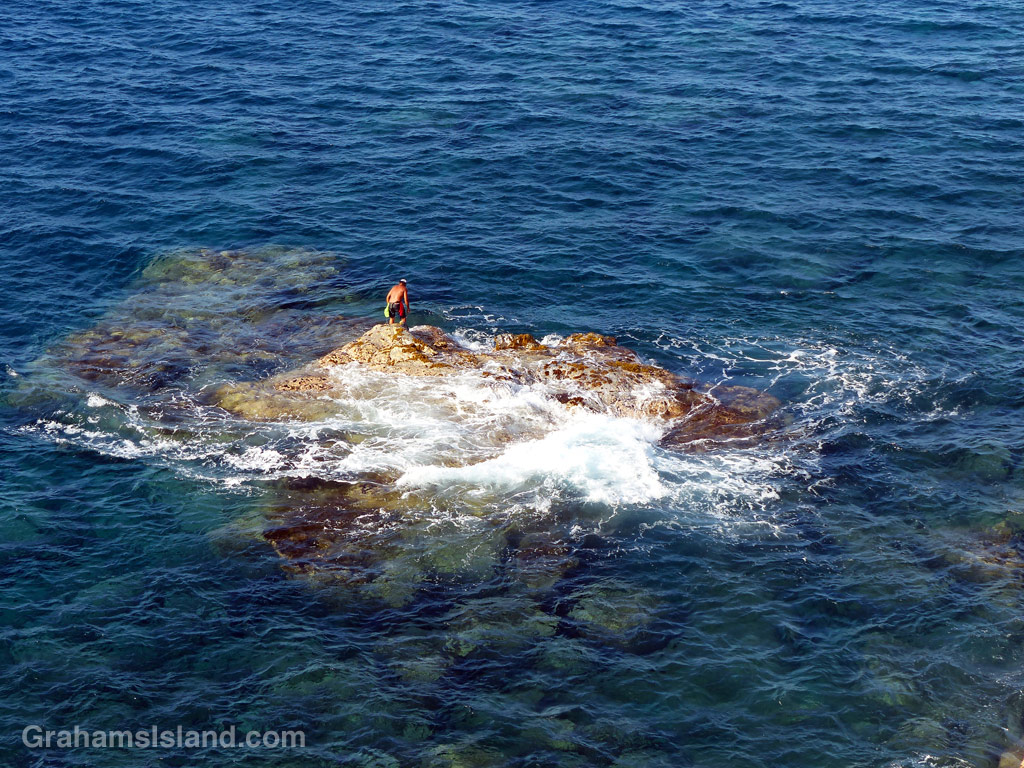 This lonesome individual, scrambling over a tiny islet, searching for food, appears to be the quintessential castaway. But he’s really collecting opihi and the islet is about a hundred-foot swim to the much larger Big Island.
On a different day with windier conditions, the swim wouldn’t be necessary since the surf could pick a person up and slam them against the cliff with no effort required on their part.
A Waipi’o Valley horse goes to the beach
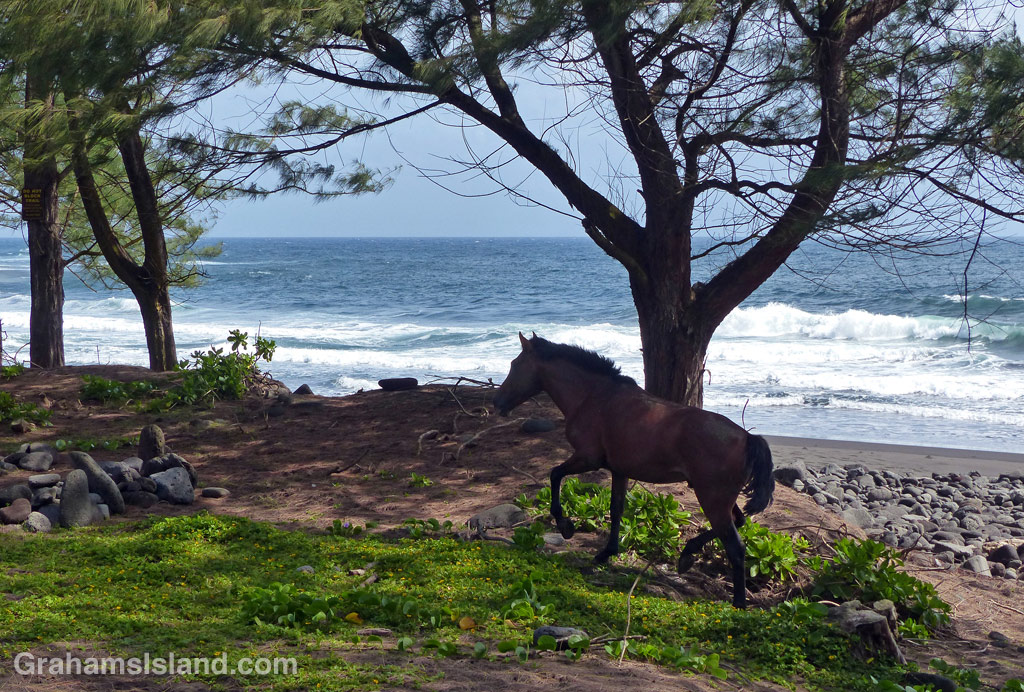
The wild horses of Waipi’o Valley have some very nice territory in which to roam.
New Guinea creeper

New Guinea creeper (Tecomanthe dendrophila) is a vigorous vine that grows up to 80 feet high here. The lovely bicolor flowers grow on the plant’s woody stems and will appear on the same stems year after year.
Abstracts: Footprints
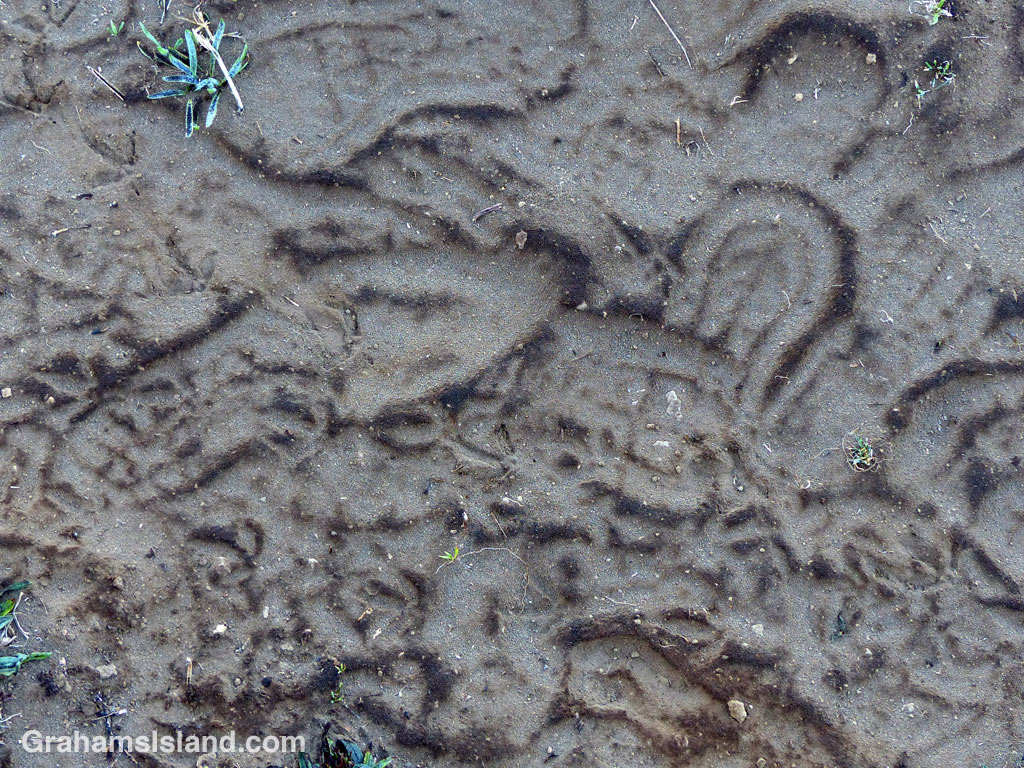
I came across these footprints on a dusty path where early morning dew had darkened the high spots. At least, I think that’s what’s going on.
Hualalai in early morning light
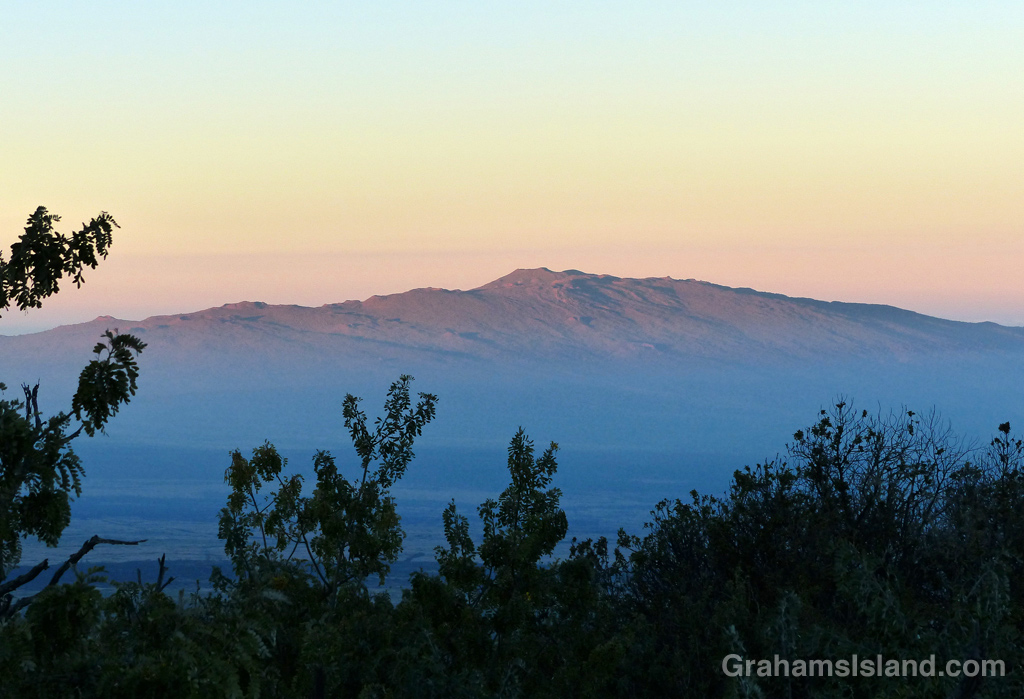
This is Hualalai volcano soon after sunrise, as seen from the western slope of Mauna Kea.
Square-spot goatfish
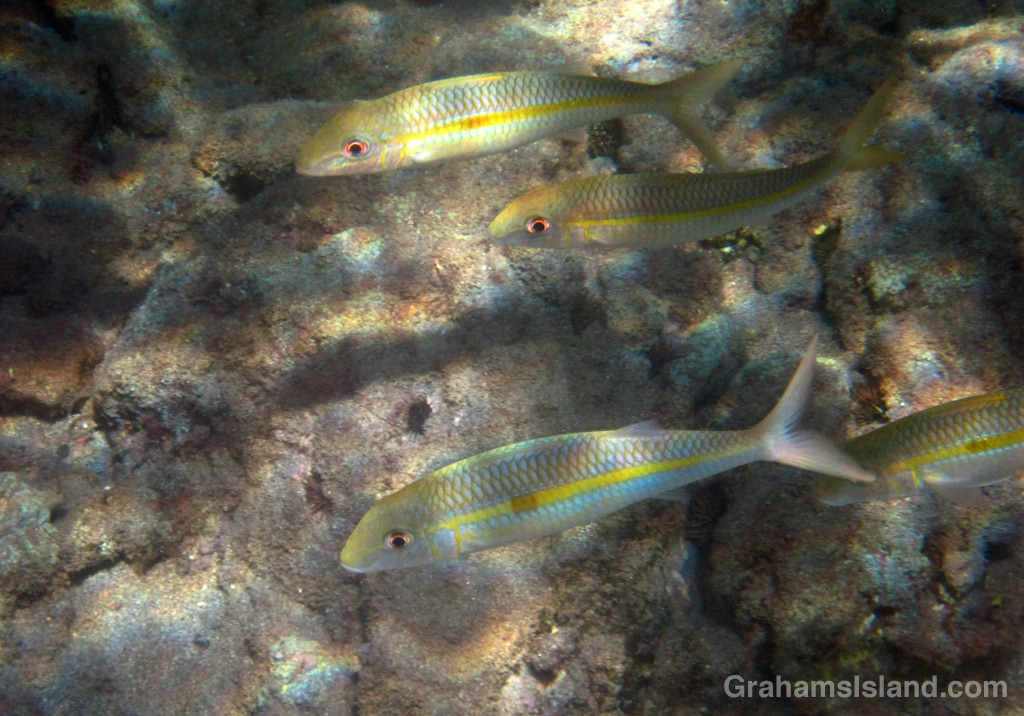
Square-spot goatfish are quite common and most easily distinguished by the square spot in the yellow stripe along their sides. However, the intensity of the square spot changes, darker during feeding, and fading (as with the fish in the photo) or disappearing altogether while resting or schooling. When the spot disappears, square-spot goatfish are hard to distinguish from yellowfin goatfish.
In my attempts to identify what I see in the water, I use John P. Hoover’s book The Ultimate Guide to Hawaiian Reef Fishes, Sea Turtles, Dolphins, Whales, and Seals. His website is hawaiisfishes.com.

