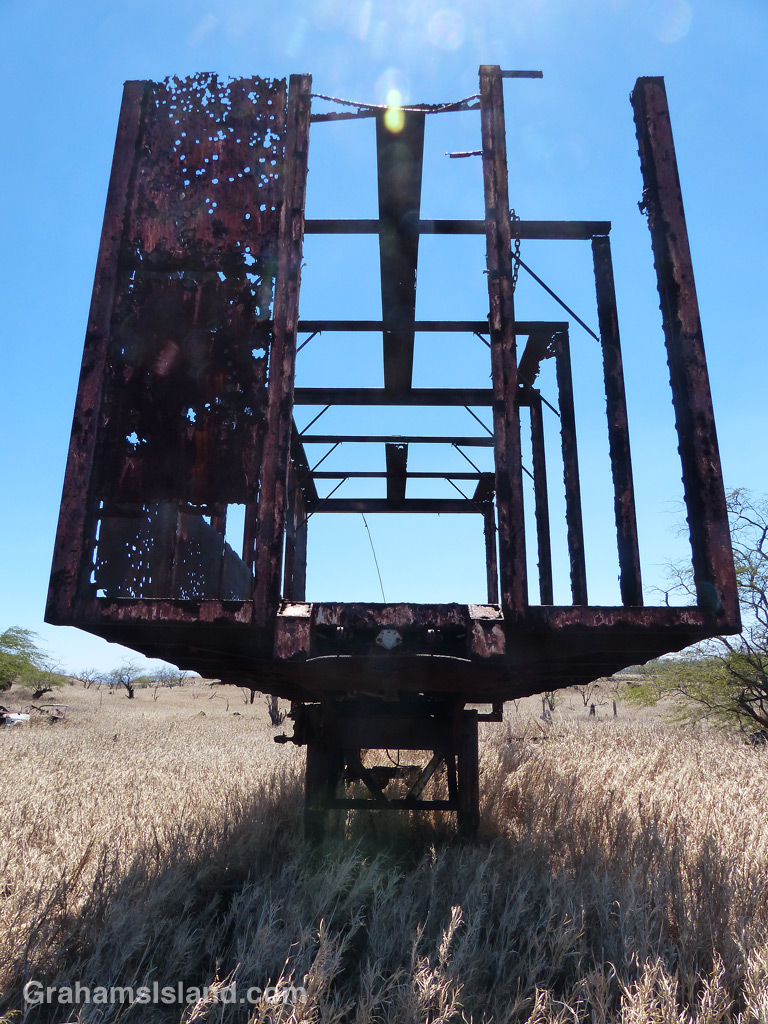
An old trailer rusts away in a field near the Kohala coast.

An old trailer rusts away in a field near the Kohala coast.

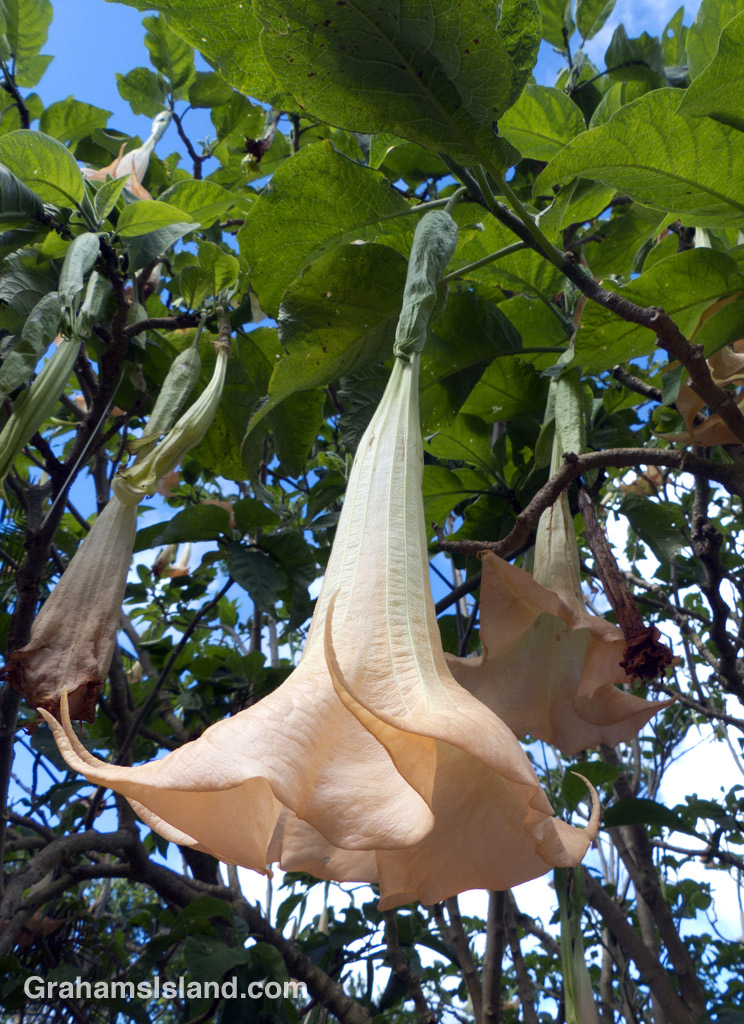
I grew a brugmansia at my old garden in Washington State. During the course of a summer, it grew to two or three feet high and bloomed. As I expected, the first serious dip in temperature reduced it to a sorry wilted remnant.
Here on the Big Island, such temperature dips aren’t a worry, so a brugmansia will grow to a very large shrub and carry its blooms a good while. This splendid specimen is growing next to the Kohala Ditch in North Kohala. The ditch was used to bring water from the Kohala Mountains to the sugar plantations. These days the water is mostly used for agricultural irrigation.
For more information about the history of the Kohala Ditch, go to fluminkohala.com/the-kohala-ditch.


The two fish in the second photo are juvenile yellowtail coris. Over time, they’ll transform into adult colors like the one above. The bright blue spots identify this yellowtail coris as a female.
In my attempts to identify what I see in the water, I use John P. Hoover’s book The Ultimate Guide to Hawaiian Reef Fishes, Sea Turtles, Dolphins, Whales, and Seals. His website is hawaiisfishes.com.
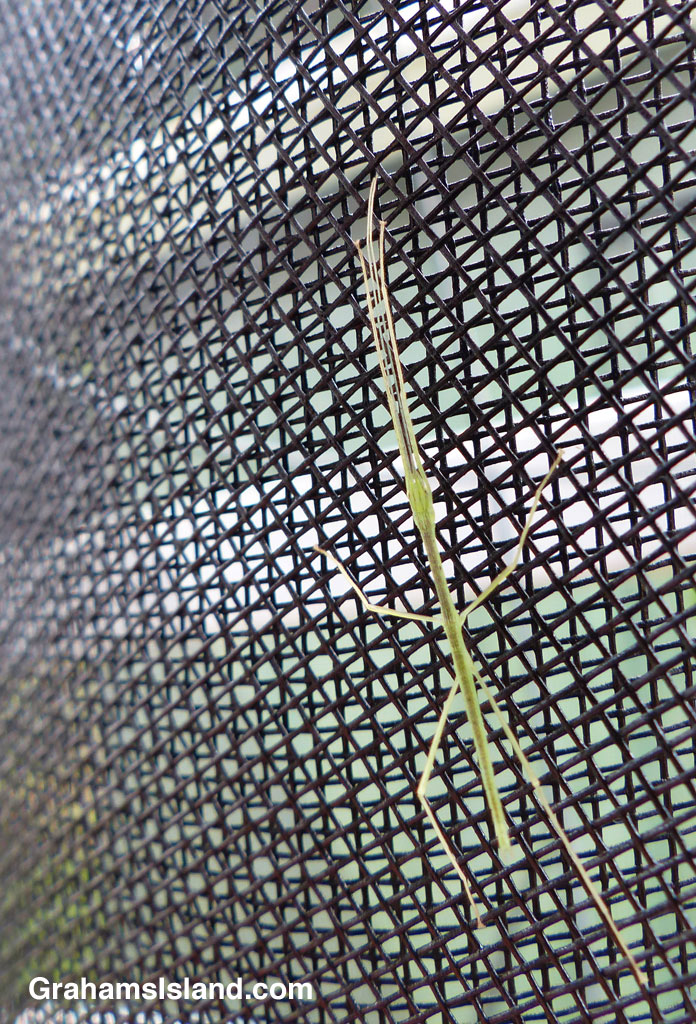
In my ongoing quest to thwart leaf miners from devouring the basil plants, I’ve surrounded them with netting made from window screen material. One morning, I saw this little fellow perched on the netting. It’s easily the smallest stick insect I’ve seen. That’s a pretty fine mesh it’s clinging to.
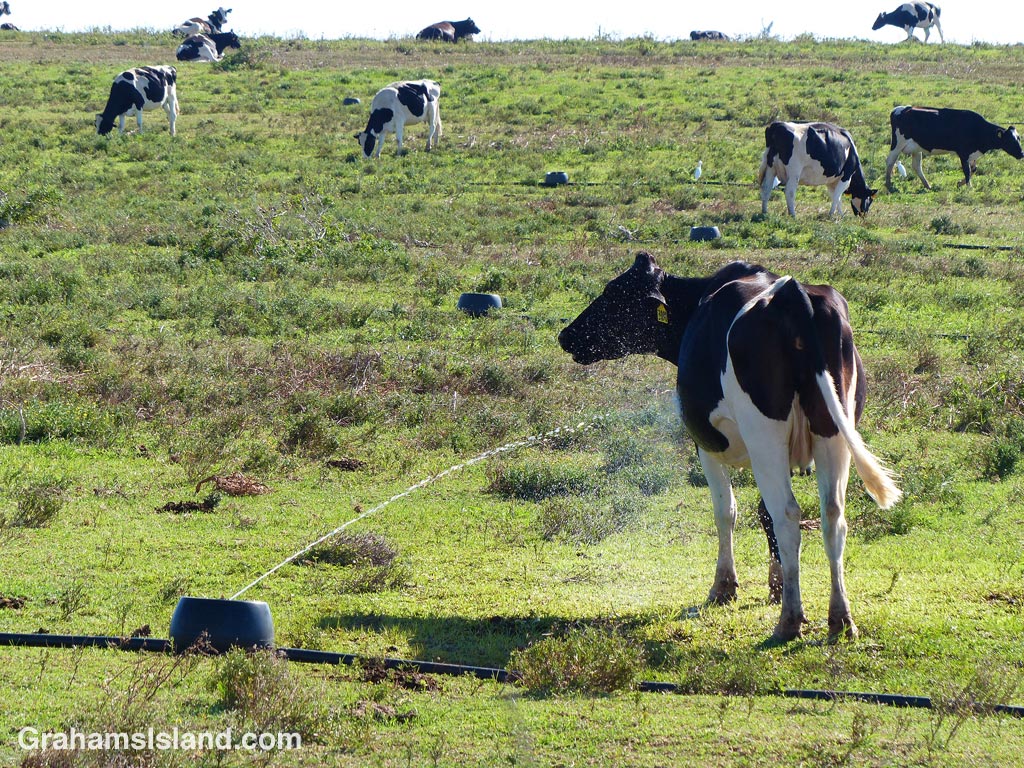
One warm afternoon I came across this scene. This pasture is one of several irrigated by water from the Kohala Ditch. The irrigation nozzles throw a fine spray over a considerable distance, but when the flow is turned off, the water in the pipes continues to drain down the hill before exiting in a gentle arc through the lower nozzles.
I’ve seen cows use the spray from these nozzles as water fountains. This one has figured out that such a flow makes for a nice, cooling shower on a warm afternoon. She stood there for several minutes, letting the water splash against her, before ambling off into the field.
For more information about the Kohala Ditch, go to fluminkohala.com/the-kohala-ditch.
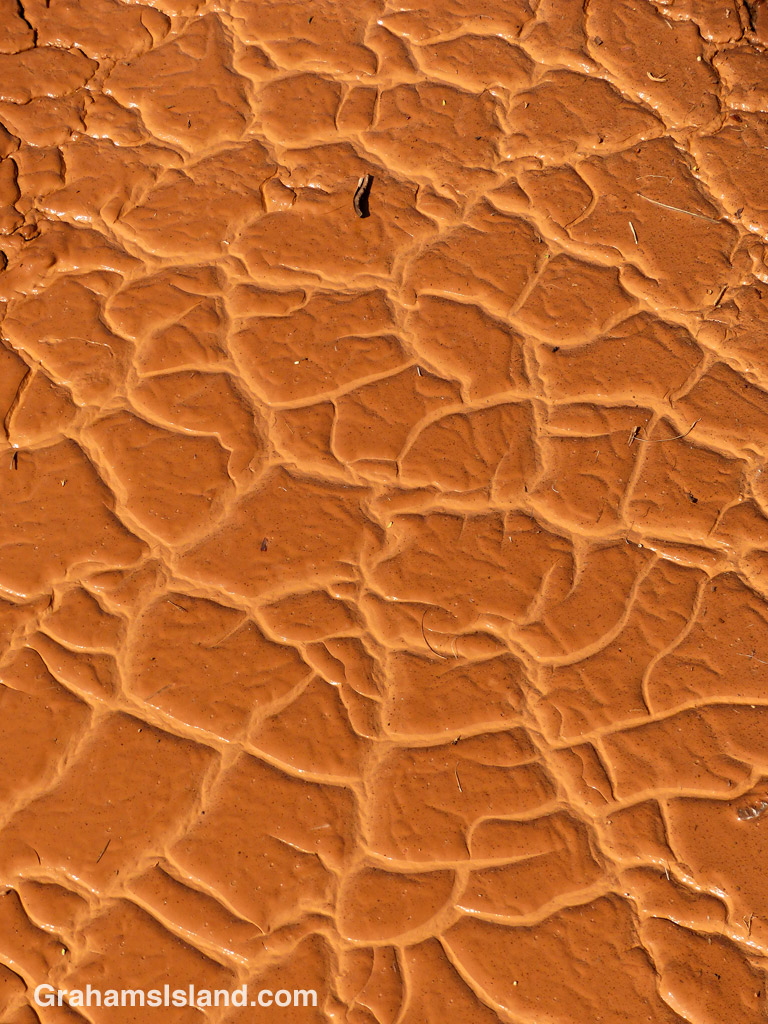
Out on a walk one day, I came across this mud puddle well into the process of drying. I like the soft, pale channels between the segments, which will soon dry into hard cracks. Those cracks and segments will be ground into dust by traffic – until it rains again.


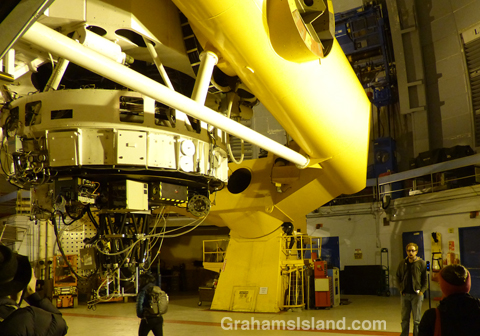
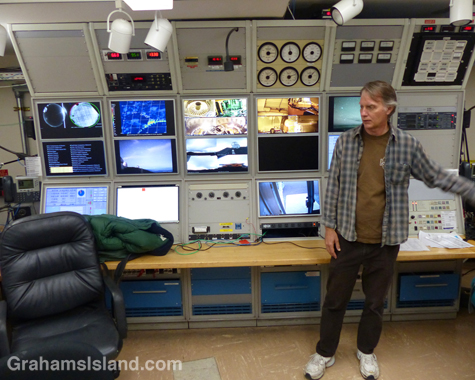
The Kama‘āina Observatory Experience was introduced by President Obama at the White House Astronomy Night in October 2015. The idea is for people who live on the Big Island and elsewhere in the state, to have an opportunity to visit the telescopes and learn a bit about what they do, as well as learn about the natural history and cultural significance of Mauna Kea.
Last weekend, I got the opportunity to take part and the Canada-France-Hawaii-Telescope (CFHT) was the first telescope visited. The telescope dates back to 1979 as is seen in the massive steel arms of the telescope and some of the instrumentation in the control room – love those analog weather instruments in the top row.
The age of the telescope doesn’t mean it’s unsuitable for the modern era. CHFT is a 3.6 meter optical/infrared telescope, but while the mirror and its housing is old school, the supporting instruments are the latest in high tech. And nowadays, like most of the telescopes on the mountain, no one needs to be there overnight; they’re operated remotely.
While a good deal of the information went over my head, and out toward the stars, it was a thoroughly worthwhile experience. I’d recommend it to anyone, but you have to be kama‘āina, a Hawaii resident.
For more information on the Canada-France-Hawaii-Telescope, go to cfht.hawaii.edu/
For more information on the Kama’āina Observatory Experience, go to kamaainaobservatory
experience.org/

I was driving home on the old Saddle Road late one afternoon when I saw that the light offered some photo opportunities. The area is one of rolling hills, pastures, and pu’us, which are old cinder cones. As I got my camera out I saw a pair of pueos, Hawaiian short-eared owls, flying toward me at a good clip. I tried and failed to get organized, almost strangling myself on the camera strap.
Luckily, one of the pueos settled in a field, not far from the road. I edged over to the fence and snapped a couple of photos. Then I eased down the fence line, trying not to fall in the hollow mounds of grass that bordered the fence. The pueo kept an eye on me while also scanning the surrounding area, it’s head swiveling around in that disconcerting way that owls have. Eventually, it decided I was too close, or too annoying, and flew off further into the field.
I’ve seen pueos several times in this area; the open pastures are a favorite habitat. Pueos, which are endemic to Hawaii, are active during the day. They usually hunt in the early morning or late afternoon, but they might be seen at any time during the day. Regardless of when I see one, a pueo sighting always leaves me feeling good about my day.

