

I always like seeing lady beetles. They usually seem so busy and industrious. This one was pootling along a passion vine.
Sun sets behind Kaho’olawe

Kaho’olawe is the smallest of the eight main Hawaiian islands and lies about 7 miles southwest of Maui. After stints as a penal colony and ranching country (resulting in extensive erosion), the island became a Navy bombing range during World War II. It wasn’t until the 1990s that this ended and the island was transferred to the state of Hawaii. Several years of unexploded ordinance removal followed.
Not surprisingly, the island is uninhabited and today it’s managed by a commission with a view to continuing its restoration.
For more information about Kaho’olawe, go to kahoolawe.hawaii.gov/home.php.
The long and winding road
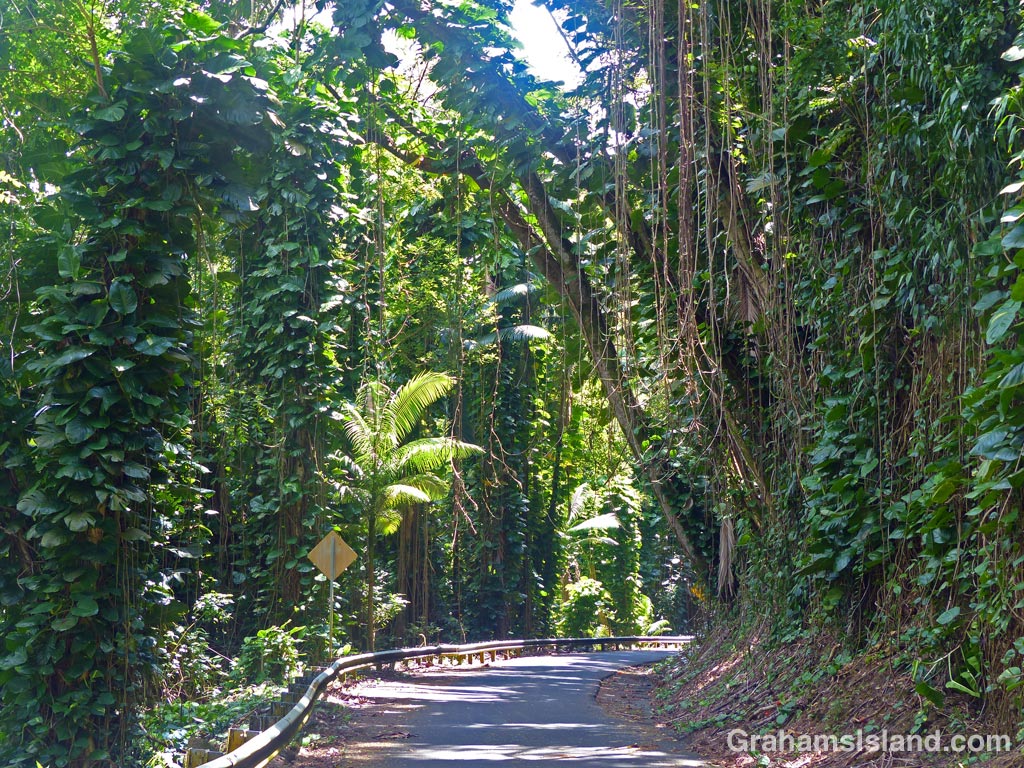
One of the things I enjoy about driving on the east side of the Big Island is coming across roads like this one, winding through a profusion of tropical foliage.
Reclaiming the lava

Lava flows make for a stark landscape, but I always find it fascinating to see how, even in such barren ground, nature regains a foothold. Here, a small shrub has taken hold in a crack in the lava. Just below and to the left of it, a fern grows under a ledge.
If there’s enough rainfall, as there is in this spot of the southeast coast of the Big Island, vegetation will begin to take hold in a fairly short while. That’s assuming that a new flow doesn’t happen along and put paid to the process.
Neoscona theisi spider

I believe this is a neoscona theisi spider, which is one of the orb weaving spiders. What I know for sure is that when I walked up the trail 30 minutes earlier, the web wasn’t there. On my return, the sun caught the web and I was able to avoid blundering through it.
Humuhumu-nukunuku-ā-pua-a

This is the Hawaiian name for the wedgetail triggerfish or picasso triggerfish. It’s also the state fish of Hawaii.
Back in 1984, the legislature decided an official state fish was needed and public input was sought. Eight species made the shortlist to be voted on by the people. Not surprisingly, those of a serious bent thought one of Hawaii’s endemic species should get the nod and lobbied accordingly. But kids liked the humuhumu-nukunuku-ā-pua-a, which gets a line in the song ‘My little grass shack,’ and children’s hula groups, dancing to this song, won people over. It netted nearly twice as many votes as the runner up.
An attempt to ‘Boaty McBoatface’ the result failed and the humuhumu-nukunuku-ā-pua-a was ultimately confirmed as state fish.
In my attempts to identify what I see in the water, I use John P. Hoover’s book The Ultimate Guide to Hawaiian Reef Fishes, Sea Turtles, Dolphins, Whales, and Seals. His website is hawaiisfishes.com.
Sea purslane
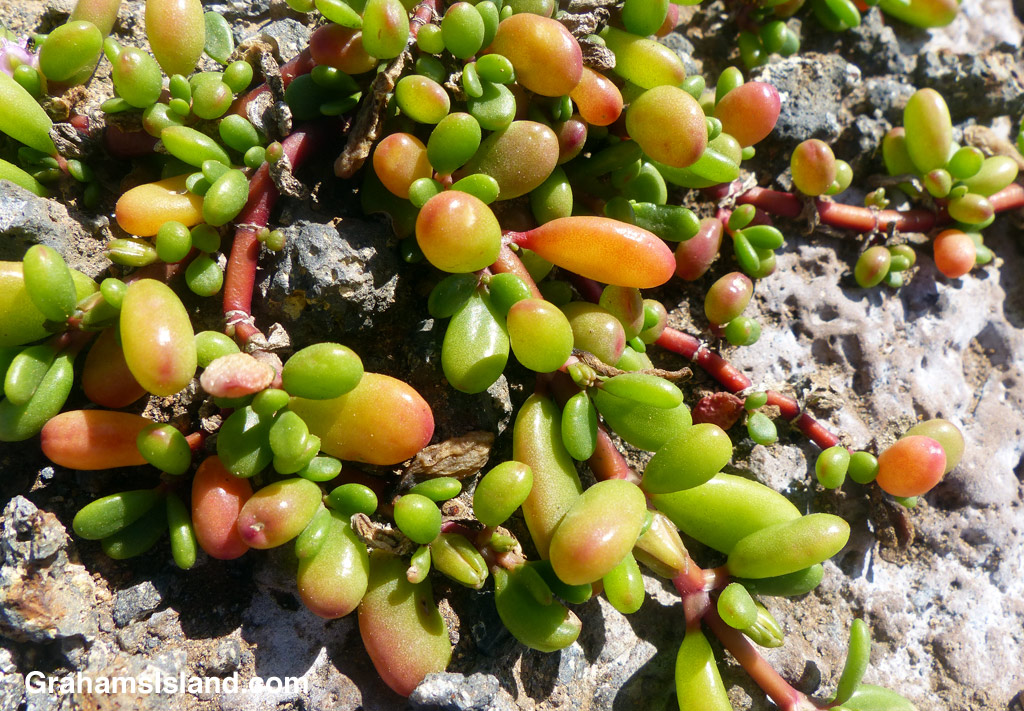
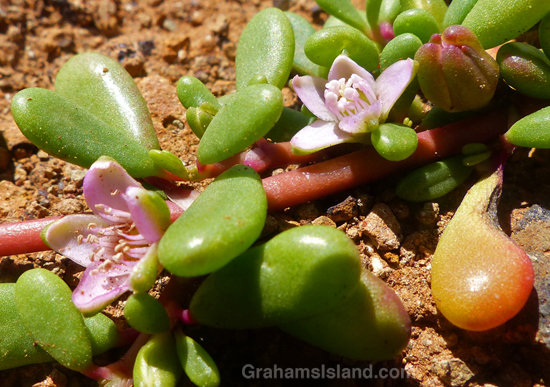
This groundcover (Sesuvium portulacastrum), known in Hawaii as ‘Ākulikuli, is common on the coast. It tolerates wind, heat, salt and drought, which means it does well on the coast. The flowers are a pale pink or purple. The green leaves become red or yellow with age, and often look like little fruit drops. Not sure eating them would be a good idea though.
For more information about sea purslane, go to nativeplants.hawaii.edu/plant/view/Sesuvium_portulacastrum.

Abstracts: Sand, sea and sun

A small cluster of whitebar surgeonfish pass over sandy ridges dappled by sunlight.

