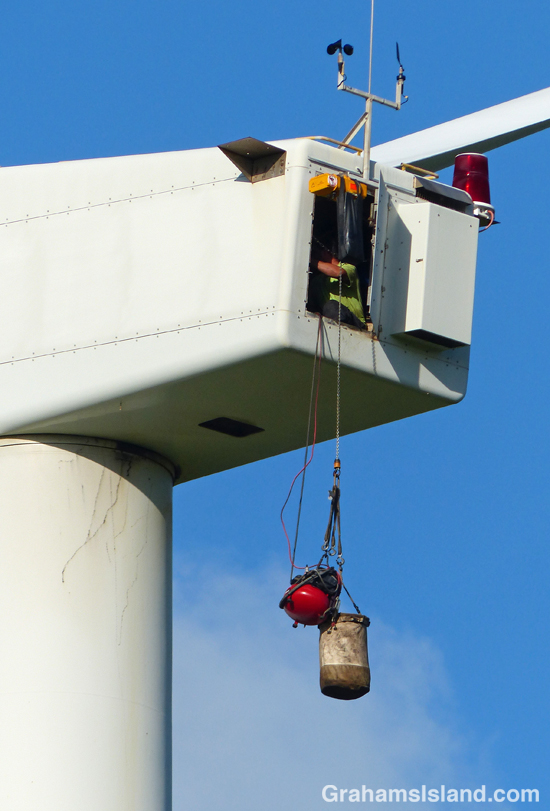
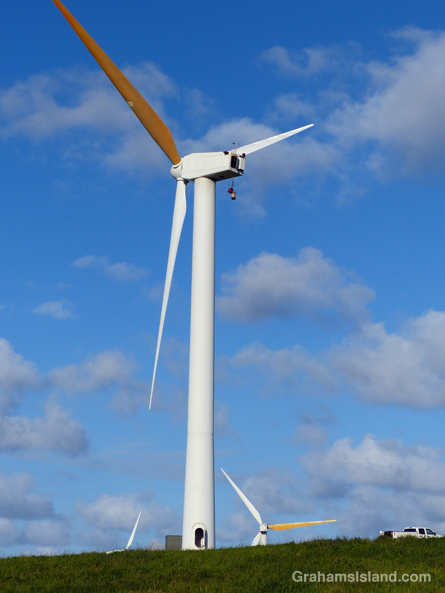
A technician works on one of the wind turbines at Hawi Wind Farm. I believe this was just routine maintenance since on the following days I saw a similar sight at the other turbines.
I haven’t yet seen the operation from start to finish, but I suspect that inside the door at the bottom of the tower there’s a way of lowering a line to hook on the tool bags. Then I assume the technician has to climb a ladder to the top.
It’s pretty high up and there are strong winds, which is why the farm is where it is. So I hope the tech in the photo to the left doesn’t lean out too far. Probably not a job I’d be suited for.
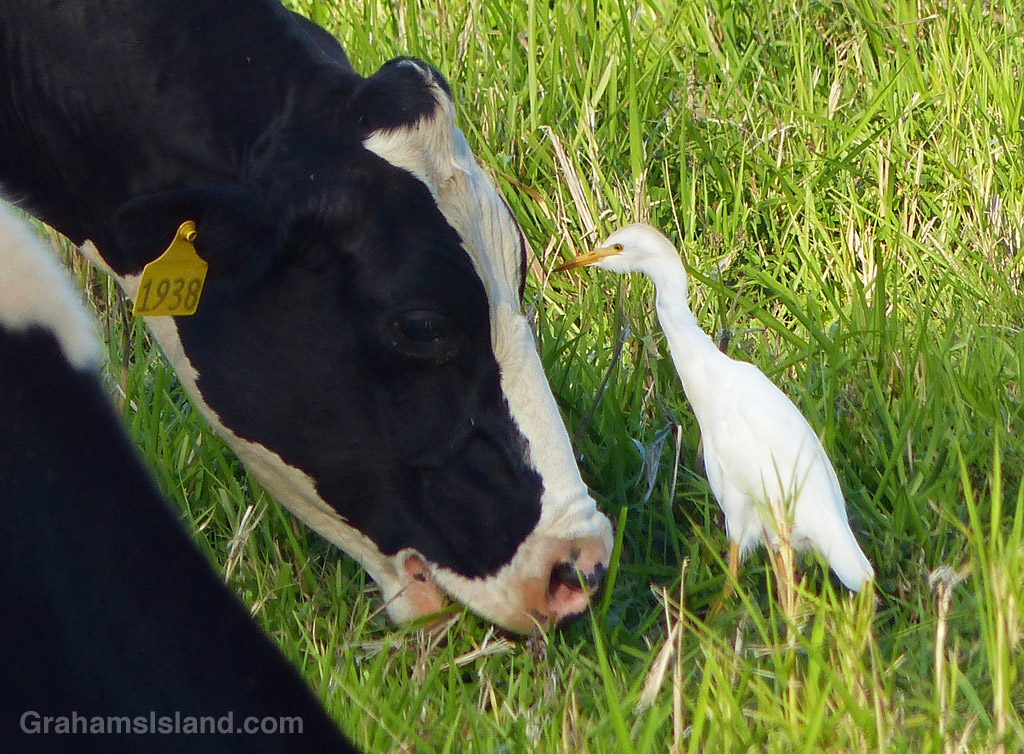
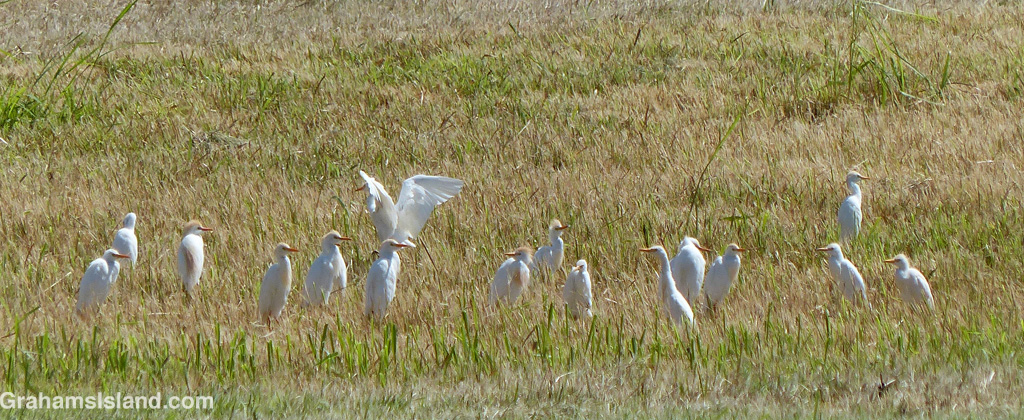
Cattle egrets are a common sight, particularly in rural areas. The name comes from their tendency to spend a good deal of time with cattle and other large mammals. Not only do they feed on insects and other small creatures disturbed by the cattle, but they also eat ticks and flies on the cattle themselves.
They’re not tied to cattle though. I’ve seen them trailing people mowing lawns for the same reason. That’s to snap up the insects disturbed by the activity, not peck for ticks on the person driving the mower.
When I see them in a field, by themselves, such as in the photo below, I always imagine them saying something along the lines of, ‘Hey, where did the cattle go?’
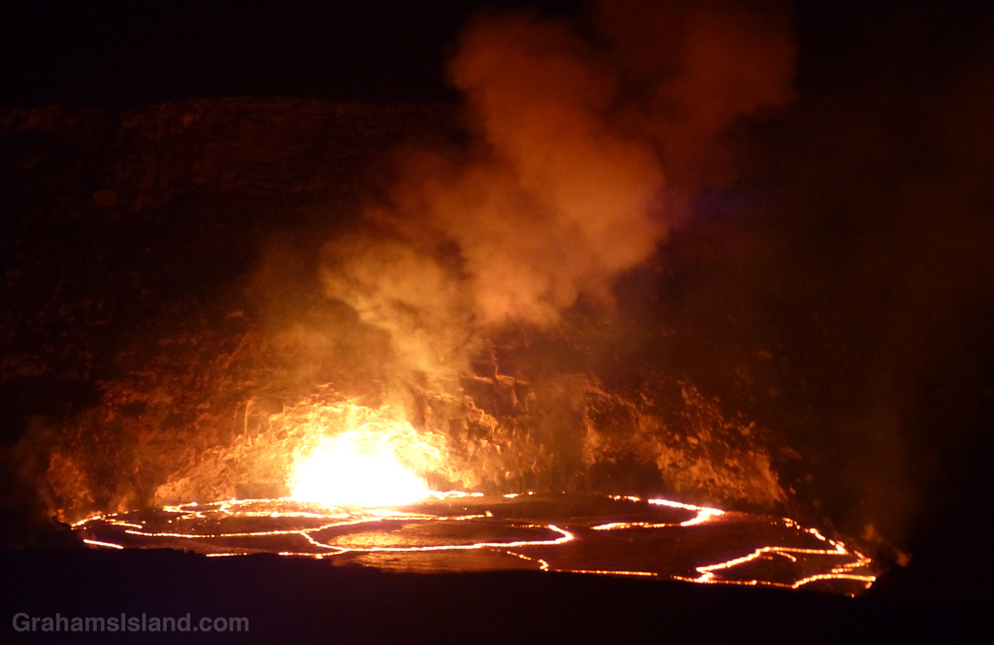
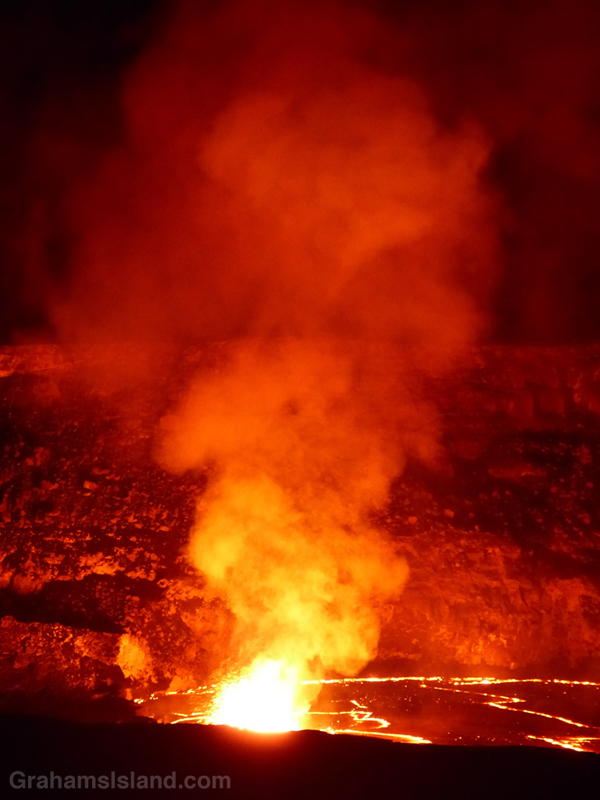
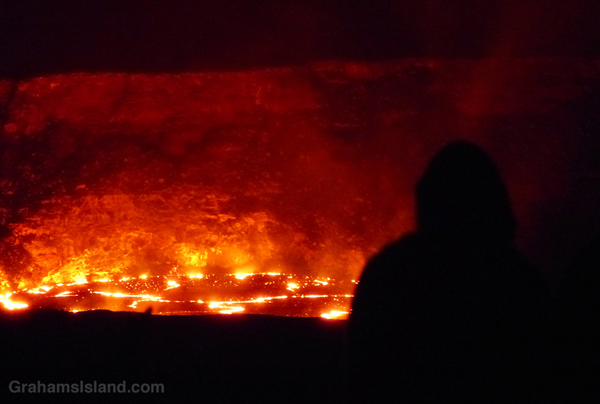
The lava lake in the Overlook vent at Halema’uma’u Crater.
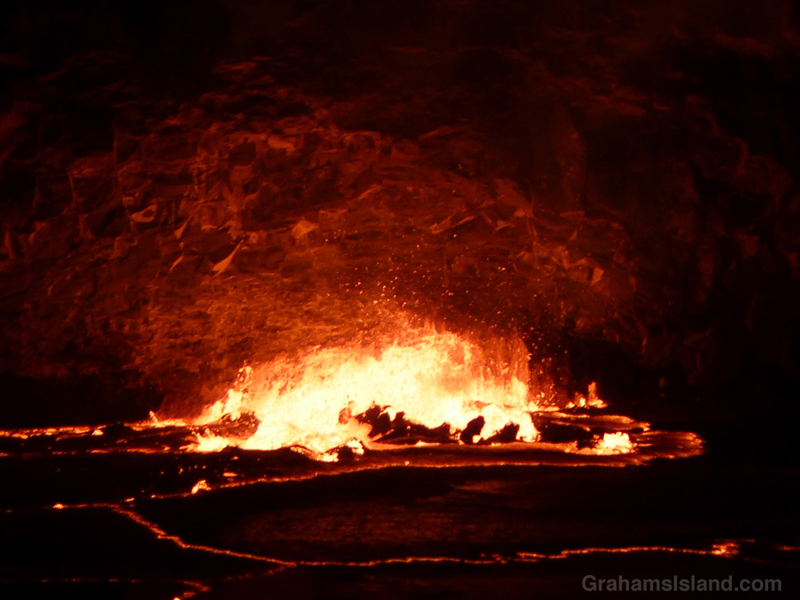
The slightly cooler surface is broken up by bubbling lava.
A hotspot illuminates the crater wall.
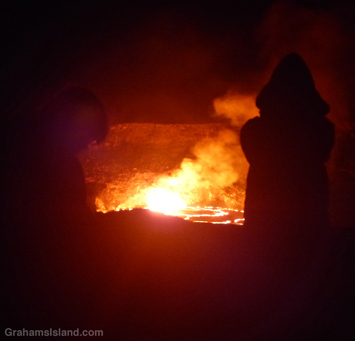
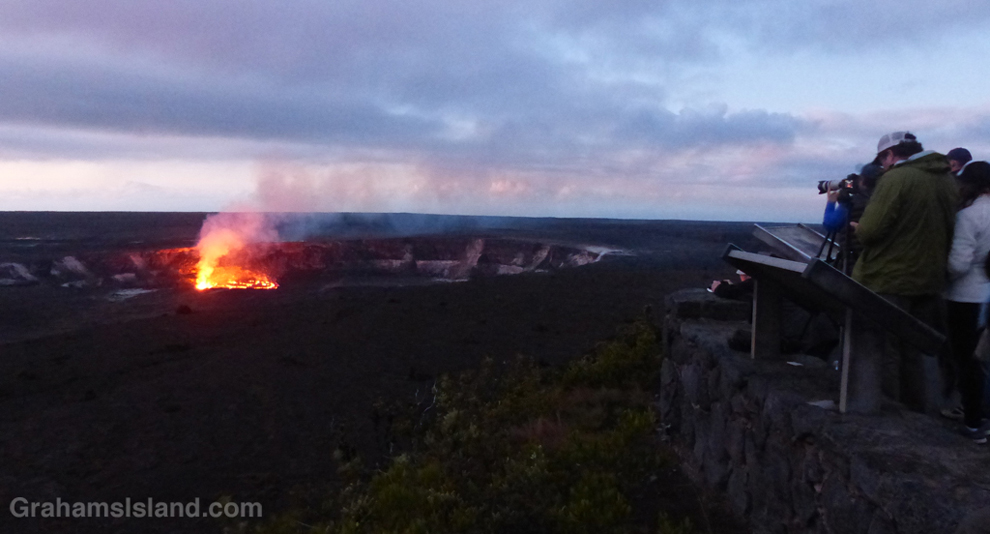
The quiet group reverently looking on had the appearance of a cult at times …
… Gathered around the mystical ring of fire.
Today marks the anniversary of a trip my wife and I made to Hawaii Volcanoes National Park. That’s where Kilauea Volcano, active since 1983, has two vents spewing lava. Flows from Pu’u O’o vent have, over the last few years, reached to the ocean and threatened to take out the town of Pahoa.
The other vent is in Halema’uma’u Crater. It’s known as the Overlook vent since it’s below an old viewing overlook. Since it became active in 2008, it’s been a bubbling pool of lava, varying from 60 to 400 feet below the floor of the crater. By night the lava glow was visible. By day, mostly what could be seen was steam and smoke.
In early April of last year, the lava lake started rising. It rose so much that the lava became visible from the Jaggar Museum, which gives a good view of the main crater. It was time to check it out. The problem was that the spectacle of active lava visible from an accessible spot led to a crush of visitors. The park warned that large crowds were showing up and advised visiting at off peak times.
Lava viewing is more vivid at night, but the scene in daylight is also interesting, so there were two options. Showing up in the afternoon and staying through sunset would be iffy because it was guaranteed to be crowded. The alternative was to arrive before sunrise and stay until it got light. The only snag? We live 100 miles away.
The day before the trip, we turned in early and I set my alarm for 12:01 a.m. We got up and were on the road by 12:35. Driving in the wee hours was actually pretty nice. The stars were out and the roads mostly empty. In Hilo, we stopped at Ken’s House of Pancakes, the Big Island’s only open-24-hours restaurant, and had breakfast at 2:45 a.m., a slightly surreal experience. Then back on the road before pulling into the viewing area parking lot at the Jaggar Museum a little before 4 a.m.
It was cold with the wind making it feel cooler and we weren’t really dressed for the occasion. But there weren’t too many people there, the night sky was gorgeous, and the lava very visible and active. We watched it bubble and spatter, often vigorously. Daylight crept in. As it did so the scene changed and more people began to show up. By 6 a.m. it was light so we left, getting home just after 8:30. It was strange to think that at that relatively early hour we had driven to the farthest side of the island, watched the volcano for a couple of hours, and driven back. Usually at the time the most I can claim is that I’ve made coffee.
First light silhouettes the onlookers.
As darkness dissipates, lava bubbles in the crater.
Soon after our visit, part of the crater wall collapsed into the lava causing a big explosion. The lava lake also reached the rim of the Overlook vent and began to spill out onto the main crater floor. We thought these developments were worth making the same trek again. And then the lava went into retreat. It fell back below the rim of the vent. Within days, the lava lake in the vent disappeared from sight and sank back to its former levels, which is where it remains, currently more than 100 feet below the Halema’uma’u Crater floor. (For scale, the active vent opening measures about 500 feet by 700 feet and the distance from the main Halemaumau Crater floor to the rim is about 270 feet.)
This is I05 who was the subject one of my first posts on this blog. In that photo he was resting. Here we see him doing calisthenics. Ha, just kidding. This was actually a brief position adjustment between two lengthy spells of resting.
Monk seals, though few in number, often haul out to rest around the island. It’s important not to get too close while they do so. Besides being illegal, disturbing their resting periods can be stressful and adversely affect their health. Also, if they get used to humans being close by, it’s only a matter of time before there’s an encounter where someone gets bitten. This is likely to result in the animal having to be relocated to the uninhabited northwestern islands.
This was the first time I’ve seen I05 in almost 5 months so it was good to see him again and still in such good shape. The green tinge to his skin around his nose and flippers is algae and he will likely molt in the none too distant future. Molting is usually an annual occurrence, during which he’ll shed the top layer of his skin and fur.
I05 is the brother of Waimanu and was the uncle of Elua, the subject of this post. I’m not sure why, but as far as I know I05 was never given a name. I confess that I call him Igor, though I can’t remember why.