Tag Archives: Anoles

Here’s looking at you

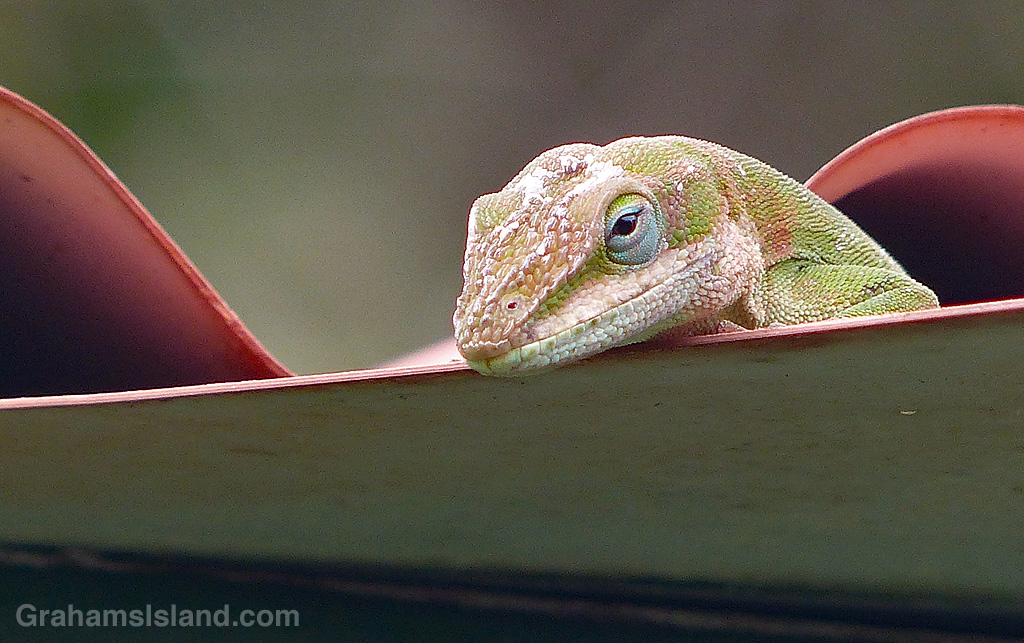
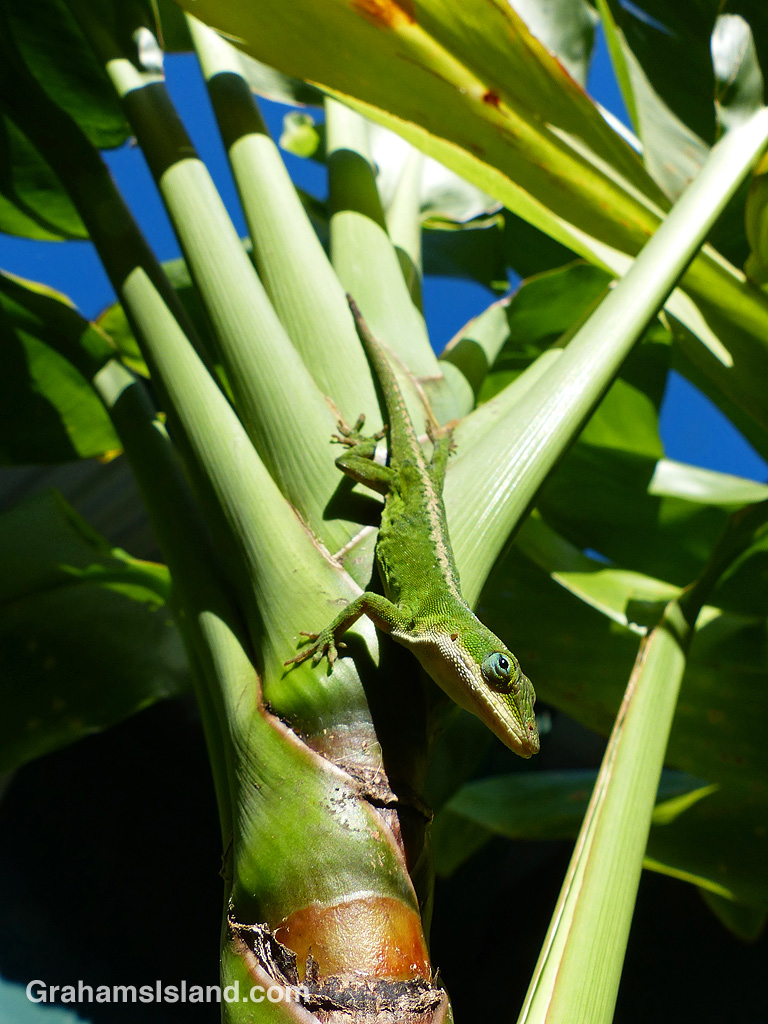
A green anole on a ti plant

A green anole keeps a wary out from the stalk of a ti plant. This is a popular spot for anoles in the winter months. Often, the dominant male spends a good deal of time running around and puffing out his dewlap to let all and sundry know who’s boss. This year’s dominant male seems positively mellow by comparison. So far I haven’t seen him get ruffled by anything, including my intrusive behavior.
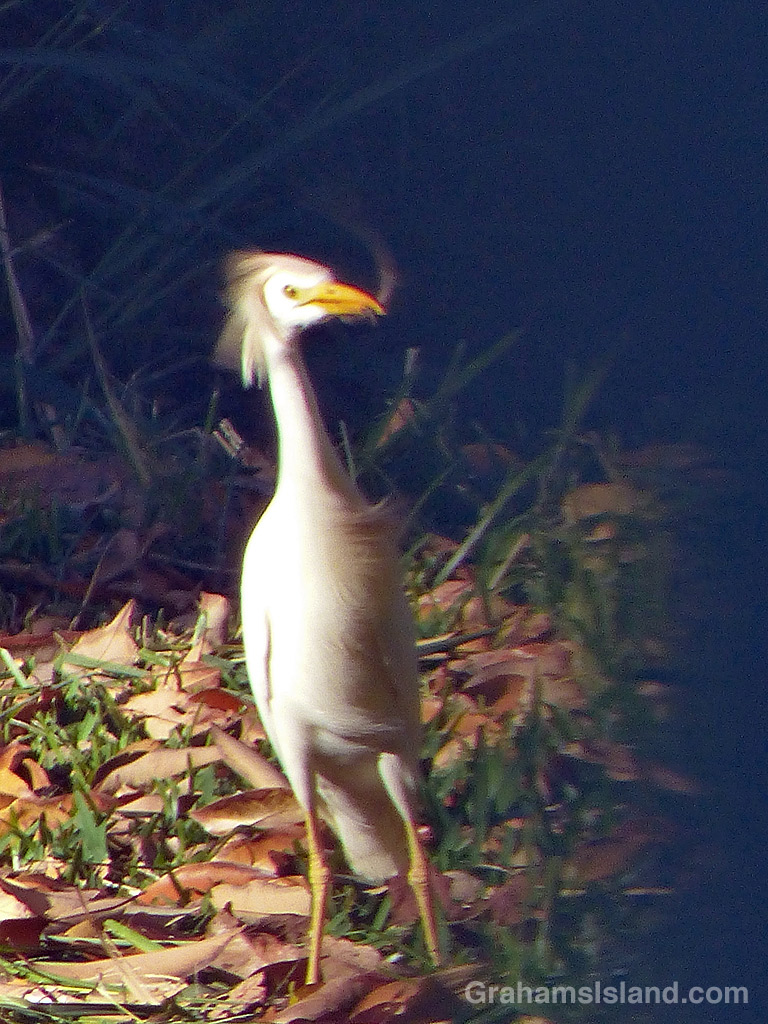
Cattle egret hunting

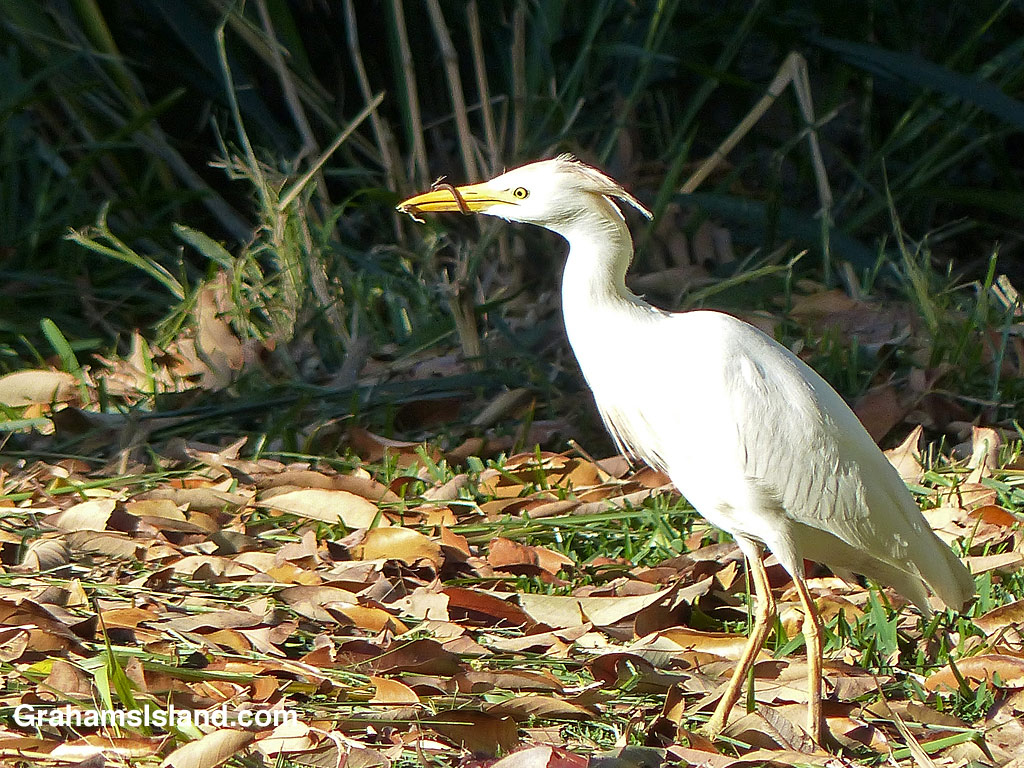
A cattle egret wrestles with a green anole.A cattle egret wrestles with a green anole.

Another post on the theme of ‘Glow,’ this week’s WordPress photo challenge.

I looked out of the window early one morning, and saw this cattle egret staring intently, as they do, into fallen leaves bordering the yard. After a few minutes of that, a sudden lunge was followed by the top photo. That’s a green anole wrapped around the egret’s beak as it struggled, unsuccessfully, to get free. The photo on the left shows the egret swishing the anole back and forth, in an effort to finish it off.

I doubt the anole was happy, but the egret certainly glowed in the morning light.

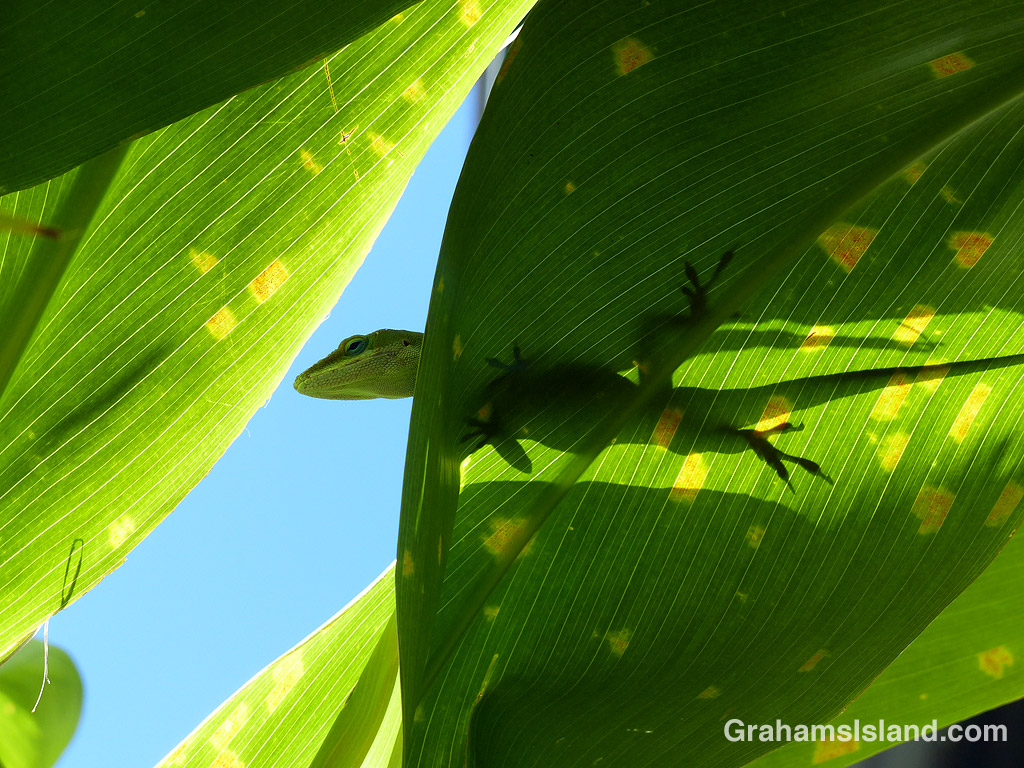
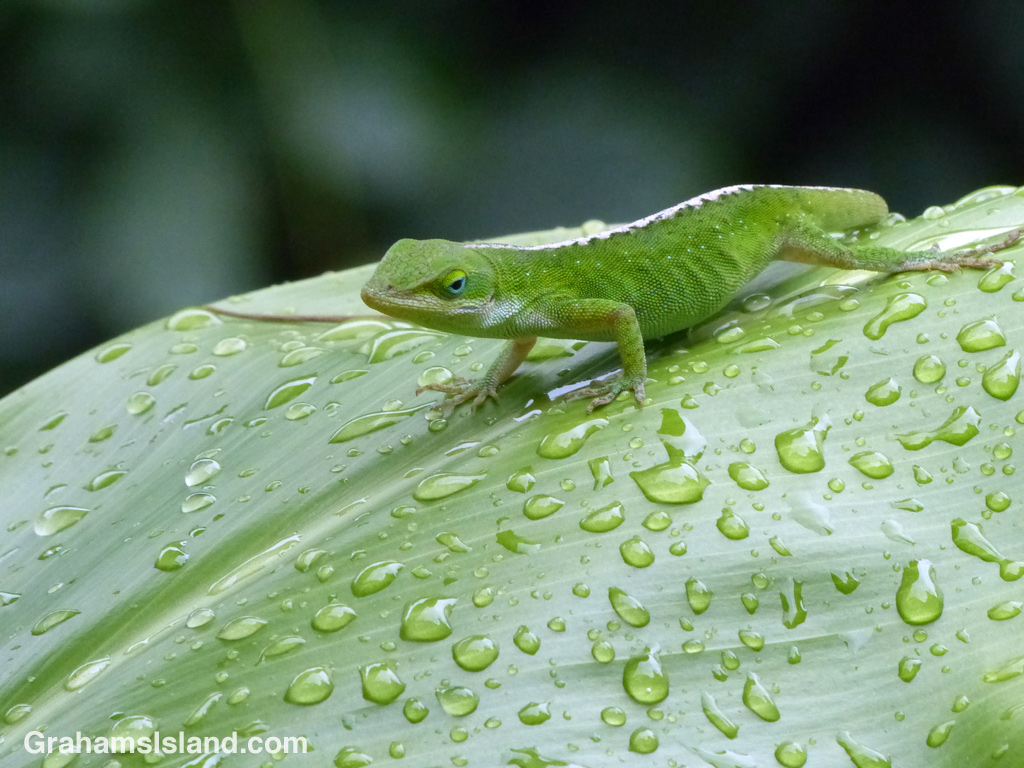
Green anole on ti leaf

A green anole surveys the scene from a ti leaf.

A green anole surveys the scene from a ti leaf. Ti leaves start out a bold green, then gradually turn yellow and brown before dropping off. If the ti plant is pruned back, two new shoots will sprout from the cut.

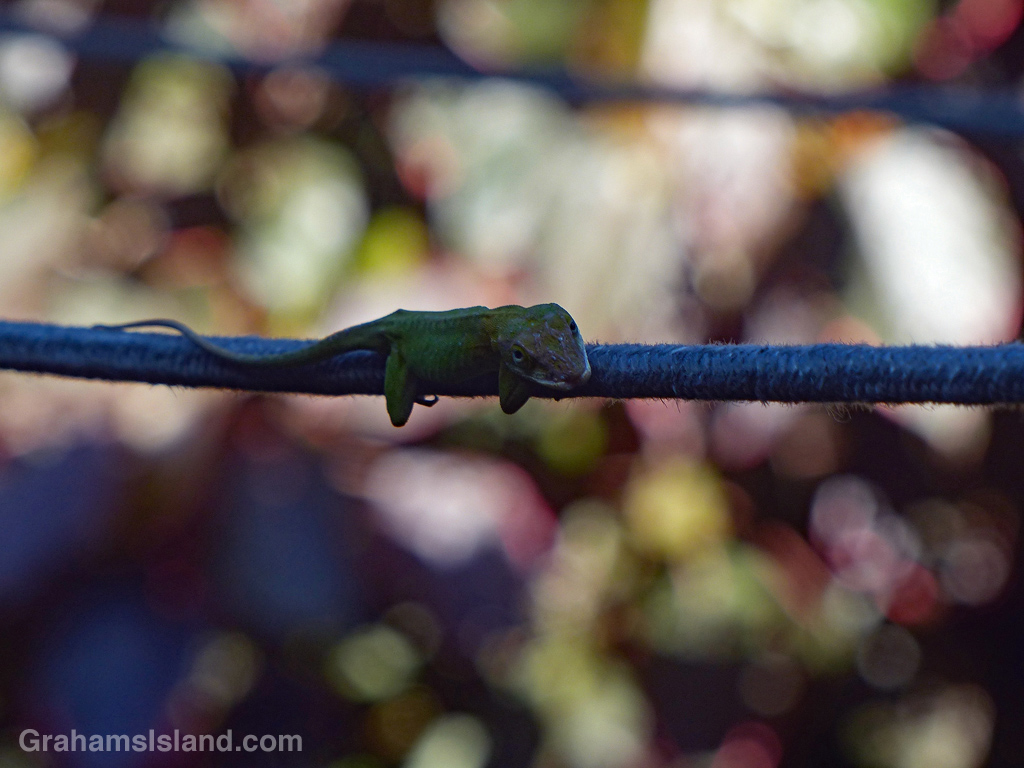
Green anole bridge

I have a laundry line strung up between the house and a tall hedge. Besides its intended purpose, it also serves as a bridge for geckos and anoles commuting between the house and hedge. They can scurry across the span in a hurry when they want to, but usually they go a little way, pause and look around, then repeat the process. They’re entertaining to watch, the experience sullied only slightly by the knowledge that this rope bridge could also serve as a freeway for rats.

Green anole shedding

A green anole tears at his shedding skin before eating it

This green anole is the dominant male at the south end of the house. I see him often, but was surprised recently to find him in this condition. He was shedding, which I think is an annual event. He pulled at the paper-like skin with his mouth, and when it came free, he promptly ate it. Sometimes it can take a while to complete the process, but when I saw him again half an hour later, he was all done.

Green anole approaching

A green anole clumps across a ti leaf.
Anoles and geckos are common everywhere around here. Where geckos have a softer, often goofy look to them, the larger anoles seem to me much more ‘reptilian.’ I don’t picture geckos as descendants of dinosaurs, but anoles? Definitely.

This photo is what I mean, both in the anole’s appearance and its pose, echoing a mighty dinosaur clumping through prehistoric forest.