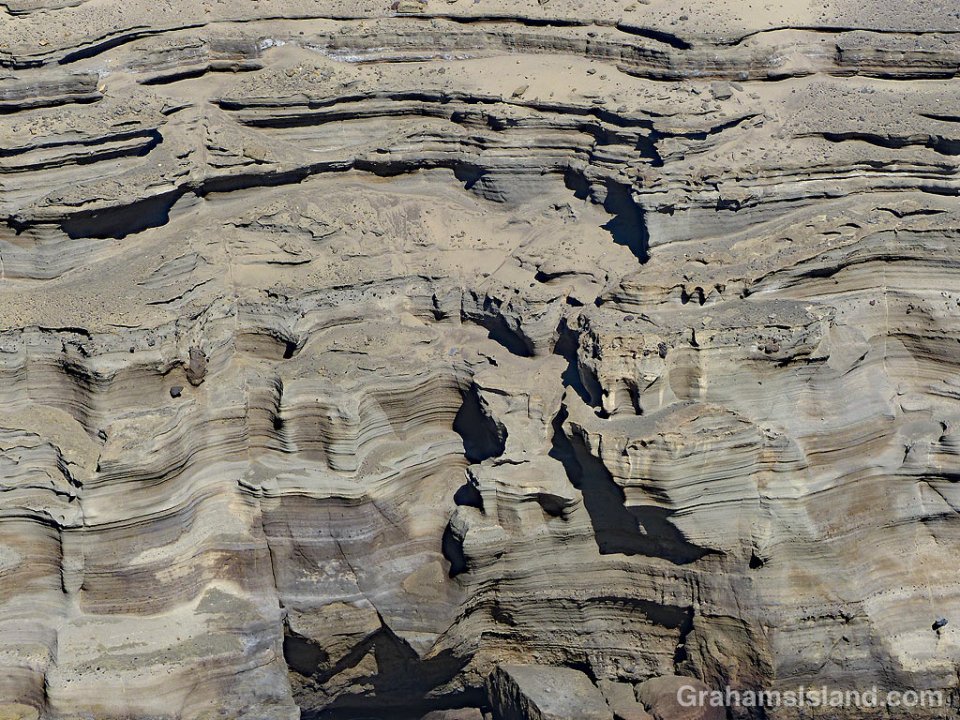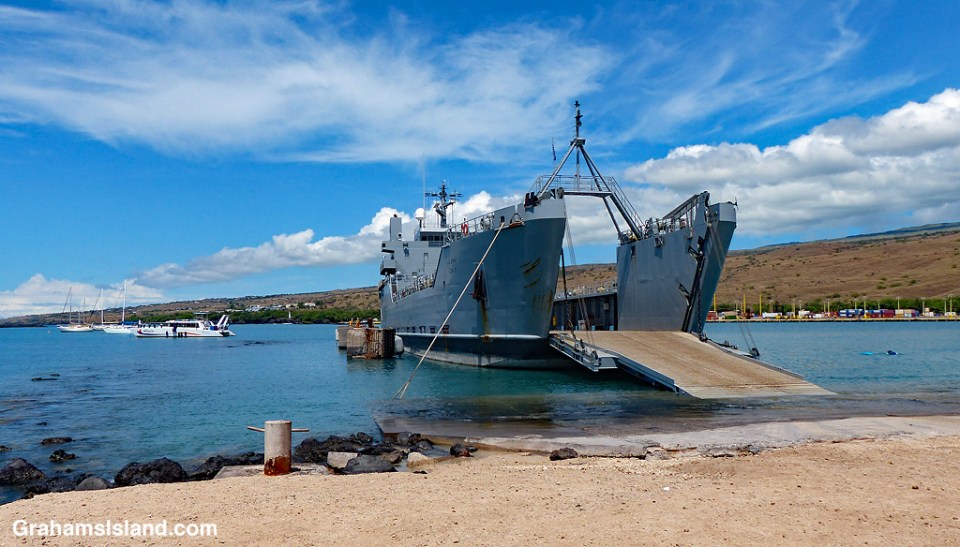
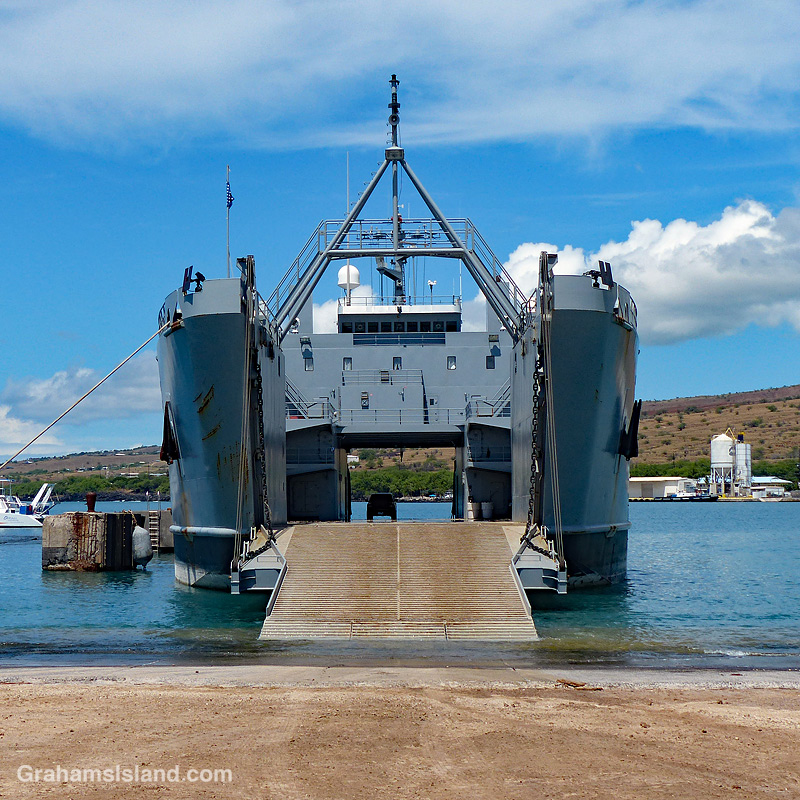
These cliffs, all layers and curves, enclose one side of Green Sand Beach near South Point.
Tag Archives: Beaches
Signs: Green Sand Beach
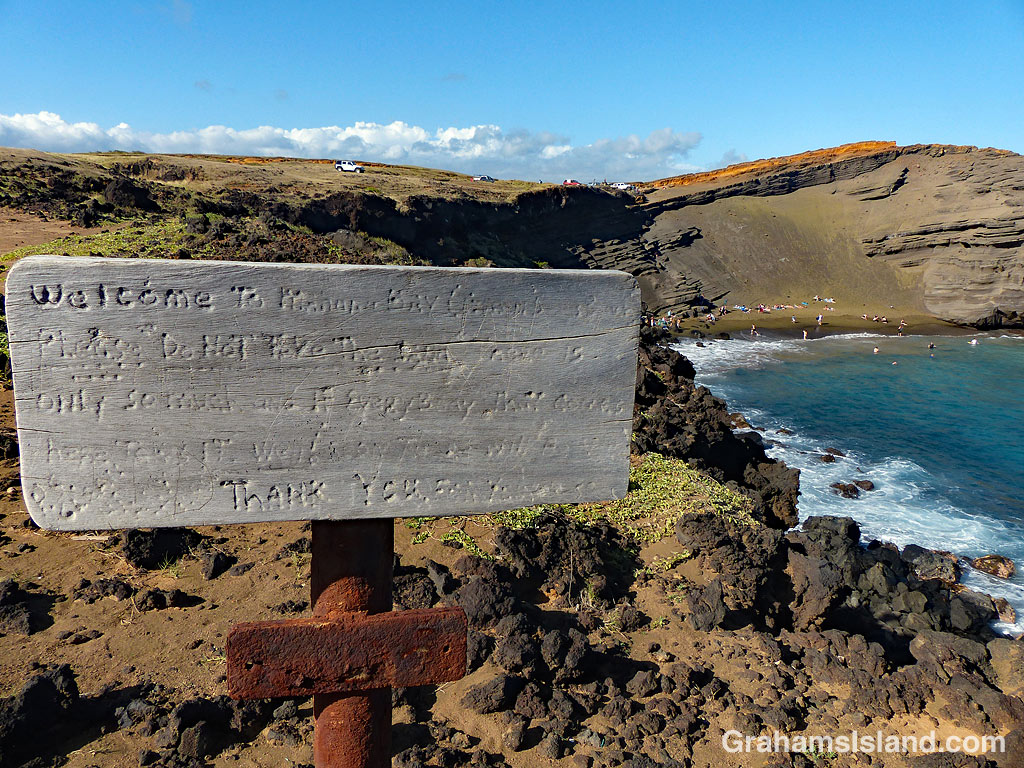
Near the end of a hike to Papakōlea Beach, better known as Green Sand Beach, there’s this old sign. I think it reads, ‘Welcome to Mahana Bay green sand beach. Please do not take the sand. There is only so much and if everybody that came here takes it, well! soon there will be none. Thank you.’
What I liked was that the only parts that could reasonably be read were, ‘Welcome’ and ‘Thank you.’ The rest I had to decipher with the help of Photoshop when I got home.
Black sand, white pole holders


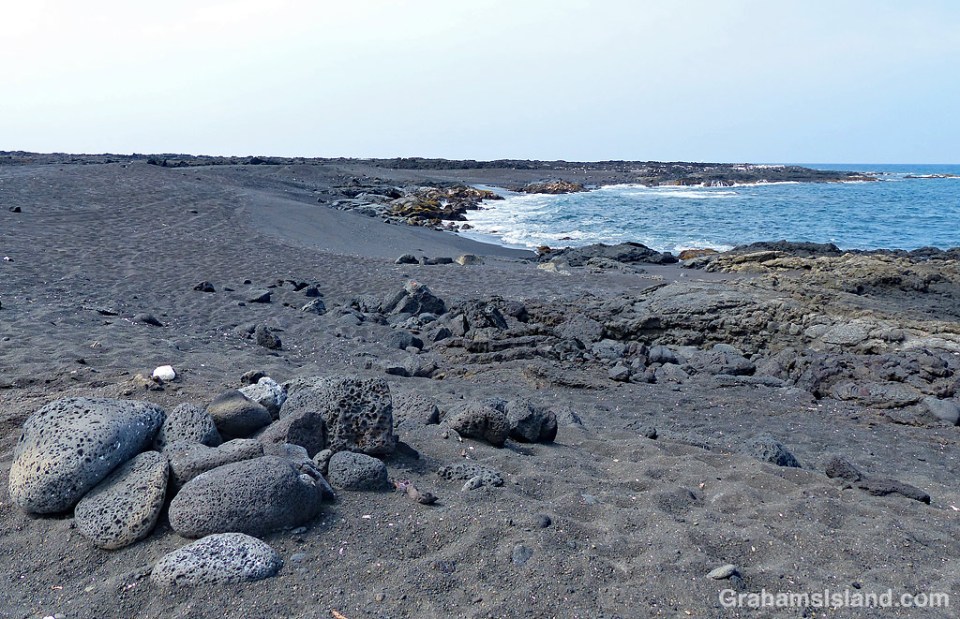
Between Kailua Kona Airport and Kekaha Kai State Park is a stretch of coastline heavy on lava and aircraft coming in to land, but light on vegetation and people.
There’s a fair smattering of black sand to be found in little coves and one proper black sand beach at Makole’a (below).
In several places, white plastic tubes can be seen wedged or cemented in to the lava (above). They’re fishing pole holders and are a common sight on most of the island’s coastline.
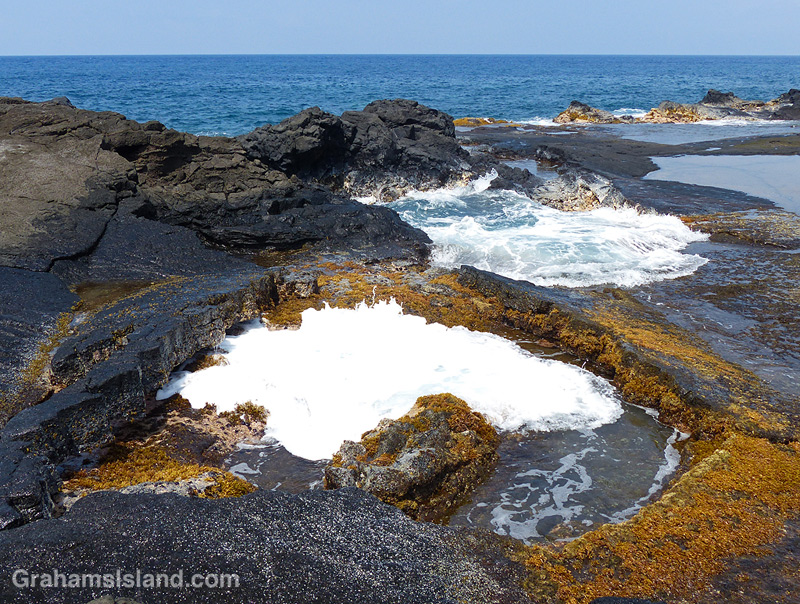
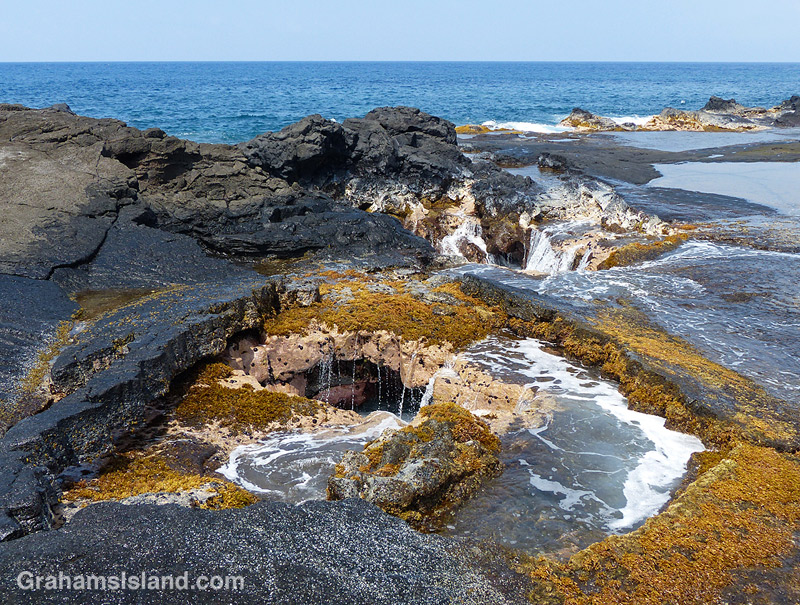
And then there are the usual features of old lava flows by the ocean including blow holes and fractured lava tubes where the ocean surges in and out again (right).

What the tide washed in

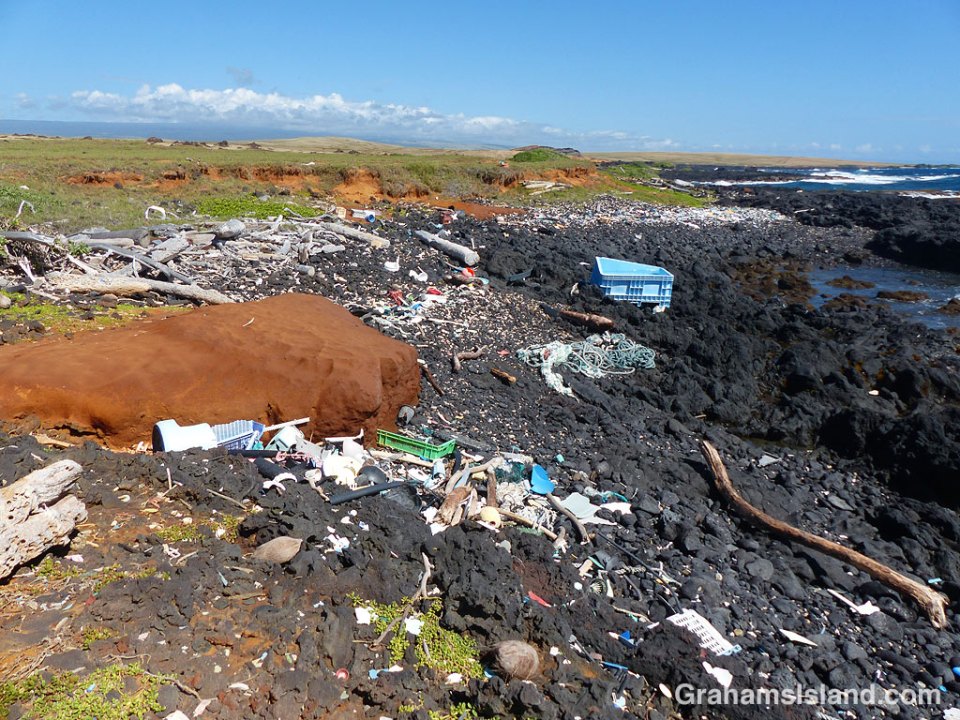
These are scenes from the coast of the Big Island, a few miles northeast of South Point, the island’s southernmost tip. This stretch of coast is notorious for the amount of marine debris on its shores.
In late January of this year, a mass of rope washed up at Kamilo Point, just a few miles from where these photos were taken. The rope mass was estimated to weigh around 40 tons. Kamilo Point is nicknamed ‘Plastic Beach’ because weather conditions and ocean currents bring huge amounts of debris ashore there. At least some of this junk is believed to have come from the ‘North Pacific Garbage Patch’ and before that, Asia.
In early March, volunteers gathered 11.6 tons of debris from this same stretch of coast.
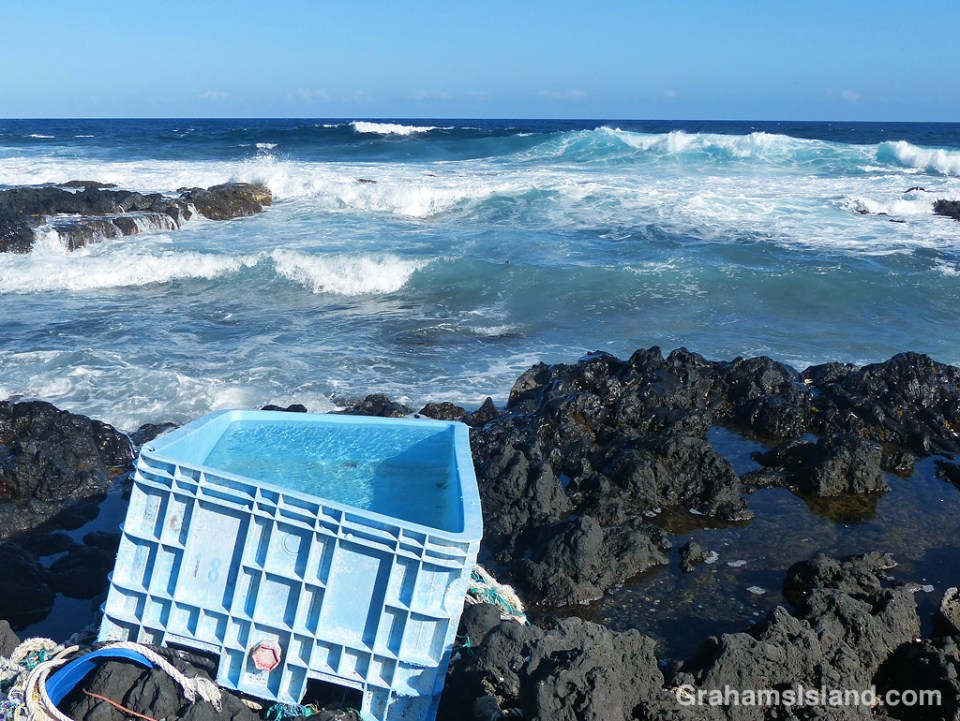
The debris in these photos is mild be comparison, but still unsightly, and dangerous for everything from seabirds to Hawaiian monk seals, turtles, and humpback whales. That said, the blue plastic soaking tub (below) on the ocean’s edge, looked awfully inviting.

Keawaiki beach

I’m not a person who goes and spends a day at the beach, but I have been drawn to water and the ocean all my life. Possibly that’s why I’ve ended up in Hawaii, where the place is surrounded by it. And who wouldn’t be drawn to the water here?
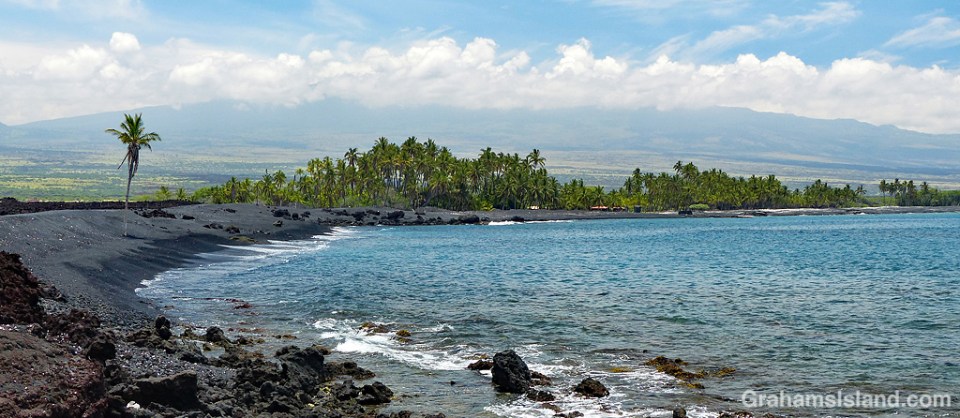
This is Keawaiki Beach on the South Kohala coast. It’s a steep, black beach where sometimes the surf can roll in. But on a day like this one, it would be a fine place to swim. And on this particular day, not a soul was there, just me and my camera.
Posted in response to this week’s WordPress Photo Challenge ‘Place in the world.’
Kealia beach

I’d rather be at the beach, though I’m not one for stretching out on the sand and slowly broiling. I much prefer a beach like Kealia, north of Ho’okena, where the mix of sand and lava attracts tide pool dwellers and the birds that feed on them.
It was here, also, that I first saw butterflies, such as the large orange sulphur (Phoebis agarithe) below, drinking from the sand. I subsequently learned that butterflies can’t drink from open water, but get moisture from dew on plants, wet sand, earth and mud. In addition, drinking from these sources allows butterflies to obtain needed salts and minerals.
I learn something new every day. Now, if only I could remember these things.
Posted in response to this week’s WordPress Photo Challenge, ‘I’d rather be…’

Abstracts: Birdman

I’d rather be out exploring, which is how I found conclusive evidence of the existence of this previously unknown creature – half man, half bird. I bet it spends a good deal of its time going around in circles.
Posted in response to this week’s WordPress Photo Challenge, ‘I’d rather be…’
Hawaiian monk seal and her new pup
There’s a new monk seal pup on the Big Island and, happily, both mother and pup are doing well. The pup is just over a month old now and its mother will stay with it for another two weeks or so. At that point, she’ll head out to feed, having not eaten since giving birth, and the pup will be left to fend for itself.
I’ve been to see them three times and the pup’s growth has been dramatic as seen in the third and fifth photos. In the top one, the pup is 11 days old and below, exactly a month old.
For more information about Hawaiian monk seals, go to www.pifsc.noaa.gov/hawaiian_
monk_seal/ or www.marinemammalcenter.
org/hawaii.
Posted in response to this week’s WordPress Photo Challenge to be a visual storyteller.