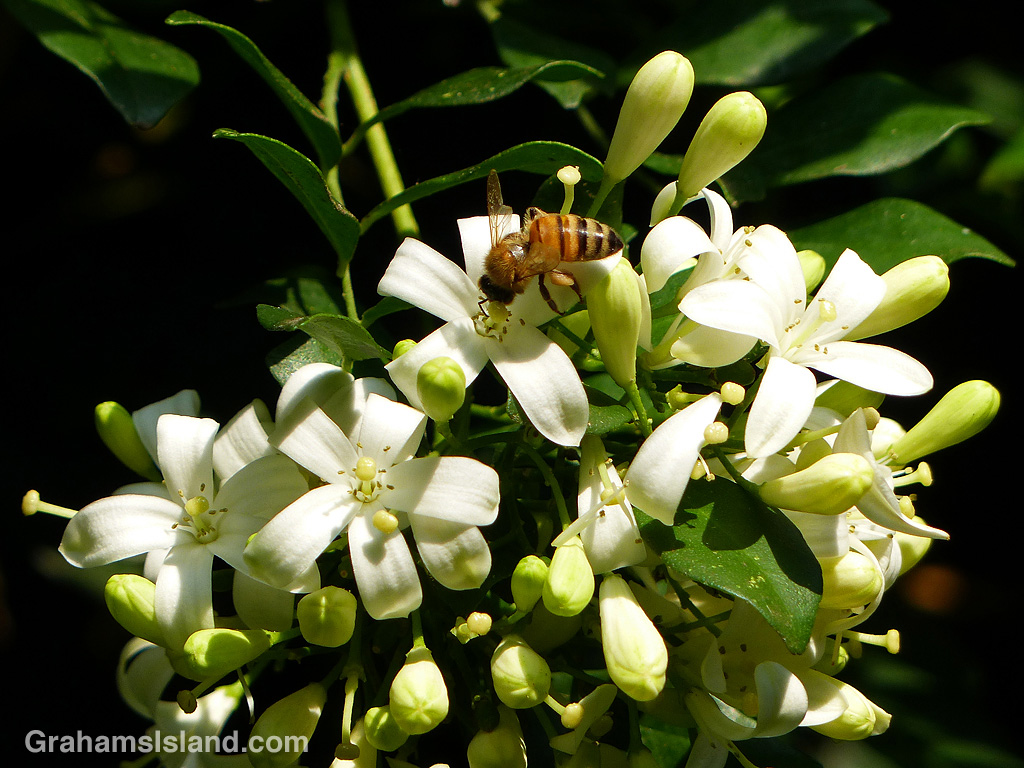
A bee forages on a mock orange. When the plant is in bloom, the aroma is thick in the air.

A bee forages on a mock orange. When the plant is in bloom, the aroma is thick in the air.
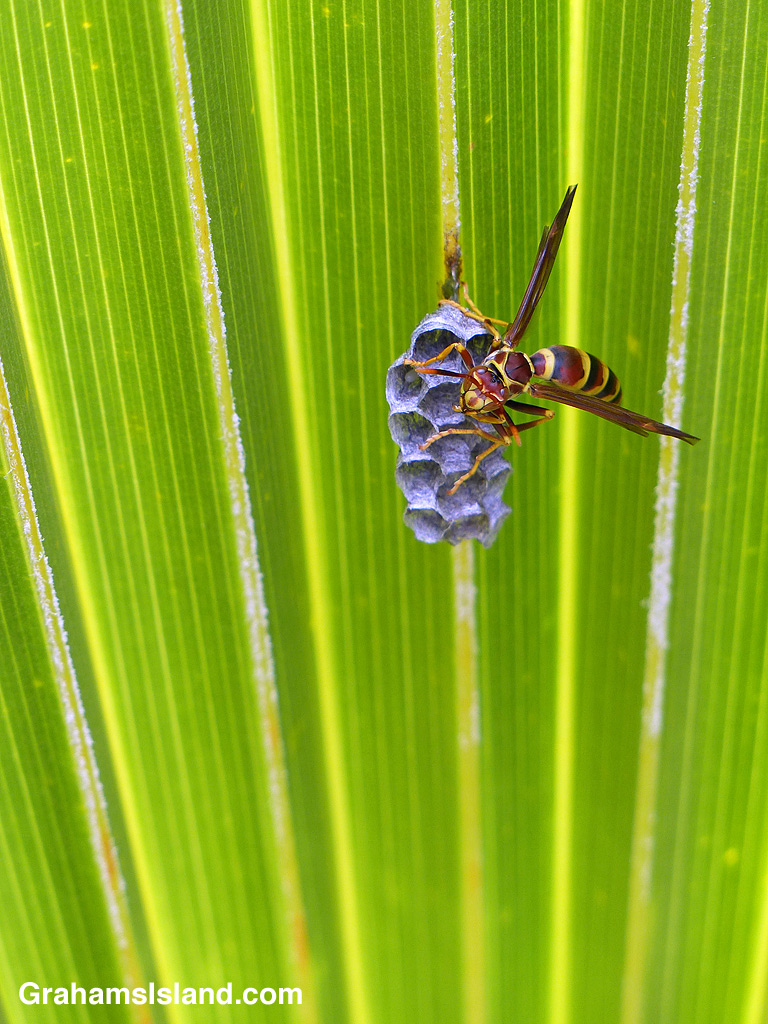
This paper wasp was working on a new nest attached to a loulu palm (Pritchardia affinis). In one of the cells – the top one of four on the left side – an egg has already been deposited.
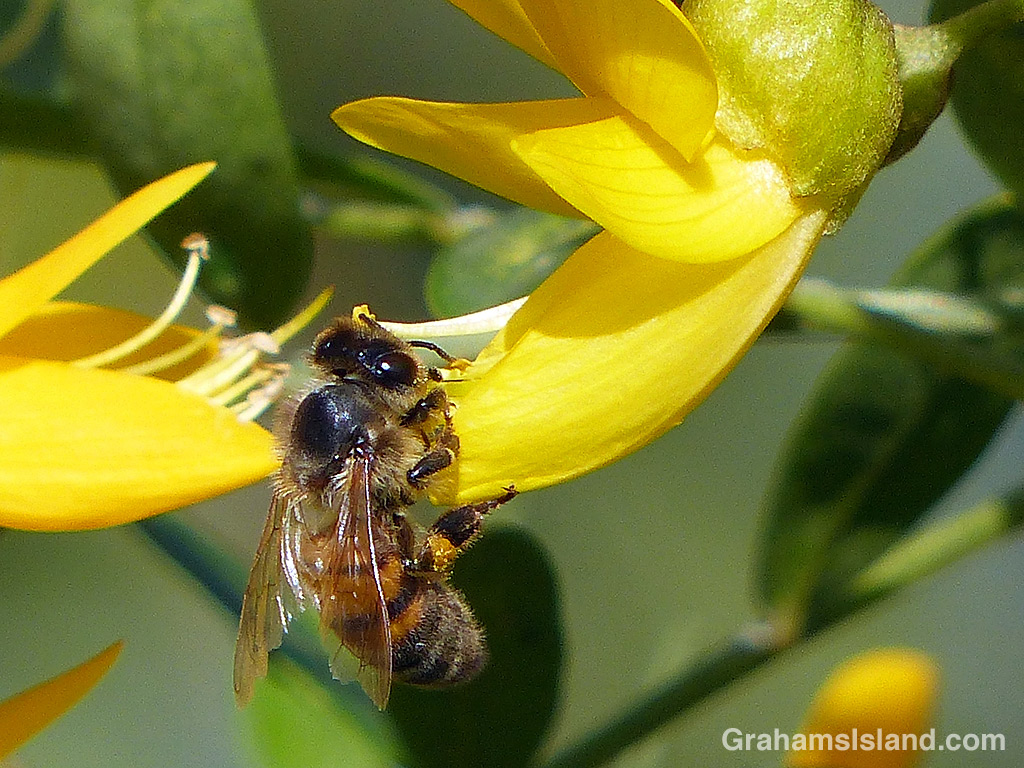
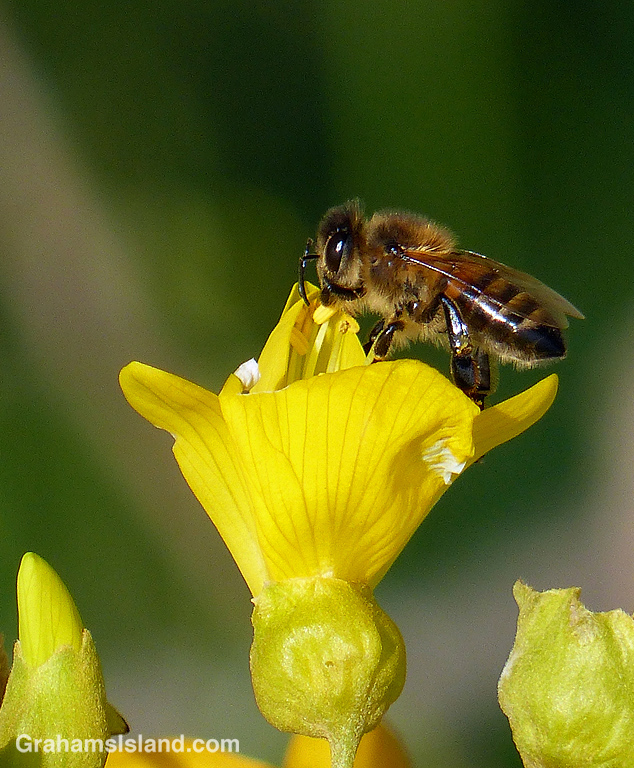
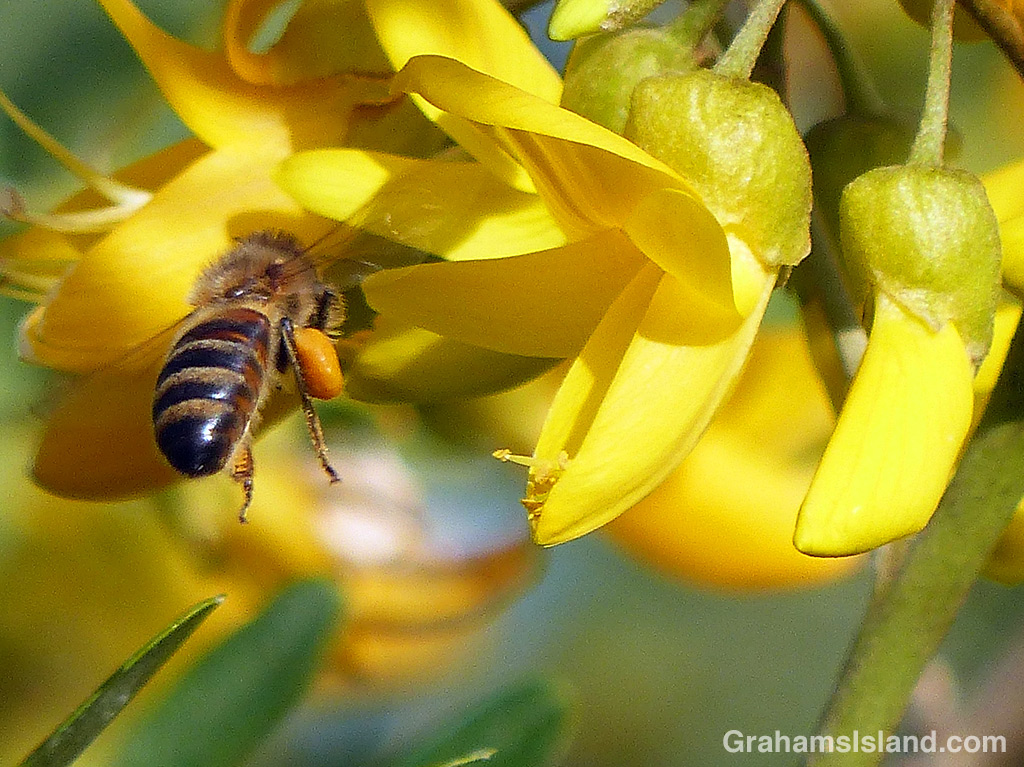
Bright yellow mamane flowers are not only a cheerful sight, but also very popular with bees. They were all over these mamane flowers on the upper slopes of Pu’u Wa’awa’a.


Yesterday, I posted about the dangers geckos pose to a praying mantis that has been living on a spider lily.
Today’s post is about the advantage of that location for the mantis. The primary benefit is that the spider lily’s flowers attract wasps, bees and other insects. In these photos, the mantis has caught a good-sized paper wasp, securely held by its forelegs. It held the wasp in that position for a while, but once it began its meal, it made short work of devouring the wasp. Next day I saw it with a bee and a beetle.
As the spider lily flowers fade, new ones pop up on other stalks, so the insect attraction has been fairly continuous.


A bee, already heavily laden with pollen, flies in to examine a rose jatropha flower.


Haole koa is the local term for Leucaena leucocephala. It means ‘foreign acacia koa.’ Acacia koa is a native hardwood tree that has been used in building everything from guitars to canoes.
Haole koa got its name because it looks similar to young acacia koa trees. It also looks similar to kiawe, but lacks the vicious thorns of that tree.
This is the time of year that haole koa trees flower and their white flower heads look like puff balls. These are popular with the bees, which were swarming all over a small group of haole koa trees just a few days ago.
Posted in response to this week’s Sunday Stills challenge on the theme of ‘Spring has Sprung.’ See more responses here.

 A busy leafcutter bee forages on aptenia cordifolia flowers. Aptenia cordifolia is an iceplant that comes from southern Africa.


 Agave attenuata is native to Mexico, but is commonly seen in Hawaii. It’s also known as lion’s tail agave, swan’s neck agave, or fox tail agave. These names stem from its long flower stalk which rises from the center of the leaves and arches over. Most agaves bloom and die, but agave attenuata blooms annually without dying. Also, unlike many other agaves, agave attenuata leaves don’t have leaves with sharp points or spiky edges.
The progression of the flowering process can be seen on one agave attenuata plant. In the second photo, starting at the base of the flowering stalk, there is a bare section where the flowering process has finished. Above that is a brownish section where small brown pods have been set. Some of these, that remain attached to the stem, will turn into green fruits. Near the end is the portion of the stalk that is currently flowering and at the end are buds that have yet to flower.
I was drawn to these plants, not just because of their striking flower stalks, but because in the mornings, bees were all over the plant. The top photo shows a bee clambering through a tangle of stamens and pistils. In the third photo, there were lots of bees working along the flowering portion of the inflorescence. Below, sometimes it’s hard work getting to grips with the task in hand.

 Graham's Island