
A large orange sulphur butterfly feeds on a bougainvillea. This was one of the few butterflies I’ve seen on a flowering bougainvillea. Not sure whether that’s usual or not.

A large orange sulphur butterfly feeds on a bougainvillea. This was one of the few butterflies I’ve seen on a flowering bougainvillea. Not sure whether that’s usual or not.
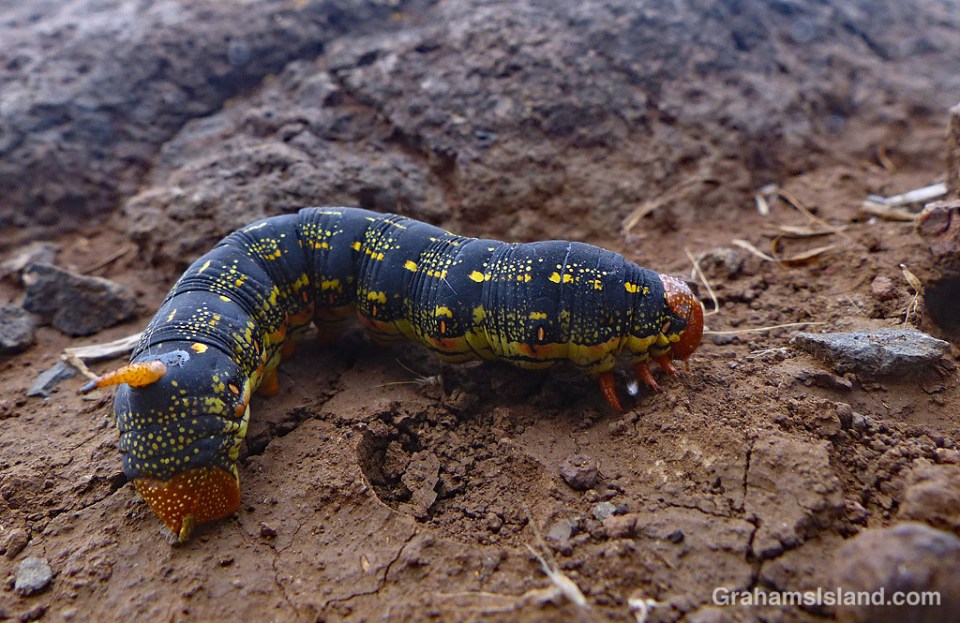
This handsome fellow is the caterpillar of a white-lined sphinx moth (Hyles lineata). This caterpillar’s color can vary quite a bit. The markings on this predominantly black caterpillar can be green or orange, but the main color can be bright green or yellowish with black markings or red dots.
One consistent feature of these caterpillars is the orange horn on their back ends. This is also a good way to distinguish front and back. The horn looks like it could sting, but it can’t. It’s probably more of a visual deterrent to would-be predators.
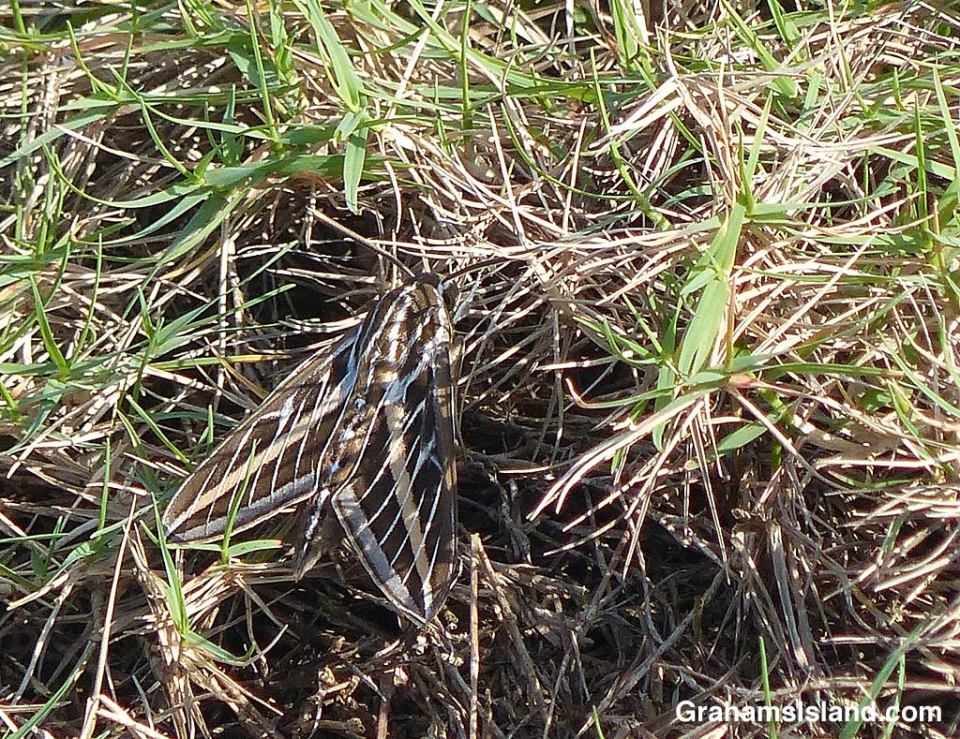
The adult moth (below) has more uniform coloration. These moths and caterpillars are quite common but I rarely see then. This isn’t surprising considering how the adult moth blends in, but the caterpillar is quite striking and I’m surprised I haven’t seen more of them.
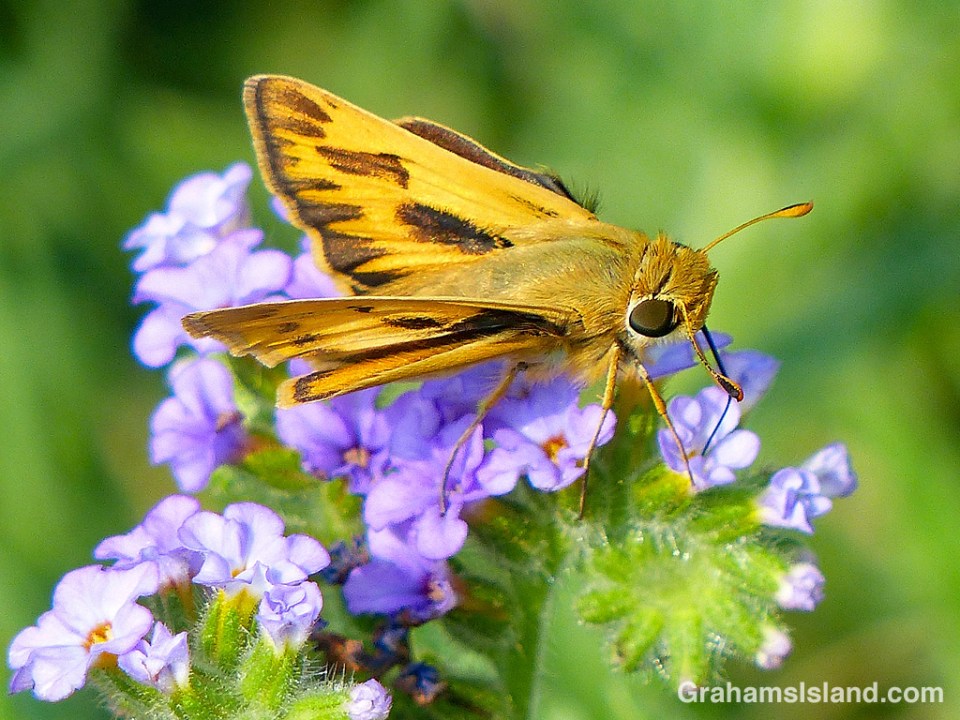
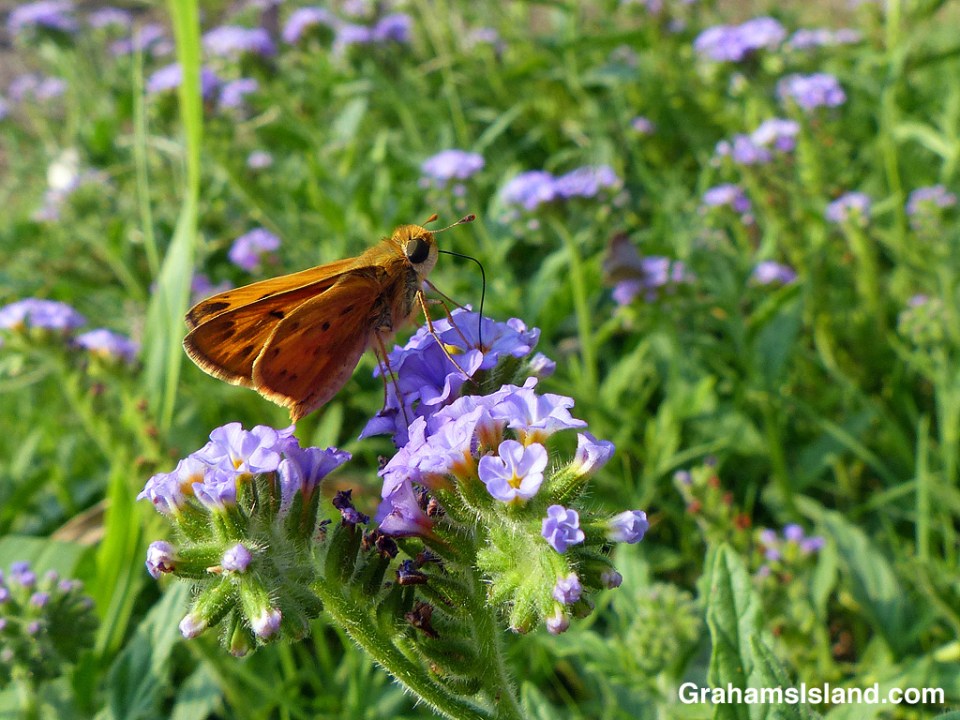
A fiery skipper butterfly stops to feed on blue heliotrope (Heliotropium amplexicaule) flowers.
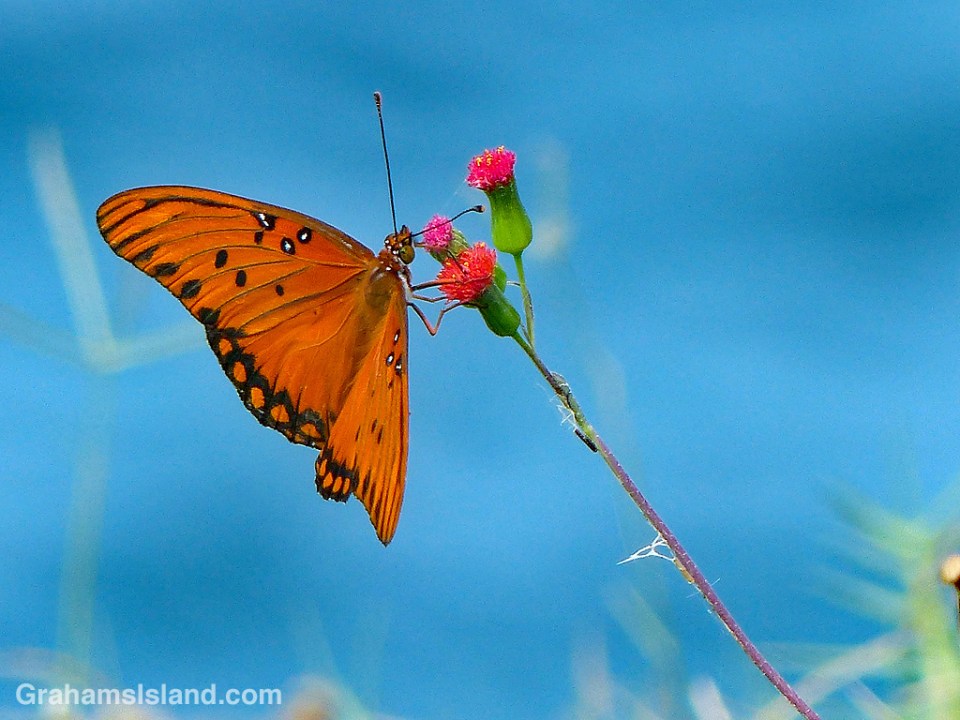
I already ran a post for this week’s Sunday Stills challenge on the theme of ‘Orange’ (here, and other responses here). But yesterday, while taking a walk, I came across this passion vine butterfly and thought it fit the theme too well to pass up. The butterfly was feeding on a tasselflower with the blue Pacific as a backdrop.
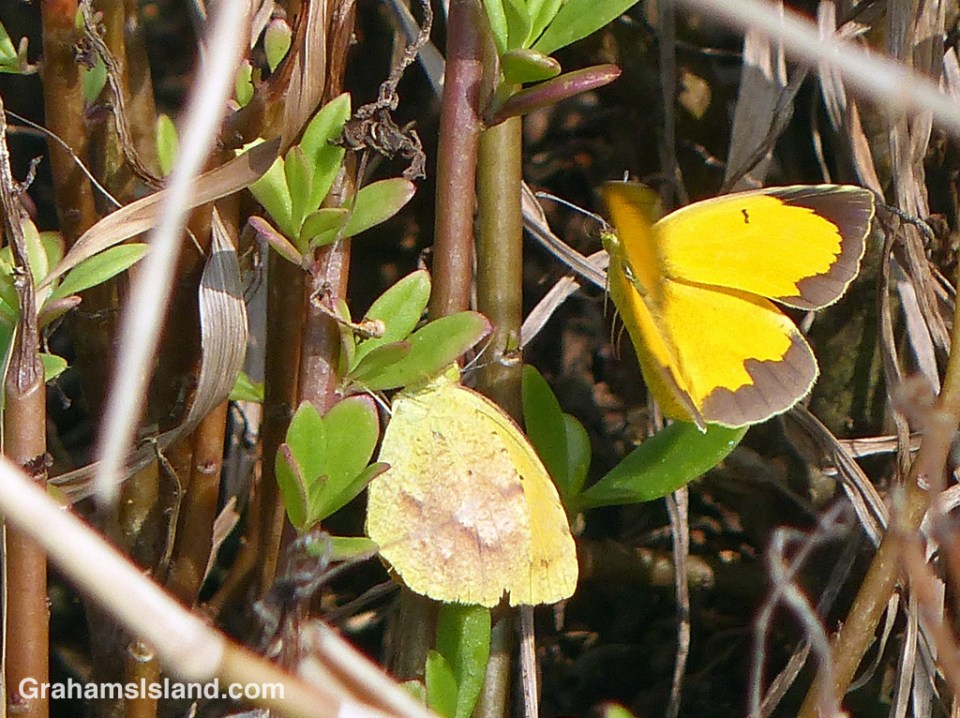
I came across these two sleepy orange butterflies (Abaeis nicippe) while on a walk. I think the one flying is a male since they’re described as having more sharply defined borders on the wings. If that’s the case, I presume this was some sort of mating activity going on, or at least, being attempted by the male. I didn’t see any response from the other butterfly so don’t know if the attempt was ultimately successful.
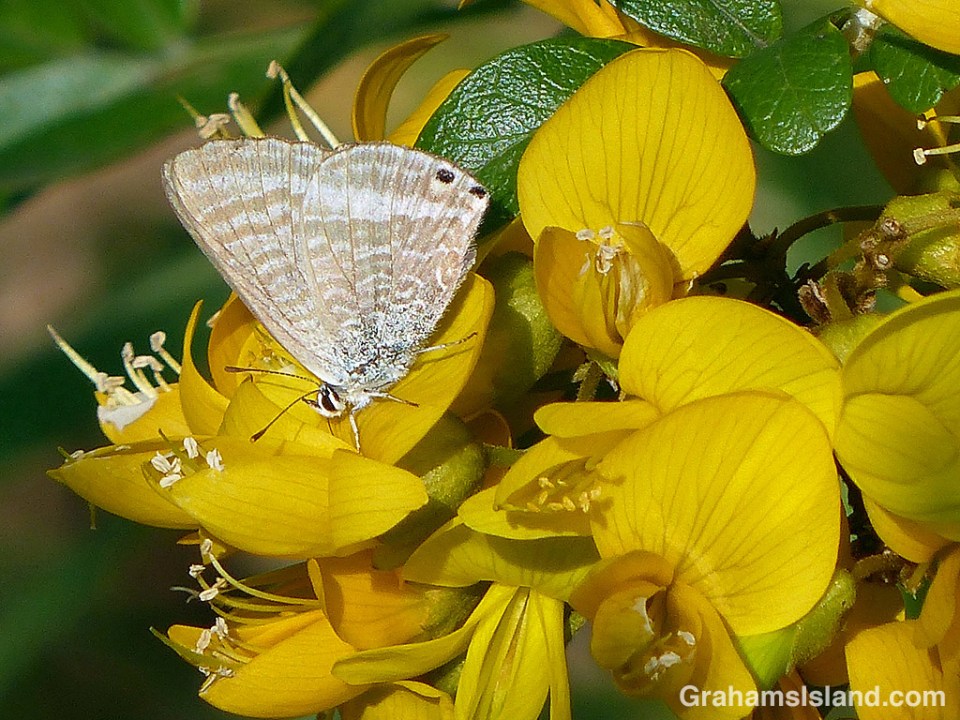
I think this is a long-tailed blue butterfly, otherwise known as the bean butterfly. It’s a pest on beans and peas and also wild legumes. My only question about the identification is that the tail, normally seen where the black spots are, is not visible here. But it’s possible that this butterfly has suffered a bit of damage in that area. Some butterflies look so beaten up that it’s a wonder that they’re able to fly at all.
It’s resting on the flowers of a mamane tree.
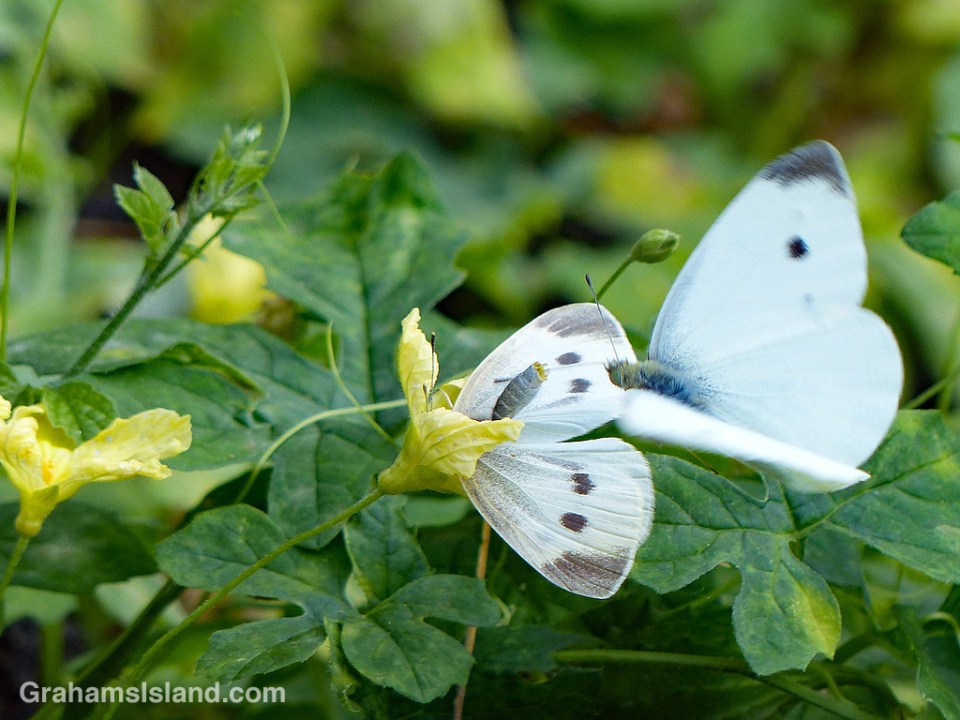
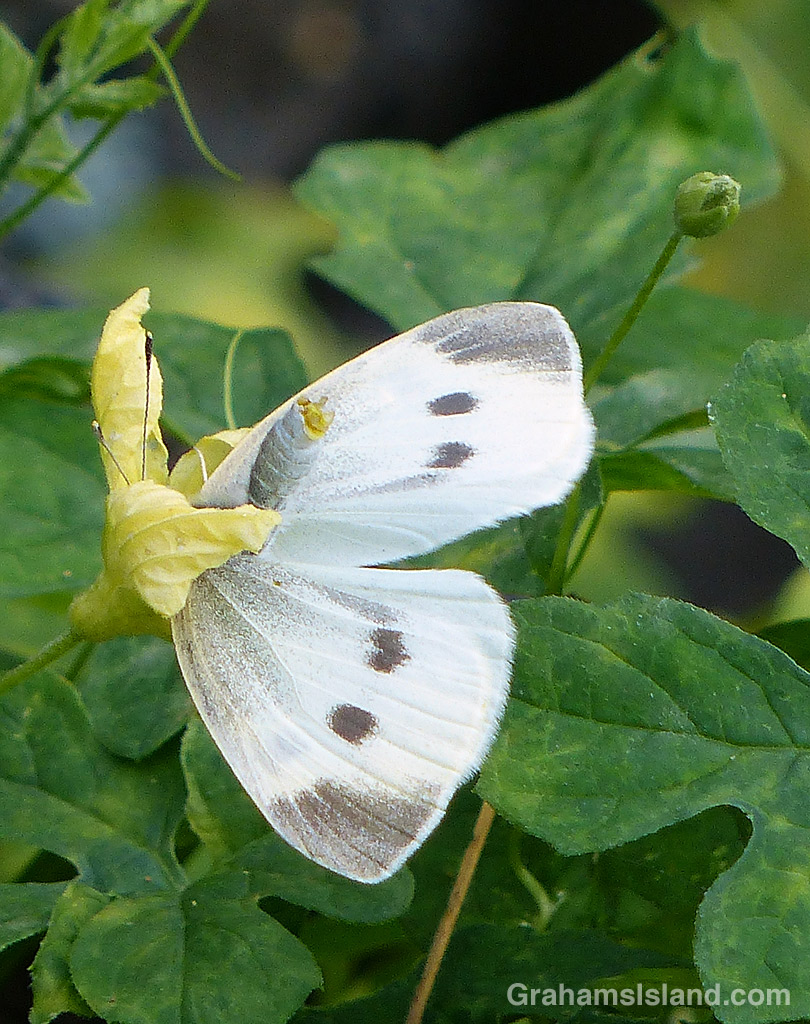 When I first saw these two cabbage butterflies I thought they were mating or about to mate. But I’ve since read that this posture, adopted by the female (identifiable by the two dark spots on each wing), is a signal that she’s already mated and is no longer available. In typical fashion, the male butterfly took a while to get the message before he gave up and left.

The Asian swallowtail butterfly (Papilio xuthus) is also known as the Chinese yellow swallowtail, and in my butterfly book, the citrus swallowtail. Whatever the name, this is the only swallowtail butterfly found in Hawaii, first sighted in 1971.
I see them mostly when I’m standing at the kitchen window, either preparing food or washing dishes. They seem to sense when I’m otherwise engaged and flutter by scenically. If I grab my camera and rush out, they’re always gone. For whatever reason, I hardly ever see them settle on a plant; they’re always flying.
This one was slightly less flighty than most and obliged by returning to the same plant several times.
 Graham's Island