

It’s hard to believe that the spiky, menacing-looking caterpillar above transforms into the beautiful passion vine butterfly, seen foraging on lantana flowers.


It’s hard to believe that the spiky, menacing-looking caterpillar above transforms into the beautiful passion vine butterfly, seen foraging on lantana flowers.
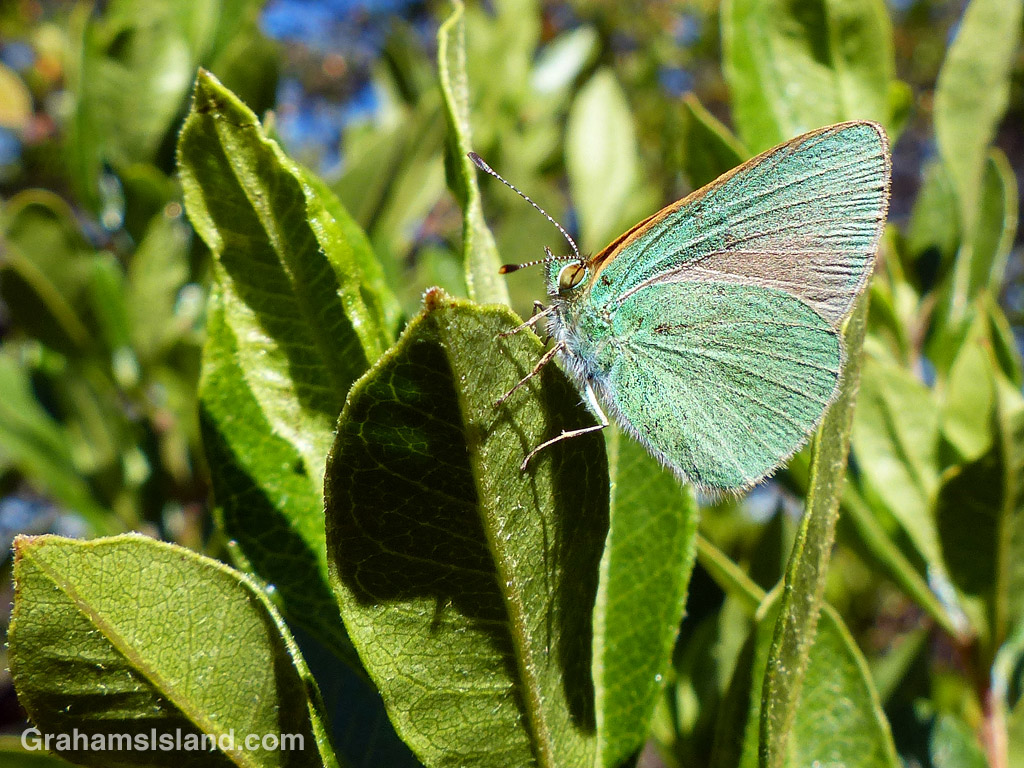
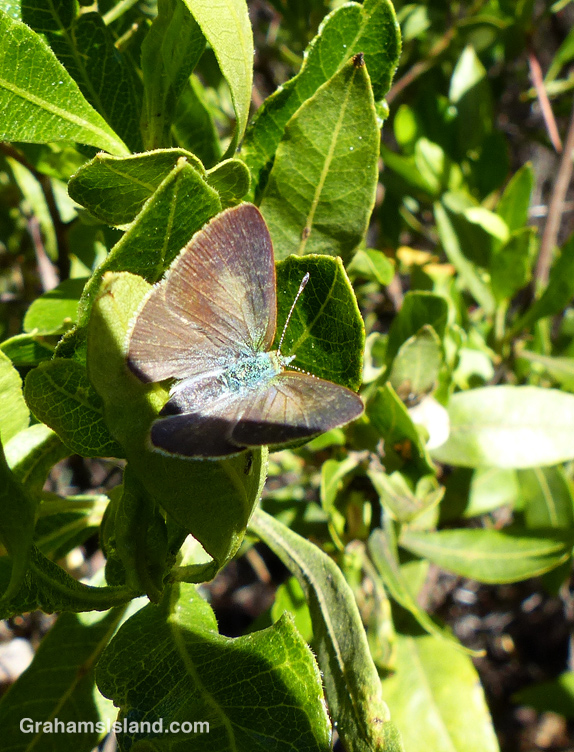
This endemic Hawaiian blue butterfly was flitting around at the Palila Forest Discovery Trail, on the southwest flank of Mauna Kea. This one is, I think, a female with its bright underside and uniformly brown top.
The butterfly is also known as the Koa butterfly, since its caterpillar feeds on that tree. I don’t think Koa trees are found in the trail area, but ‘A‘ali‘i (Dodonaea viscosa), an indigenous Hawaiian plant, does grow there and that’s another plant the caterpillar will eat.

A lesser grass blue butterfly spreads its wings before taking to the air again.

This passion flower was drawing great attention from various bugs including a fiery skipper butterfly, a variable lady bug, and a host of flying ants, or possibly parasitic wasps.
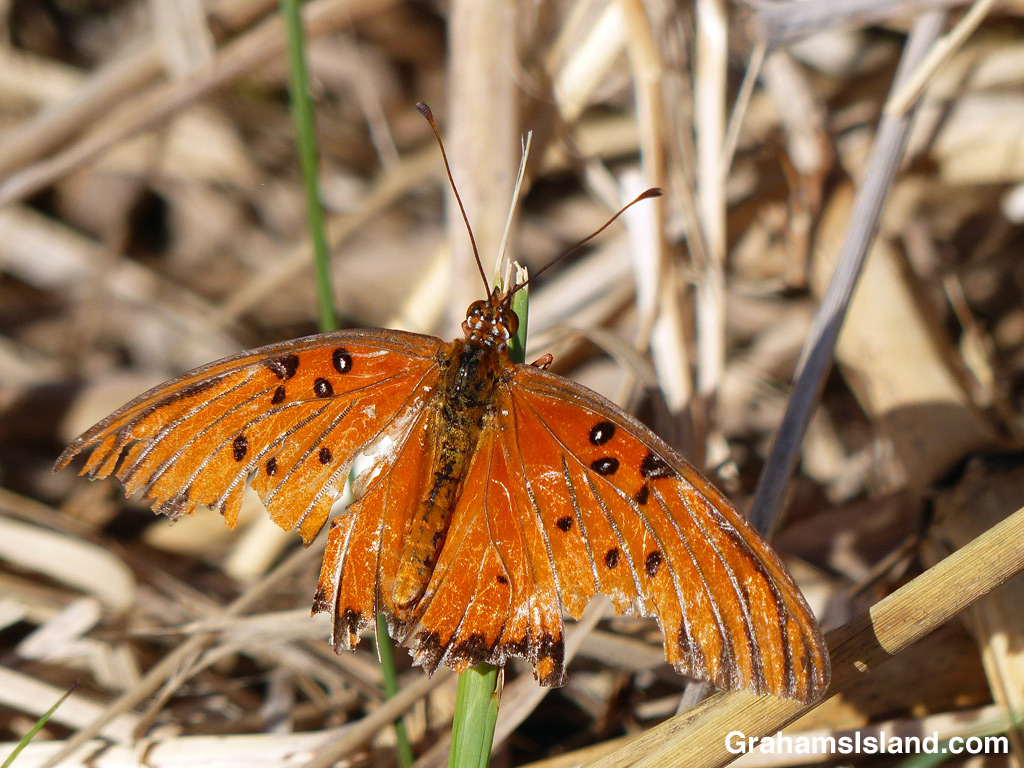
So you think you’re having a bad day? This passion vine butterfly is marked by fading color and missing chunks of wing. To top it off, every time it got airborne, a strong wind whipped it westwards, regardless of where it wanted to go.
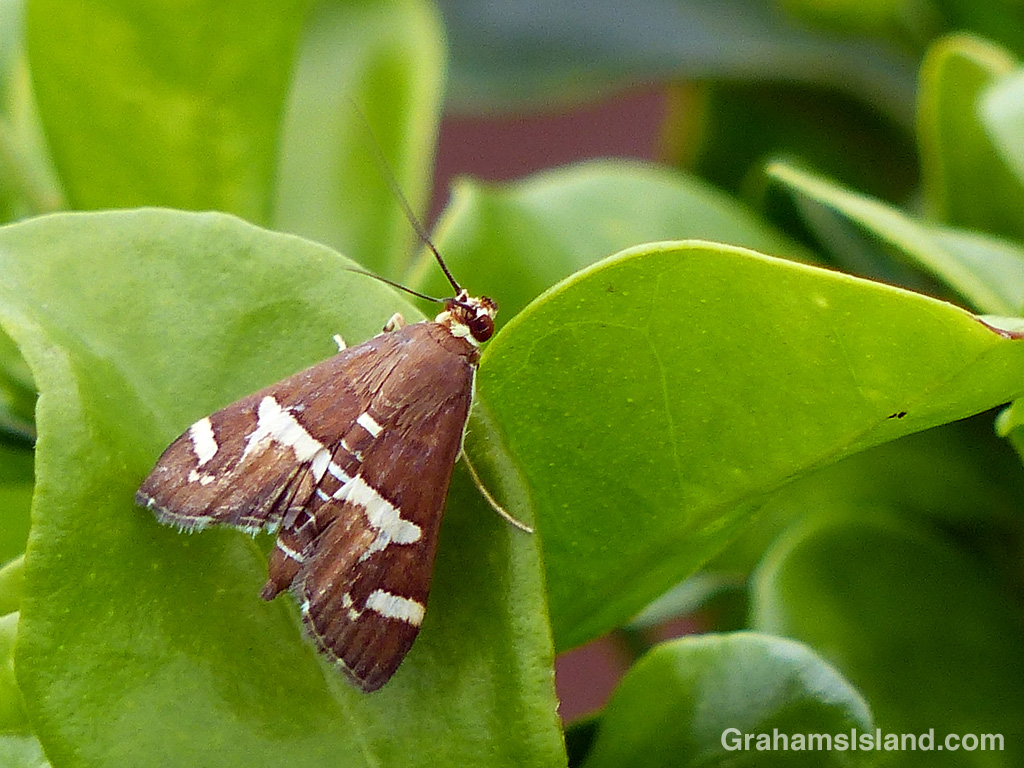
While Hawaiian beet webworm moth (spoladea recurvalis) sounds quite local, this moth is actually widespread in warm regions of the U.S. and other parts of the world. Also widespread is the damage its larvae does to chard, spinach, weeds in genera Chenopodium and Amaranthus, and of course beets.

The cabbage butterfly (Pieris rapae) is an introduced pest that feeds on cultivated and wild members of the cabbage family. A larger member of this family, also called the cabbage or cabbage white butterfly (Pieris brassicae) isn’t currently present in Hawaii.

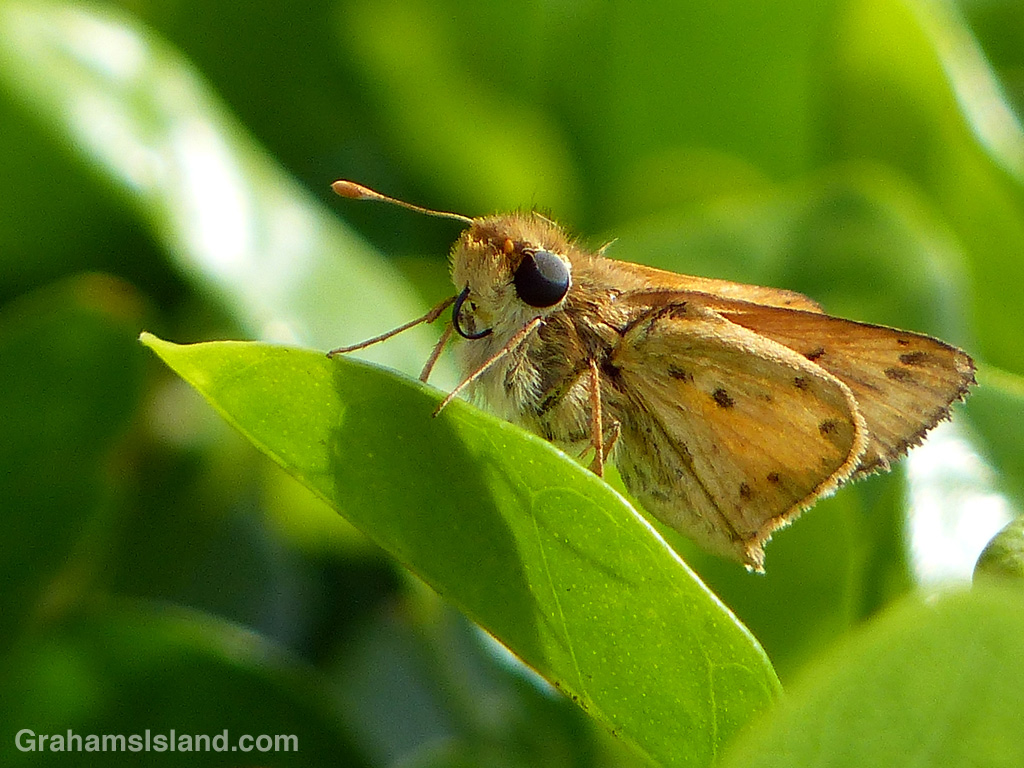
A male fiery skipper butterfly sits on a leaf pondering its next move.

