Tag Archives: Eels

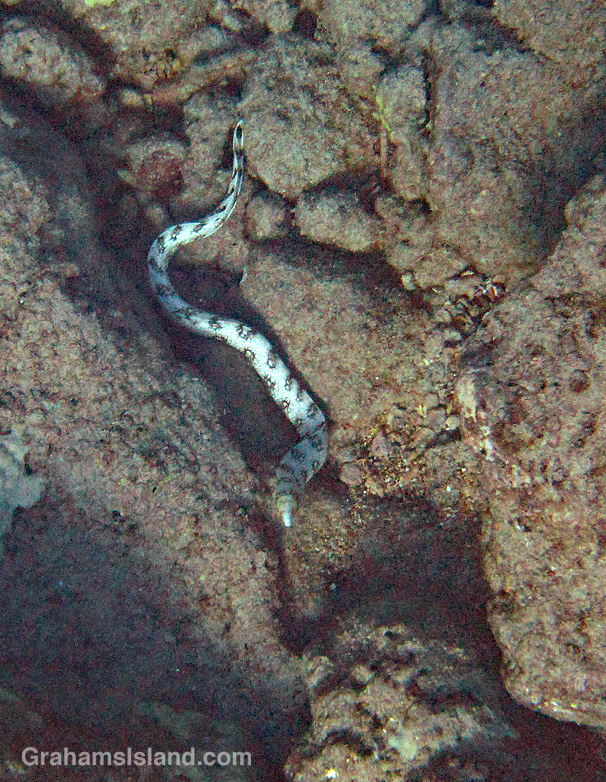
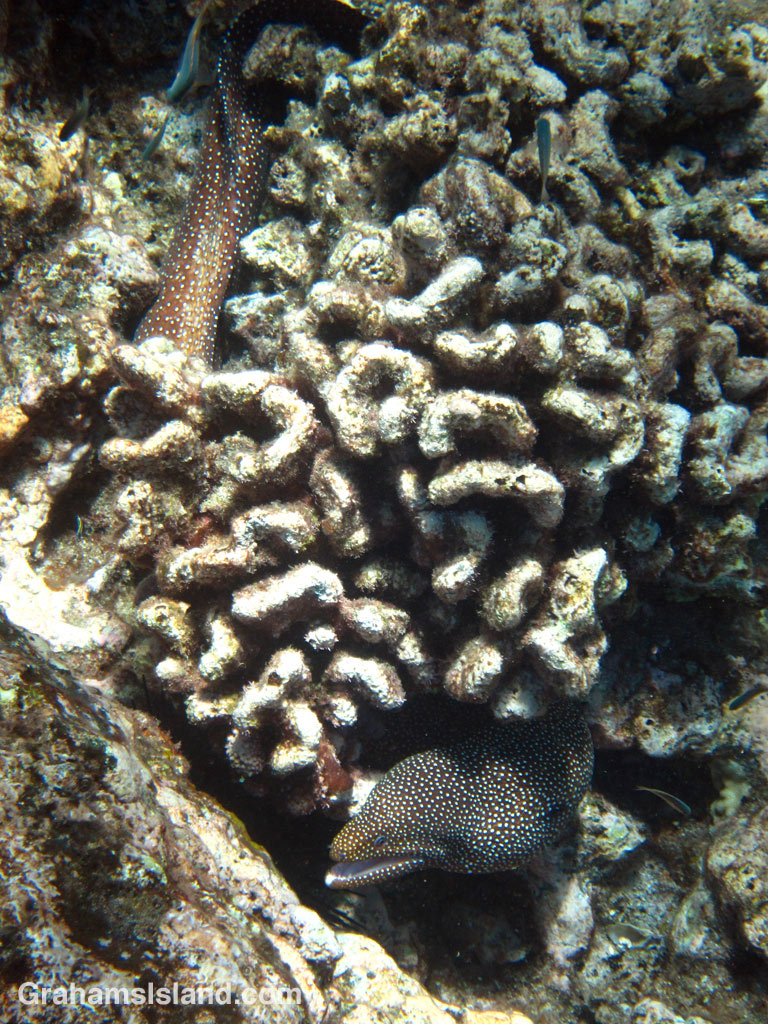
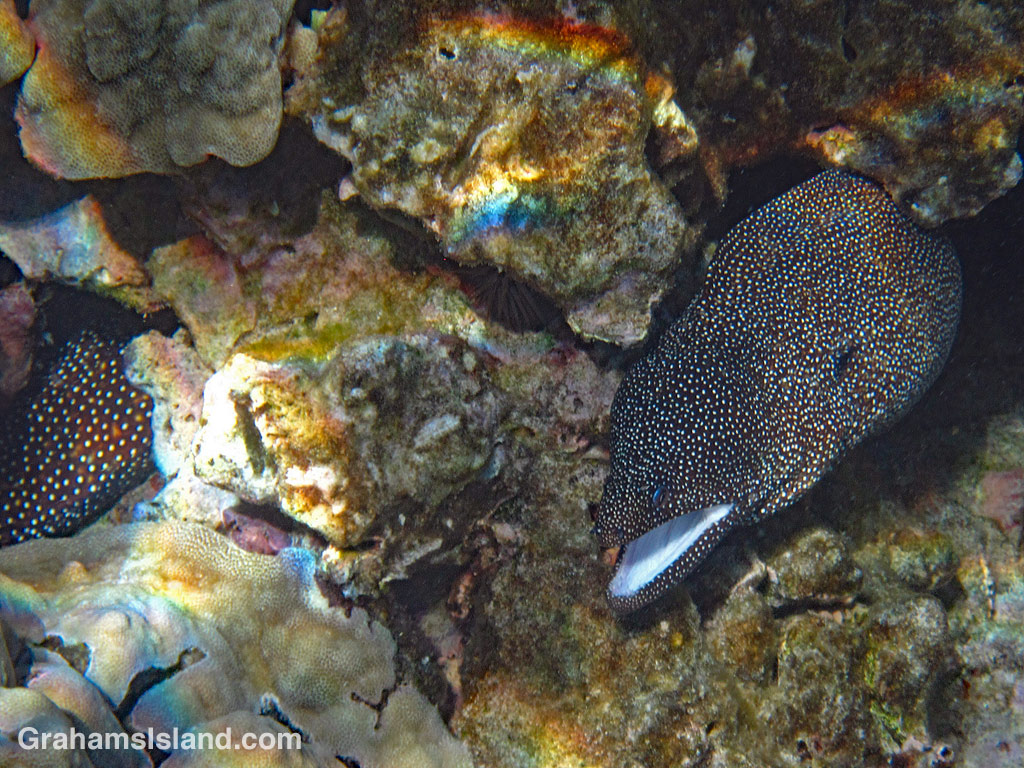
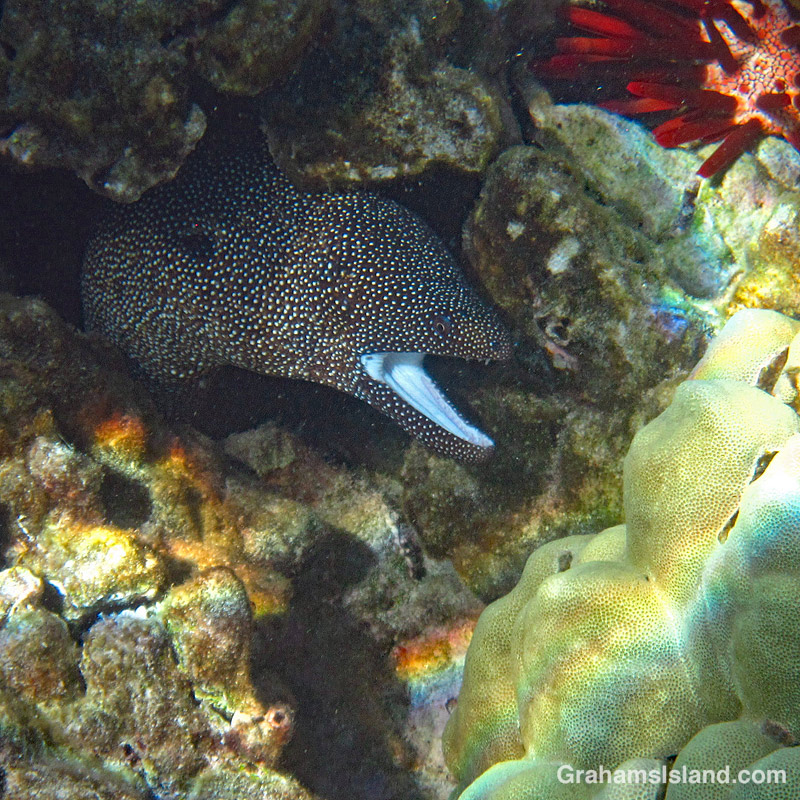
Snowflake moray eel

Snowflake eel

This is an adult snowflake moray eel. Their distinctive markings make them one of the easier eels to identify. Unlike other eels, they don’t have sharp teeth, but pebble-like plates which they use to crush the shells of their invertebrate prey.

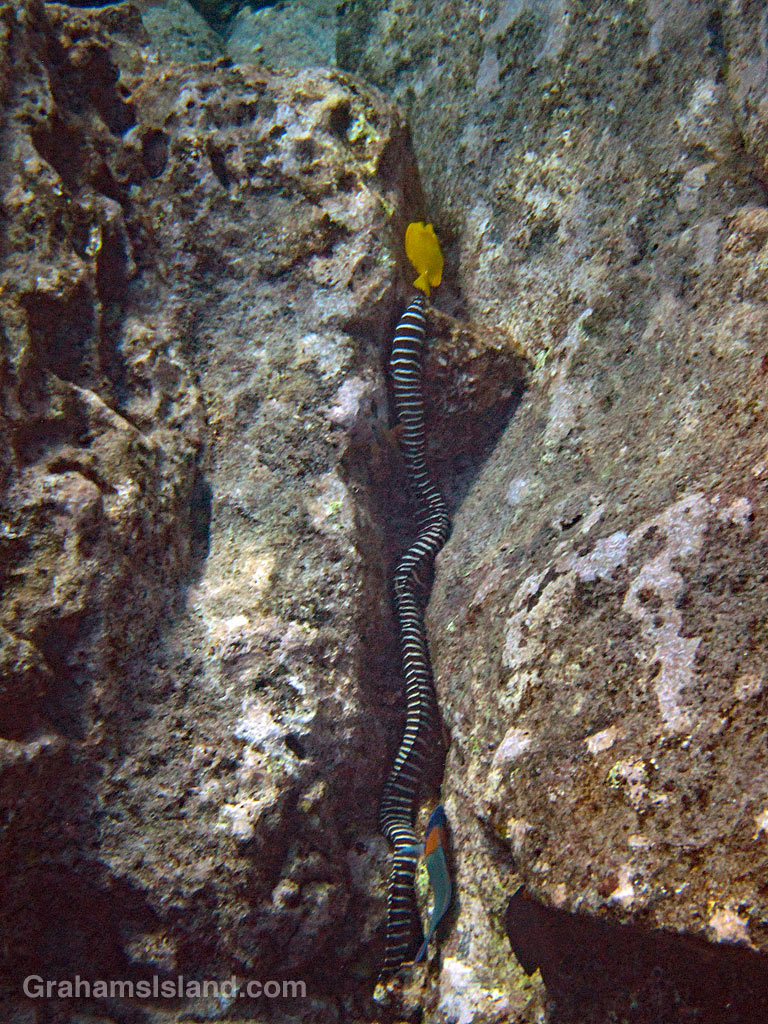
How long is a zebra moray eel?

Zebra Moray Eel

Zebra moray eels are one of the easiest eels to identify, their circular stripes differentiating them from any other eel. They feed mostly on crabs, which they crush with their blunt teeth.

These eels can grow to five feet in length, but are usually smaller. This one though is probably about as large as they get. The yellow tang near its head could be as long as six or seven inches, while the saddle wrasse at its tail tops out at ten inches. That would make this eel somewhere between four and five feet long. It’s certainly the biggest zebra moray that I’ve seen.

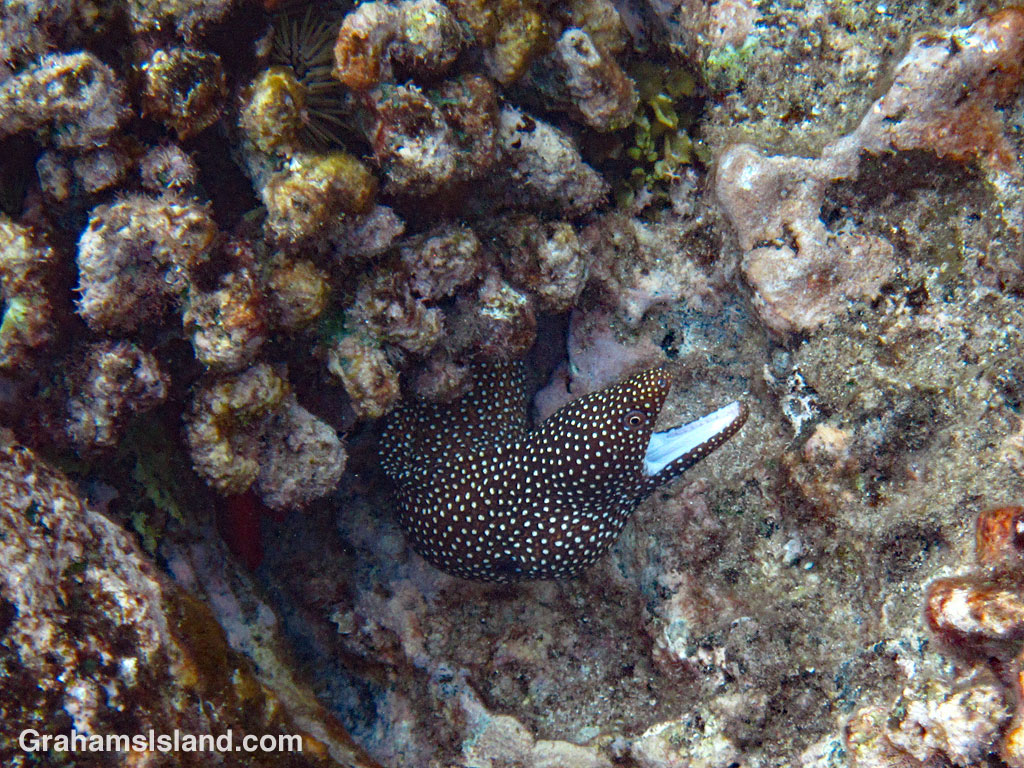
Whitemouth moray eel

Whitemouth Moray Eel

A smaller whitemouth moray eel displays the feature that gives them the name. An eel will typically open and close its mouth in this way, but it’s not an act of aggression. It’s how they breathe, the motion pumping water over the gills.

This pose, with much or most of the eel hidden in a crevasse or coral head, is also typical. It’s how I make most of my sightings. But every so often I’ll see an eel in open water or passing from one hiding spot to the next. It’s usually a fleeting sight as eels can zip along and disappear into the tiniest of cracks.

Dwarf moray eel

Dwarf Moray eel

I was watching some fish in fairly shallow water when, below them, I noticed this eel tucked away in a groove in the rock. It looked different to anything I’d seen before, but often the young of a species can look very different to the adults. However, a browse through my fish book showed it’s a dwarf moray eel, which doesn’t grow to more than 12 inches long. The clinching feature, which can be seen in this photo, is the dark bar through its eye.

Dwarf morays are fairly common in Hawaii, but because of their size and their reclusive nature they’re not often seen. This was as far as this eel emerged from of its hiding place so I was happy to get this shot.

I think the pinkish pincushion next to it is a rock-boring urchin, which gets its name from the fact that it can bore into solid rock by scraping with its spines and teeth. A second of these urchins can be seen in the little recess below the main one.

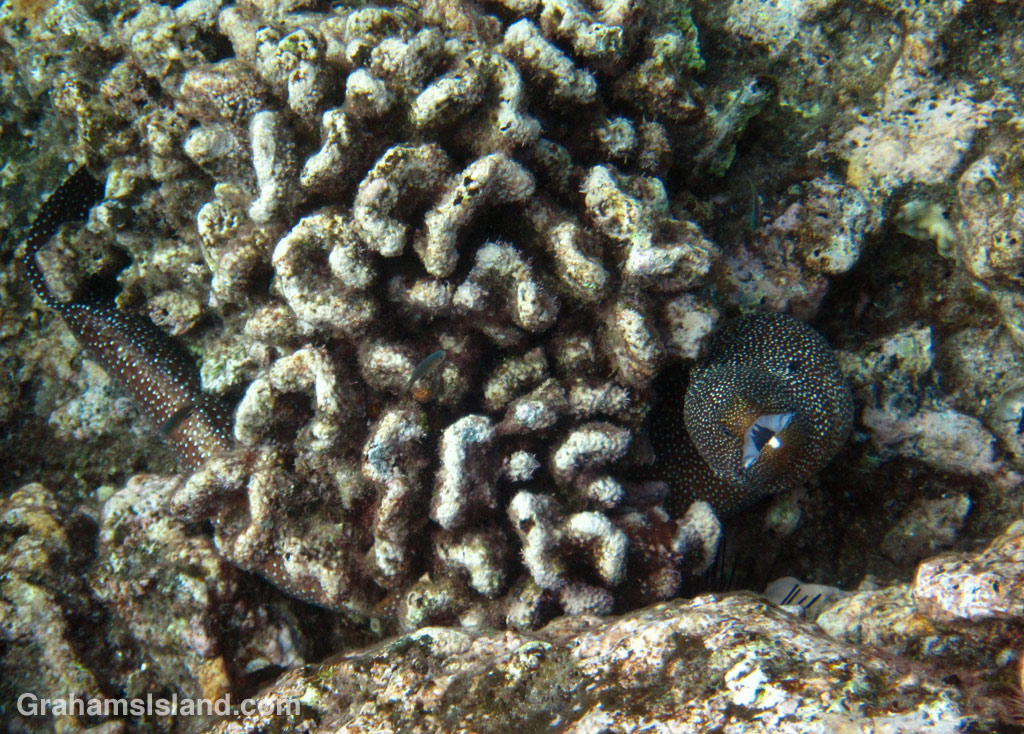
Twisty whitemouth moray eel

Whitemouth Moray Eel in dead coral

Whitemouth Moray EelI’m always amazed and entertained by the ability of eels to disappear into a seemingly solid lump of coral or rock and then, a few moments later, emerge from some unexpected location. I mean, how do they know they’re going to find a way out? There must not be too many claustrophobic eels in the world.

This whitemouth moray eel illustrates the concept in a small patch of dead coral.

Posted in response to this week’s WordPress Photo Challenge ‘Twisted.’


Bluefin trevally and whitemouth moray eel hunting

A Bluefin Trevally and Whitemouth Moray Eel hunting in the waters off the Big Island of Hawaii

There are a fair number of predatory fish in Hawaii, that eat other, smaller fish. These fish have a variety of hunting strategies, everything from ambush to outpacing their prey. Some fish team up with other predators.

Fish that employ this latter strategy include various goatfish and bluefin trevallies. These fish often accompany each other on hunts, but either or both can also be seen with other predators including eels and octopuses.

I followed this bluefin trevally and whitemouth moray eel for a few minutes and didn’t see them catch anything, but they were definitely traveling together. If the eel hung out for a while under a ledge, as they like to do, the trevally would hang around, passing back and forth or circling the spot.

This tendency is actually helpful for spotting eels and particularly octopuses. Several times I’ve seen a goatfish or two milling around a rock for no apparent reason, so I’ve waited and watched. Sure enough an eel pops its head out or, better still, the rock turns out, on careful examination, to be mostly octopus.

There you go, an actual useful tip for snorkelers.