
I enjoyed seeing this sign at Kaloko-Honokohau National Historical Park. I guess the storm was severe enough to knock the sign over.
For more information about Kaloko-Honokohau National Historical Park, go to nps.gov/kaho/index.htm.

I enjoyed seeing this sign at Kaloko-Honokohau National Historical Park. I guess the storm was severe enough to knock the sign over.
For more information about Kaloko-Honokohau National Historical Park, go to nps.gov/kaho/index.htm.
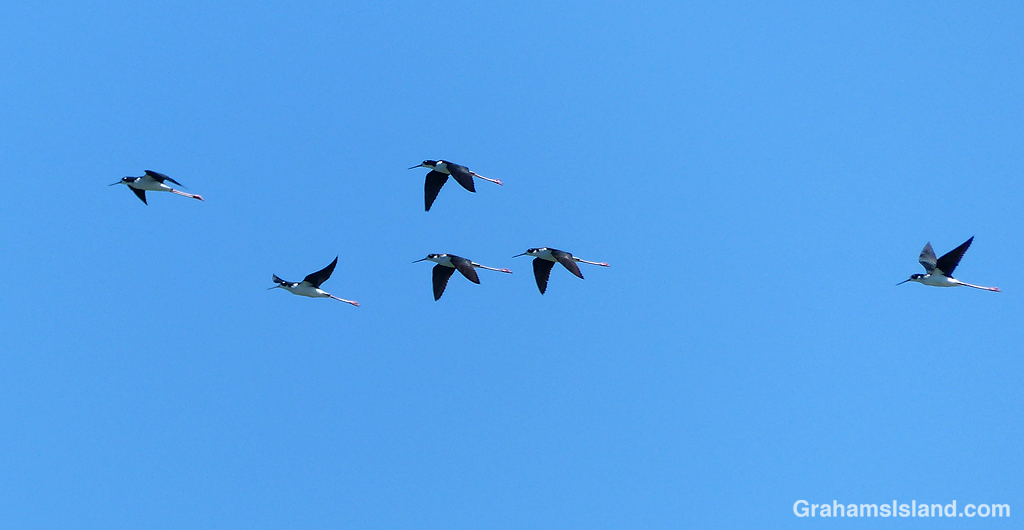
’Aimakapa Fishpond, in Kaloko-Honokohau National Historical Park, is a good place to see the endemic Hawaiian stilt. Mostly they’re seen wading in the shallows, probing the mud with their long beaks. On this day, however, they took to the air.
I enjoy taking photos of birds in flight, but it’s a challenge. Challenge number one is getting them in the frame. Then there’s the small matter of tracking them and getting settings right. I’m constantly experimenting with the best way to get the picture. Usually I find that by the time I’m organized they disappear behind some trees or settle down again on the flats.
This time the birds were unusually cooperative. They headed out over the water, circled back and returned from whence they came. And they did this more than once so I was able to get a bit of practice in.
I do like seeing birds shot, photographically speaking, against a clear blue sky, particularly the stilts with those long, pink legs. But I also like the context of the water and greenery surrounding the fishpond. I don’t know what the white birds are as this fleeting pass was as good a look as I got. They might be some kind of gull, though gulls aren’t especially common in Hawaii.
For more information about Kaloko-Honokohau National Historical Park, go to nps.gov/kaho/index.htm.

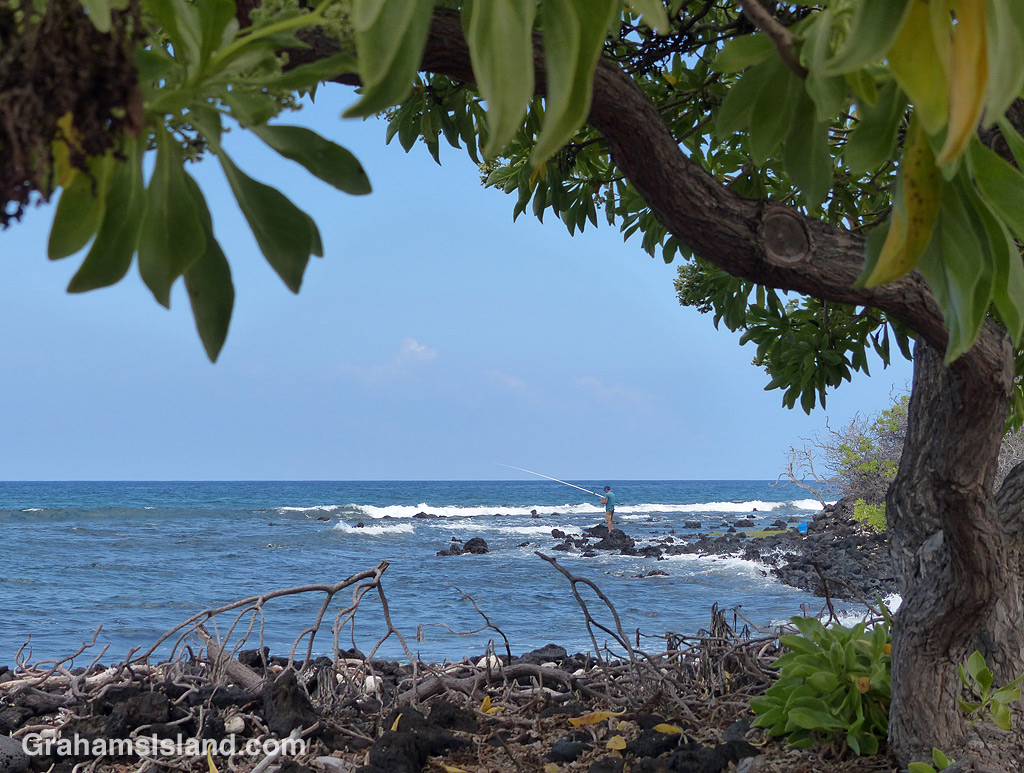
A man tries his luck fishing on the shore of Kaloko-Honokohau National Historical Park north of Kailua Kona.
For more information about Kaloko-Honokohau National Historical Park, go to www.nps.gov/kaho/index.htm.

The wall of Kaloko Fishpond, in Kaloko-Honokohau National Historical Park, is currently under repair. According to the park’s website, work on rebuilding the wall began in 1998. This end looks good, but there’s still work to be done at the far end.
For more information about Kaloko-Honokohau National Historical Park, go to www.nps.gov/kaho/index.htm
For more information about Kaloko Fishpond, go to www.keolamagazine.com/ocean/kaloko-fishpond-a-valuable-cultural-resource/


Brant geese are rare visitors to Hawaii so it was nice to see this one puttering in the shallows at Kaloko-Honokohau National Historical Park, north of Kona. The rock it’s about to bump into is a Hawaiian green sea turtle. There were probably about a dozen of them there, either resting on the sand or bumping along the reef close to shore.

A green turtle swims through rippling shallow water at Kaloko-Honokohau National Historical Park.

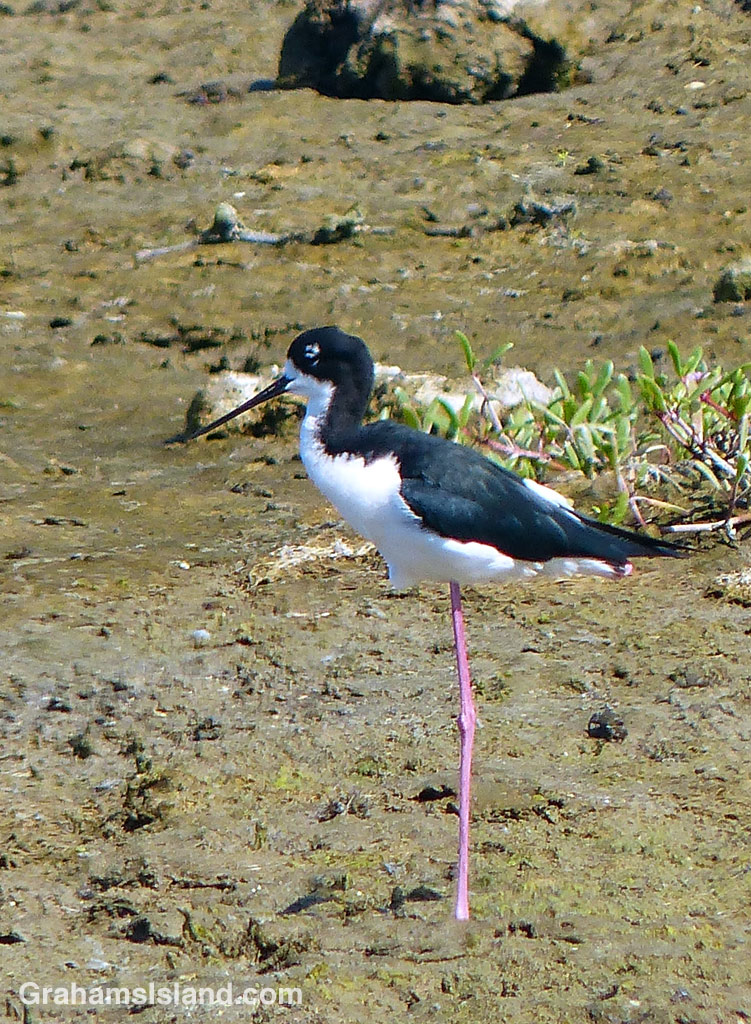
The Hawaiian stilt (Himantopus mexicanus knudseni) is known here as the Ae’o. It’s endemic to the islands and endangered to boot, though the population is thought to be increasing. These two were by the Kaloko Fishpond at Kaloko-Honokohau National Historical Park. I wonder why they’re called stilts?

A pair of moorish idols swim in shallow water at Kaloko-Honokohau National Historical Park.
 Graham's Island