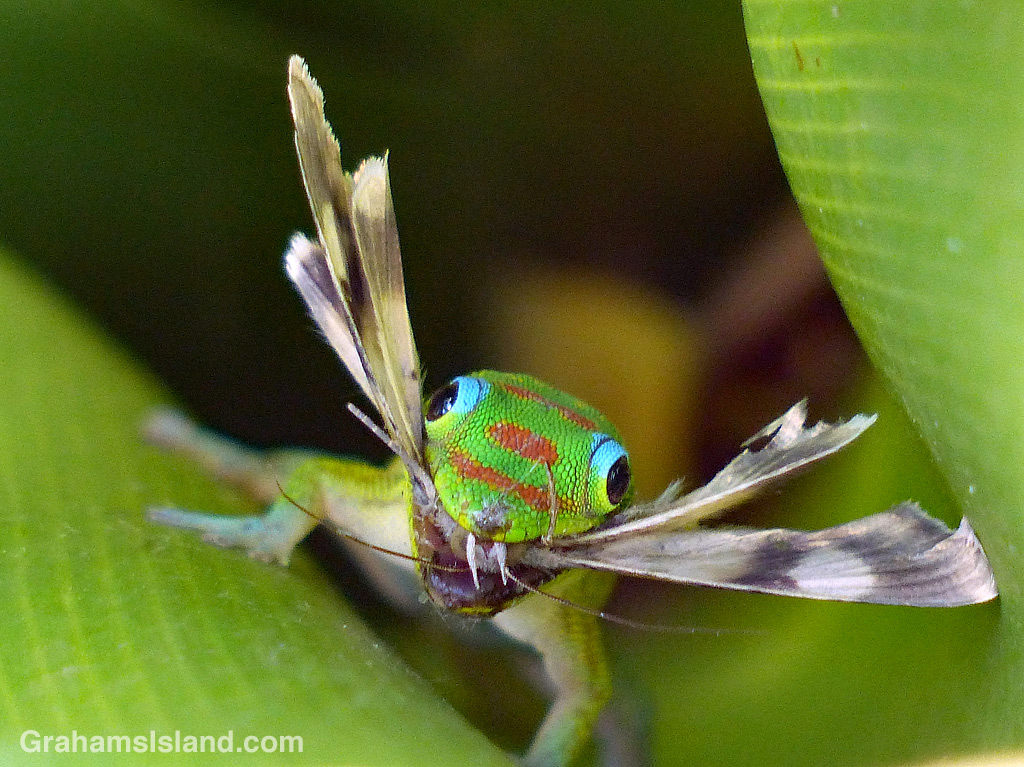
Yesterday, I posted about the dangers geckos pose to a praying mantis that has been living on a spider lily.
Today’s post is about the advantage of that location for the mantis. The primary benefit is that the spider lily’s flowers attract wasps, bees and other insects. In these photos, the mantis has caught a good-sized paper wasp, securely held by its forelegs. It held the wasp in that position for a while, but once it began its meal, it made short work of devouring the wasp. Next day I saw it with a bee and a beetle.
As the spider lily flowers fade, new ones pop up on other stalks, so the insect attraction has been fairly continuous.


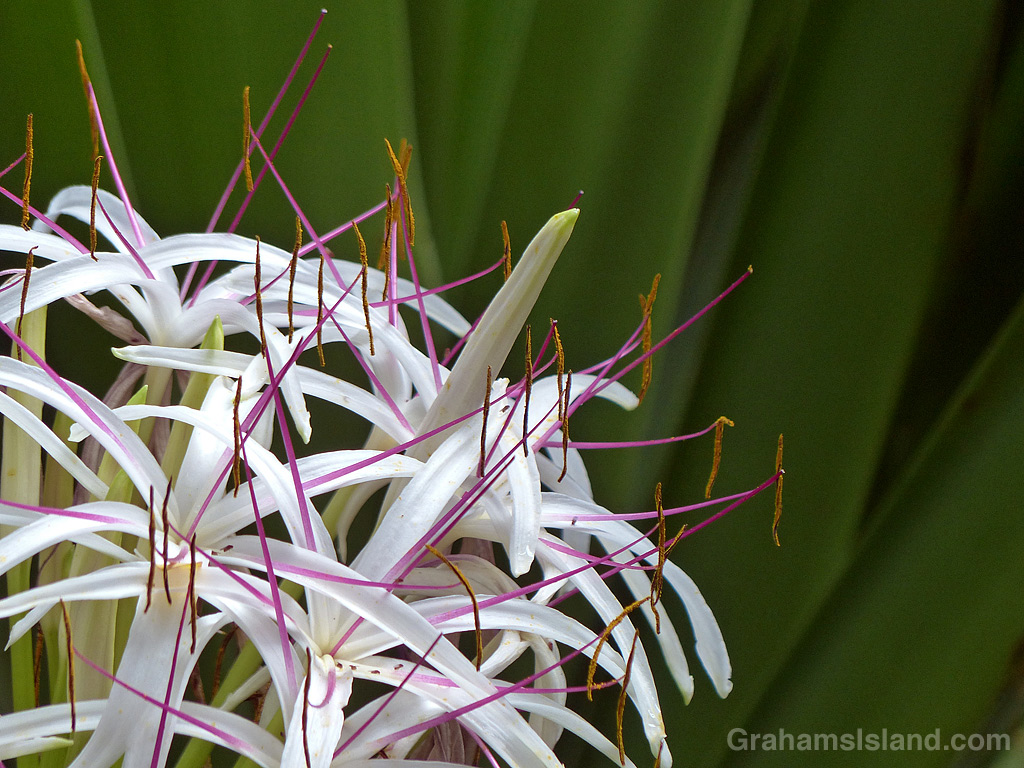
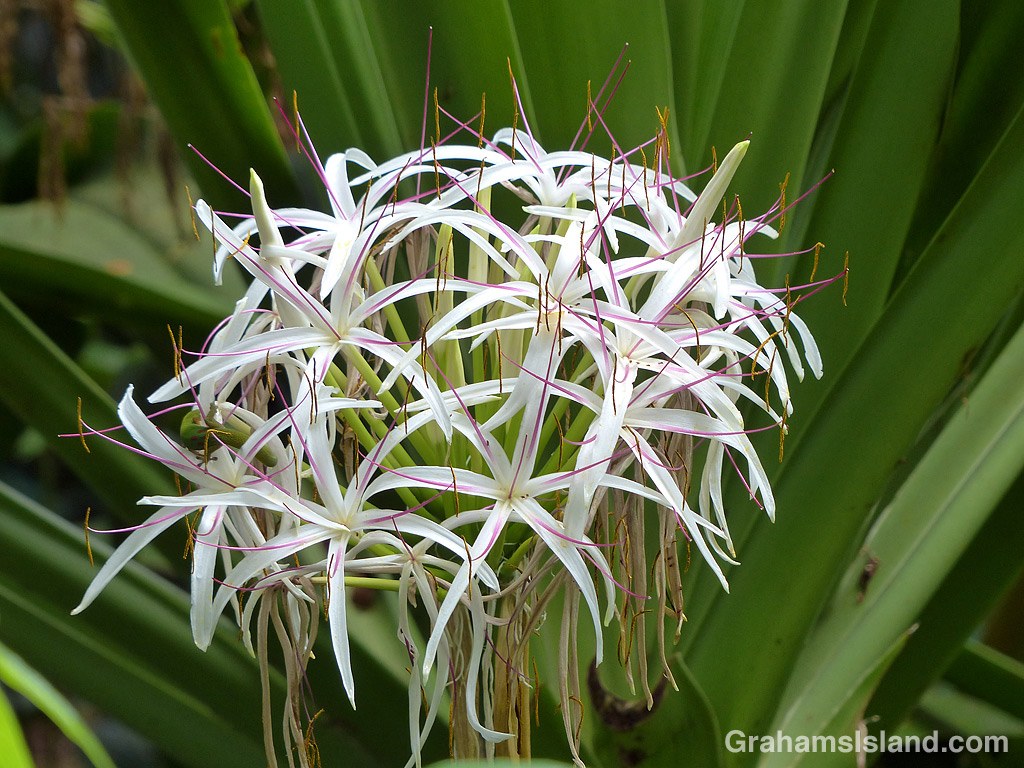
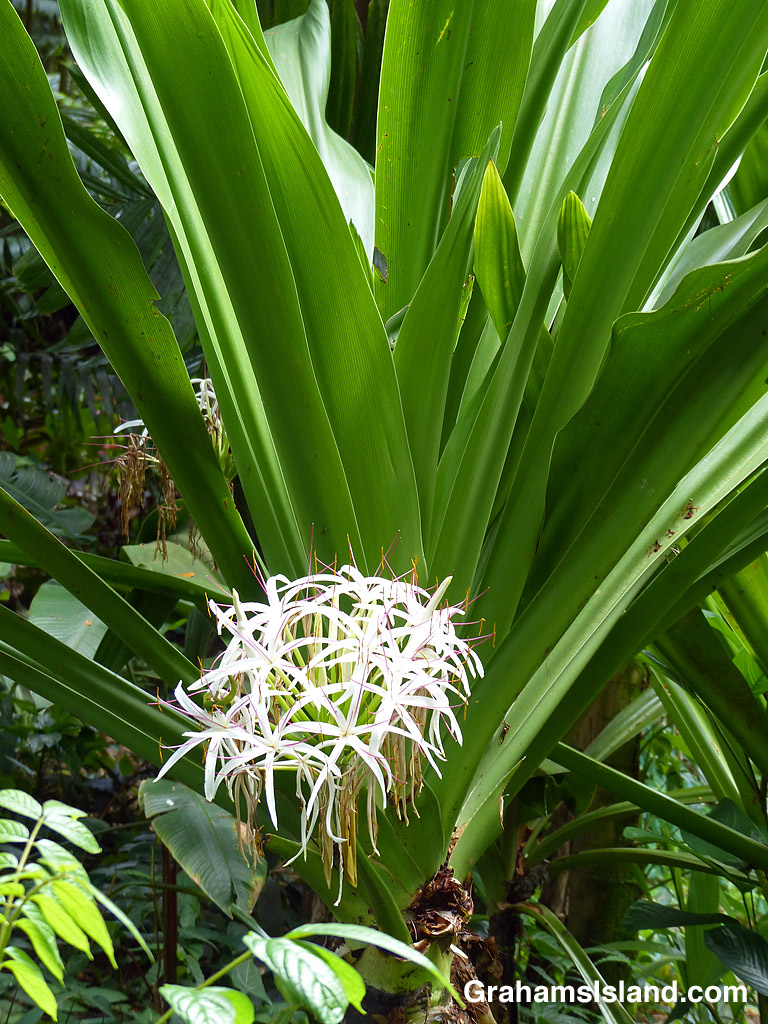 Commonly known as spider lily, crinum asiaticum has beautiful, delicate flowers, and sword-like leaves. The flowers are popular with gardeners, though possibly not with those who have kids since the plant is poisonous.