
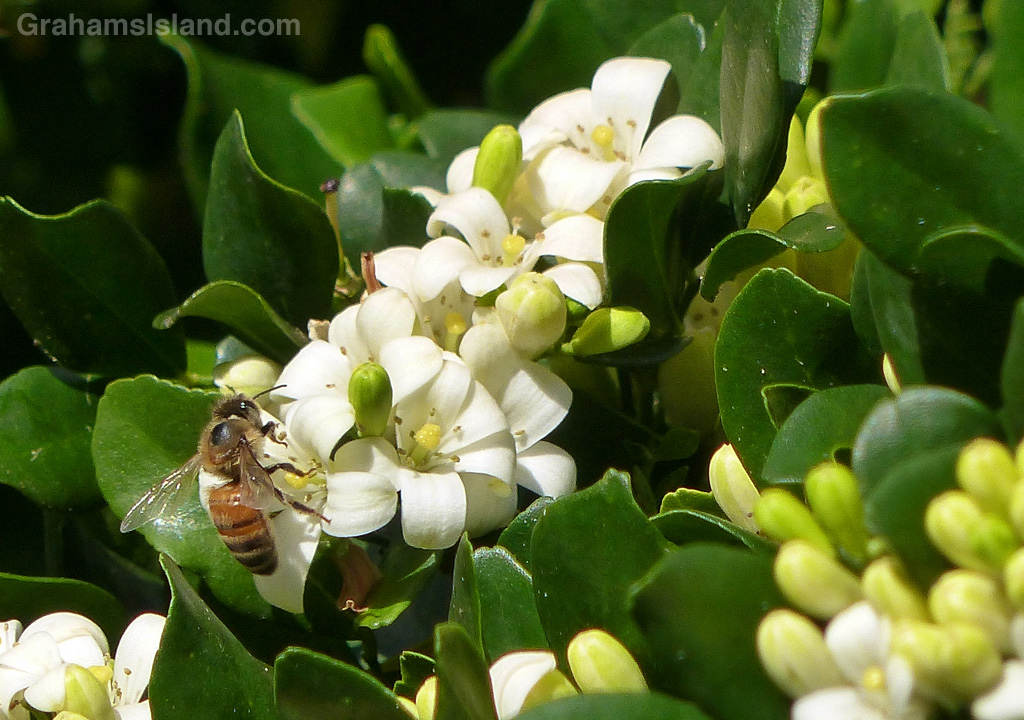
A bee forages through the blooms of a mock orange.
Tag Archives: Macro
Lesser grass blue butterfly
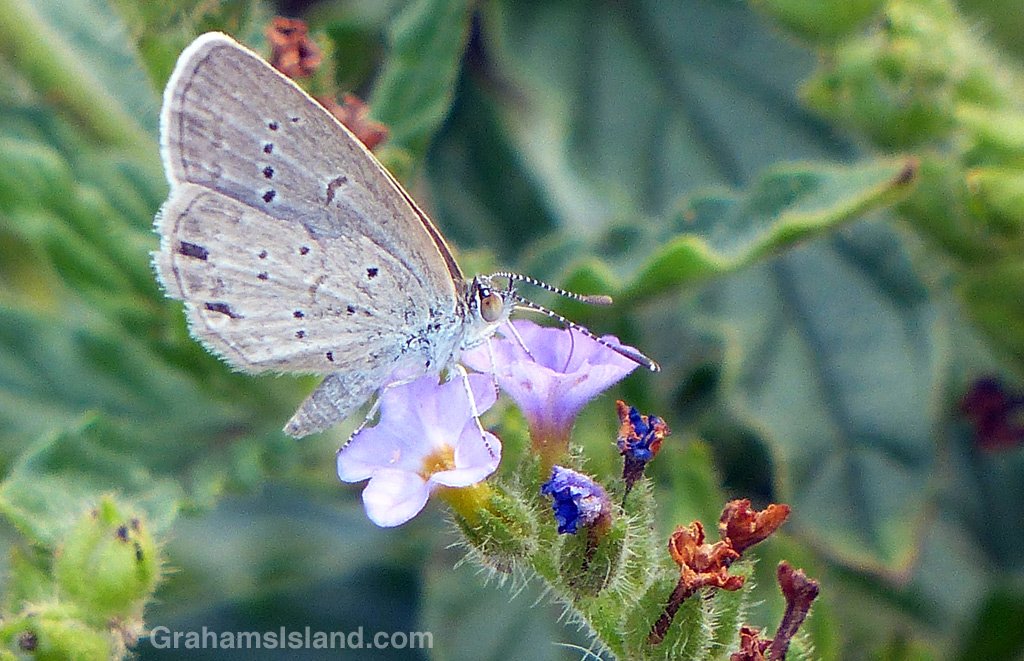
A lesser grass blue butterfly takes a drink from a small purple flower.
Prepare to pupate


This Hawaiian monarch butterfly caterpillar was getting ready to pupate. It attached itself to the underside of a ti leaf with a silk pad. Just a few hours later it had molted into the blue-green chrysalis to the left.
Only a small percentage of monarch eggs make it all the way to adulthood, so I hope the geckos don’t get to this one. I’ll keep an eye on it over the next week or so.
Praying mantis on basil

I suppose I should have a series about things found on my basil plants since they are many and varied. This praying mantis won’t harm the plant and it might eat some harmful bugs, but it’s equally likely to devour beneficial insects. Still, I think they’re fascinating creatures and I always enjoy seeing them.
Sweetpotato bug
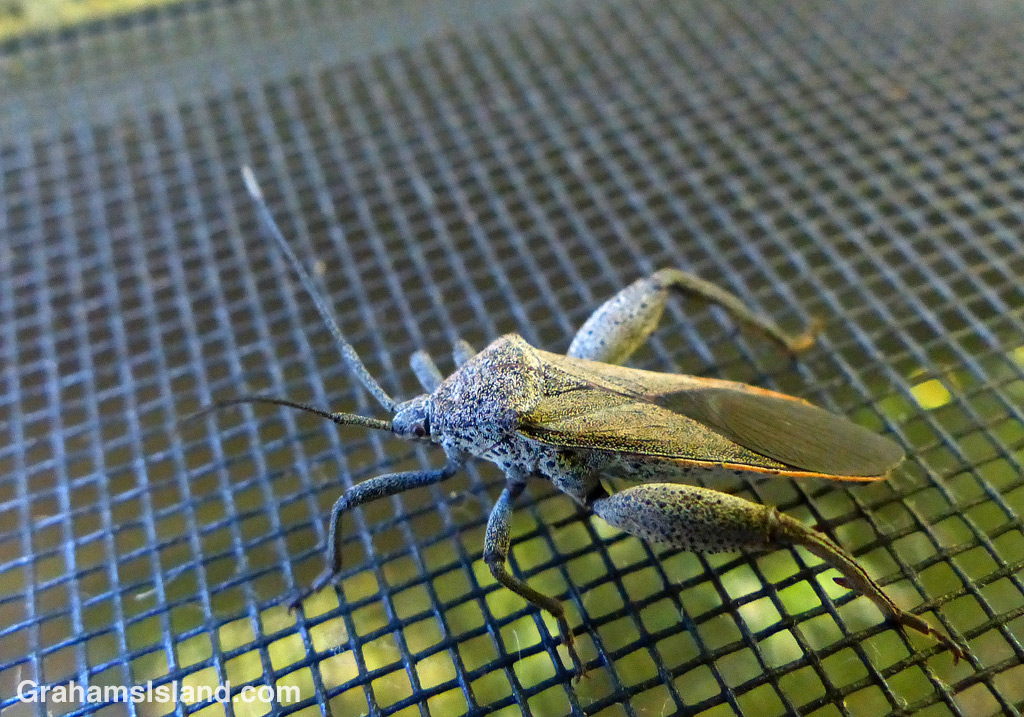
This bug (Physomerus grossipes) is a fairly recent introduction to Hawaii, most likely sneaking in on an imported plant. It’s from the family Coreidae, otherwise known as leaf footed bugs. It feeds by sucking juices out of various plants, including sweet potatoes. I found this one wandering across a window screen, some distance from anything edible.
Rolling, rolling, rolling, keep that …
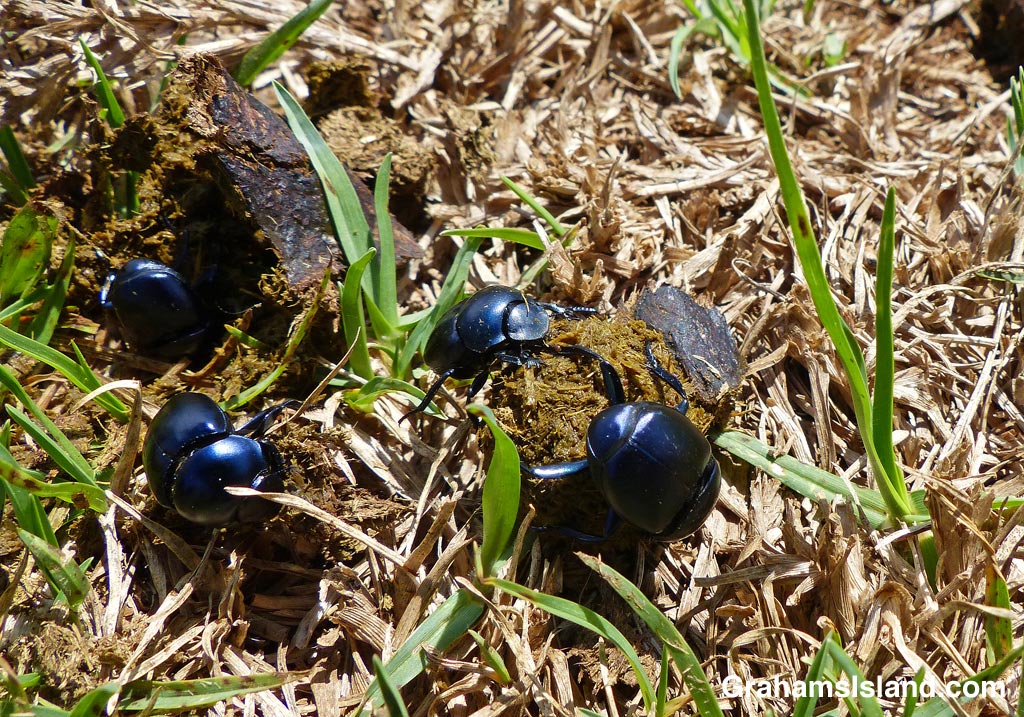

I came across these industrious beetles about half way up a steep trail. They’re rolling dung beetles, as opposed to ‘tunnelers’ or ‘dwellers.’ Tunneling dung beetles dig a hole and bury their dung. Dwellers simply live in the dung where they find it. Rolling dung beetles make a ball, roll it away, and then bury it. In each case, the purpose of this activity is for the female to lay her eggs in the dung. When the egg hatches the larva will have its food source ready and waiting. Yum!
I’m glad my mother didn’t opt for this strategy, but dung beetles make such a valuable contribution in recycling this waste that they’re often introduced into areas to help in this process. And that’s not the only laudable quality they possess. According to livescience.com, dung beetles can also navigate using the Milky Way, the only non-human creatures known to do so.
I have to say, I was a little worried about how these two would get on on this steep hill. They weren’t around when I returned.
Passion vine butterfly caterpillar
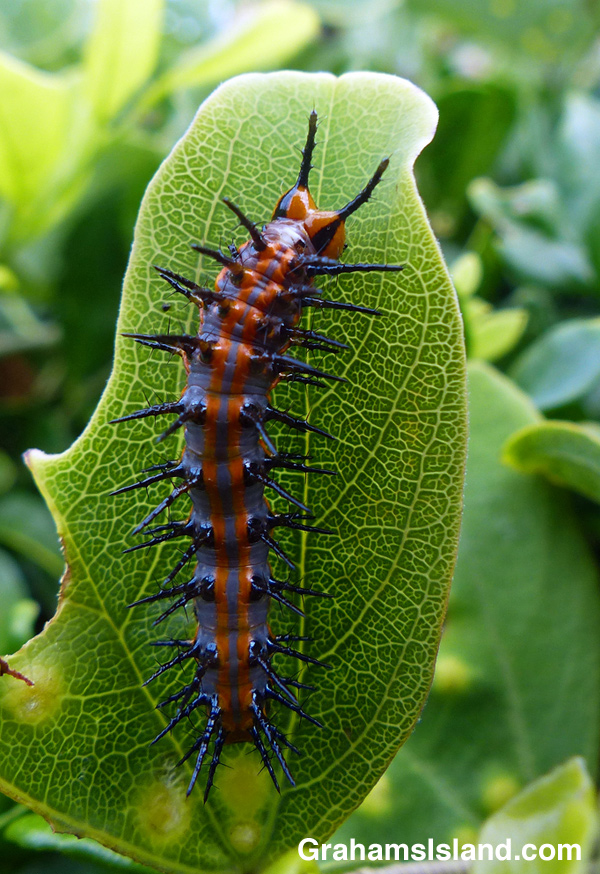
I took some photos of a passion vine butterfly flitting around a hedge and when I looked at them at home I noticed a distinctive caterpillar in the background. So next day, I returned, hoping it might still be there. Not to worry. The hedge was literally crawling with them. That’s when I noticed the passion vine twining through the hedge.
The spines and orange and black coloring are nature’s way of saying ‘watch out.’ This caterpillar is poisonous if eaten, not that I was tempted. They also have a voracious appetite and can defoliate a plant, especially a young one. Certainly, the ones I watched munched their way through leaves with great thoroughness.

Rose jatropha
 Rose jatropha (Jatropha integerrima) is an ornamental shrub from Cuba with showy red flowers. Bees were all over this plant.


