

A tropicbird wheels over an islet, and its lone, tenacious tree, off the North Kohala coast.
Tag Archives: On The Coast
A fleeting rainbow
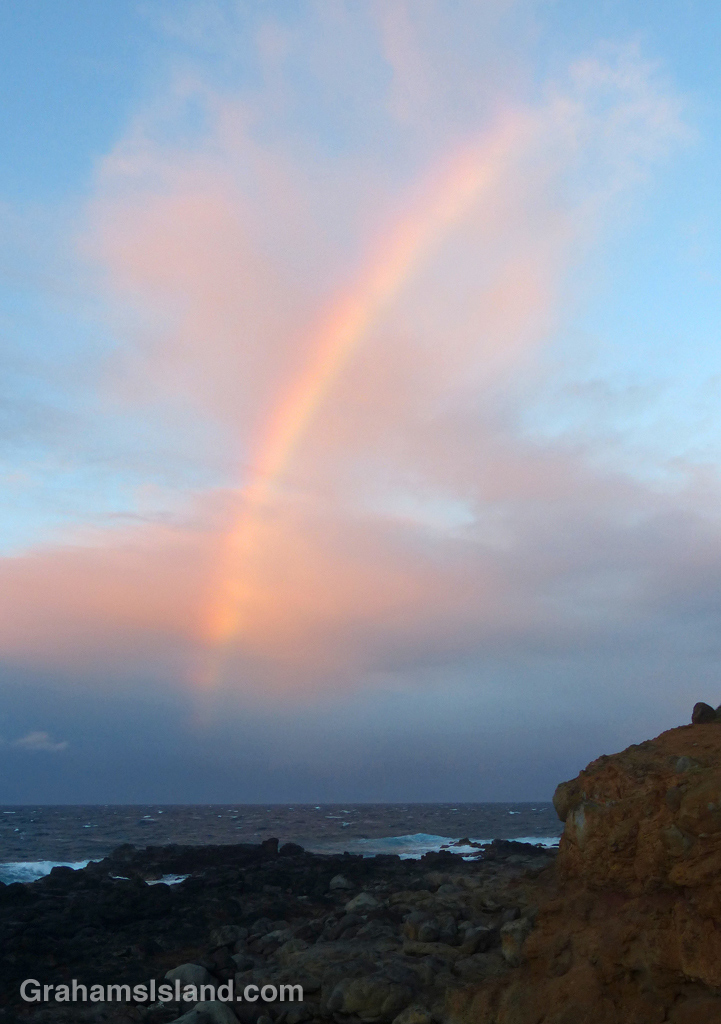
This week’s posts are in response to the WordPress photo challenge on the theme of ‘evanescent.’
This slice of rainbow, backed by pink clouds, fits the bill, I think. Fueled by an approaching shower of rain, it shone briefly bright, then quickly faded.
Turtle on the rocks
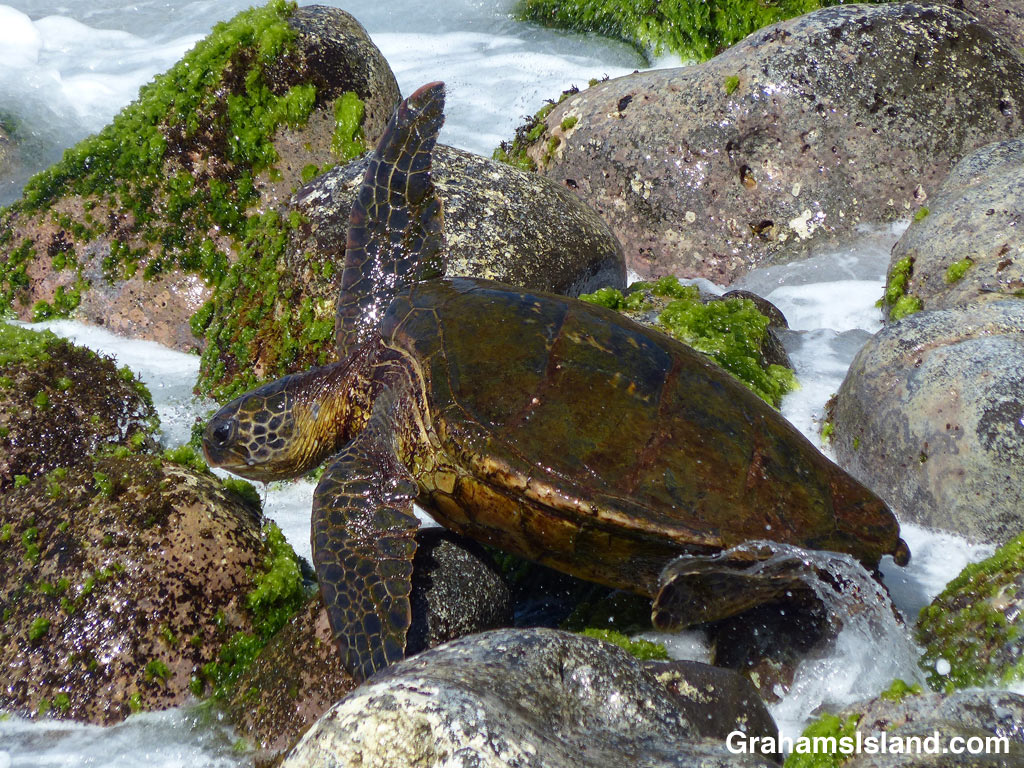
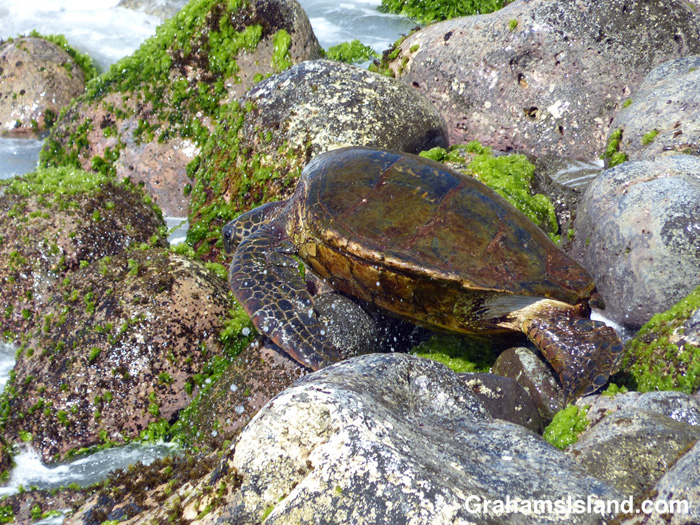
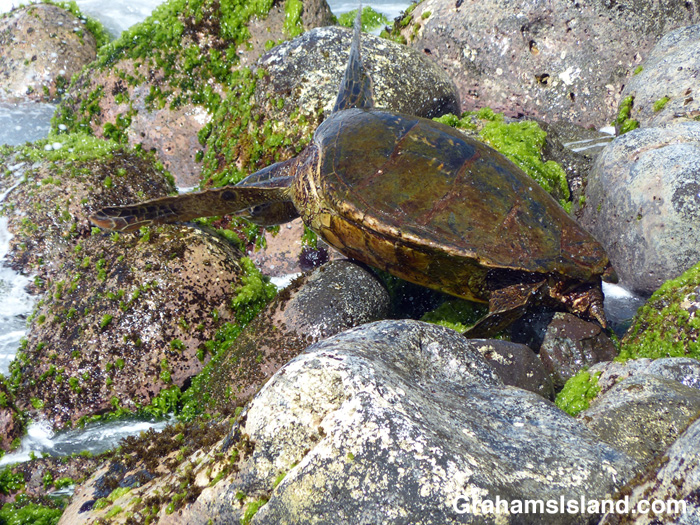
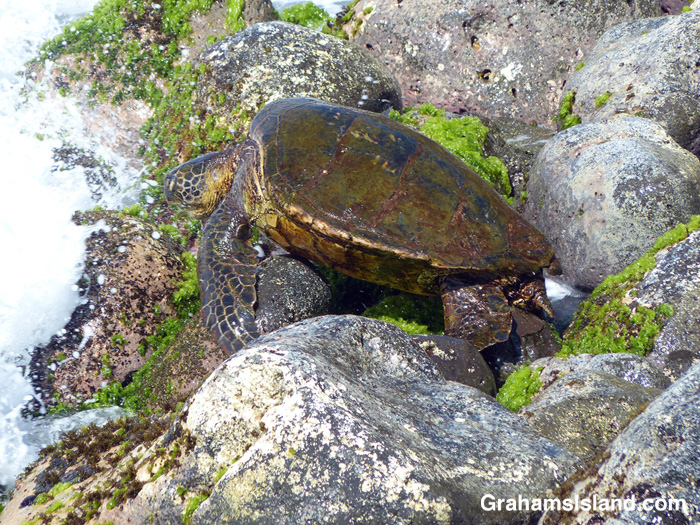
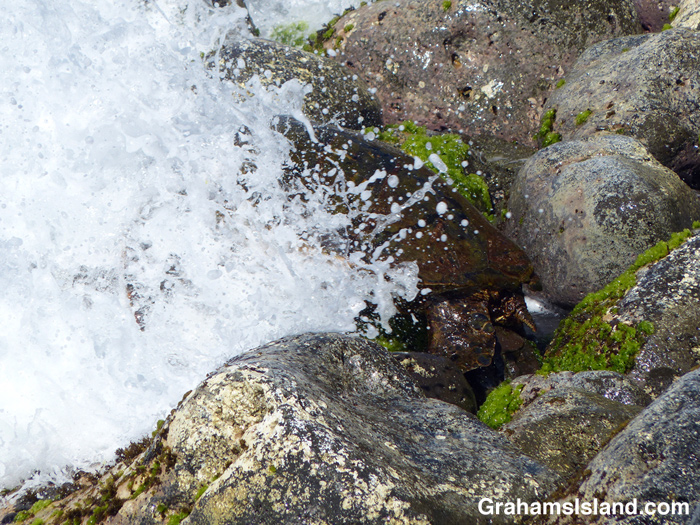
I’ve been fortunate to see green turtles in the water and on land. On land, they’re most often seen hauling themselves up some sandy beach to bask and rest for a few hours. The effort looks like hard work.
In the water, however, turtles are amazingly graceful. They’re powerful swimmers with great maneuverability. They graze on seaweeds, mostly close to shore. I’ve seen them in shallow waters, white with breaking waves and the worst I’ve witnessed is one or two teetering atop a rock before sliding off again. I’ve never come close to getting a photo of that event.
On this day, there were several turtles feeding in a small bay. A moderate amount of swell ruffled the waters, but every so often a set of two or three much larger waves would barrel in. This was nothing worse than I’d seen turtles handle before, but perhaps these waves were a bit steeper and followed one another a bit quicker. Perhaps, too, these turtles were closer in, bumping among the boulders in the shallowest of waters.
As one big turtle puttered in the shallows, a large wave rushed in and lifted it up and over a rock, dropping it into a water-filled hollow beyond. The turtle scrabbled onto the top of the rock. Here was my photo and my camera was tucked away in its bag on my shoulder. By the time I got the bag unzipped and my camera out, the turtle had enough of its weight across the rock that it slid forward, back into deeper water.
Soon after, another turtle found itself in nearly the same predicament against the same rock. But it wasn’t knocked so far into the hollow and managed to escape much quicker. I did snap a couple of shots, but wasn’t sure if I’d got anything decent.
I hung around, waiting for another big set to come through. When one did, it found the turtle in the photos rattling around amongst the rocks in its quest for food. The onrushing whitewater engulfed the turtle, carrying it in, and when the water receded, the turtle did not.
I started taking photos. The top photo is where the turtle ended up, well up among the rocks. The others show it working like crazy to find a way back to the water. I’ve never seen so much flipper flapping in my life. It was starting to make progress over the first boulder when the next wave arrived, plopping it back where it started. Luckily, that was the end of that big set and over the next few minutes the turtle managed to bump its way over the rocks and into the sea.
Even as I was laughing at this slapstick scene, I hoped the turtle wasn’t injured. I don’t think it was; the waves lifted it over the rocks more than slamming it into them. When it finally slid beneath the water it looked none the worse for wear, though it might have harbored dark thoughts about anyone rude enough to photograph the episode.
Makalawena beach

One of the things I like about the Big Island is that there’s so much variety in a relatively small area. It boasts 8 out of 13 possible climate zones (depending on whose definitions are used). It goes from sea level to almost 14,000 feet.
I’m happy to satiate my wanderlust right here on the island, traveling to see the outpourings of our most active volcano, climbing to the windswept summits of Mauna Loa and Mauna Kea, and of course, sweating it out on the coast.
The beaches and surf are hugely popular with tourists, but it’s almost always possible to find a sparsely populated, or even empty beach with a bit of walking. Makalawena, on the Kona coast, is one such spot. It requires a hike in, half an hour or so, but offers golden sand and a number of smaller pockets of sand where a person can soak up some sun and take a dip. Paradise indeed.
Balanced rock

I just liked how this rock was balanced when I was out walking along the coast.
Signs: Kiholo campsite

The campground at Kiholo is located at the end of a gravel road and is only open Friday through Sunday nights. It has eight sites that must be reserved in advance. There are portable toilets, but no other facilities, and no water. So what’s the attraction? Well, let’s see if the photo offers any clues. (Sorry, but the yacht doesn’t come with the reservation.)
For more information about camping at Kiholo, go to camping.ehawaii.gov/camping/all,details,57781.html
For more information about Kiholo Bay, go to bigislandhikes.com/kiholo-bay/
Bali House at Kiholo Bay
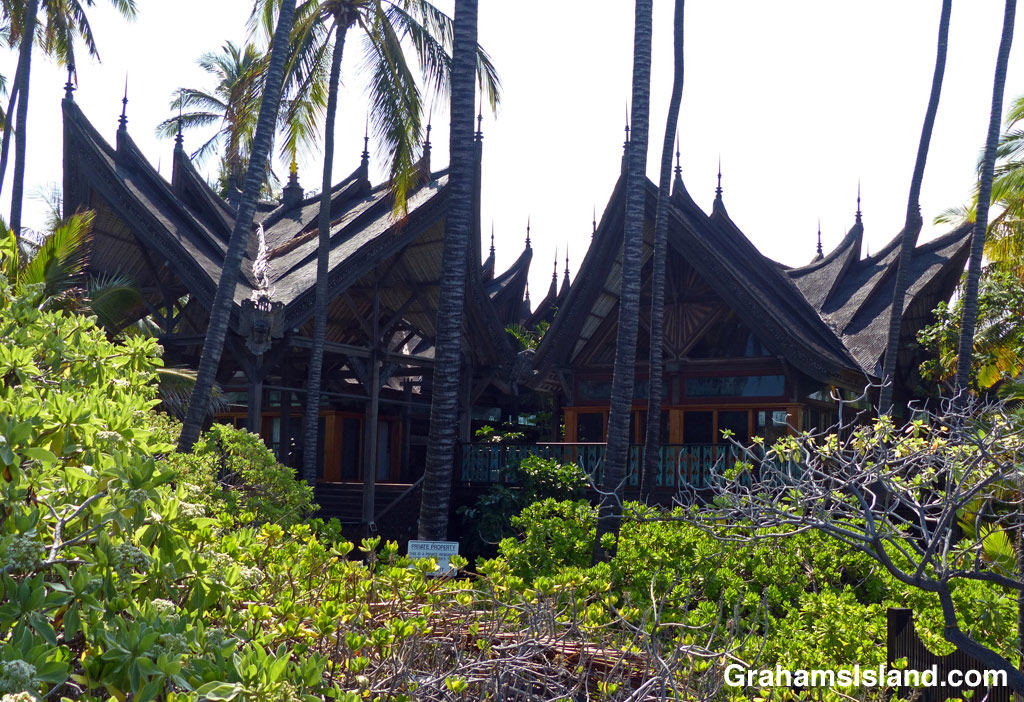
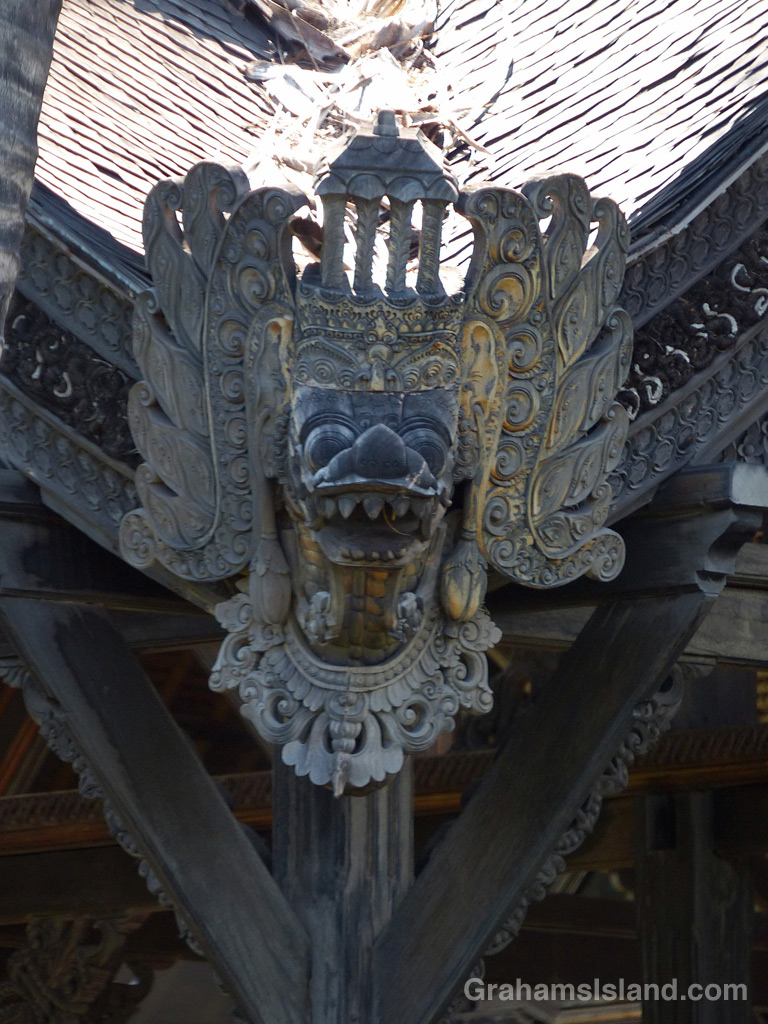
A good deal of the shoreline at Kiholo Bay is public land, but there is one short stretch that is privately-owned. Not surprisingly, these rare waterfront parcels are owned by the very wealthy. One such is a large, sprawling yellow estate just back from the beach, owned by the inventor of the pacemaker. A bit farther down the beach is this property, known to most people here as the Bali House.
The property is owned by John Paul DeJoria, co-founder of the Paul Mitchell line of hair products and The Patrón Spirits Company. DeJoria had traveled in Bali and loved the architecture, so he had this house hand-built in Bali. The house was then disassembled, shipped to the Big Island, and reassembled on this property. The whole process took around six years and when they were done, it started to shrink. Turns out the Balinese carpenters had used green logs from the Borneo forest and in less-humid Hawaii, the wood shrank and split.
Apart from it’s striking appearance, what I find notable about the house is how it’s set back from the beach and surrounded by greenery. The view of the ocean is almost what realtors call peek-a-boo. The house is also self-sustaining, relying on solar power and rainwater collection. This is most admirable, but I suspect I’d still prefer the caretaker’s cottage.
Coconut palms line the beach
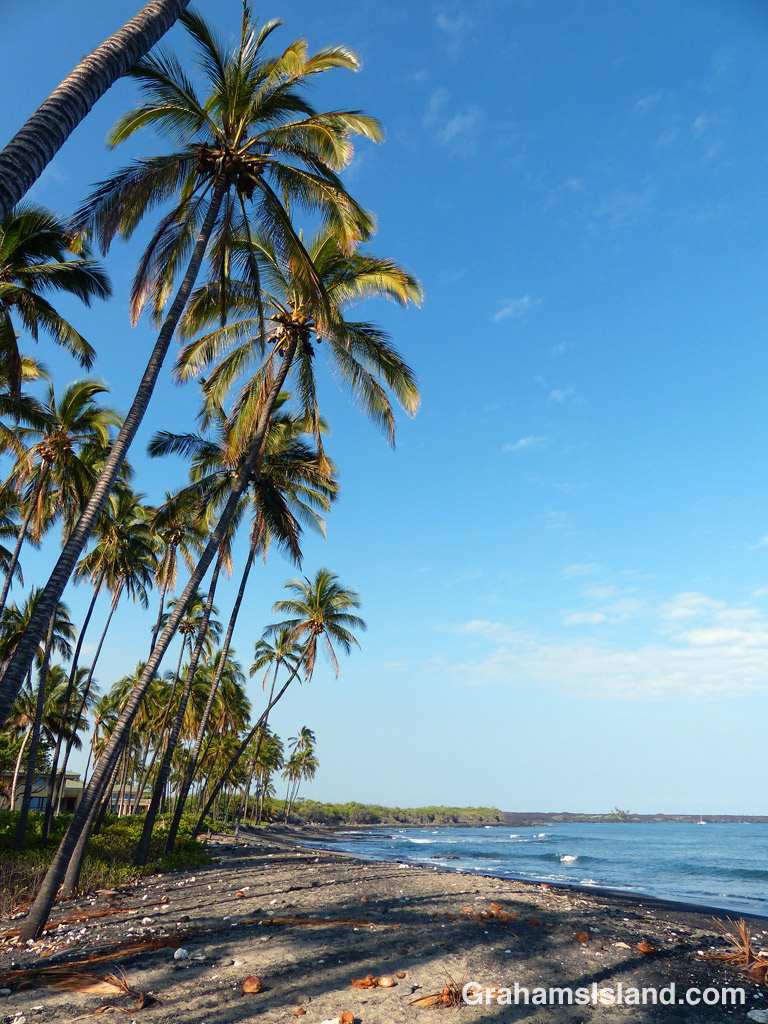
Think of Hawaii and chances are coconut palms and golden beaches spring to mind. These were north of the park at Kiholo. Head south from there instead and the beaches will be black sand.
 Graham's Island