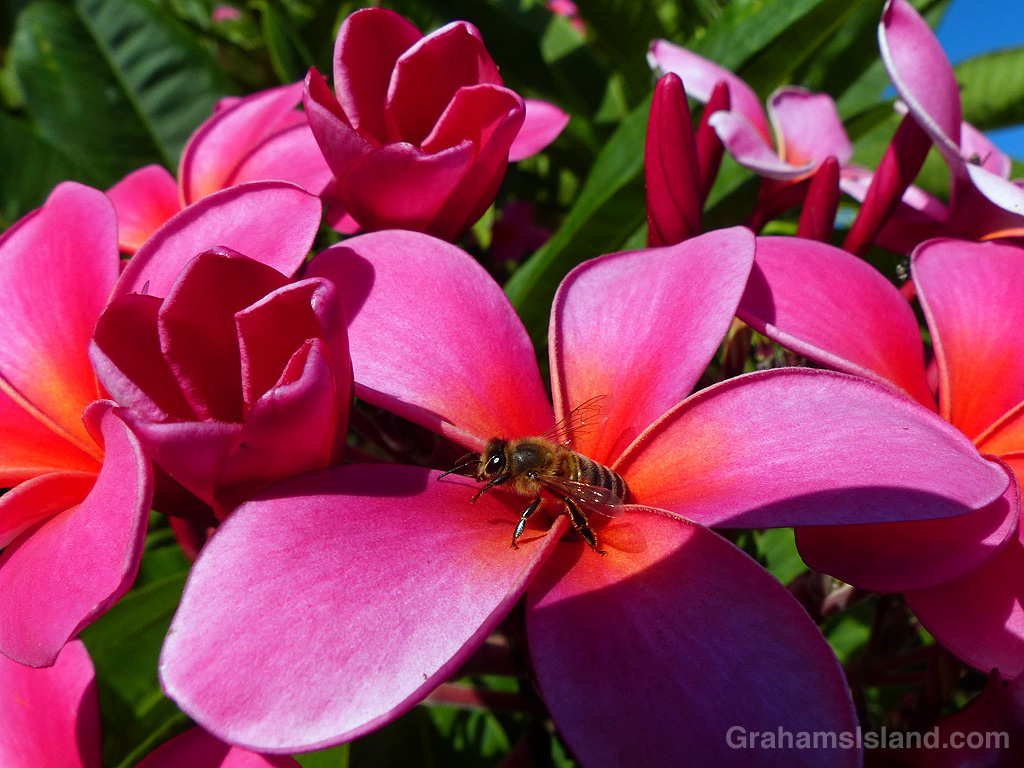
A bee forages on a red plumeria flower.

A bee forages on a red plumeria flower.
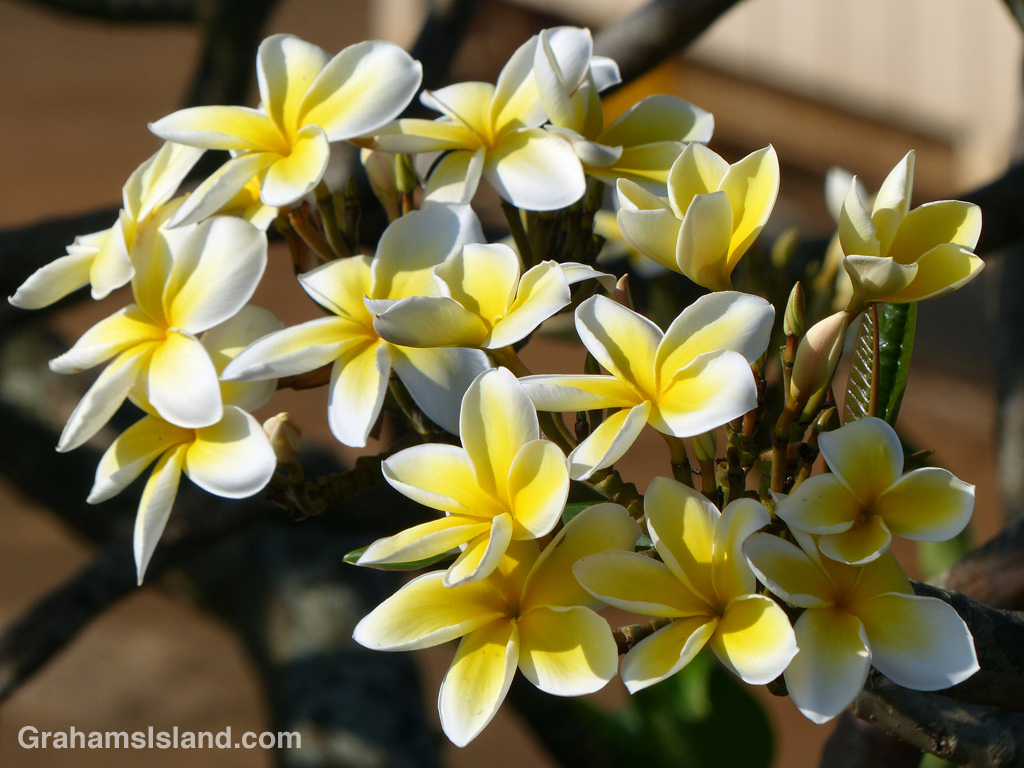
Plumeria rubra, otherwise known as frangipani, is similar in appearance to plumeria obtusa, otherwise known as Singapore plumeria. But where plumeria obtusa is evergreen, plumeria rubra is deciduous.
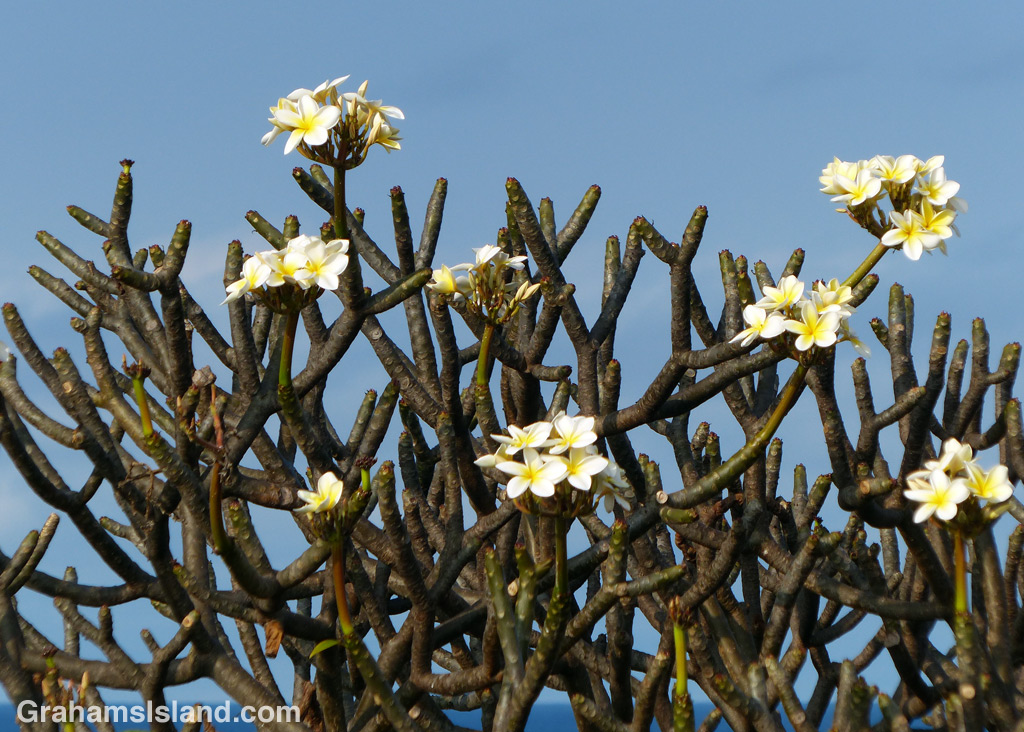
This is the time of year when plumeria rubra begins blooming again. The flowers appear before the leaves, starting in January around here. This photo, taken in spring of last year, shows the flowers well established with a few green leaves also showing.
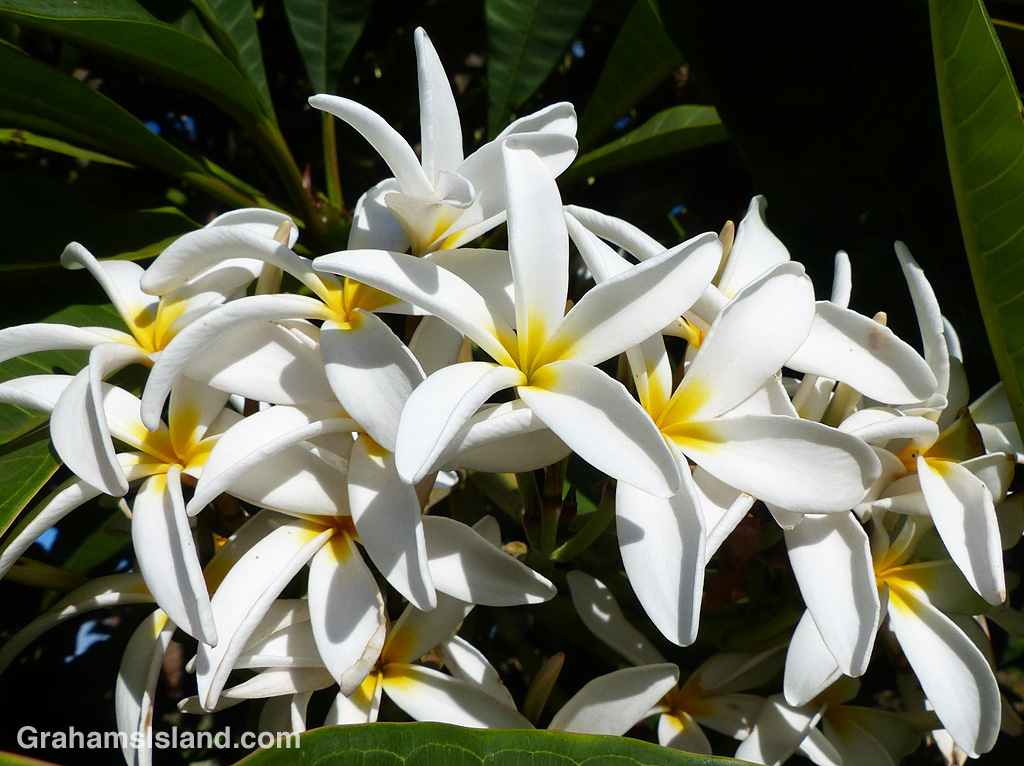
This week’s posts are on the theme of the WordPress photo challenge, ‘Tour Guide.’
Tropical foliage and flowers are another Hawaii must-see. Those tender house plants back home grow like weeds here. The east side of the Big Island, with its copious rainfall, is lush and green with sprays of tropical color as different plants come into bloom.
Plumerias are a quintessential tropical plant, much used here in the making of leis.
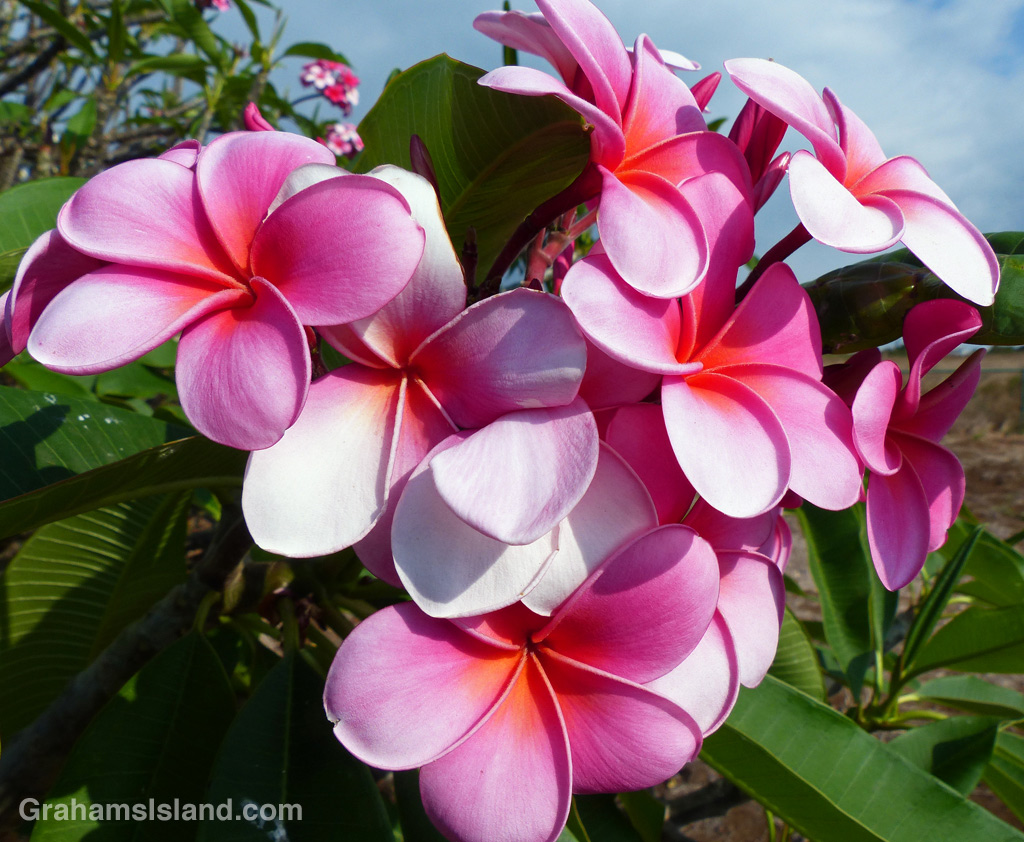
May 1 has been celebrated as Lei Day in Hawaii since 1929 and is a celebration of Hawaiian culture. Each island has a different lei. The Island of Hawaii (the Big Island) features the Ohia blossom.
Plumeria flowers such as these, still attached to the tree, are often used in leis because of their fragrance and rich colors.
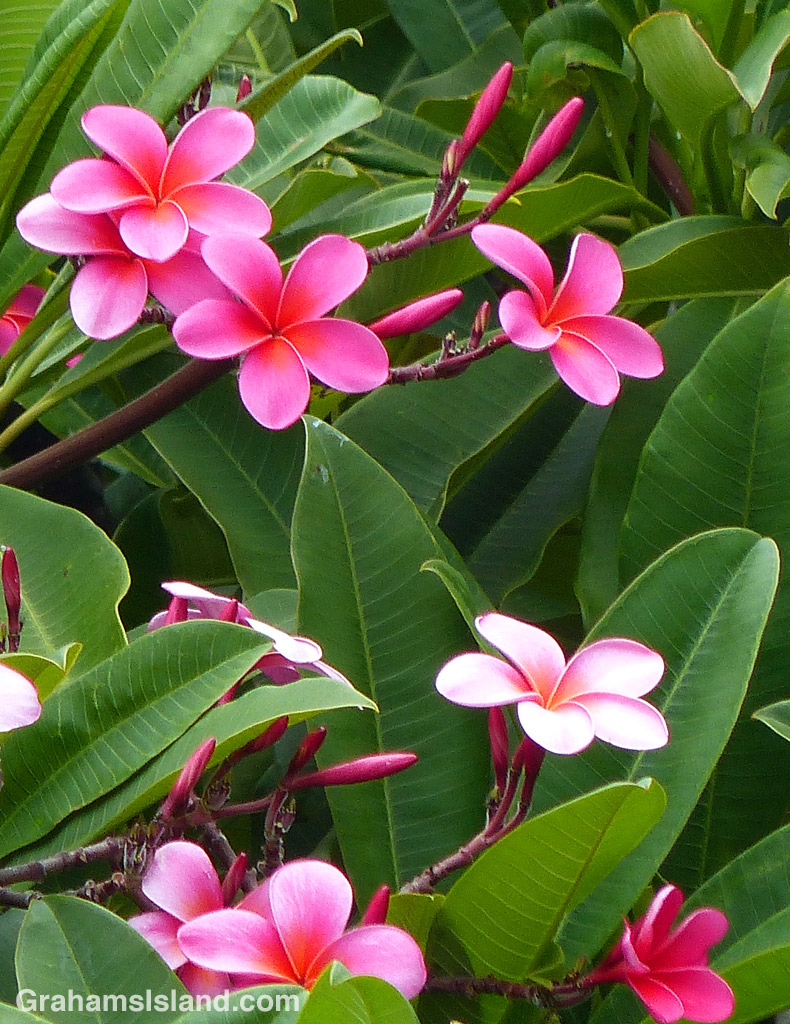
This Plumeria rubra has dark pink flowers, but others might sport, red, orange, yellow, or white flowers.
For more information about this and other Hawaiian flowers, go to wildlifeofhawaii.com/flowers/.

A paper wasp clambers over a budding plumeria.

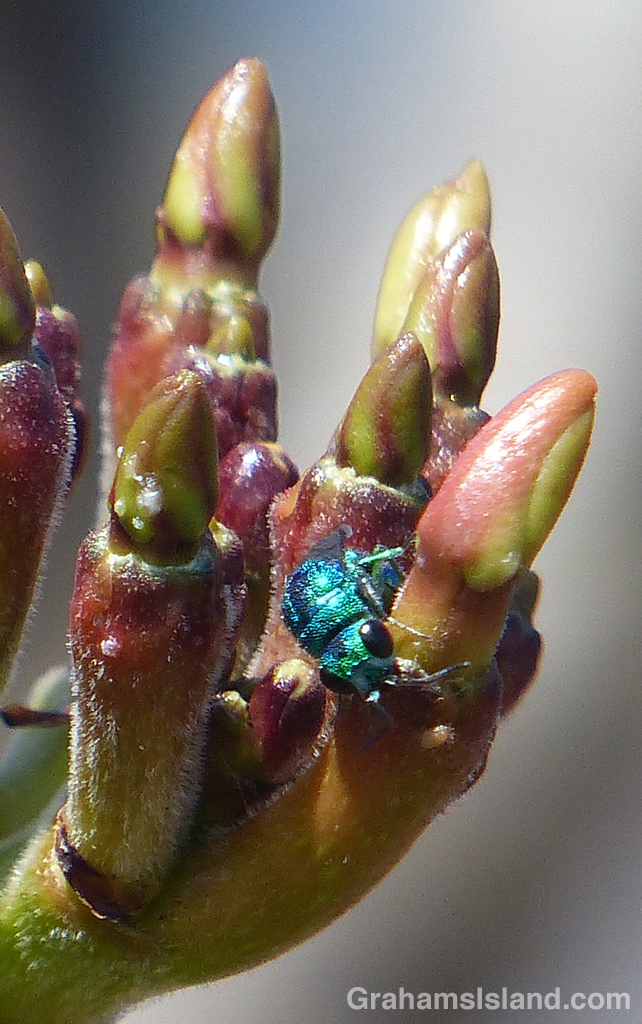
I saw this small, bright insect flitting about on the new growth of a plumeria. The cuckoo wasp gets its name from its practice of laying eggs in the nests of other wasps and bees. Once hatched, the cuckoo wasp eats the host wasp or bee larva. Then it eats the food placed in the nest for the host’s offspring. Probably not an insect to invite to your next dinner party.
For more information about cuckoo wasps, go to bugguide.net/node/view/6946.
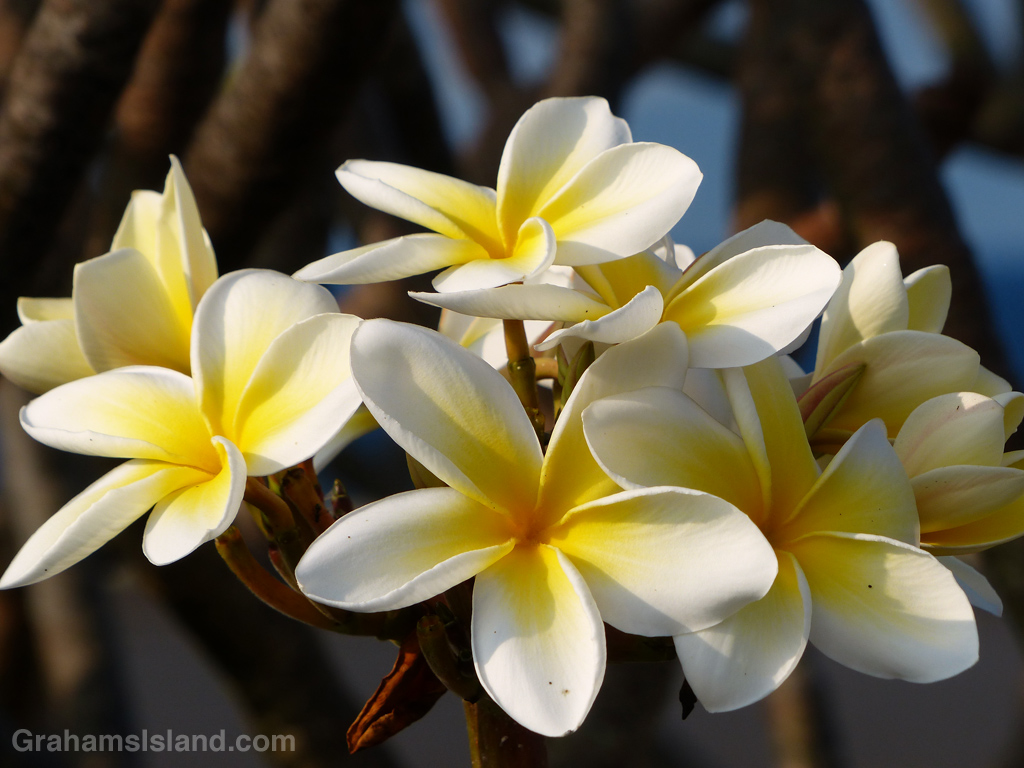
These flowers, officially called Plumeria rubra, are used in leis here in Hawaii. The flowers appear before the leaves so that, for a while, the tree appears stark and yet also colorful.
For more information about this and other Hawaiian flowers, go to wildlifeofhawaii.com/flowers/.
 Graham's Island