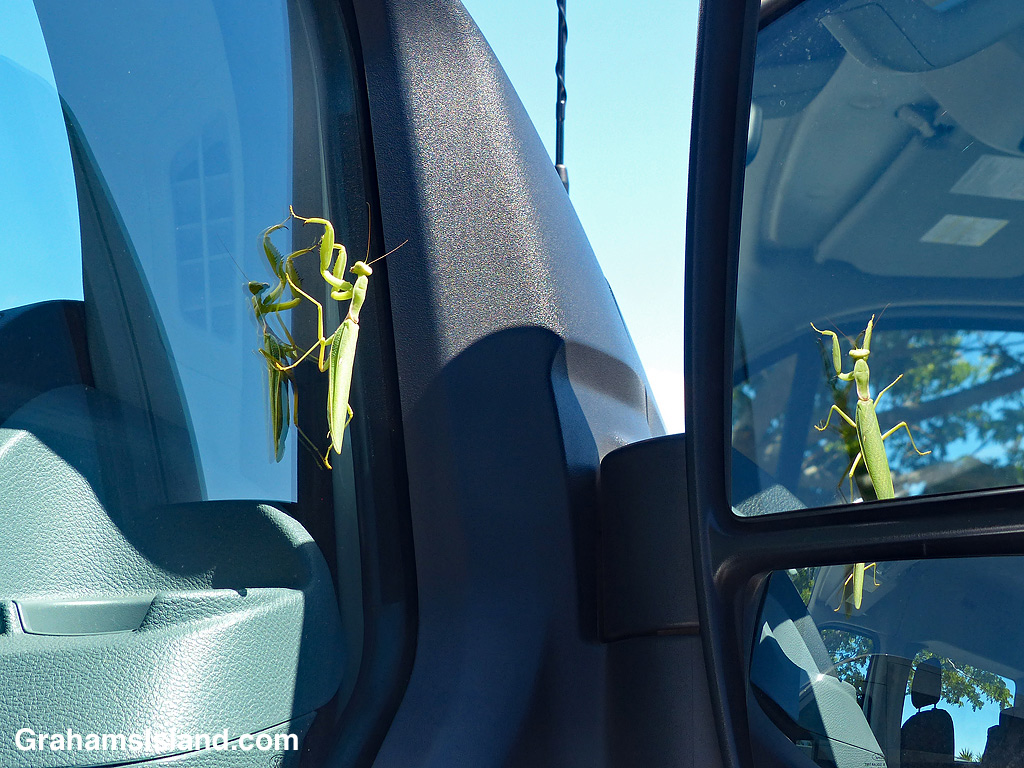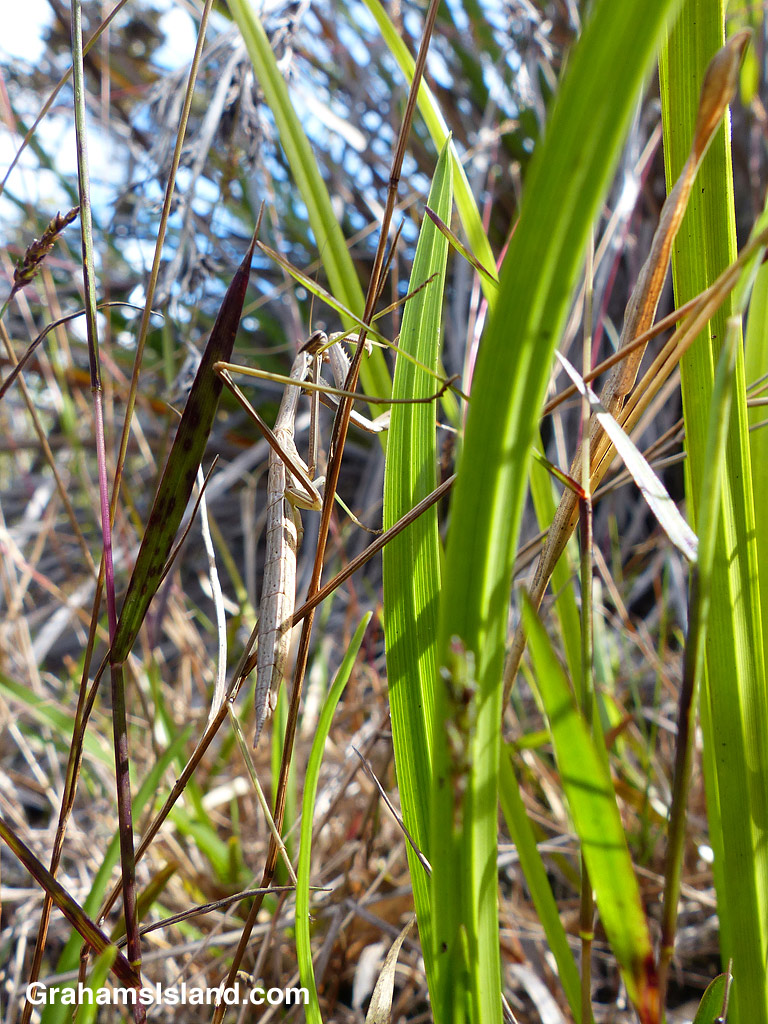
A praying mantis shows how well it can blend into the background while climbing through some grasses.

A praying mantis shows how well it can blend into the background while climbing through some grasses.


Yesterday, I posted about the dangers geckos pose to a praying mantis that has been living on a spider lily.
Today’s post is about the advantage of that location for the mantis. The primary benefit is that the spider lily’s flowers attract wasps, bees and other insects. In these photos, the mantis has caught a good-sized paper wasp, securely held by its forelegs. It held the wasp in that position for a while, but once it began its meal, it made short work of devouring the wasp. Next day I saw it with a bee and a beetle.
As the spider lily flowers fade, new ones pop up on other stalks, so the insect attraction has been fairly continuous.


For the past three weeks, this praying mantis has been a fixture on this spider lily. The downside of this location is that the plant is a favorite spot for gold dust day geckos. The geckos would no doubt like to eat the mantis, but have so far not made a move that I’ve seen. I suspect that one reason for this is that the geckos have learned that, while the mantis looks like it never moves, when they do, they move fast. A few futile sorties against a mantis would make any gecko decide to seek easier prey.
Tomorrow, I’ll post about the upside of this location for the mantis.


This praying mantis had been hanging out on this spider lily for a few days. I don’t know whether it was working hard there, but I did like how it mopped its brow in the second photo.

I posted recently (here) about finding the exoskeleton of a praying mantis after it had molted. It’s possible the mantis in this photo is the one that shed that skin, since I saw it in the same vicinity.
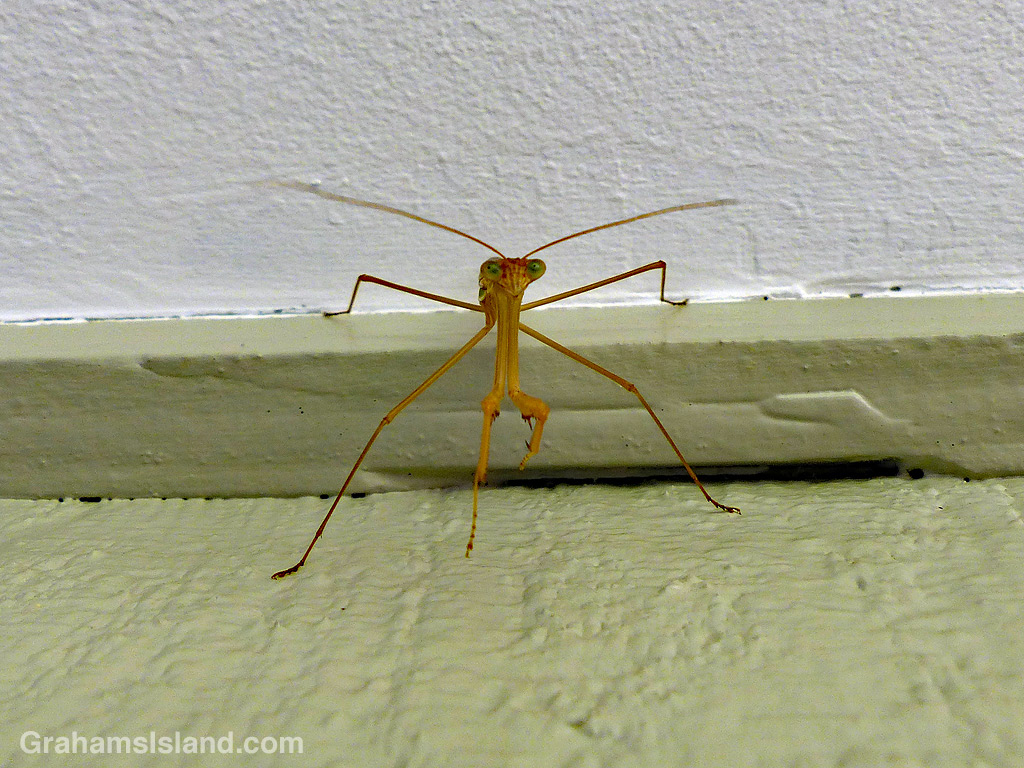
This mantis was stationed where a wall meets a ceiling and it was staring straight down that wall at me. I like this photo because I think it captures the mantis’s rather piercing stare.
A couple of days before I took this photo, another mantis, slightly bigger than this one, was perched on a Pepsi machine in the same vicinity. It was watching me as I went back and forth. Eventually, when I paused, it leapt onto my head. I reached up and encouraged it onto my hand, where it paused a moment before scampering up my arm. So I interposed my other hand, which it duly climbed onto. Cue the mantis then scampering up that arm. We did this little dance a few times before I managed to maneuver the mantis onto a deck rail. It perched there a while and then eventually flew off.
I guess I’m in a praying mantis purple patch.

A few days ago, just in time for Halloween, I noticed this ghostly praying mantis, devoid of its innards. The work of some ghoulish fiend? Alas no, at least for Halloween fans. Rather, this is the result of a mantis molting, which it will do up to five times en route to adulthood. At least I hope that’s what it was.
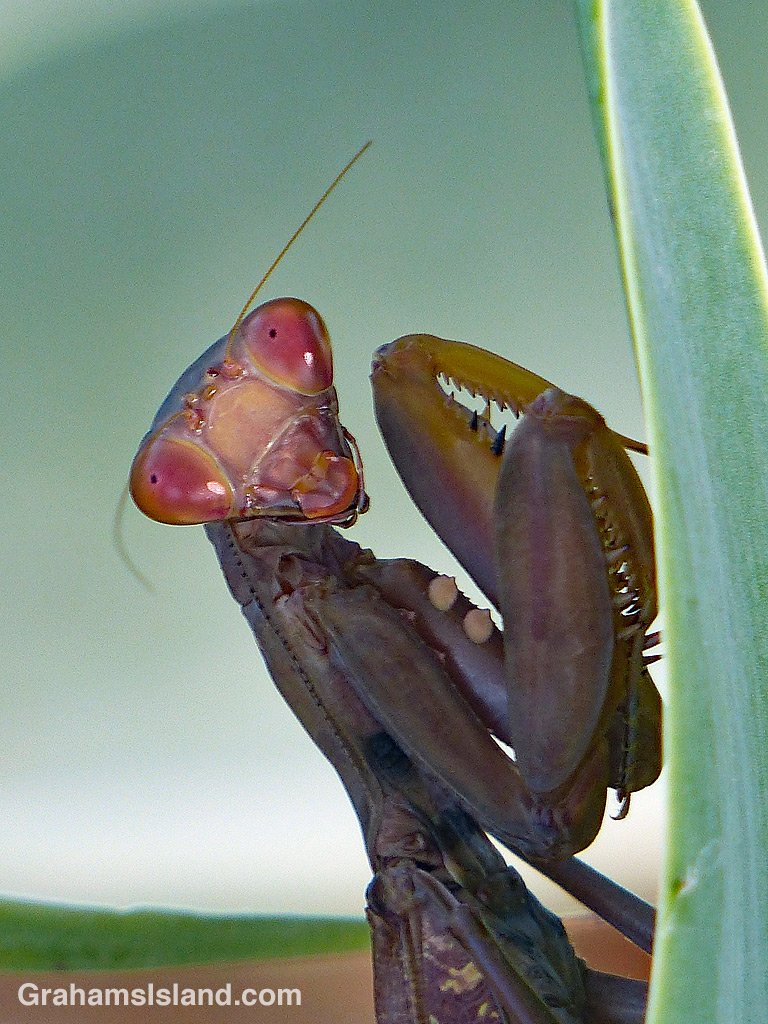
When it comes to bugs, there are many contenders for otherworldly status. One such is the praying mantis. This one was slowly working its way along a hedge looking for prey, but it kept a wary eye out for the weird looking, big-headed alien creature pointing that glass-fronted box in its direction.
Posted in response to this week’s WordPress Photo Challenge, ‘Out of This World.’