
A view of the light tower between Lapakahi and Mahukona on a day when the swells were rolling in.

A view of the light tower between Lapakahi and Mahukona on a day when the swells were rolling in.

According to my fish book, Finescale Triggerfish are rare in Hawaii, except for the west coast of the Big Island. I see one or two most times I get in the water, and when I see them, I try to take photos. Most of the photos are terrible.
Finescale Triggerfish are, by some way, the largest triggerfish in Hawaii’s waters, so they’re not hard to spot, and with their dorsal and anal fins flopping from side to side as they swim, they’re easy to identify. However, they do present problems. For one thing, they’re generally a blotchy grey or brown color so they tend to blend into the background. While they can be seen close to shore, they usually swim nearer the bottom than the top. And they’re skittish. When I do see one nearer the surface, it’s usually seen me first and is headed down and away.
This one was a bit trapped in a relatively shallow area, so I got a few photos, though unfortunately the water was very hazy that day so the quality wasn’t great.


Cleaner wrasses establish territories where they remove mucus, parasites, and dead tissue from other fish. These cleaning stations can exist in the same place for years and can have several wrasses performing those services. Their clients can be anything from other small reef fish to eels and sharks.
In these photos, a Hawaiian Cleaner Wrasse services a Whitebar Surgeonfish.

A couple of creatures in the water that are like to blend into the background. The Titan Scorpionfish is fairly easy to spot in this one, but the Whitemouth Moray Eel is a bit trickier.
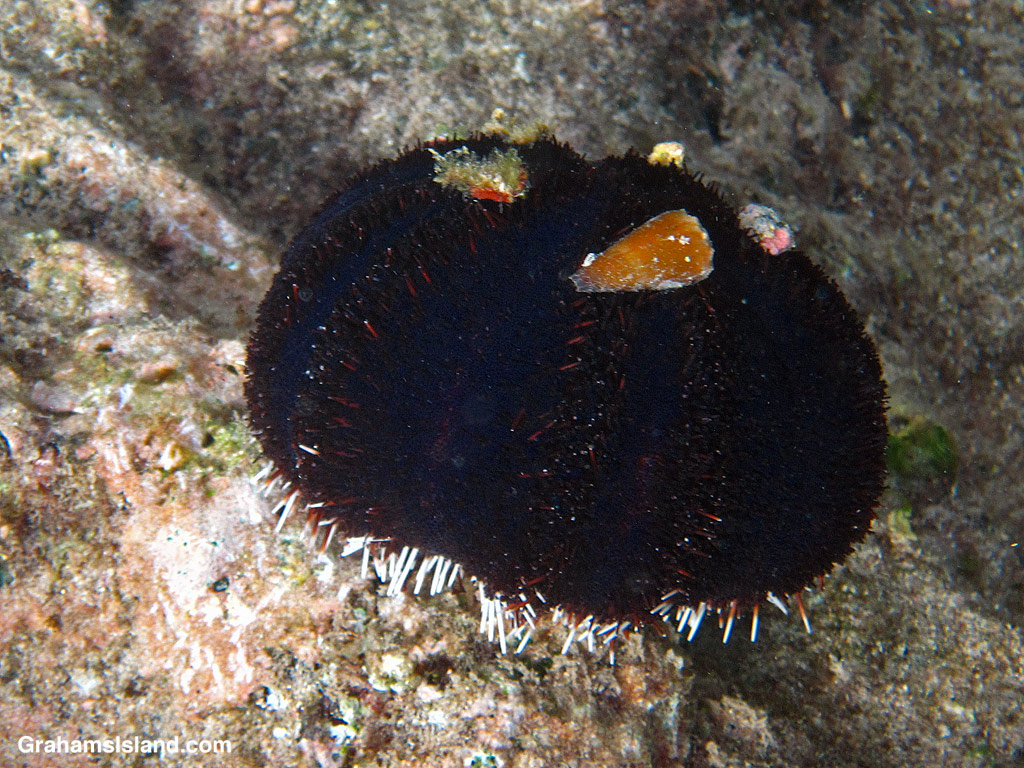
I like to keep an eye out for Collector Urchins to see what bits and pieces they have found to attach to their spines (here). What caught my eye with this one is that the shell on its back is that of a Yellow Cone. They do attach shells so I expect this was one of those rather than a living cone.

These are a couple of fish that spend a good deal of their time sitting, stationary, on coral or rocks. The similarity ends there.
The hawkfish is a predator, waiting for small fish or crustaceans to come within range. The blenny feeds solely on living coral. And while this blenny is probably an adult at about 6 inches long, the hawkfish can grow to twice that size.


On a recent swim, the most notable sighting was this duck, bobbing serenely in the water. It took a while to realize that its calm demeanor owed nothing to its personality, but all to its construction. The duck was a decoy, and a well made one, I thought. A dip under the water revealed no legs, but a good amount of marine growth, indicating it had been bobbing along for some time.
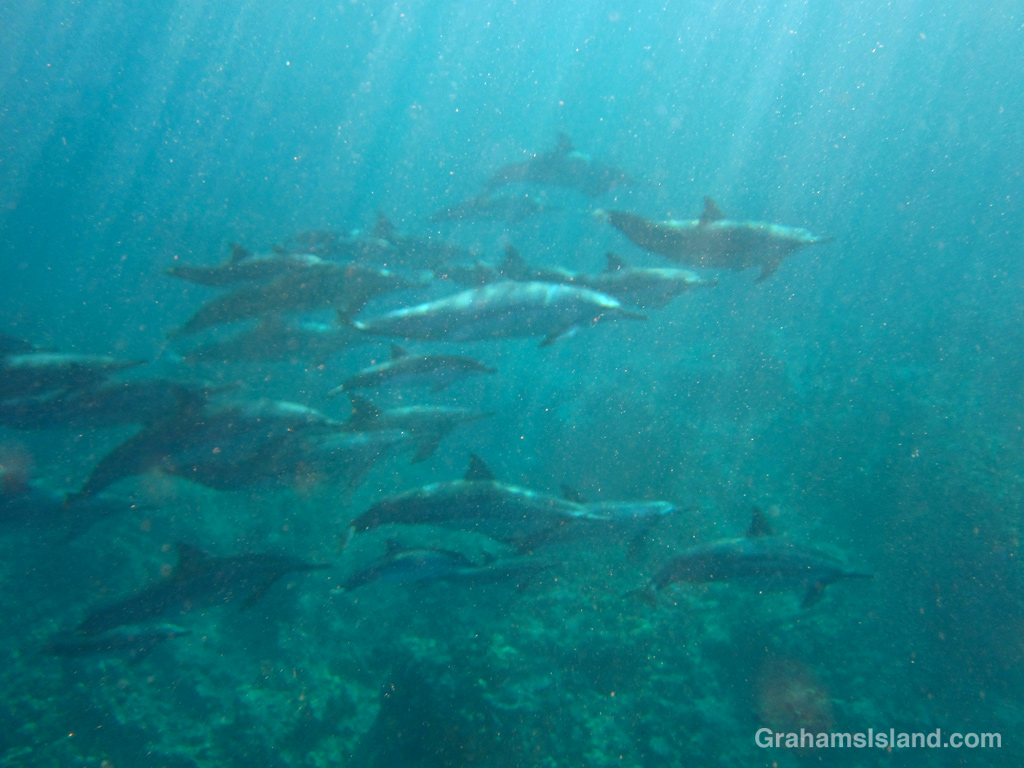
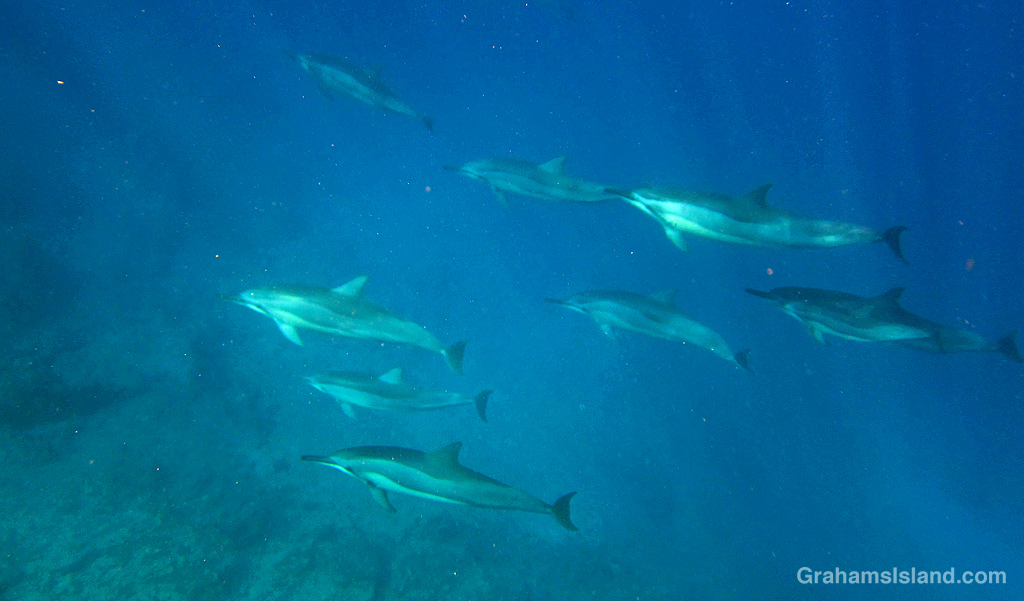
Yesterday, when I went swimming, the swells rolling in were larger than expected, and the visibility in the water, worse than expected. Consequently, it wasn’t a banner swim until I popped my head out of the water and saw spinner dolphins heading my way.
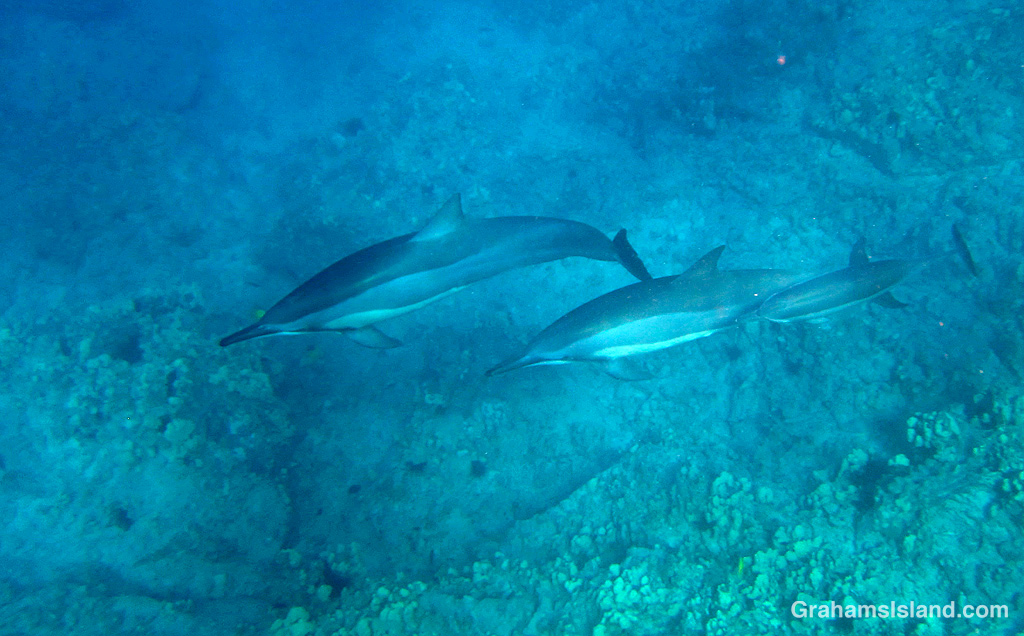
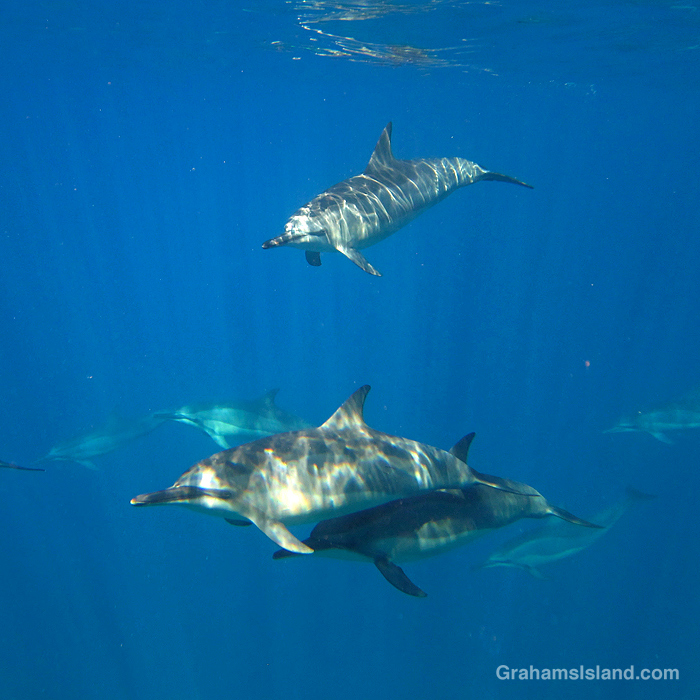
I reckoned there were at least 60 or 70 dolphins in the pod, but I suspect there the number was closer to 100. I count more than 25 in the top photo and that was one group going by on one side. The traffic was continuous on both sides, and below, for several minutes.
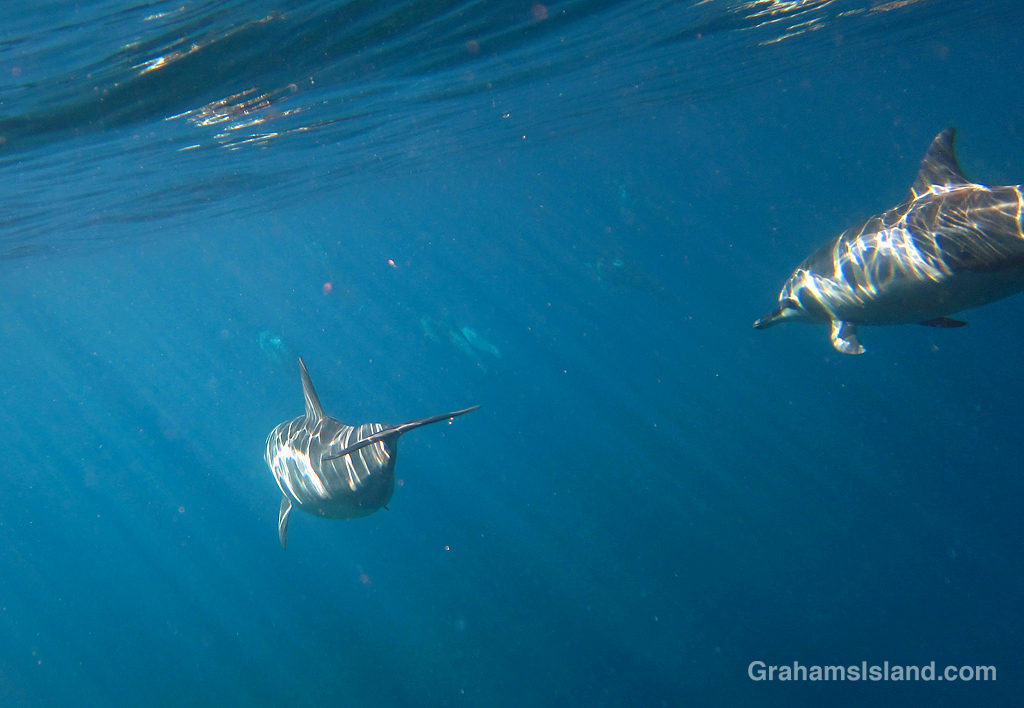
The dolphins weren’t hanging around, but zipped by, heading for their daytime resting spot. Several minutes later, a much smaller group passed by, traveling at a more sedate speed. I’m not sure why that was. Sometimes it’s because they’re escorting calves, but I didn’t see any. Perhaps they were just tired and not inclined to get caught up in the rush of the main group.
 Graham's Island