
During some recent swims, I’ve been lucky enough to see this small Spotted Eagle Ray. It doesn’t tend to hang about, so the encounters have been fleeting, but the ray looks in great condition, which is always good to see.

During some recent swims, I’ve been lucky enough to see this small Spotted Eagle Ray. It doesn’t tend to hang about, so the encounters have been fleeting, but the ray looks in great condition, which is always good to see.

A week or so ago, I was snorkeling when I happened to glance behind me and saw I was being followed by the local barracuda ohana. Ohana is the name for family in Hawaiian and these were Great Barracudas, which sometimes congregate together in this way. I think they follow people swimming in the hope that they’re spear fishing, and might catch something which they can steal. I offered no such rewards, so they soon moved on.
I see 10 in this photo, but I counted a dozen in the water, and there might have been more. They were all what I call small barracudas, perhaps a foot to 18 inches in length. The biggest around here get to be three- to four-feet long and much bigger around.

Reticulated Butterflyfishes are among the easiest fish to identify with their array of white spots on black, and other notable markings.
The same cannot be said for Brown Surgeonfishes. Mostly brown, with a tinge of lavender and some dull spots on the face, this is a fish that’s often overlooked. But according to my fish book, it boasts a couple of noteworthy accolades.
The first is that, back in 1993, “the biggest species of bacteria known to science had been discovered in the gut of this surgeonfish.” It notes that the bacteria was about the size of a hyphen in a newspaper article, which is a pretty good size actually.
The other distinction is that a study, by Roland and Marie-Louise Bauchot, of the brains of Hawaiian reef fishes, declared that the smartest fish on the reef is none other than the little Brown Surgeonfish.


Peppered Moray Eels live in shallow waters, including tide pools and ponds. My fish book describes them as bold and active, and notes that they will even launch themselves out of the water, onto the rocks, trying to catch crabs, their primary prey.
So it’s somewhat surprising that, while I have probably seen glimpses of this eel, these are the first photos I’ve taken of one. This one was swimming along and, obligingly, continued to do so for a while, without disappearing into a crack or hole.


This is the smallest Flowery Flounder I’ve seen while snorkeling. It was probably about 3 inches long. The only reason I saw it was because it was moving for just a moment before it settled down.
If you can’t see it in the top photo, the cropped version should help.
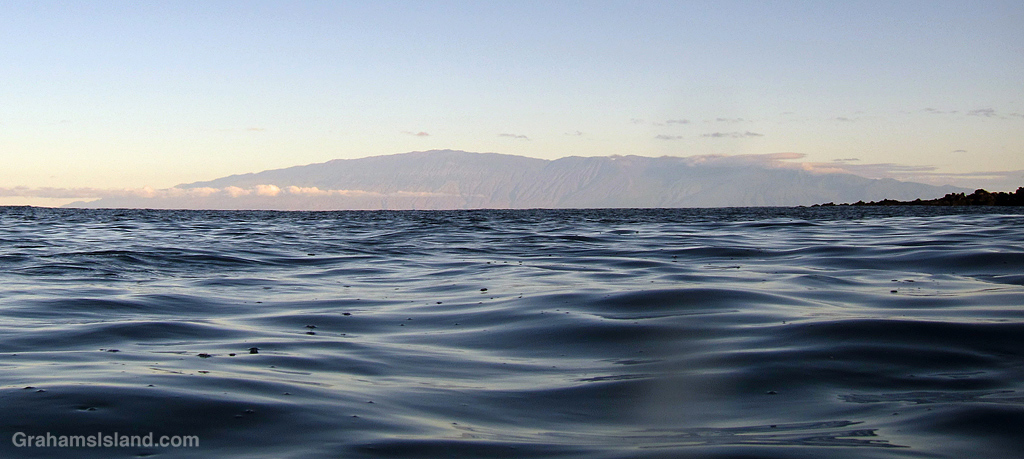
A view of Maui, seen from the water while snorkeling one day.

When I was snorkeling a couple of days ago, I came across this green turtle coming up for air. It took a breath and then curled down into deeper waters at a leisurely pace, before disappearing under a ledge.

… Christmas Wrasse, that is, this one swimming past a ledge occupied by blue-black urchins.
 Graham's Island