
This longnose butterflyfish was cruising around, probing for tasty morsels, when it disturbed this surgeonfish. I think it might be a Thompson’s surgeonfish, but it disappeared before I could make a positive ID.

This longnose butterflyfish was cruising around, probing for tasty morsels, when it disturbed this surgeonfish. I think it might be a Thompson’s surgeonfish, but it disappeared before I could make a positive ID.
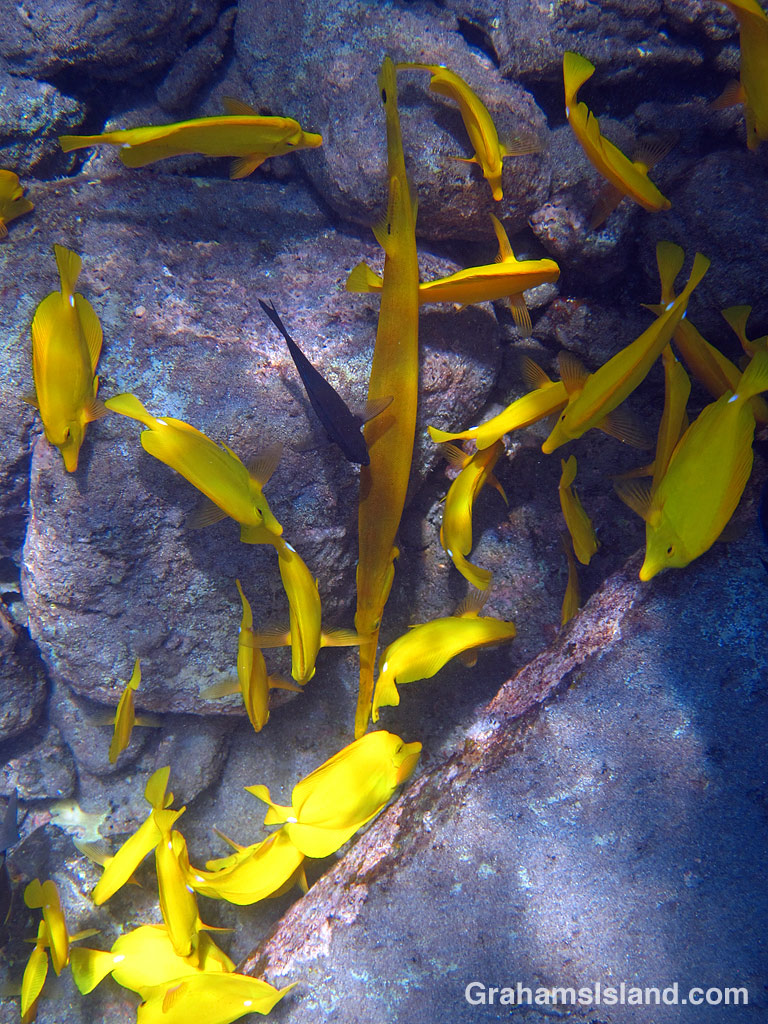
Pacific trumpetfish have the ability to change their coloration according to their surroundings. In this case, the trumpetfish has turned yellow to blend in with a shoal of yellow tang, one of the most common fish on the reef.
So why bother with this subterfuge? Trumpetfish are predators, feeding mostly on small fish and some crustaceans. Appearing to be one of the crowd allows it to sneak up on unsuspecting prey. And while the very different shape of the trumpetfish might make it seem like it’s prey would be sure to spot it, from the front, which is where the prey is going to be, trumpetfish are very hard to spot.
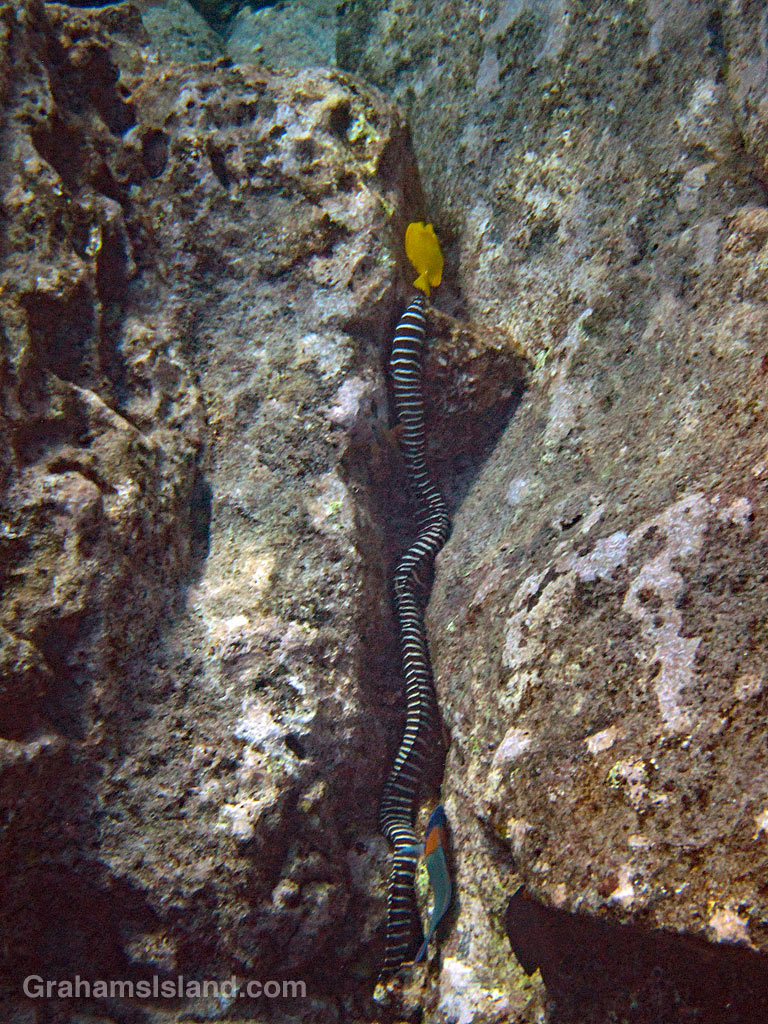
Zebra moray eels are one of the easiest eels to identify, their circular stripes differentiating them from any other eel. They feed mostly on crabs, which they crush with their blunt teeth.
These eels can grow to five feet in length, but are usually smaller. This one though is probably about as large as they get. The yellow tang near its head could be as long as six or seven inches, while the saddle wrasse at its tail tops out at ten inches. That would make this eel somewhere between four and five feet long. It’s certainly the biggest zebra moray that I’ve seen.
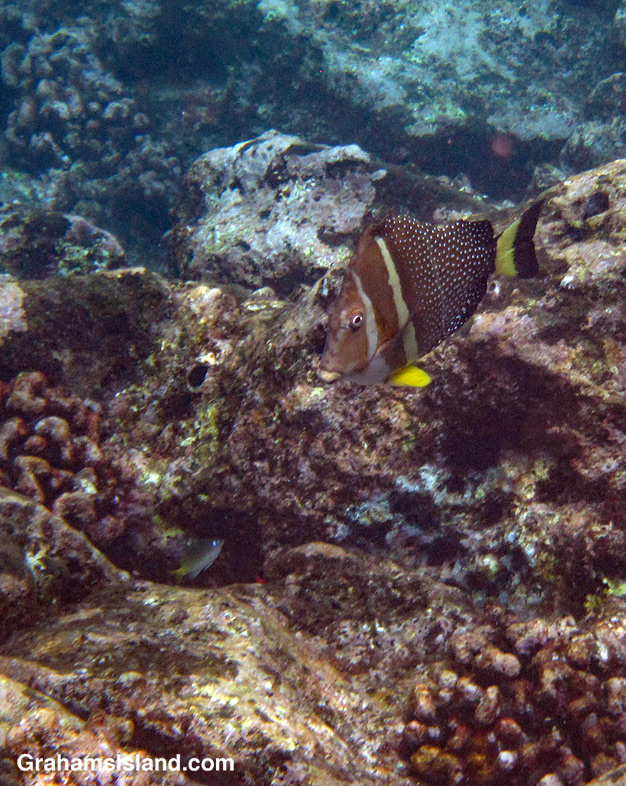
This white-spotted surgeonfish is one that I see regularly when I’m snorkeling. It’s quite distinctive as something has taken a chomp or two out of its back. It’s not unusual to see fish like this, with chunks missing here and there, but if they survive the encounter, they seem to fare as well as the other fish. This one though seems, perhaps understandably, to be more skittish than most.
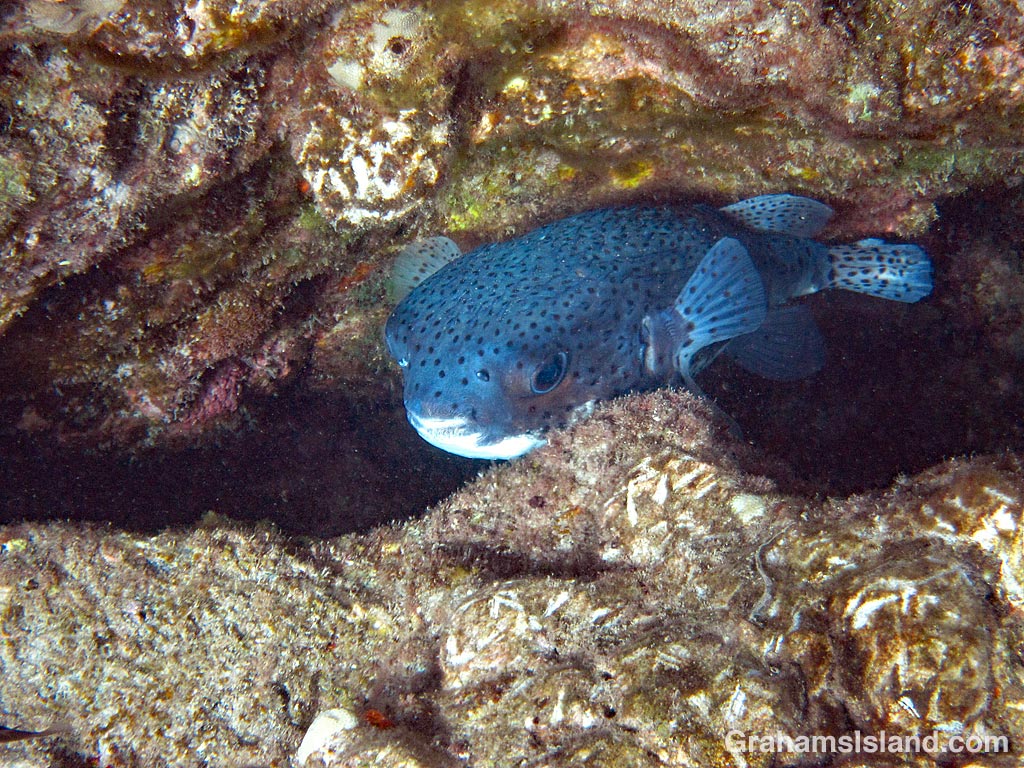
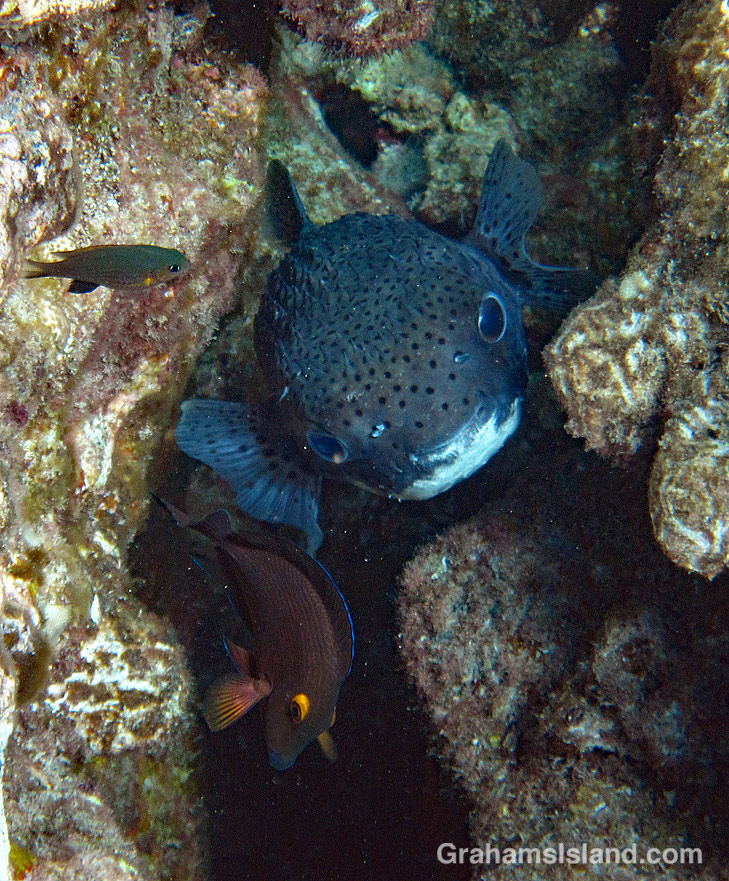 I was swimming one day when I realized I was being watched. Peeking up from a crevasse in the reef, was this giant porcupinefish. These fish do seem to be quite curious and this is a look I’ve seen before. The difference here was that the water was quite shallow, so the fish was not as deep as they usually are. If I got too close, the fish would dip deeper into the crevasse. If I moved away, it would pop up again.
Porcupinefish are not to be messed with. They have strong beaks (fused teeth), which they use to break mollusc and crustacean shells, and which have been known to sever fingers, too. In addition, like pufferfish, they can inflate themselves with water into a large, round ball when threatened. Unlike pufferfish, porcupinefish have sharp spines which normally lie flat, but which become erect when inflated. Finally, they’re extremely poisonous.
The other fish, in the second photo, are a goldring surgeonfish and, above it, a small blackfin chromis.
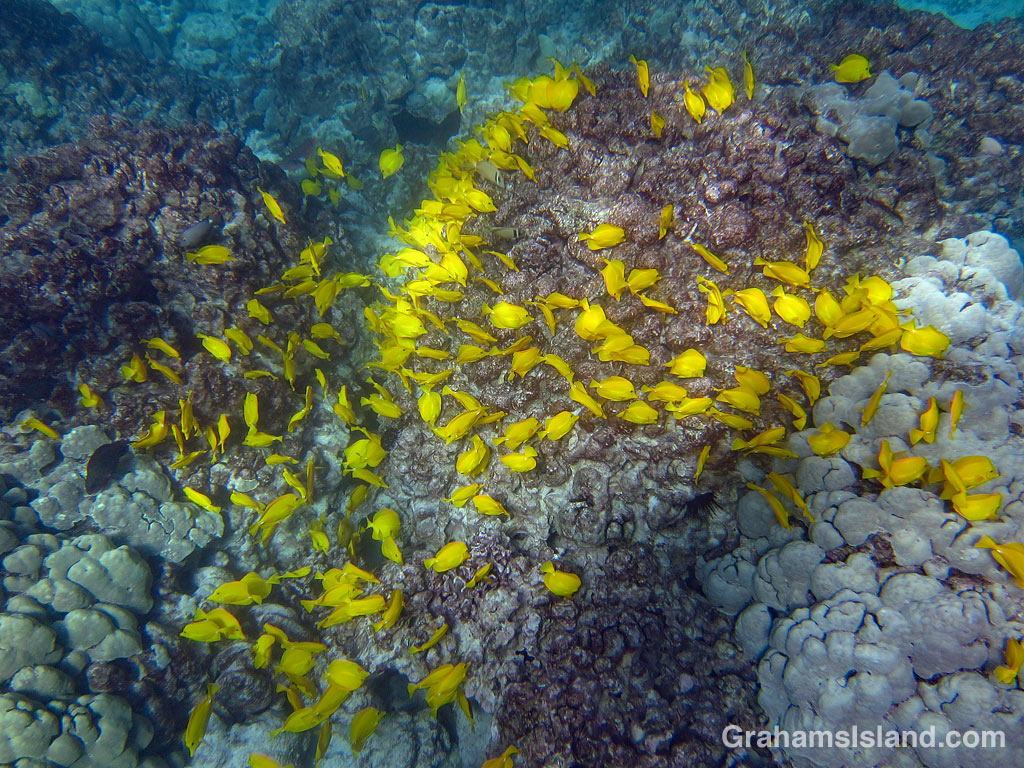
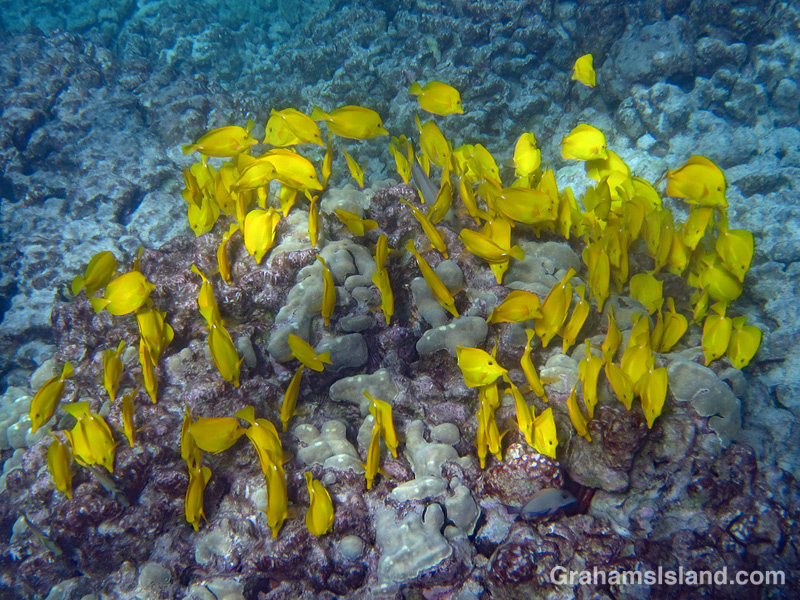 Yellow tang are one of the most noticeable fish on the reef, in part because of their bright color, and in part because of their prolific numbers. These fish are also very popular in the aquarium trade, but because they can’t be bred in captivity, all aquarium yellow tang are collected from the wild.
Aquarium fish collection is regulated by Hawaii’s Department of Land and Resources, but conservationists have taken the department to court claiming it doesn’t follow Hawaii’s environmental laws. The DNLR restricts areas where fish can be collected and issues permits allowing the capture of 2,000 fish per permit. However there’s no restriction on how many permits can be issued, or where the permit will be used or what fish are intended to be taken.
Last week, a court voided all the permits and basically told DNLR to start over with its rules for fish collection. Expect this case to run and run.
Posted in response to this week’s WordPress Photo Challenge ‘Prolific.’
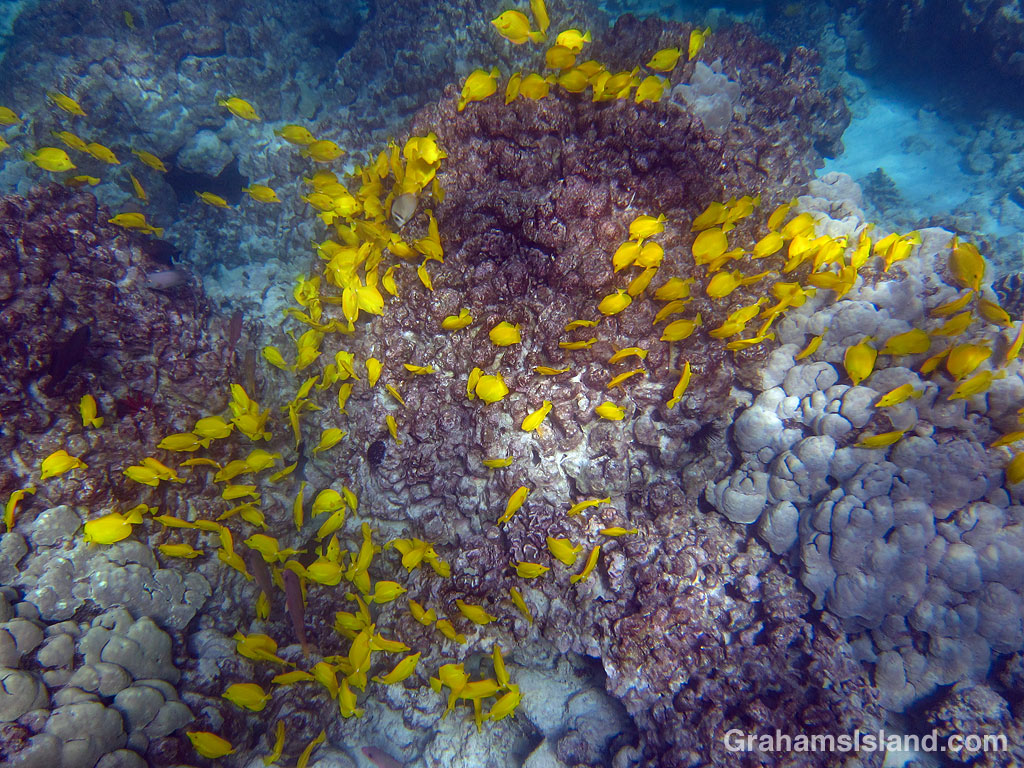
This week’s posts are on the theme of the WordPress photo challenge, ‘Tour Guide.’
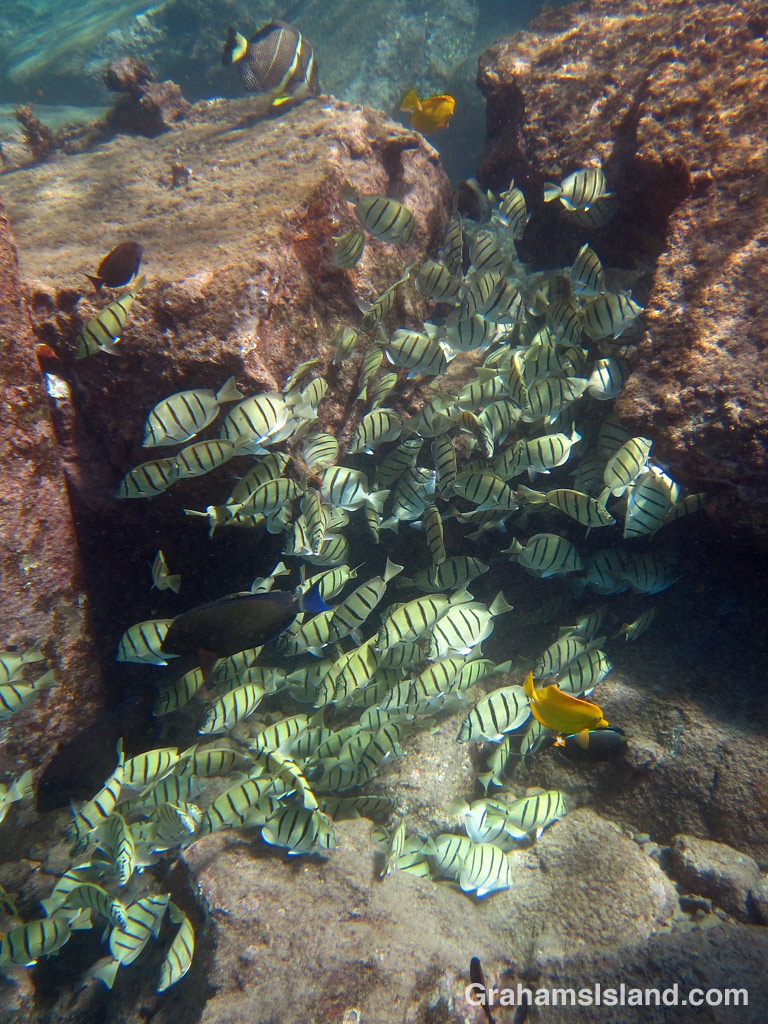
Getting in the water is a top activity here. Whether it’s surfing or swimming, diving or snorkeling, the water is relatively warm and reasonably clear. And there’s lots to see in the water. Here, a shoal of convict tang are joined by a couple of yellow tang, a whitespotted surgeonfish, a ringtail surgeonfish, and an orangespine unicornfish.

Yellowfin goatfish, like the very similar looking square-spot goatfish, are adherents to the theory that there’s safety in numbers. Younger fish, such as the ones in the photo, tend to meander around in clumps in shallow water. This group are looking suspiciously at a yellow tang.
 Graham's Island