Tag Archives: Wrasse

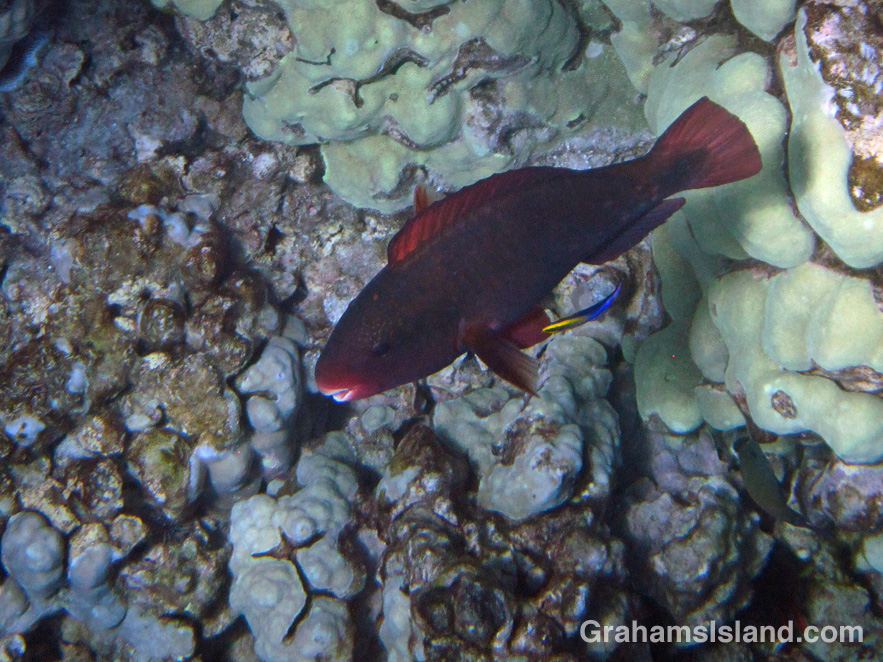
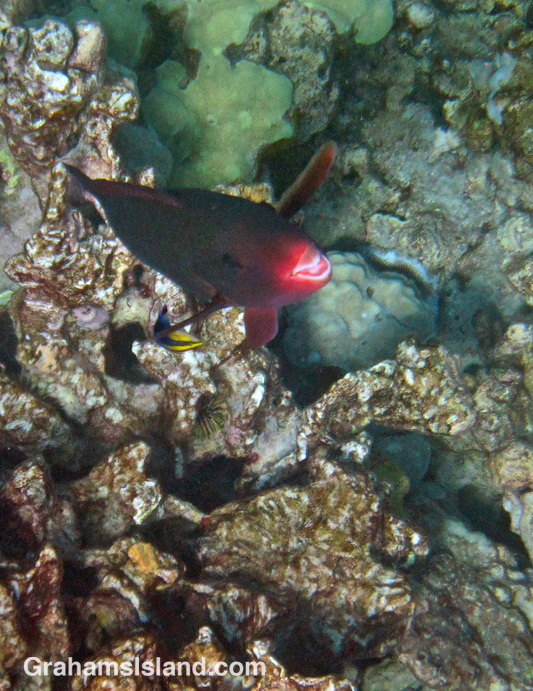
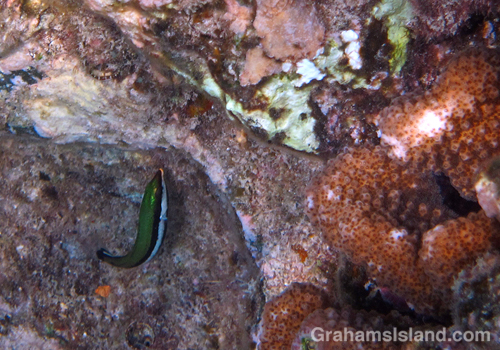
Hawaiian cleaner wrasse services a bullethead parrotfish

A Hawaiian cleaner wrasse cleans a bullethead parrotfishA Hawaiian cleaner wrasse cleans a bullethead parrotfish

Hawaiian cleaner wrasse are small blue and yellow fish that clean the mucus, dead tissue and parasites off other fish. They establish permanent stations on the reef, and fish that need cleaning swim up and hover around until it’s their turn.

A fish can get nipped during a cleaning, but they also seem to enjoy the process and the sensation of the cleaner wrasse dragging its fins over a client’s body – a one-stop clean and massage. This bullethead parrotfish seemed positively ecstatic during its clean, several times sporting a look of bliss on its face.

Maybe next time I’m in the water, I’ll dive down and give it a go.

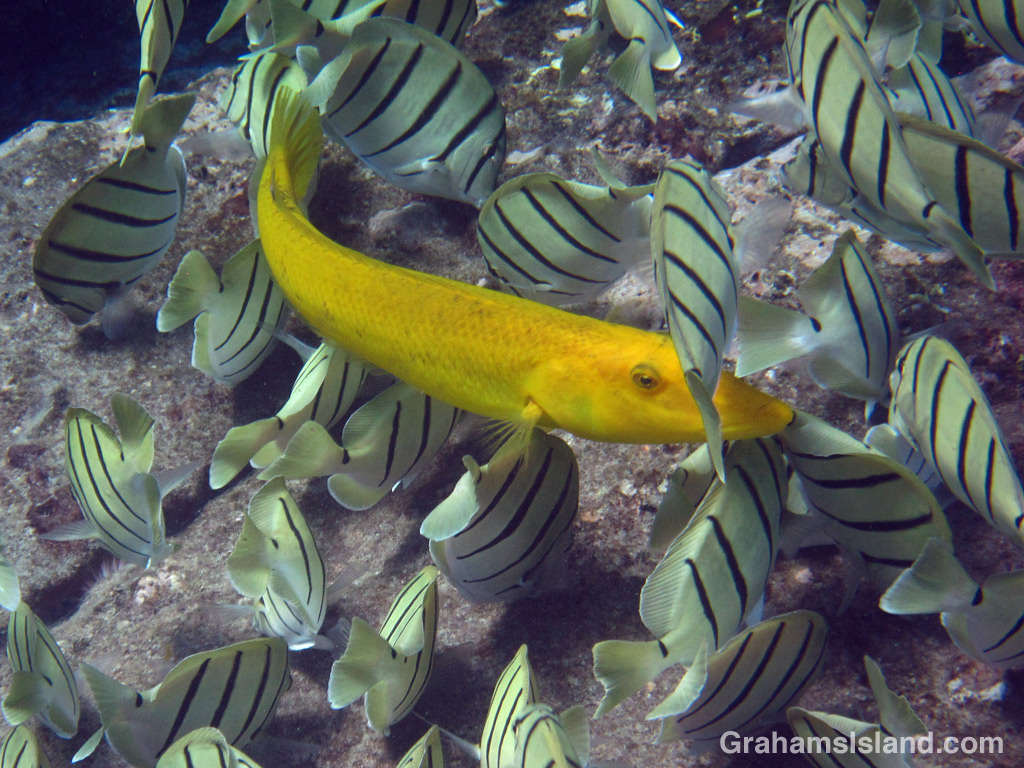
One of these fish is not a convict tang

A cigar wrasse swims among a shoal of convict tang.
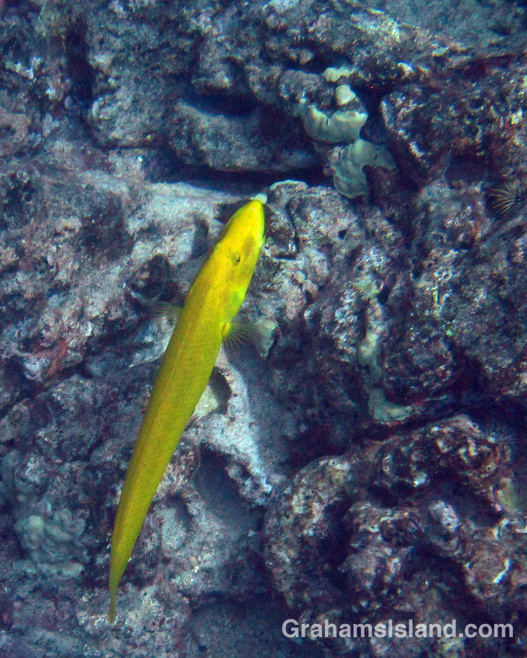
Shoals of convict tang are common in the near-shore waters of the Big Island and it’s equally common to see a bright yellow female cigar wrasse among them. The theory is that the cigar wrasse uses the cover of the harmless shoal to surprise its prey, a variety of marine invertebrates. Seems like the cigar wrasse’s prey does not have real good eyesight.

Cigar wrasse

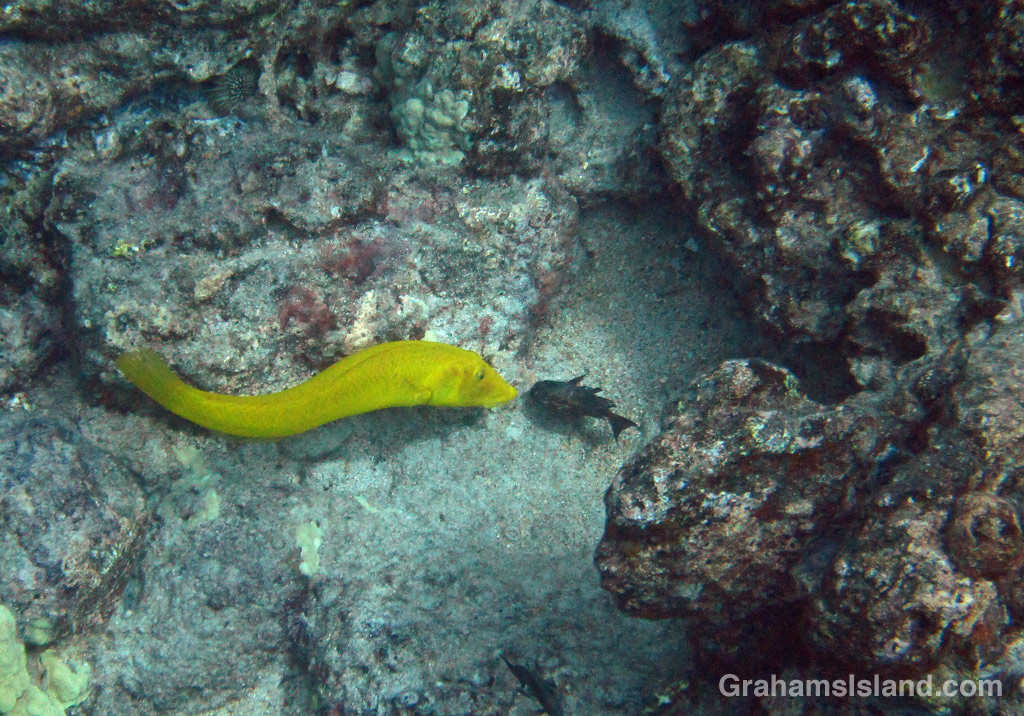
A female cigar wrasse eyes its prey.A female cigar wrasse carries its prey.
Perhaps not the best of photos, but ones that marked a first for me. I am constantly reading about how this fish preys on that fish and that fish preys on this creature, but the only feeding I’d seen is various fish grazing on algae on the coral.

On this day, however, I noticed, a good way below me, this female cigar wrasse with a small fish in her mouth. In the photo above the poor creature has just been dropped in front of her momentarily. In the second photo, the fish is firmly held in the cigar wrasse’s jaws.

The prey looked like some kind of small damselfish, which is interesting because John Hoover notes that cigar wrasse “feed on a variety of invertebrates.” Also of interest is that I mostly see cigar wrasse swimming among shoals of yellow or convict tang. Perhaps I should give them the heads up about the danger in their midst.

In my attempts to identify what I see in the water, I use John P. Hoover’s book The Ultimate Guide to Hawaiian Reef Fishes, Sea Turtles, Dolphins, Whales, and Seals. His website is hawaiisfishes.com.

Ember parrotfish

An ember parrotfish and christmas wrasse.

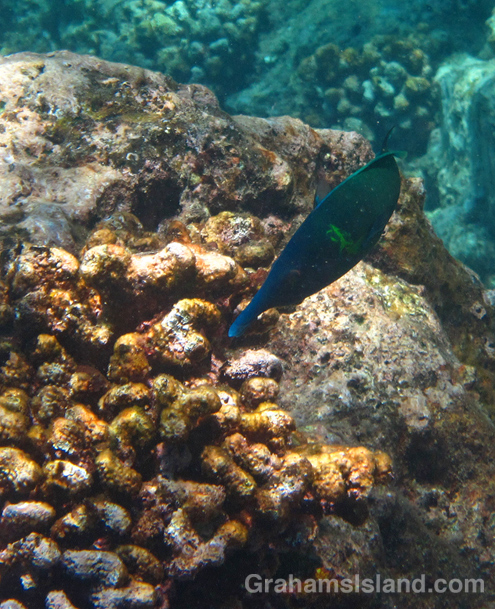
As parrotfish grow, they go through two phases, initial and terminal. Initial phase parrotfish can be male or female, but in some species are always female. I ran a photo of an initial phase ember parrotfish here.

This ember parrotfish is in its terminal phase and is what is known as a supermale. Terminal phase parrotfish are always male and, as John Hoover notes, ‘supermales are almost always reversed-sex females.’ Supermales also tend to brightly colored, like this one.

The smaller, following fish is a Christmas wrasse. Parrotfish are often trailed by one or other of the wrasses, looking to latch onto things to eat, dislodged by the larger fish grazing for algae on the coral.

In my attempts to identify what I see in the water, I use John P. Hoover’s book The Ultimate Guide to Hawaiian Reef Fishes, Sea Turtles, Dolphins, Whales, and Seals. His website is hawaiisfishes.com.
Yellowtail Coris

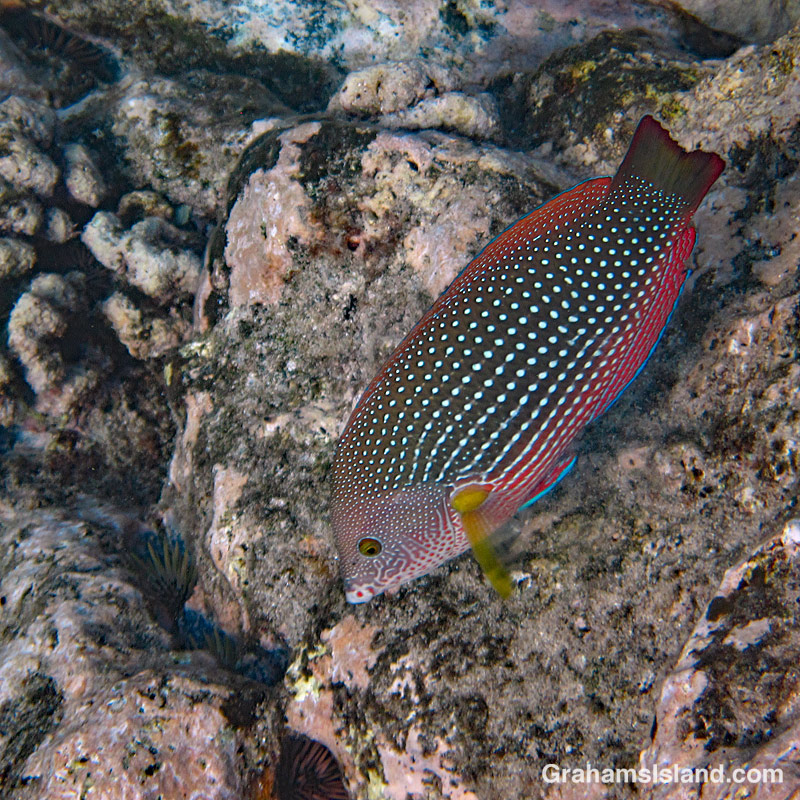
A female yellowtail corisTwo juvenile yellowtail coris
The two fish in the second photo are juvenile yellowtail coris. Over time, they’ll transform into adult colors like the one above. The bright blue spots identify this yellowtail coris as a female.

In my attempts to identify what I see in the water, I use John P. Hoover’s book The Ultimate Guide to Hawaiian Reef Fishes, Sea Turtles, Dolphins, Whales, and Seals. His website is hawaiisfishes.com.

Bird wrasse

A juvenile bird wrasse.A supermale bird wrasse.
This bird wrasse is another of those fish that will grow up to look completely different than it did as a youngster. The juvenile above will not only change color, but will also end up with a much longer snout, like the fish on the right, a supermale.

In my attempts to identify what I see in the water, I use John P. Hoover’s book The Ultimate Guide to Hawaiian Reef Fishes, Sea Turtles, Dolphins, Whales, and Seals. His website is hawaiisfishes.com.

A splash of color

A cigarfish and pinktail triggerfish add color to a shoal of surgeonfish.
This predominately brown shoal of whitebar surgeonfish and whitespotted surgeonfish is enlivened by the yellow and orange of a male cigarfish and a flash of pink from the aptly named pinktail triggerfish.

In my attempts to identify what I see in the water, I use John P. Hoover’s book The Ultimate Guide to Hawaiian Reef Fishes, Sea Turtles, Dolphins, Whales, and Seals. His website is hawaiisfishes.com.

Ember parrotfish

An Ember Parrotfish swims by off the Big Island.


This ember parrotfish is one of several kinds of parrotfish to be seen around here. They scrape algae from the rocks, which is the reason for the dark stains around its beak. This fish is in its ‘initial’ phase and will later turn a beautiful blue-green.

Parrotfish are often trailed by a smaller wrasse of some kind, in this case, a Christmas wrasse. It’s there to snap up any small creatures dislodged by the larger fish’s grazing.

In my attempts to identify what I see in the water, I use John P. Hoover’s book The Ultimate Guide to Hawaiian Reef Fishes, Sea Turtles, Dolphins, Whales, and Seals. His website is hawaiisfishes.com.

An Ember Parrotfish is trailed by a Christmas Wrasse off the Big Island.