
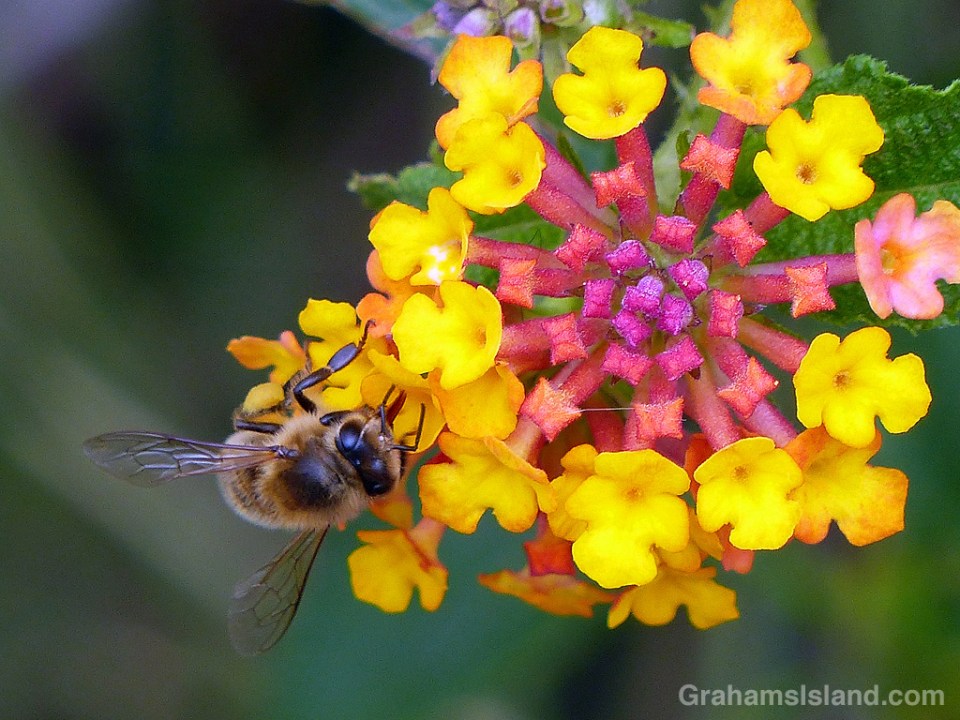
Lantana is such a colorful flower – pink and purple, yellow and orange (and invasive here, but let’s not talk about that). Curiously, it doesn’t seem all that popular with bugs, at least by my observations. But at certain times I see butterflies very interested and on this occasion, several bees were going from bloom to bloom.
Posted in response to this week’s Sunday Stills challenge on the theme of ‘Macro-Photography of Anything.’ See more responses here.
 Graham's Island
So beautiful!❤
LikeLiked by 1 person
The first time I saw that flower somewhere (was it Hawaii then?), it looked like a lego to me!
LikeLiked by 1 person
Yes, very good. It does have that look about it.
LikeLiked by 1 person
Ooo, what a beautiful flower. I don’t think I’ve ever seen it in real life.
LikeLiked by 1 person
I don’t know it’s range but I imagine it’s fairly widespread. It is very colorful though.
LikeLiked by 1 person
Extremely beautiful!
LikeLiked by 1 person
This is an amazing photo! I know this flower from Venezuela but we call it cariaquito and it’s very small. Even more amazing with that bee there!
LikeLiked by 1 person
Thanks. Any time I see bees about I pull out my camera.
LikeLiked by 1 person
What a glorious shot, Graham, so clear and crisp. The colors are amazing! I’m always surprised to read about invasive species on the islands. When they were first inhabited by the first Polynesians, I would think a lot of what is there today was brought over from elsewhere. But as I saw first hand with certain trees and those darn (but cute) coqui frogs, invasive species can take over to the detriment of others! Lovely shot for SundayStills!! I managed to share this on my Facebook page and twitter!
LikeLiked by 2 people
So many native species have been wiped out here, most of them due to predation by introduced species or the activities of that most destructive invasive species, humans. For example, there used to be 55 different species of Hawaiian honeycreepers including 16 kinds of finch-billed honeycreepers. Now there are just 17 species left and only one, the palila, of the finch-billed kind. Thanks for sharing the post.
LikeLiked by 2 people