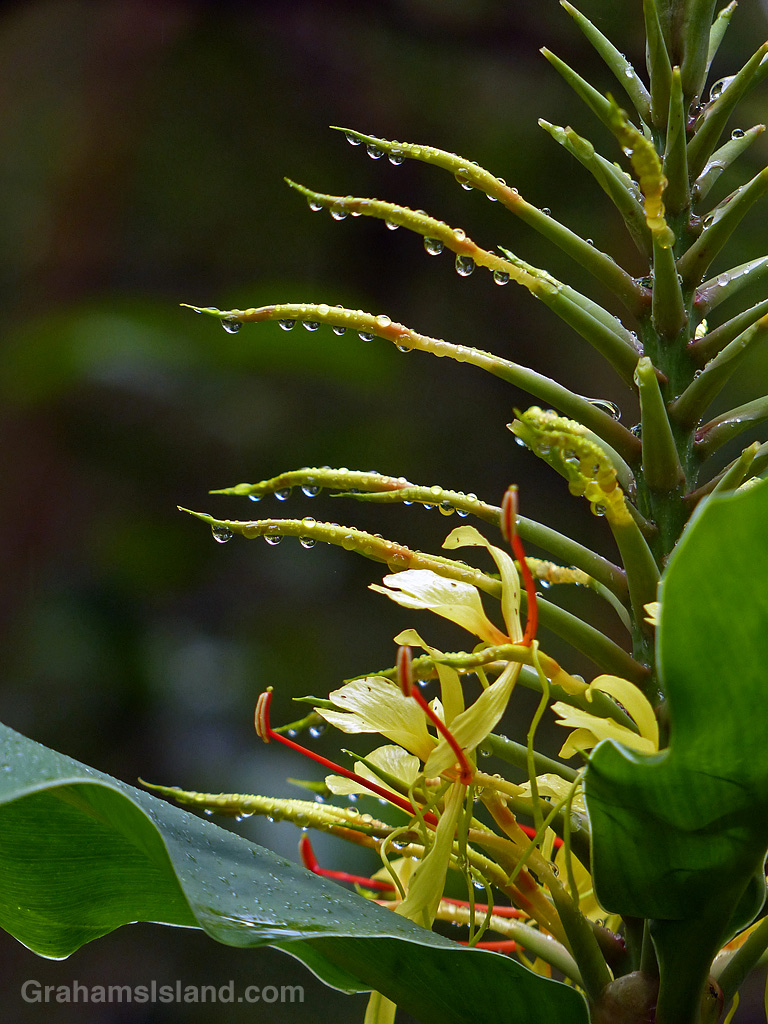
Kahili ginger is invasive, but still gorgeous. This flower was dappled with raindrops.


Kahili ginger is invasive, but still gorgeous. This flower was dappled with raindrops.
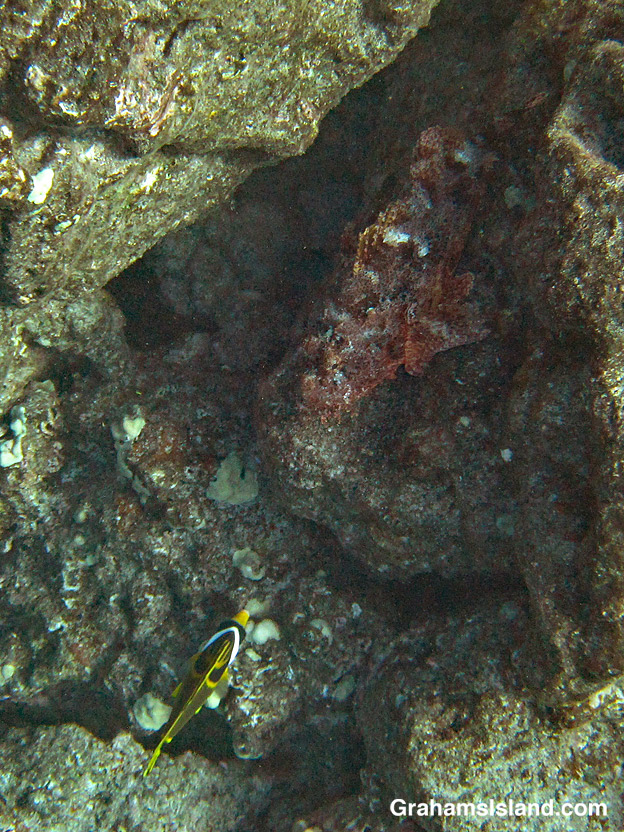
I was snorkeling recently, when I saw something distinctive on some rocks. At first I thought it was an octopus, but it didn’t look right. A lobster perhaps, but again something was amiss. Then I realized that the fin shapes I was seeing those of a scorpionfish. I focussed in with my camera and the fish scooted forward and disappeared into a crack and beneath a boulder before I could get a shot.
When I got home, I looked at my fish book and figured out that I’d probably seen a titan scorpionfish. The only scorpionfish I’ve seen previously have been devil scorpionfish, which are easily identified by their distinctive and colorful pectoral fins. The titan scorpionfish is more colorful overall but without such a distinctive signature. However, it’s the largest scorpionfish in Hawaii and the one I saw was big.
Next day, I was snorkeling in the same general area and I saw a reddish, mottled fish moving. ‘That looks familiar,’ I thought. This time the fish plunked down onto a rocky area and stayed put so I was able to get a good look at it and take some photos, of which this was the best. It was indeed a titan scorpionfish, probably the same one I’d seen the day before. I even saw the loose flaps on its lower jaw which are a prime identifying mark.
Even though I knew where it was, there were times when I looked and thought it had moved on before I could pick it out again, so well does it blend in with its surroundings.

Some recent high surf made a breach in the breakwater of the northern small boat harbor at Kawaihae. Besides punching this hole in the rock barrier, the wooden mooring floats were also badly damaged and boats using the harbor were ordered to relocate since it was no longer safe.
Repairing the damage being estimated to cost around $8 million. Usually these kinds of thing overrun the estimates by a generous margin.
The top photo shows the extent of the damage as a tug and barge approach the harbor. Below, the picnic tables are deserted as the wind whips up whitecaps and a blast of sand across the area.
Incidentally, the tug and barge were unable to get into harbor because of the strong crosswinds and spent the night out at sea. They were still there next morning when I saw them, but were able to finally get into the harbor a few hours later.


I think this is a bloody hermit crab, but this was my only look at it. The greenish lump, from which the legs protrude, is not a shell but a lump of rock or old coral.

This week’s Sunday Stills challenge theme is ‘For the Birds.’ See more offerings here.
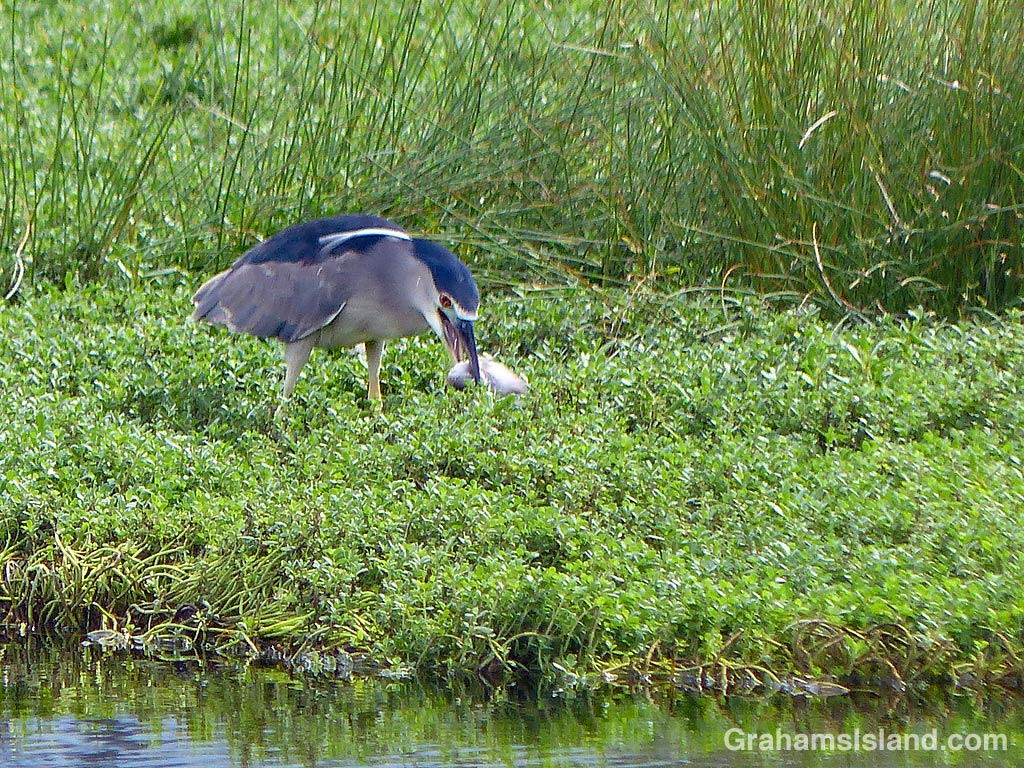
Bird baths and bird feeders are a couple of subjects for this theme and these photos are of what is, in effect, a bird feeder. It’s a fish pond at Hualalai Resort and where there’s a fish pond, there will likely be herons. I saw half a dozen perched around one of the ponds there, but this adult black-crowned night heron was the only one I saw catch anything.
It lunged its beak into the water and pulled this good-sized fish out onto the bank. After a few minutes of tossing the fish around to get it lined up properly, the bird swallowed it whole. The photo at right shows the fish on its way down.


This week’s Friendly Friday challenge theme is ‘Odd Couples.’ See more responses here.
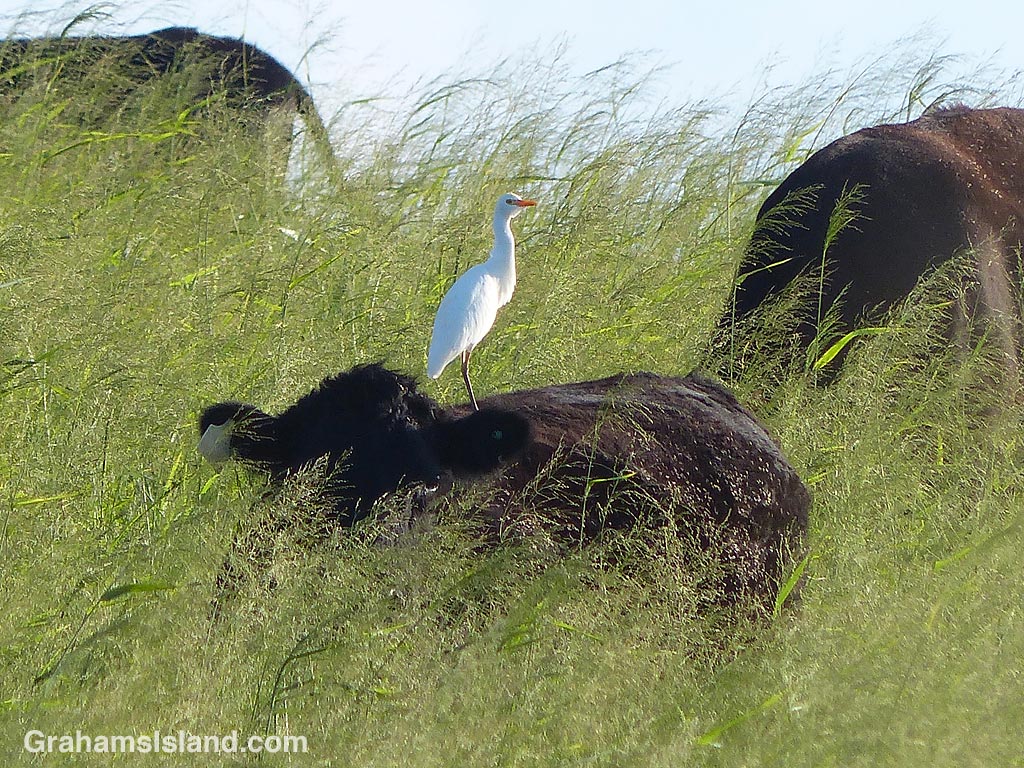
It’s common to see cattle egrets in the company of cattle and yet they still make an odd pairing – the bulky, stolid cow or bull and the slender, flighty cattle egret. The benefits for the cattle egret are clear. They catch insects and other prey disturbed by the grazing cattle (or horse, sheep, goat, etc.). But they also remove flies and ticks from the cattle themselves, which also benefits the cattle.
The cattle also don’t seem to mind being used as a perch. I imagine the egret above giving directions: ‘take a left up ahead buddy.’ The one in the middle is switching allegiances. Below, gotta find someplace with a view when in the tall grasses.
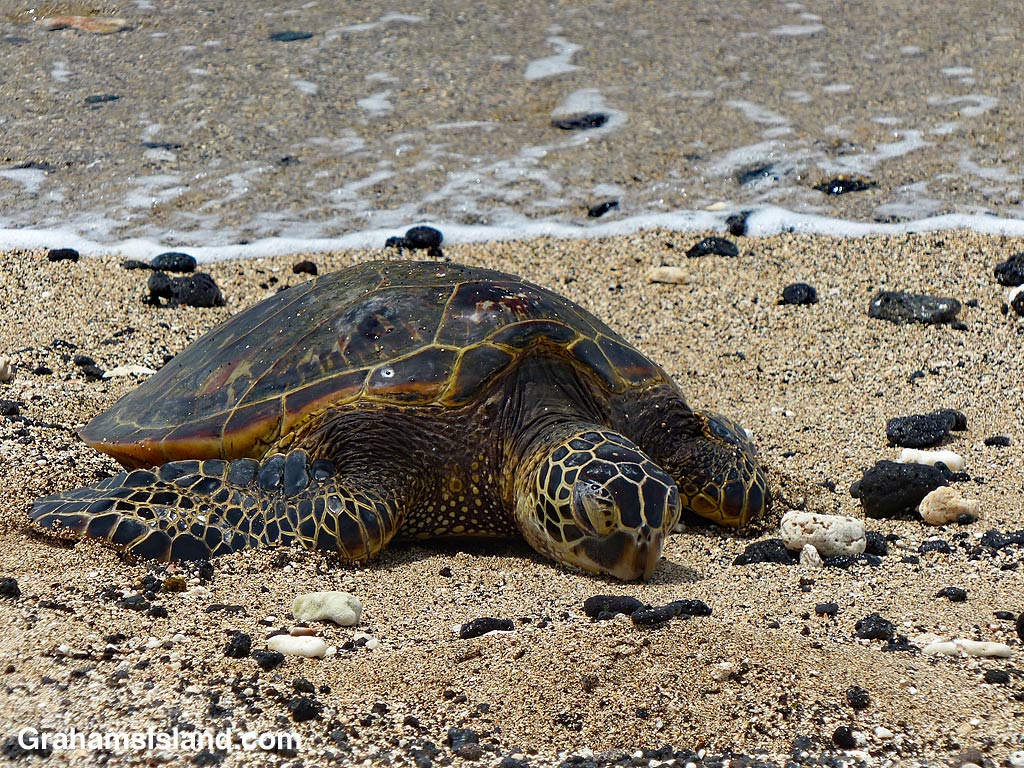
I see green turtles hauled out on pebbles, rocks, and lava flats, but a sandy beach seems to be the preferred spot for a rest. They’re rather ungainly on land, so digging those flippers into soft sand and nudging forward to a suitable spot is probably easiest for them.

In my seven plus years of living in Hawaii, I’d never encountered a scorpion. Then I saw my first, squashed, in a box I was emptying. Earlier this week I saw my second. It wasn’t dead, but it wasn’t well. I think it had been stepped on, which is why its large, claw-like pedipalps aren’t so prominent in this photo.
This is a lesser brown scorpion (Isometrus maculatus), the only scorpion species in Hawaii. It’s not as dangerous as some scorpions, with a sting similar to bees. It’s also not common, in part because it’s nocturnal and also small. This one was less than two inches long.

