
The full moon dips behind a cloud just prior to setting on a recent early morning.


The full moon dips behind a cloud just prior to setting on a recent early morning.
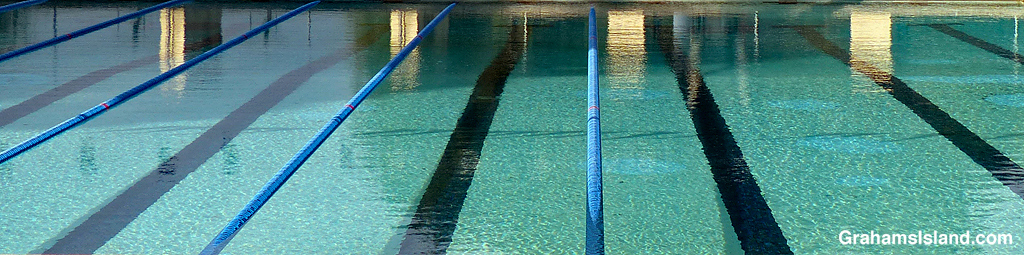
An array of lane dividers, pool markings and reflections at the local swimming pool in Kapaau.
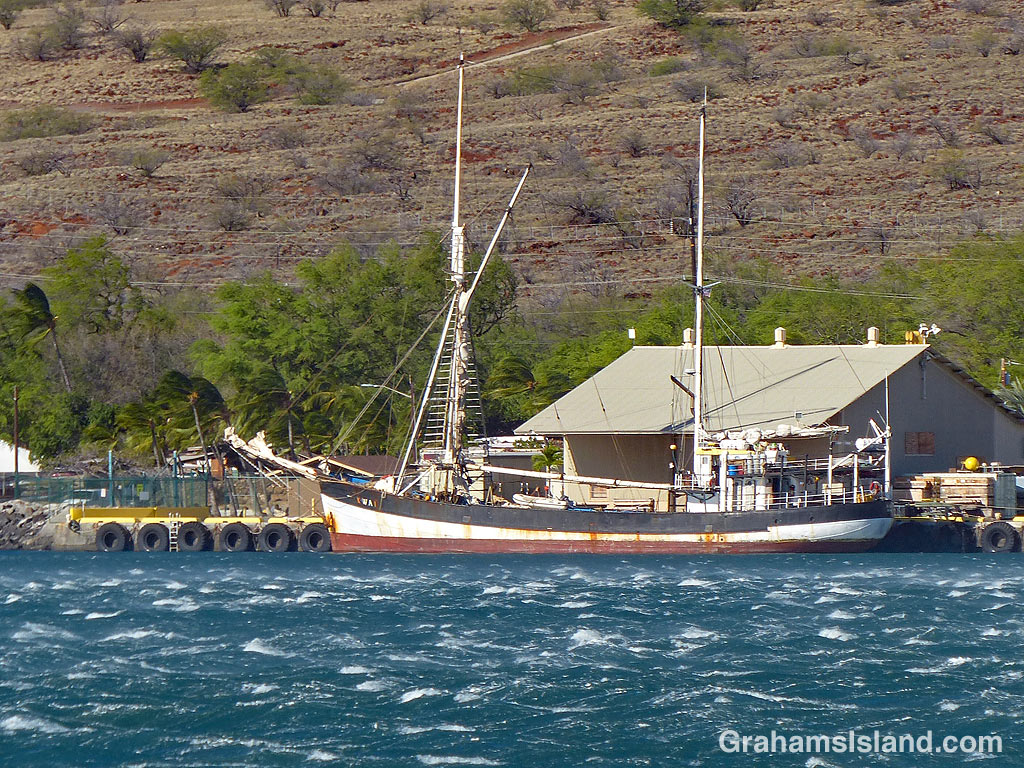
I saw this interesting-looking vessel tied up alongside the wharf at Kawaihae harbor for a week or more in the first half of January. When I searched for information about the boat, I learned that it’s the Sailing Vessel Kwai, a cargo vessel operating between Hawaii and Kiribati and the Cook Islands in the Pacific.
I’m not sure what it was doing in Kawaihae. The boat had been in Honolulu earlier in the month, on completion of its 51st voyage. Their 52nd voyage left Honolulu on January 24. Perhaps they were picking up cargo or doing maintenance in between these dates.
According to the first blog from Voyage 52 (here), the boat returned to the west side of the Big Island to search for a ghost net. A ghost net is a large clump of fishing nets that can be very destructive to ocean life and that will eventually wash up on shore somewhere being equally problematic when it does so. This net was estimated to be 50 feet long and deep by 70 feet wide.
A tracker had been attached to the ghost net so that it could be retrieved by a larger boat but, according to the blog post, when SV Kwai reached the area, only the tracker was found and retrieved. I haven’t heard or seen anything else about the net, so it is either still floating in the ocean or has washed up somewhere.
For more information about Sailing Vessel Kwai, go to svkwai.com. For more information about the ghost net, go here.
This week’s Sunday Stills challenge theme is ‘Sweet.’ See more offerings here.
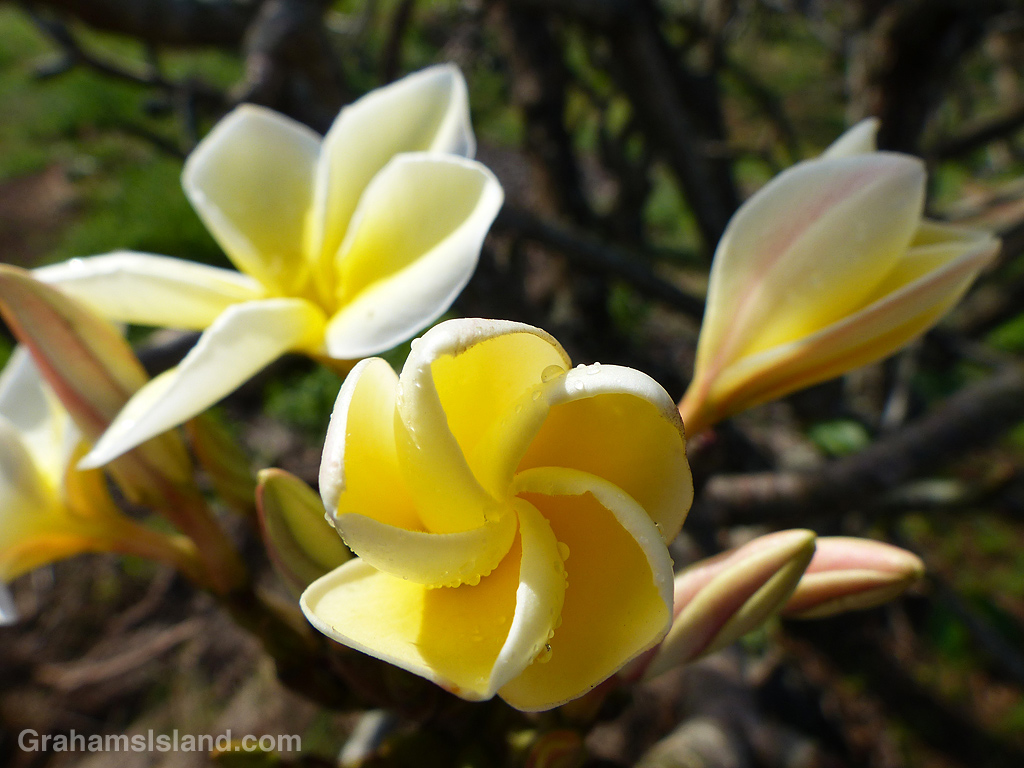
In my part of the Big Island, plumerias are starting to bloom in their curious way where the flowers appear on the tree before the leaves. In warmer parts of the island, plumeria trees are already thick with flowers and leaves. But in all cases, the flowers are redolent with a sweet perfume.
I like this photo because the blooms in this cluster are at different stages, from the tightly-curled buds at bottom right to the fully-open bloom at top left. But my attention was drawn to the flower unfurling in the center, all shadows and light and dappled with raindrops.
Also posted in response to Bushboys Last Photo for January 2020 challenge. See more responses here.
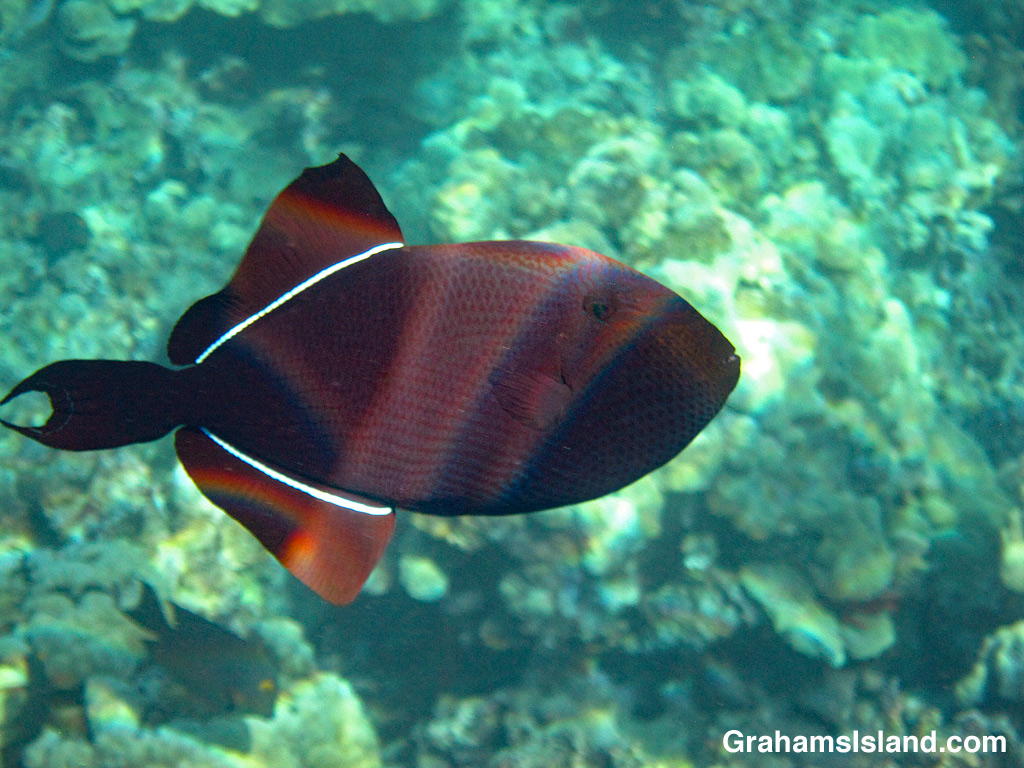
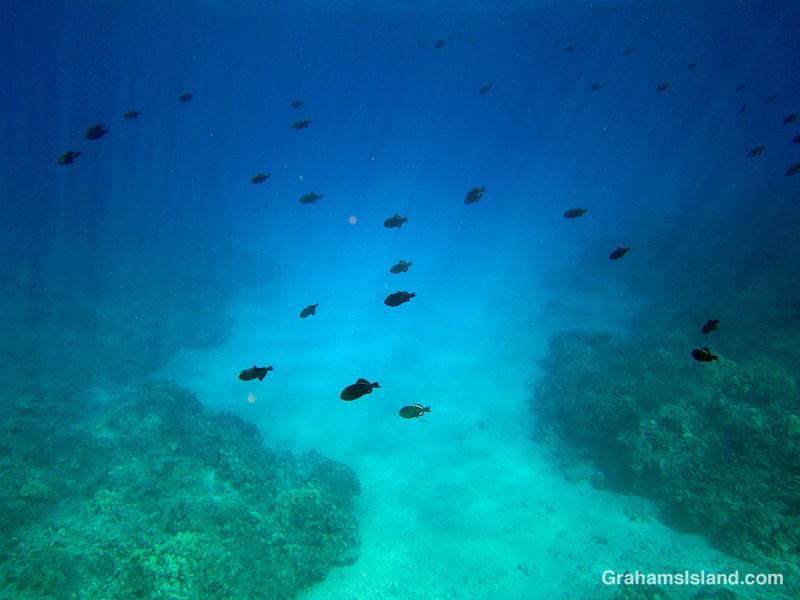
Black triggerfish are one of the most common fish on the reef, at least in certain areas. They are unremarkable in appearance being mostly black with bright, pale blue lines at the base of the dorsal and anal fins (top photo).
They are usually seen in large groups, moving through the water as they feed on plankton and algae (middle photo).
But when they’re agitated, bright blue lines radiate from around the eye. The more agitated, the more coloration, until they can appear like the fish in the bottom photo, with blue-green lines over the whole body.


This week’s Friendly Friday challenge theme is ‘Simple Joys.’ See more responses here.
This is one of the beaches at Hualalai Resort on the Kona coast. While the resort is private and access is restricted, Hawaii law states stipulates that the public has a right of access along the beaches and shorelines in the state situated below the “upper reaches of the wash of the waves.”
Any developments along the shore are required to provide designated public access points. The catch here is that sometimes parking at these places is limited and if it’s full, getting to the beach involves a much longer walk.
At Hualalai, there’s a good-sized parking lot, an easy walk to the coast, and a paved trail along the waterfront. Some beaches can be quite crowded but, in my experience, it doesn’t take much of a walk to find a stretch of sand that is either sparsely populated or entirely deserted. And in my book, walking along the coast, past palm trees and sandy beaches, is definitely a simple joy.

This northern mockingbird blended well into its surroundings as it wrestled with some kind of larvae, prior to eating it.
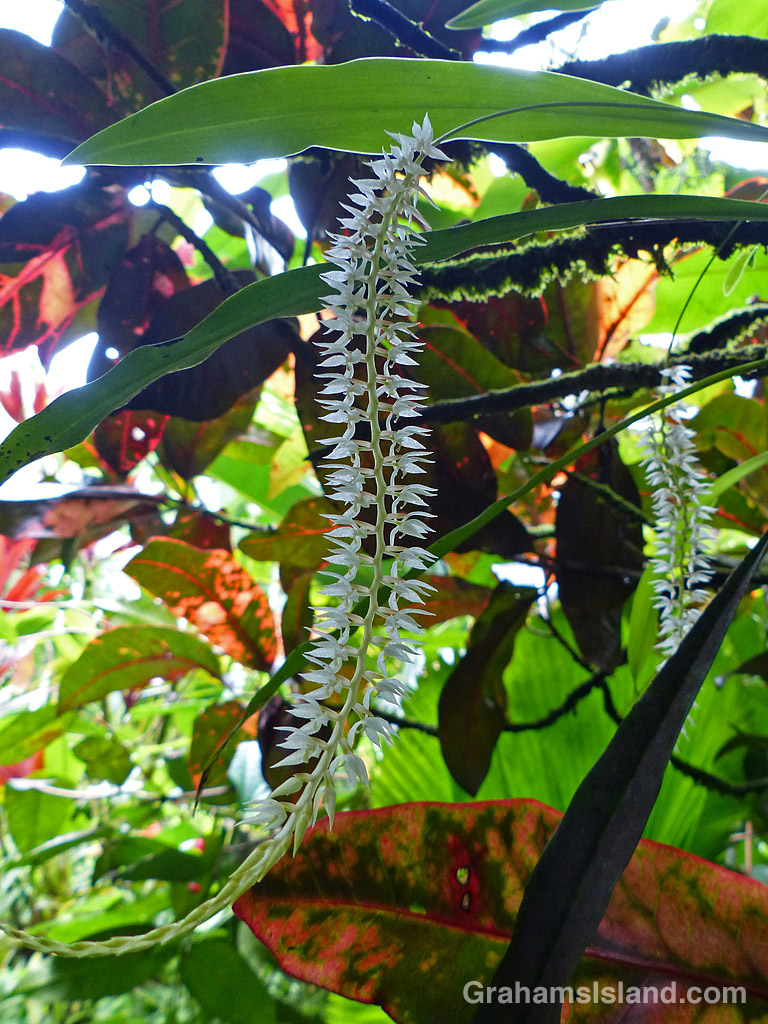
This orchid is a native of Borneo and the Philippines and has been known in the orchid world since at least 1908. This one was at Hawaii Tropical Botanical Garden. For more information about Hawaii Tropical Botanical Garden, go to htbg.com.

