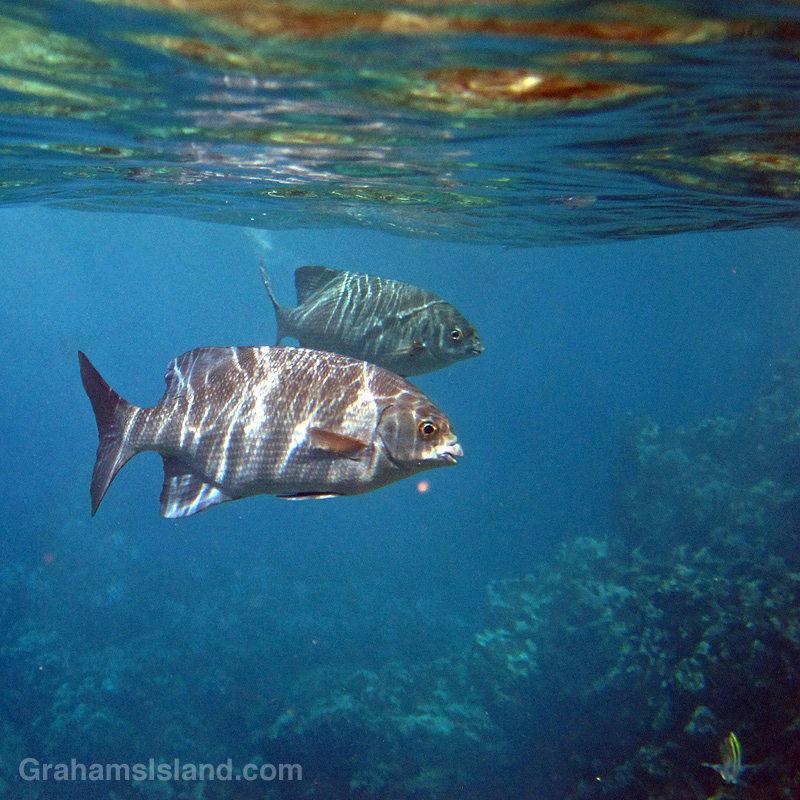
A pair of highfin chubs catch the light as they cruise just below the surface. These large fish are quite common and are typically seen fairly close to shore and near the surface of the water.


A pair of highfin chubs catch the light as they cruise just below the surface. These large fish are quite common and are typically seen fairly close to shore and near the surface of the water.


I recently went hiking in the Kalōpā State Recreation Area, not far from Honoka’a, on the northern end of the island. I’d been there before, but only to check it out, so this was an opportunity to explore the trails more thoroughly. One of the treasures of this area is that it features plants that were on the island before even the native Hawaiians arrived.
The recreation area is about 100 acres, and it neighbors the 500 acre Kalōpā Forest Reserve. At an elevation of around 2,000 feet, and on the wet side of the island, it’s cool and damp. There are a variety of trails that intersect and criss cross, which allows hikers options from short loops of less than a mile, to a 6+mile hike around the perimeter.
I took one of the longer routes and it reminded me greatly of hikes I’d taken back in the Pacific Northwest where I used to live. Light rain, water dripping from the overhead canopy, ferns bordering the trail, and tall trees stretching up into a grey sky. These were all features of those hikes. Only the species were different. Eucalyptus, ohia, and kopiko instead of firs and cedars.
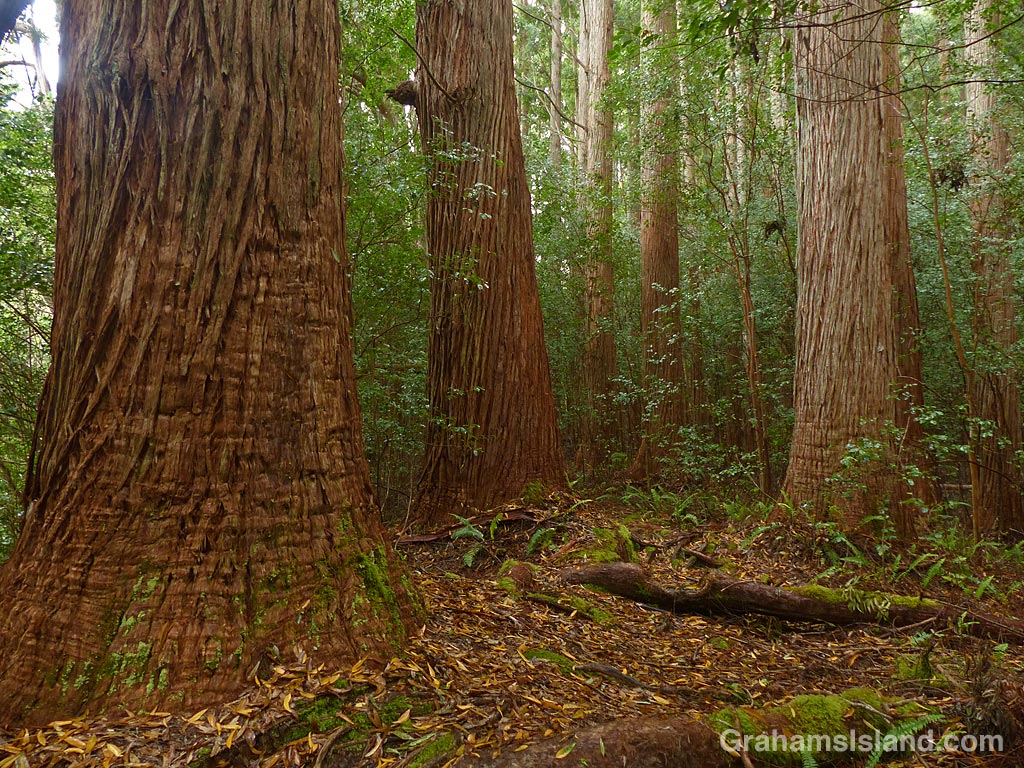
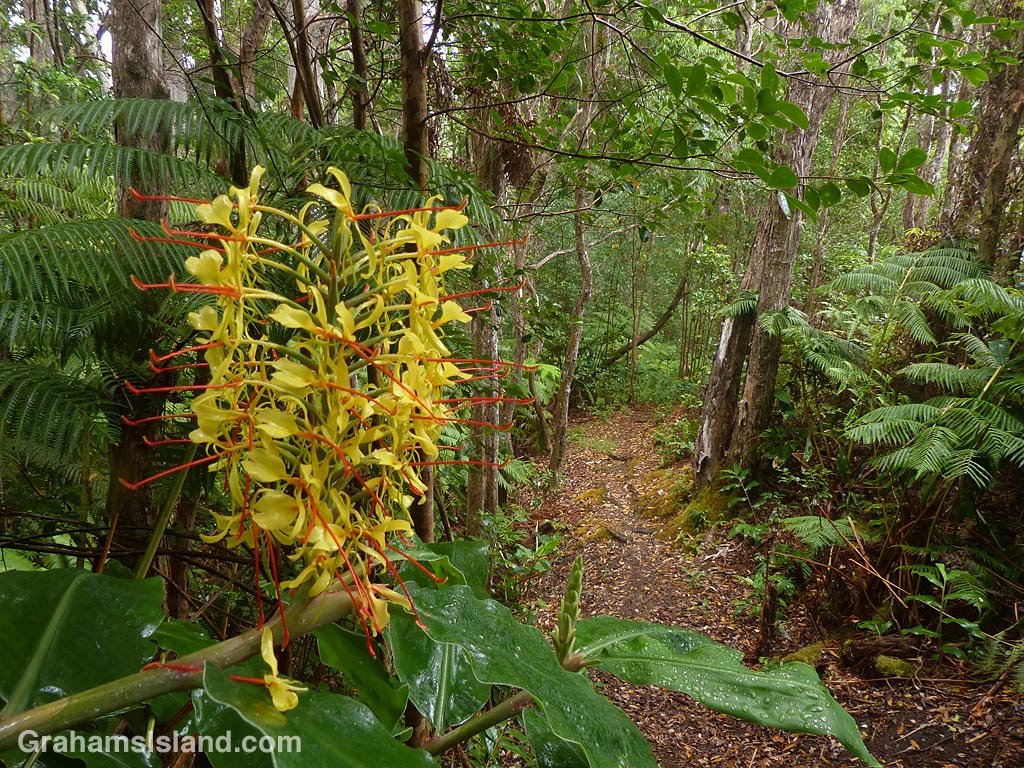
The photos show – Top: towering trees line the trail alongside Kalōpā Gulch. Above: A view down into Kalōpā Gulch. Flash floods often race down this gully so it’s a good idea to watch your step. Third photo: Strangler figs envelope native trees and take over resulting in weird, twisted shapes. Below: The old Jeep Road, bordered by invasive kahili ginger, cuts through the center of the area. It’s hard to imagine anyone driving this trail.
For more information about hiking in Kalōpā State Recreation Area go to bigislandhikes.com/kalopa-state-park/.


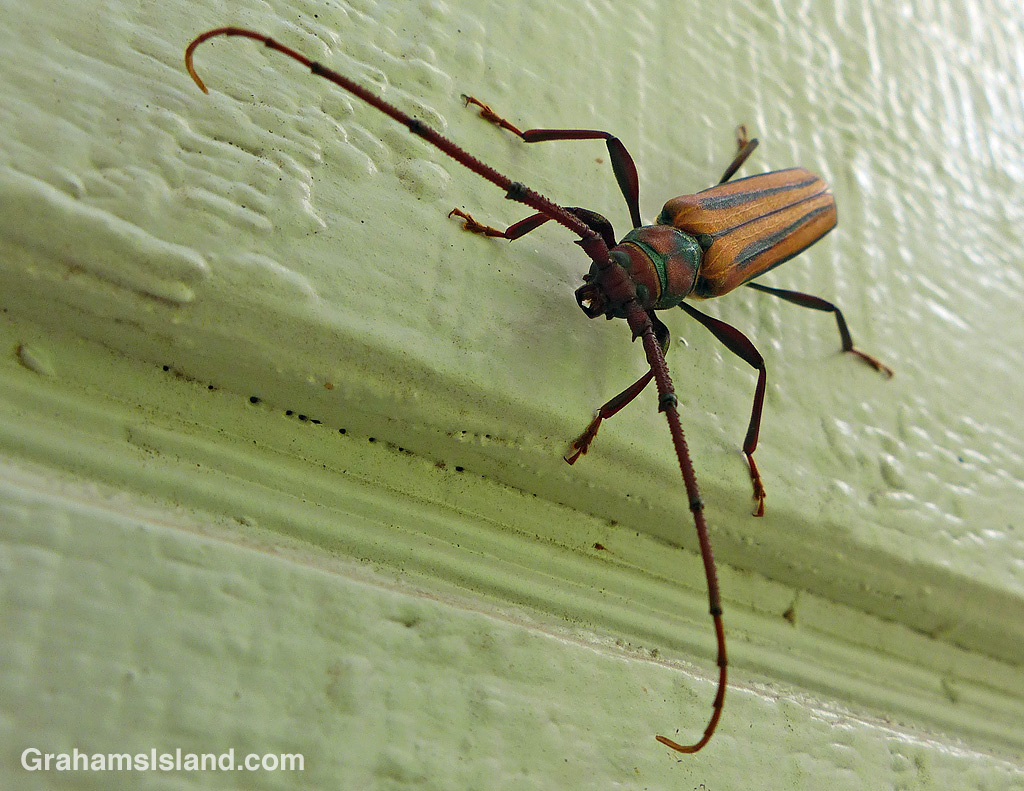
This week’s Sunday Stills challenge theme is ‘A Bug’s Life.’ (See more offerings here.) My last Sunday Stills post could have worked for this one, but instead I’m going with this fine-looking monkeypod borer beetle (Xystrocera globosa), also known as the raintree borer beetle among several alternative names. This longhorn beetle comes from southeast Asia where it is widely distributed.
As is often the case, it’s the larvae of this beetle that cause problems. They don’t tend to harm healthy trees but will bore into the sapwood of monkeypod trees that are distressed by drought or other reasons. While the damage caused is seldom enough to kill an entire tree, it can result in the loss of limbs.
This one hung out on a wall at work for a couple of days before it disappeared, possibly to a nearby monkeypod tree.
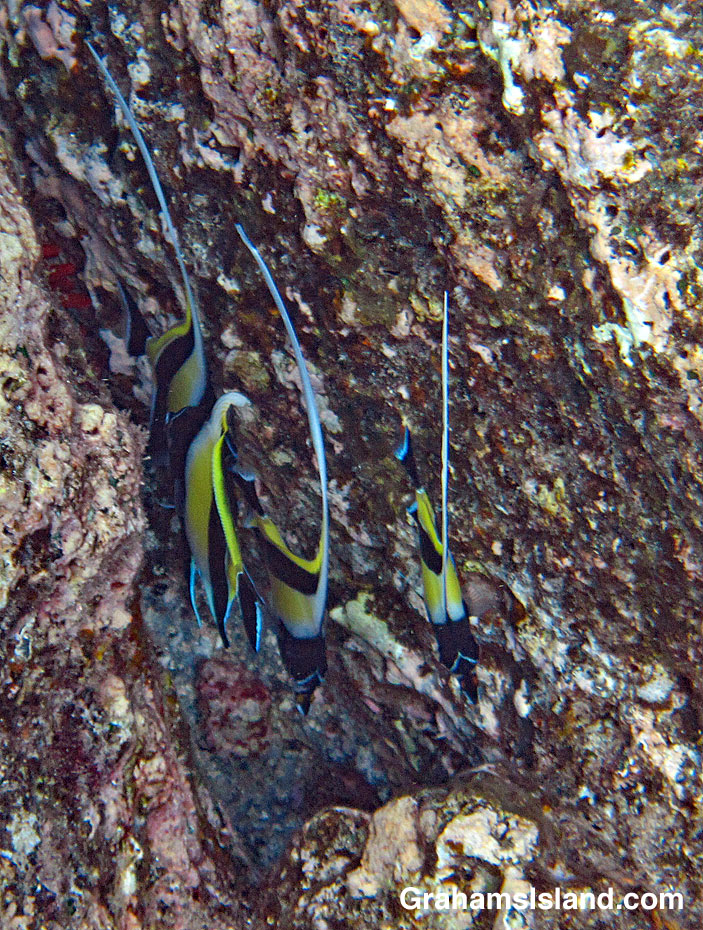
I came across this group of young moorish idols meandering through a crack in the rocks and liked how the location accentuated their narrow but curvy look.
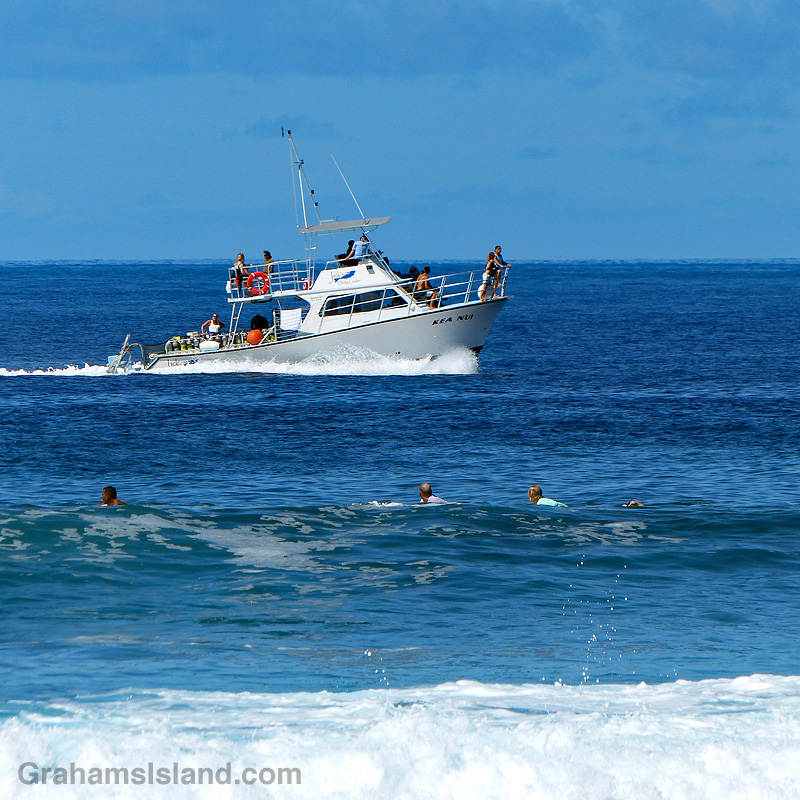
This week’s Friendly Friday challenge theme is ‘Balconies.’ See more responses here.
Not having any photos of balconies in the traditional sense, I thought I’d pop for a photo taken yesterday when I was down in Kailua Kona. Here, a powerboat heading north passes some surfers waiting for a wave.
The boat is taking people out to a dive, and like many of these kinds of boats this one has a couple of balconies (though they’re not called that in nautical language) where passengers can relax en route to the dive site.

Things to like about the zebra moray eel include that they’re probably the easiest eel to identify. They also tend to be quite long and make visually interesting shapes as they meander through rock and coral.
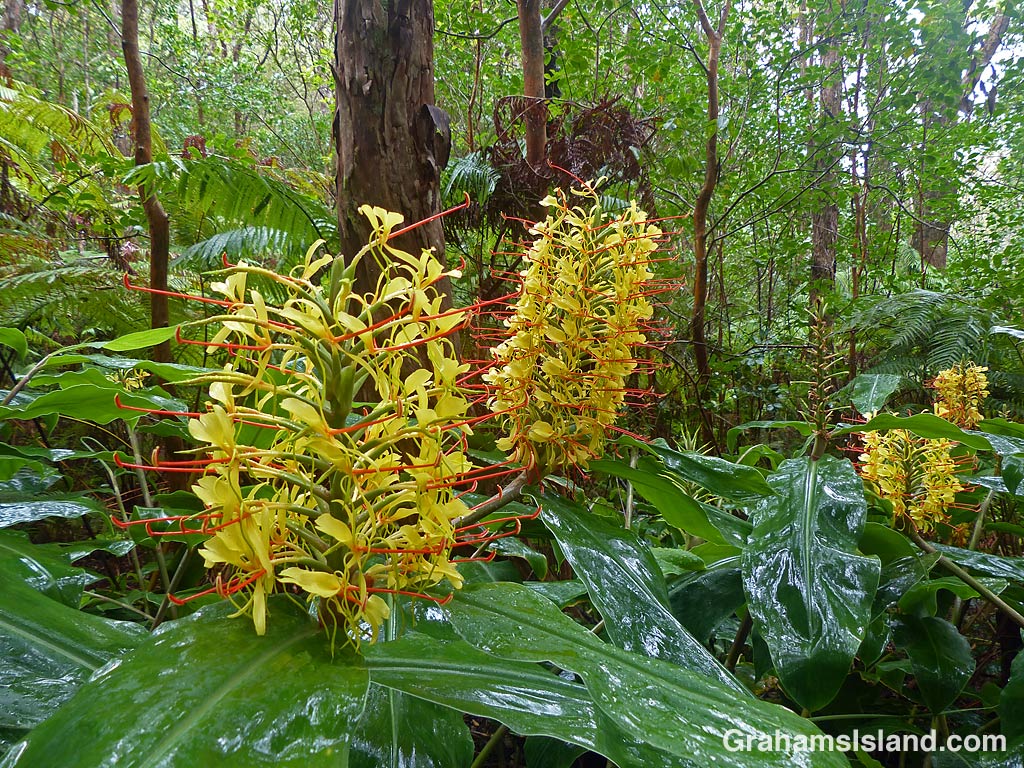
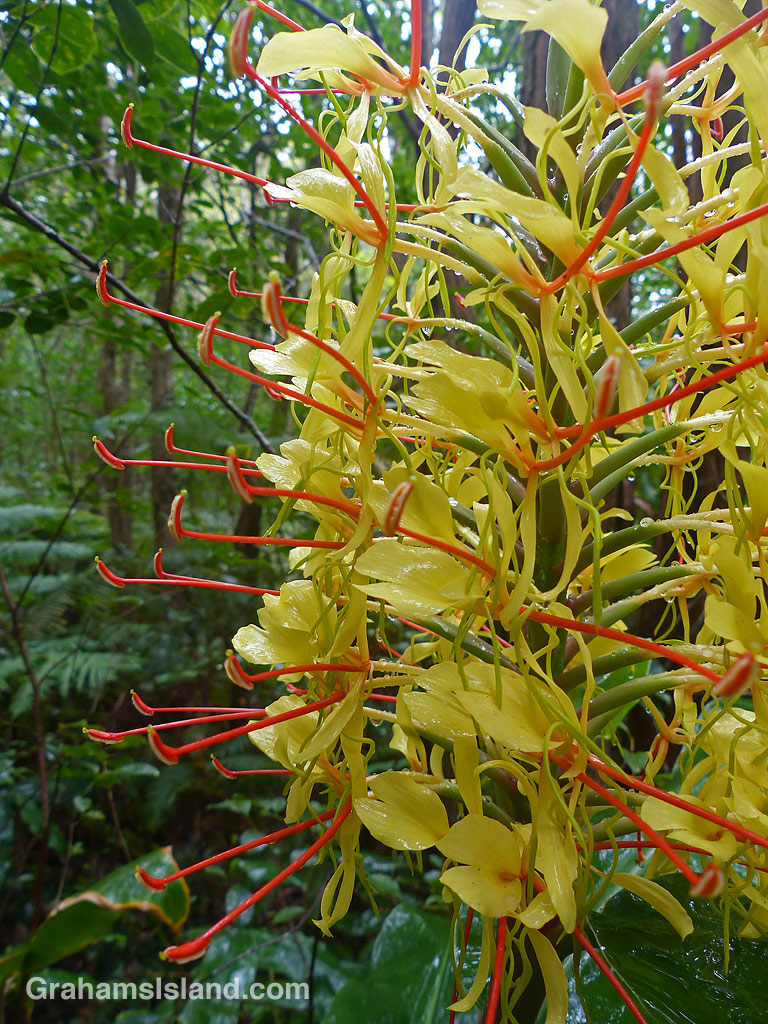
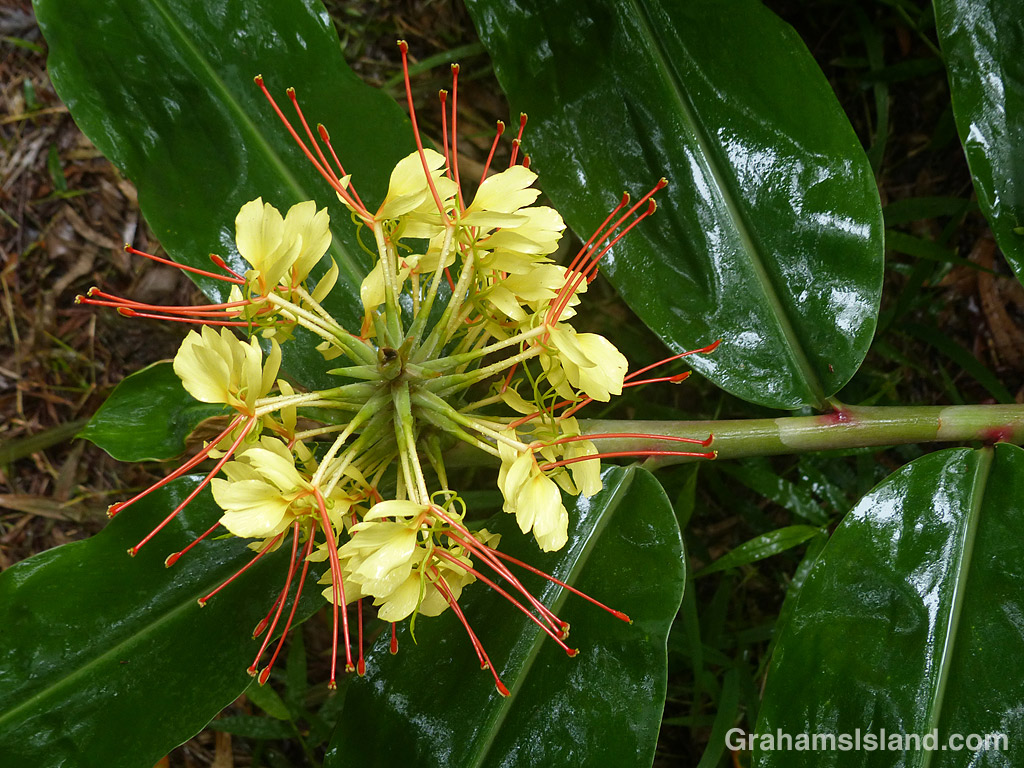
Kahili ginger (Hedychium gardnerianum), a native of the Himalayas, is a gorgeous plant, which puts forth a generous display of fragrant, showy flowers. Too bad then that another description for the plant is ‘invasive weed.’ It thrives in moist areas – pretty much anywhere on the east side of the island. Its rhizomes form dense mats, and crowd out native seedlings, and birds eat the fruit and spread the seeds.
Controlling the spread of this plants requires its complete removal, but even then regular follow up is required as the plant can reestablish from dormant seeds or scraps of rhizomes left in the soil.

The Ka’awaloa Trail starts near the top of Napoʻopoʻo Road, on the edge of Captain Cook – the town that is, not the person. The trail goes down to the water near the Captain Cook Monument on Kealakekua Bay.
As you can see, there are a lot of warnings on the sign. It could be greatly shortened to, “Abandon hope all ye who set foot on this trail.” But there are a couple of things to know about this sign. One is that most people won’t read it. I mean, who needs to waste time reading a dumb sign. The second is that quite a few people will end up in difficulty on the way back up, because the trail really is steep, hot, and exposed. Locals often take extra water with them to help out those in need, but if you don’t meet one of them on the trail, you’re on your own. An iced tea stand two-thirds of the way up could make a killing.
I also like that someone has taken the time to obliterate the word ‘vehicles’ in the ‘No vehicles’ admonishment. A car would never make it and even a trail bike might have a tough time. Perhaps it was just the principle of the thing that someone objected to.

