


This week’s Sunday Stills challenge theme is ‘Signs of Autumn.’ (See more responses here.) So here two photos of a stink bug. I think this is probably a four-humped stink bug or rough stink bug (Brochymena quadripustulata), but it could be a brown marmorated stink bug (Halyomorpha halys).
What does this have to do with ‘Signs of Autumn?’ Well, stink bugs start gathering around and inside homes in the fall. As natives of Southeast Asia, they’re sensitive to the cold and spend winter in a hibernation-like state called torpor. So in the fall, they’re looking for a suitable safe spot and a warm house fits that bill. They also have a tendency to gather in large numbers, so one stink bug could quickly be joined by many others.
Stink bugs don’t bite and they’re not dangerous, but they can release an offensive smelling liquid if threatened, hence their name. Because of this, they’re not exactly welcome house guests.

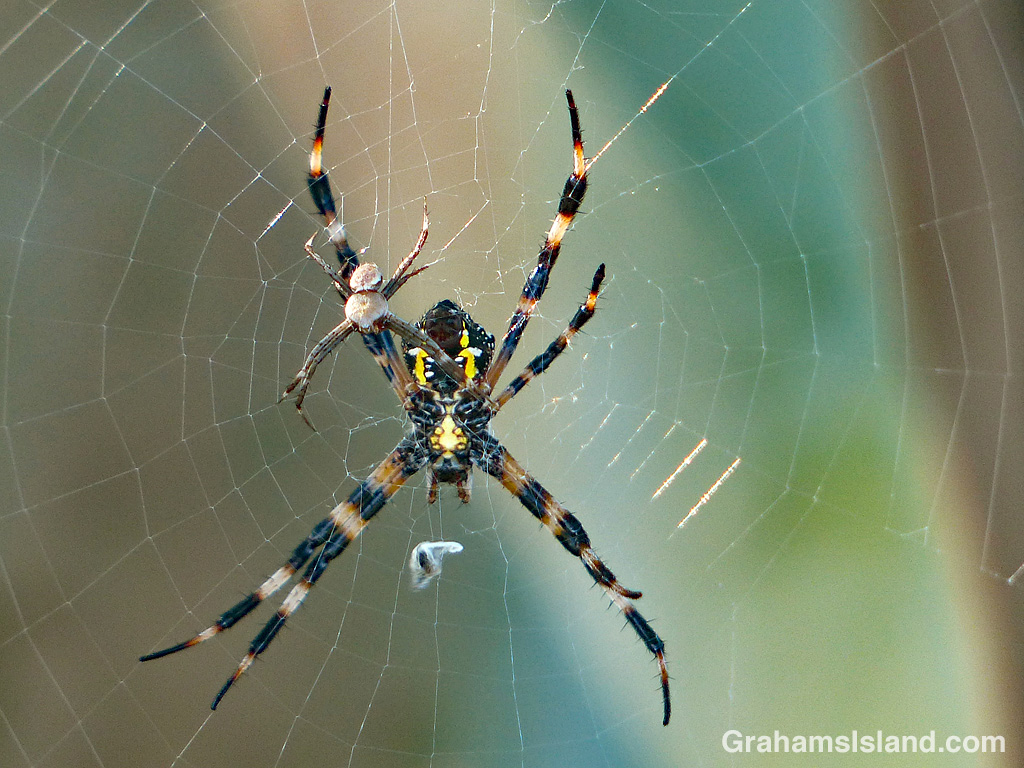
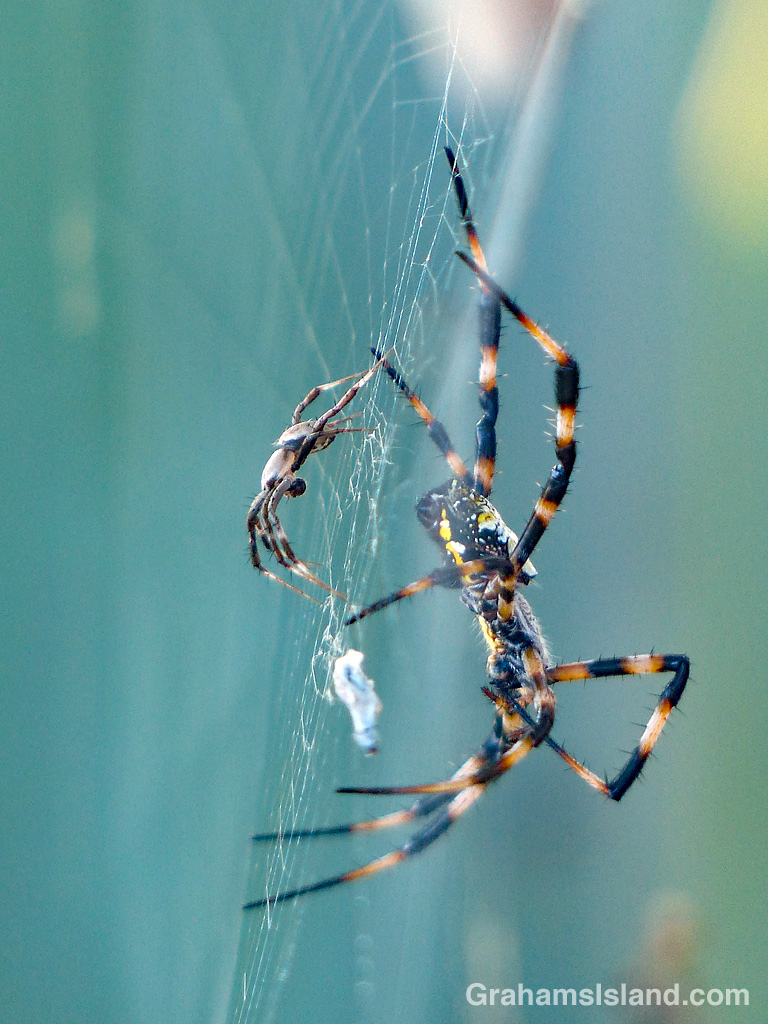 This pair of Hawaiian garden spiders spent a long time facing off from different sides of the female spider’s web. The male is the smaller, drab spider, while the larger female has splashes of yellow, orange bands on her legs, and a bejeweled back, which can be seen
 Graham's Island