
Bright yellow mamane flowers are not only a cheerful sight, but also very popular with bees. They were all over these mamane flowers on the upper slopes of Pu’u Wa’awa’a.


Bright yellow mamane flowers are not only a cheerful sight, but also very popular with bees. They were all over these mamane flowers on the upper slopes of Pu’u Wa’awa’a.


Yesterday, I posted about the dangers geckos pose to a praying mantis that has been living on a spider lily.
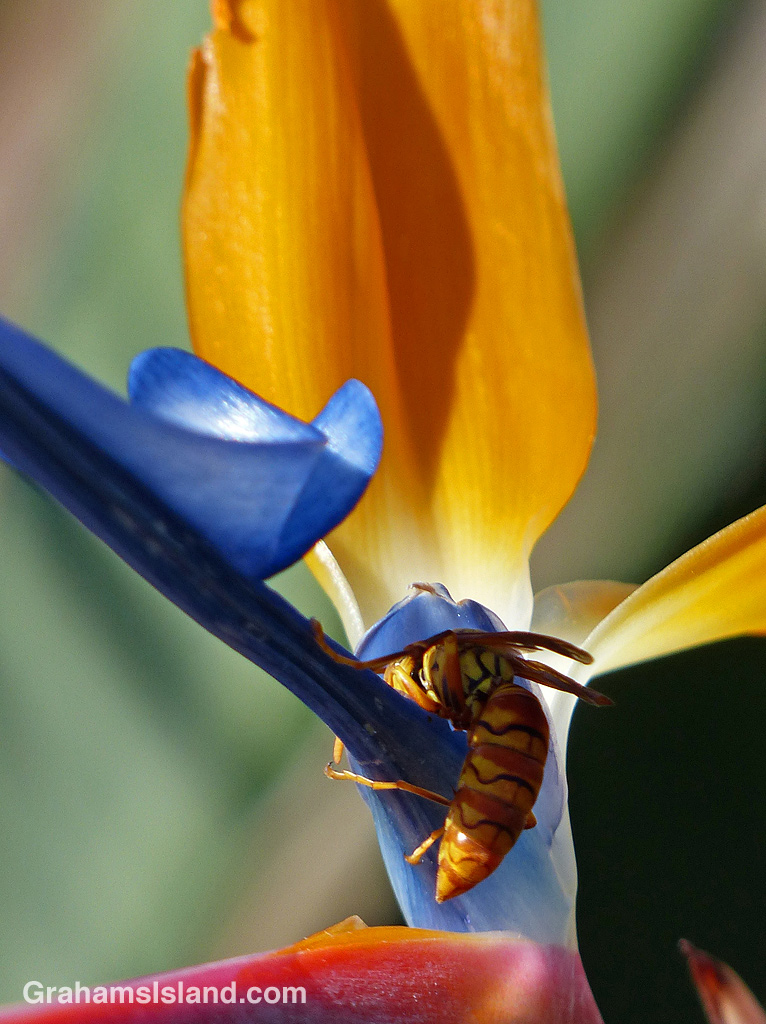
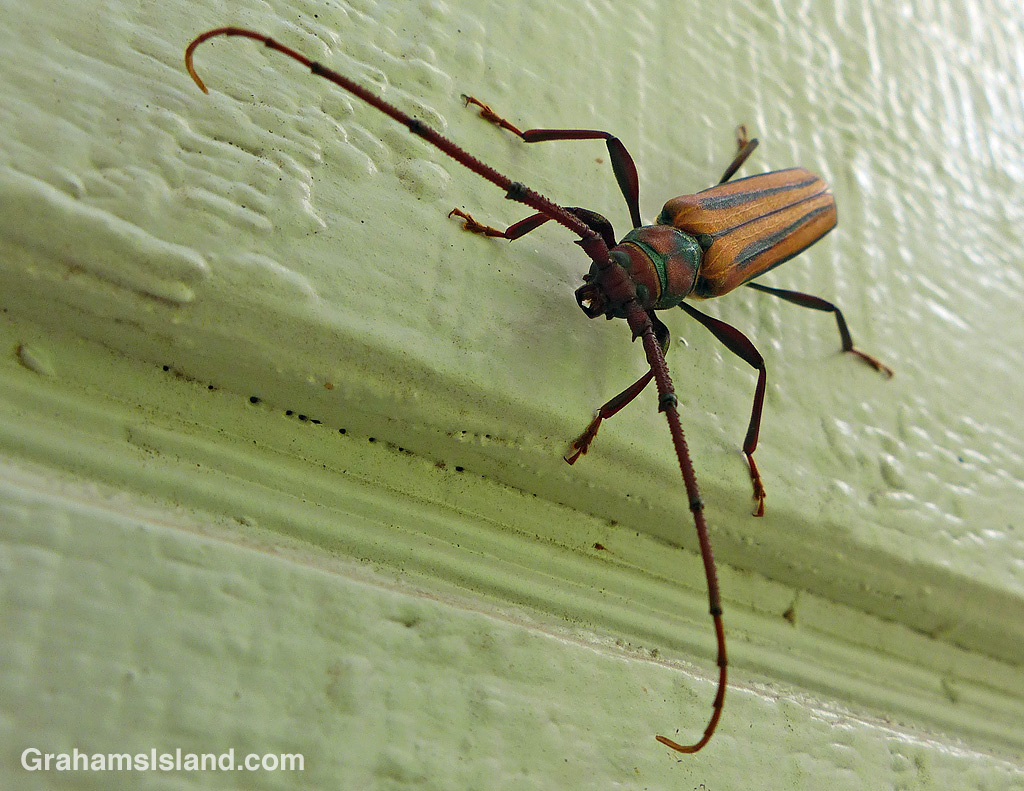
Today’s post is about the advantage of that location for the mantis. The primary benefit is that the spider lily’s flowers attract wasps, bees and other insects. In these photos, the mantis has caught a good-sized paper wasp, securely held by its forelegs. It held the wasp in that position for a while, but once it began its meal, it made short work of devouring the wasp. Next day I saw it with a bee and a beetle.
As the spider lily flowers fade, new ones pop up on other stalks, so the insect attraction has been fairly continuous.


For the past three weeks, this praying mantis has been a fixture on this spider lily. The downside of this location is that the plant is a favorite spot for gold dust day geckos. The geckos would no doubt like to eat the mantis, but have so far not made a move that I’ve seen. I suspect that one reason for this is that the geckos have learned that, while the mantis looks like it never moves, when they do, they move fast. A few futile sorties against a mantis would make any gecko decide to seek easier prey.
Tomorrow, I’ll post about the upside of this location for the mantis.

I always feel a bit sorry for cows that are plagued by the masses of flies that gather on their bodies. But I also find interesting the patterns made by the black and white cows, the direction of their hairs and the black spots of the flies themselves.

A grasshopper (schistocerca nitens) suns itself on the edge of a leaf.


This praying mantis had been hanging out on this spider lily for a few days. I don’t know whether it was working hard there, but I did like how it mopped its brow in the second photo.

A bee, already heavily laden with pollen, flies in to examine a rose jatropha flower.


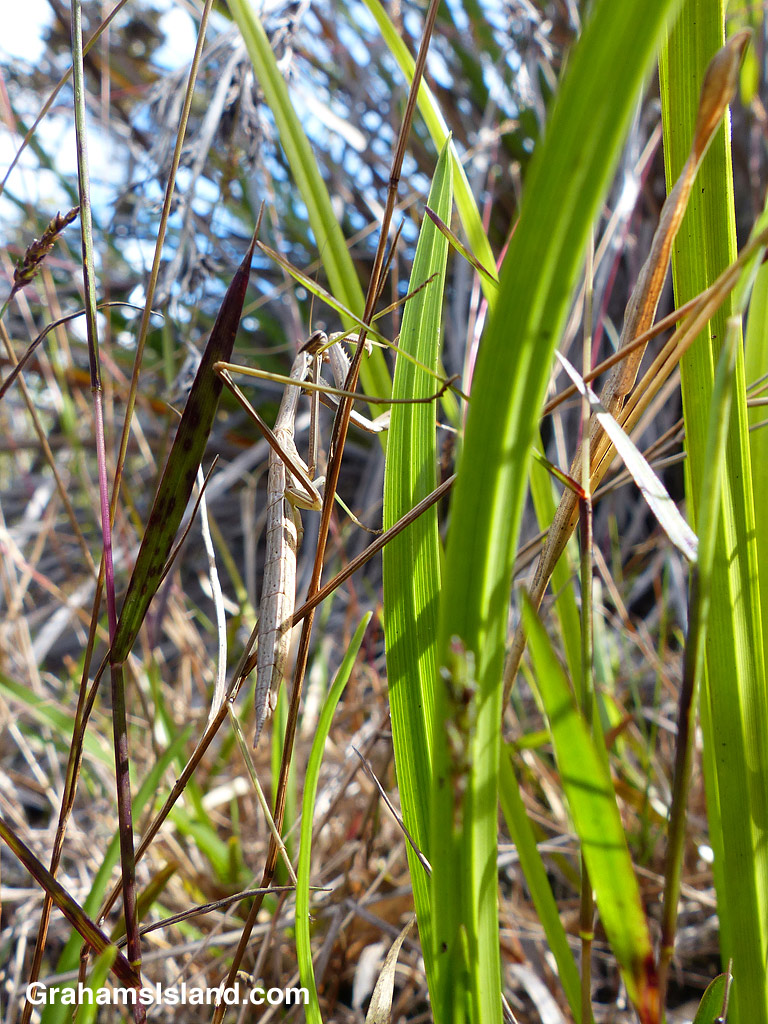
It might not be on a stick, but this stick insect blends into it surroundings of green and dry grass.