Category Archives: Animals

Praying mantis

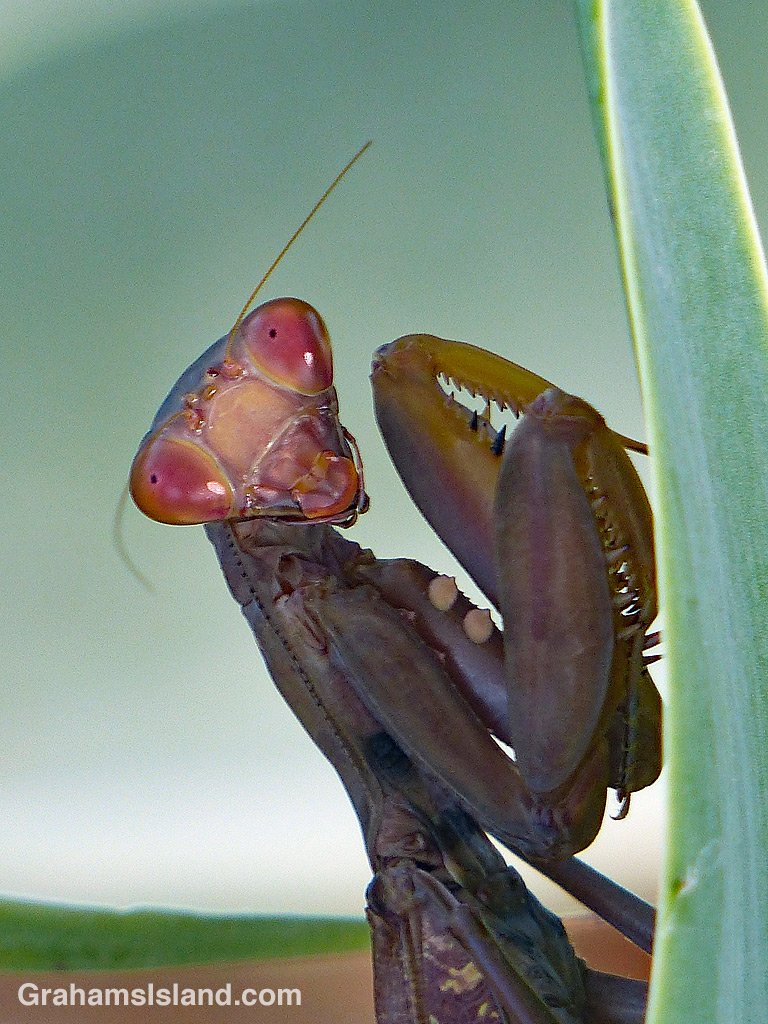
I usually think of praying mantises as just that, but there are more than 2,000 mantis varieties. Ones that are most often seen in Hawaii include Giant Asian mantis (Hierodula patellifera), Carolina mantis (Stagmomantis carolina), and European mantis (Mantis religiosa).

This one is probably a Giant Asian mantis. While I usually see green mantises, they can change color so this reddish one is not that unusual.

Thanks to Hawai’i Insect ID for help with identifying this. For more information about Hawai’i Insect Identification, go to flickr.com/groups/hawaii-insect-id/pool/.

Cattle and egrets

This week’s Friendly Friday challenge theme is ‘Odd Couples.’ See more responses here.

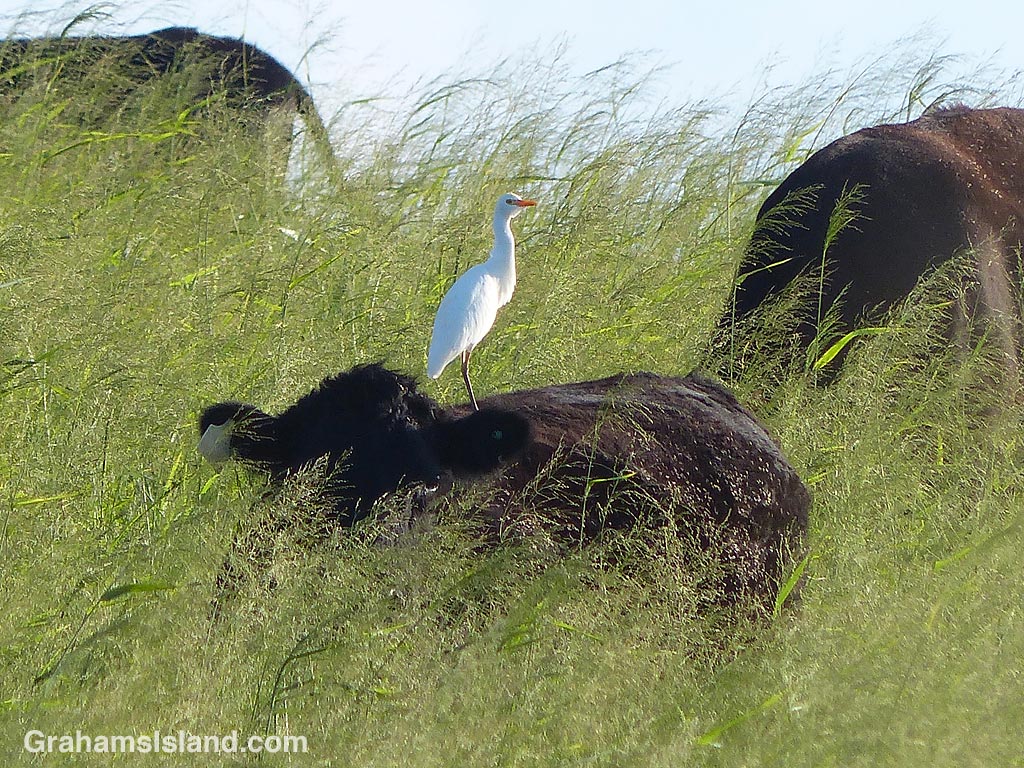
It’s common to see cattle egrets in the company of cattle and yet they still make an odd pairing – the bulky, stolid cow or bull and the slender, flighty cattle egret. The benefits for the cattle egret are clear. They catch insects and other prey disturbed by the grazing cattle (or horse, sheep, goat, etc.). But they also remove flies and ticks from the cattle themselves, which also benefits the cattle.

The cattle also don’t seem to mind being used as a perch. I imagine the egret above giving directions: ‘take a left up ahead buddy.’ The one in the middle is switching allegiances. Below, gotta find someplace with a view when in the tall grasses.

Lesser brown scorpion

In my seven plus years of living in Hawaii, I’d never encountered a scorpion. Then I saw my first, squashed, in a box I was emptying. Earlier this week I saw my second. It wasn’t dead, but it wasn’t well. I think it had been stepped on, which is why its large, claw-like pedipalps aren’t so prominent in this photo.

This is a lesser brown scorpion (Isometrus maculatus), the only scorpion species in Hawaii. It’s not as dangerous as some scorpions, with a sting similar to bees. It’s also not common, in part because it’s nocturnal and also small. This one was less than two inches long.

Brown anole

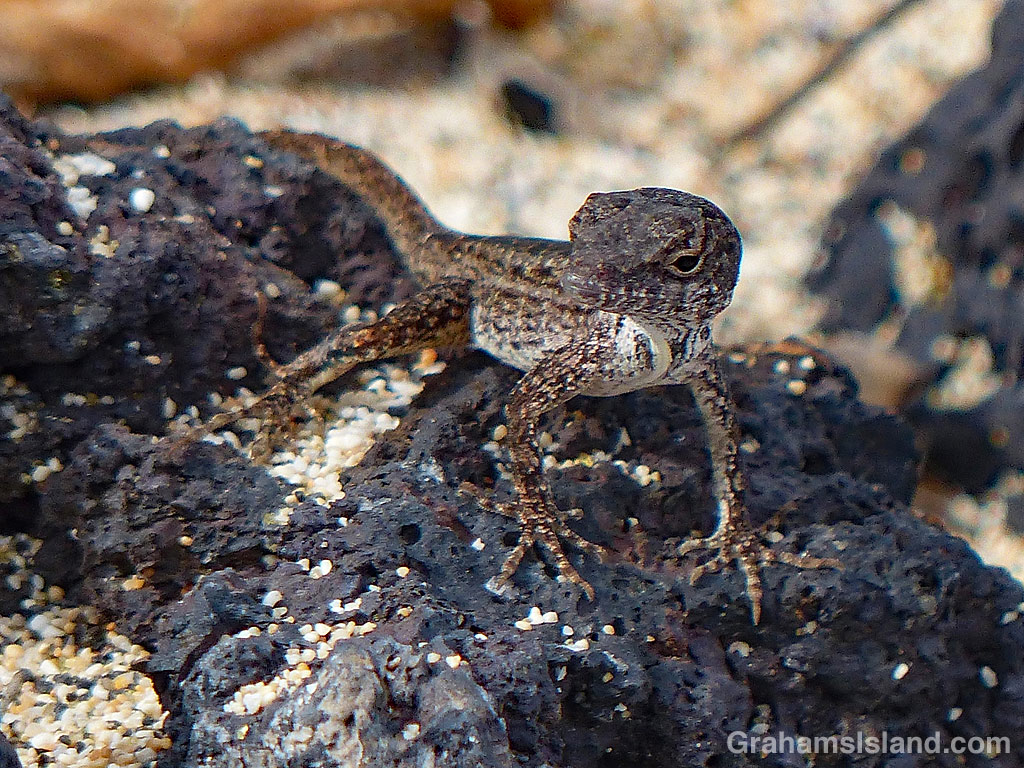
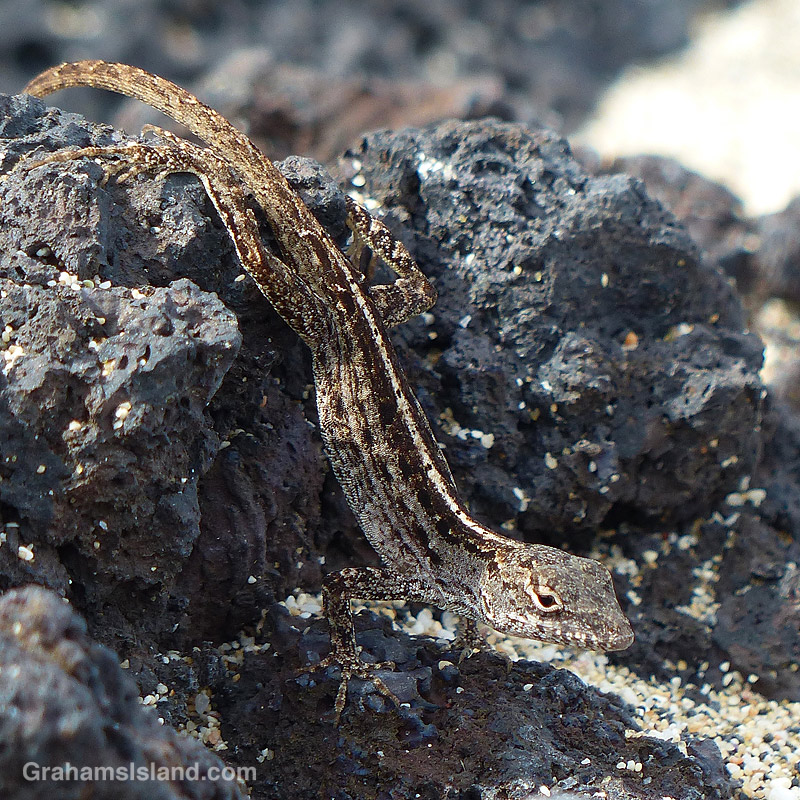
I’ve posted plenty of anole photos on this blog, but they have all been of the green anole or Carolina anole (Anolis carolinensis). Some of these photos have shown an anole that is colored brown, but that’s because the green anole can change color to brown.

It was only recently that I saw my first brown anole (Anolis sagrei), which has a quite different look and different markings to the green anole. Native to Cuba and the Bahamas, it is considered quite invasive and will outcompete green anoles for territory. This one was next to the coast path through Hualalai Resort on the Kona coast.

Short-horned cattle

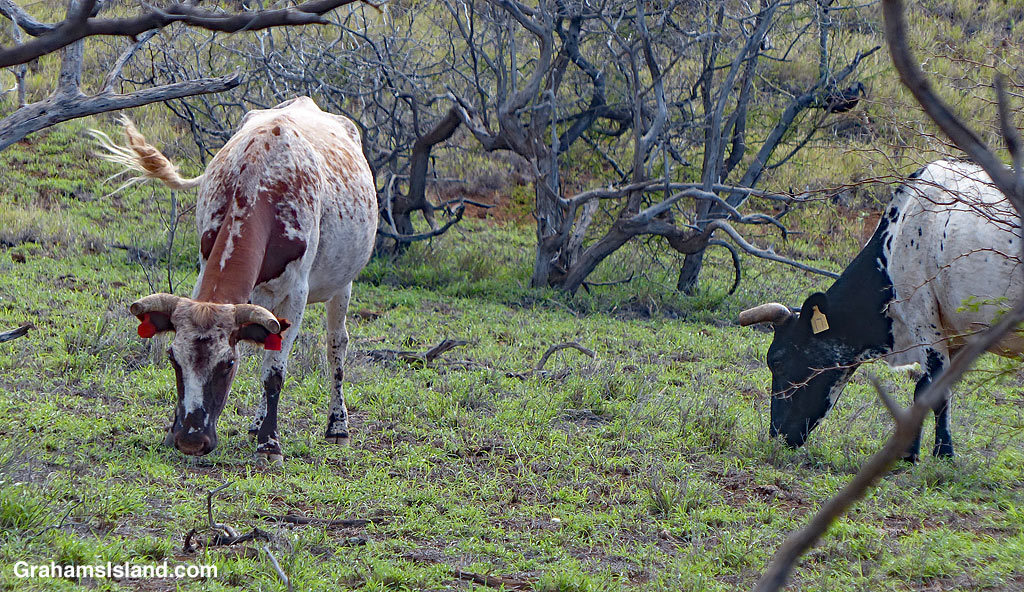
These are a couple of short-horned cattle, not shorthorn cattle which is an established breed of cattle. These two have had the ends of their horns removed. Unlike dehorning, when the entire horn is removed, removing only the tip is not supposed to be painful because that part of the horn is just keratin.

This kind of procedure is probably to reduce the risk to people handling the cattle, but I have seen these cattle in the company of others with a full set of horns, so I guess it’s a case of let the handlers beware.

Bees on an agave flower

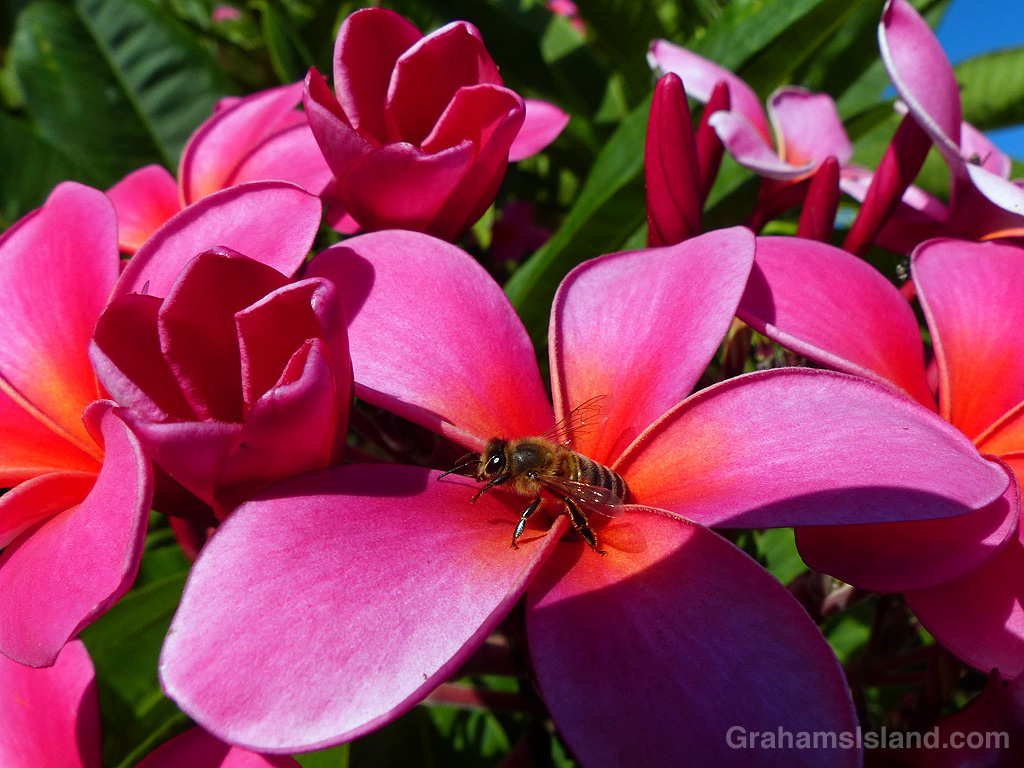
I’ve posted about agave attenuata before, in January of last year (here). The plants are blooming again and, once again, the bees are all over them. This year I wanted to focus on the bees in flight, just before they settled on the flowers to forage. This resulted in a fair number of bees buzzing around my head, but I worry less about that than I used to. I took a lot of photos, most of which were free of bees, or featured bee blurs.

These were a couple of my favorites, each capturing a bee just before plunging into the bounty within.