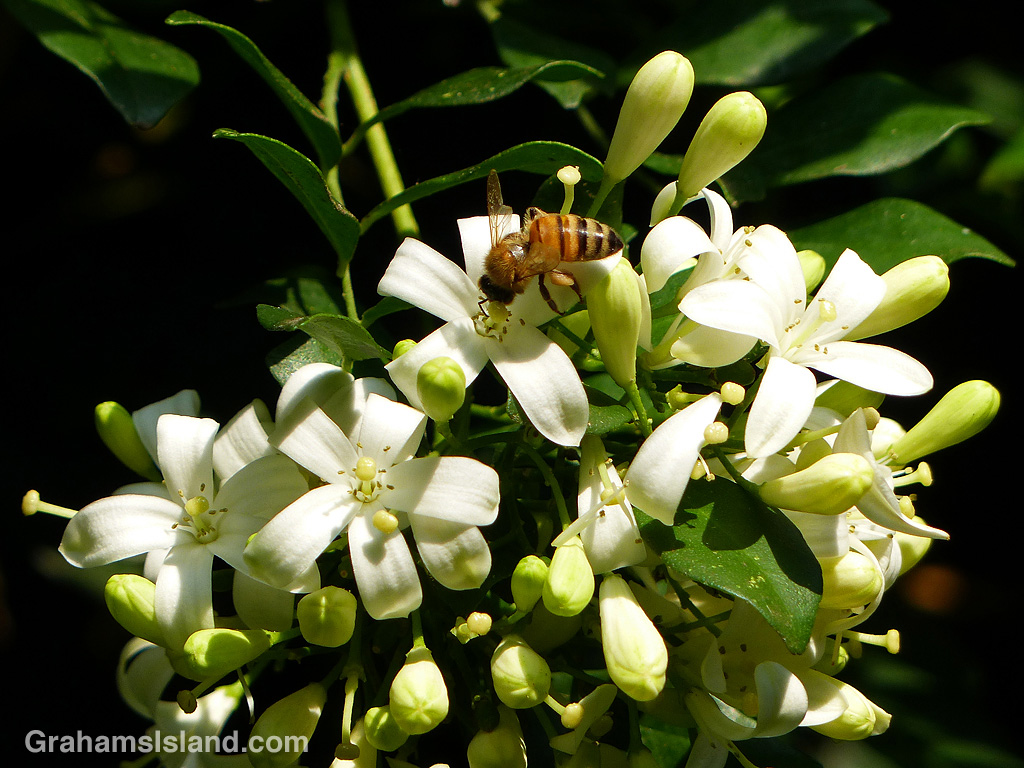
A bee forages on a mock orange. When the plant is in bloom, the aroma is thick in the air.

A bee forages on a mock orange. When the plant is in bloom, the aroma is thick in the air.
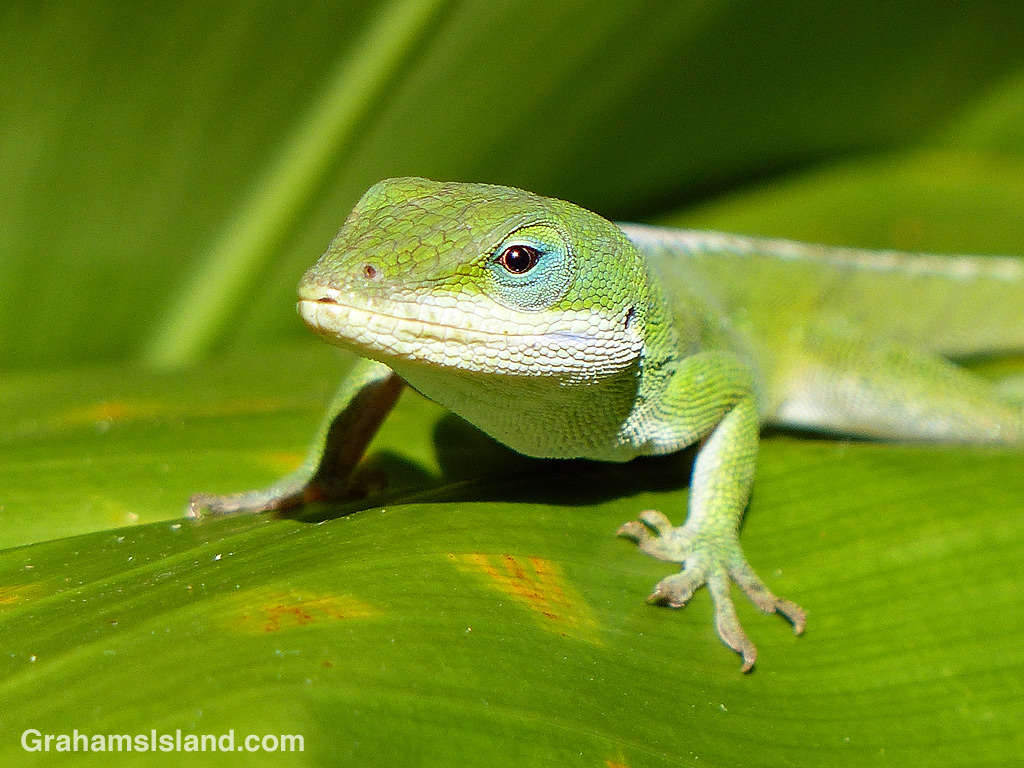
A green anole offers a stern expression as it keeps a wary eye on me.

The fireweed control moth (Secusio extensa) was deliberately introduced from Madagascar in 2012 because its larvae feed on fireweed. Unlike many other introductions, the moth was first confined to a study area to make sure it would not wreak havoc on native species. Having passed that test, it was released into the wild.
I’m not sure how much impact the moth is having on the fireweed, but I think it’s a pretty and quite striking moth.

I saw this pair of rusty millipedes mating on a dirt road. The male is on top and can be identified by a gap in his legs at his seventh body segment. The legs have been replaces by gonopods, the male’s sexual organ which he uses to transfer sperm to the female. The sperm comes from gonopores which are located in the third segment of the body, and it must be moved to the gonopods before mating.

The title says it all, but the markings of the gecko, and in particular its eyes, make this photo for me.

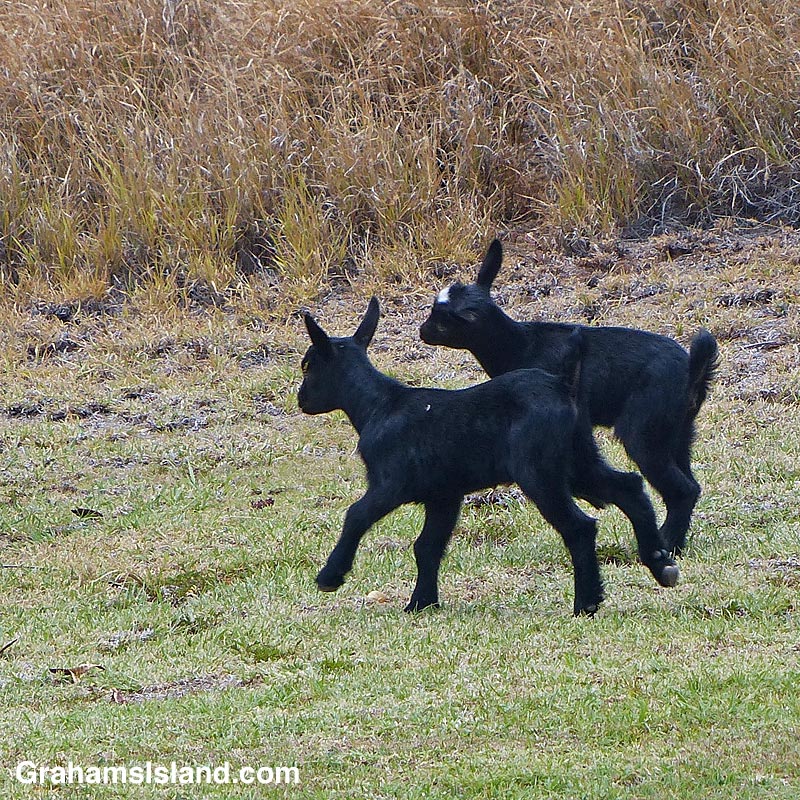
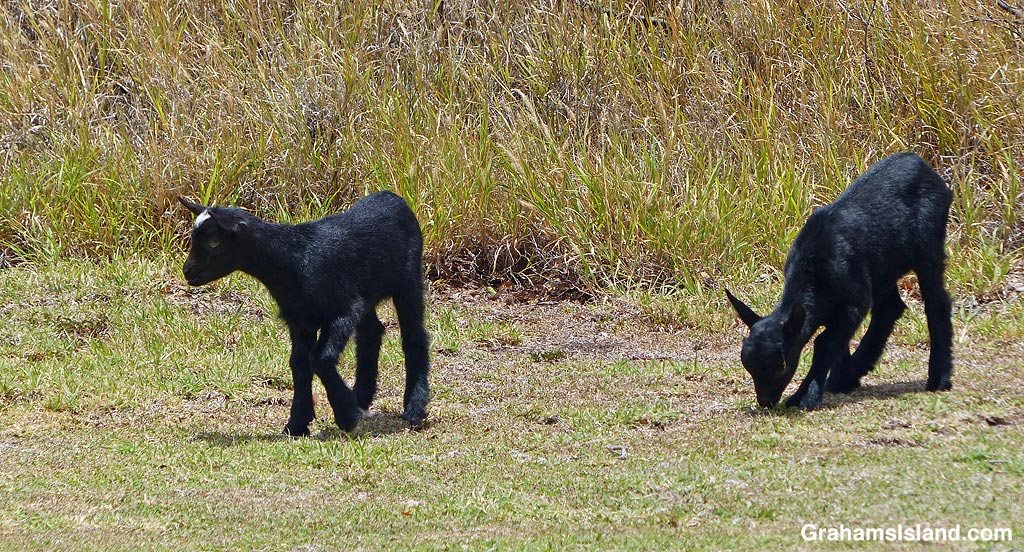
A pair of baby goats frolic with their mother in close attendance.

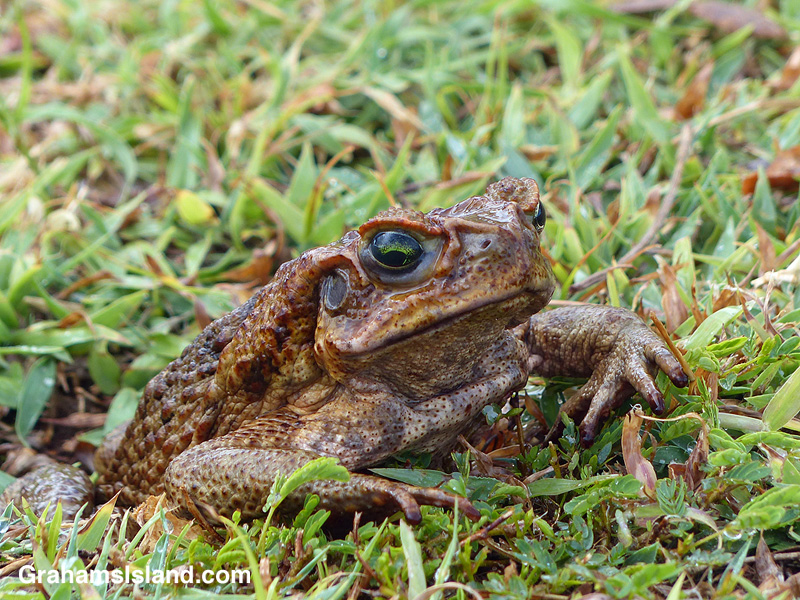
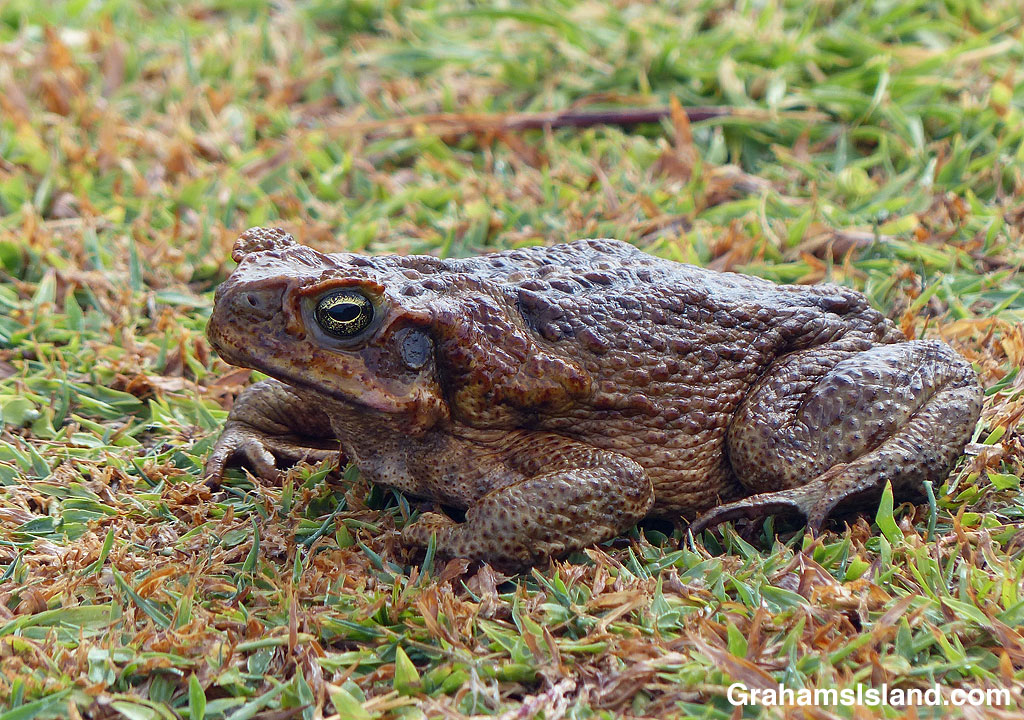
This week’s Sunday Stills challenge theme is ‘Zen.’ (See more offerings here.) This is a cane toad and, despite the exceedingly grumpy look, it found a moment of zen in the sanctuary of this sprinkler.
Cane toads were introduced to Hawaii to control pests, such as the cane beetle, in sugar cane fields. As with many such introductions, the results were mixed. The toads do eat an assortment of undesirable insects, but also breed prolifically so that they can become pests themselves.
They are the world’s largest toad and have poison glands that can release a toxic substance onto their skin, so they should be handled with care or not at all.
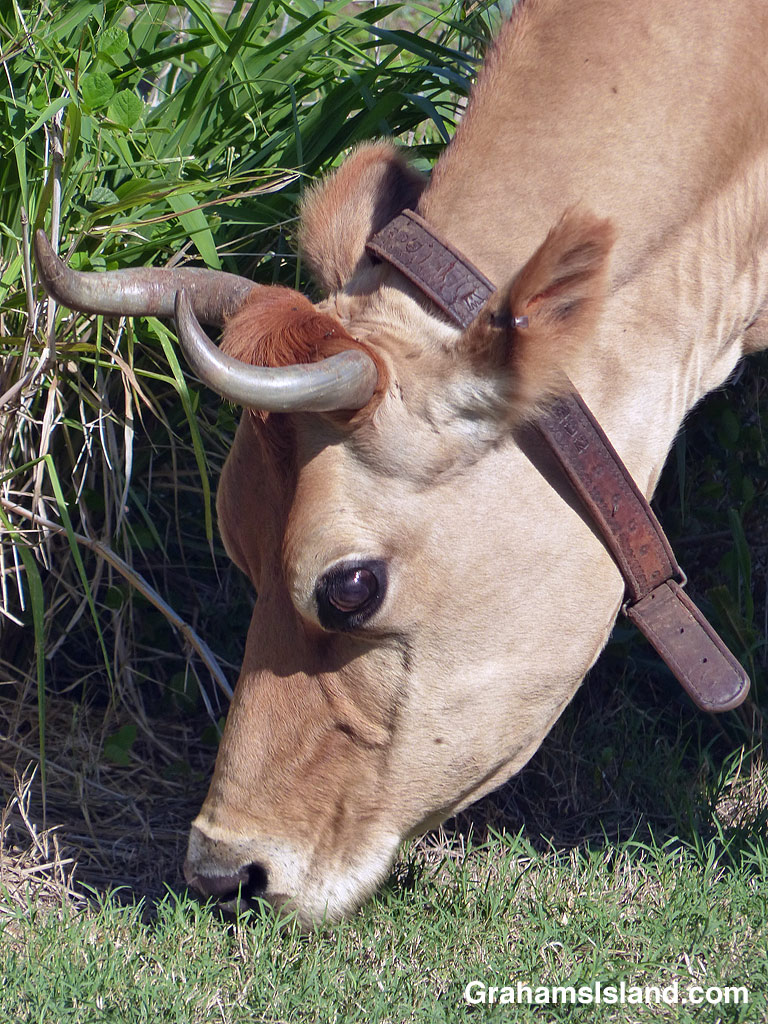
Upolu is home the last dairy on the Big Island. It has a large herd of cows, mostly black and white holsteins, but with a few other kinds mixed in. However, this cow is a little different. It’s the only one I’ve seen with a collar or horns.
I get the impression this is somewhat of the dairy’s pet, which is allowed to wander. And lately, it’s been wandering on the road. When I drive by it looks up and then continues munching grass, which grows well by the road.
 Graham's Island