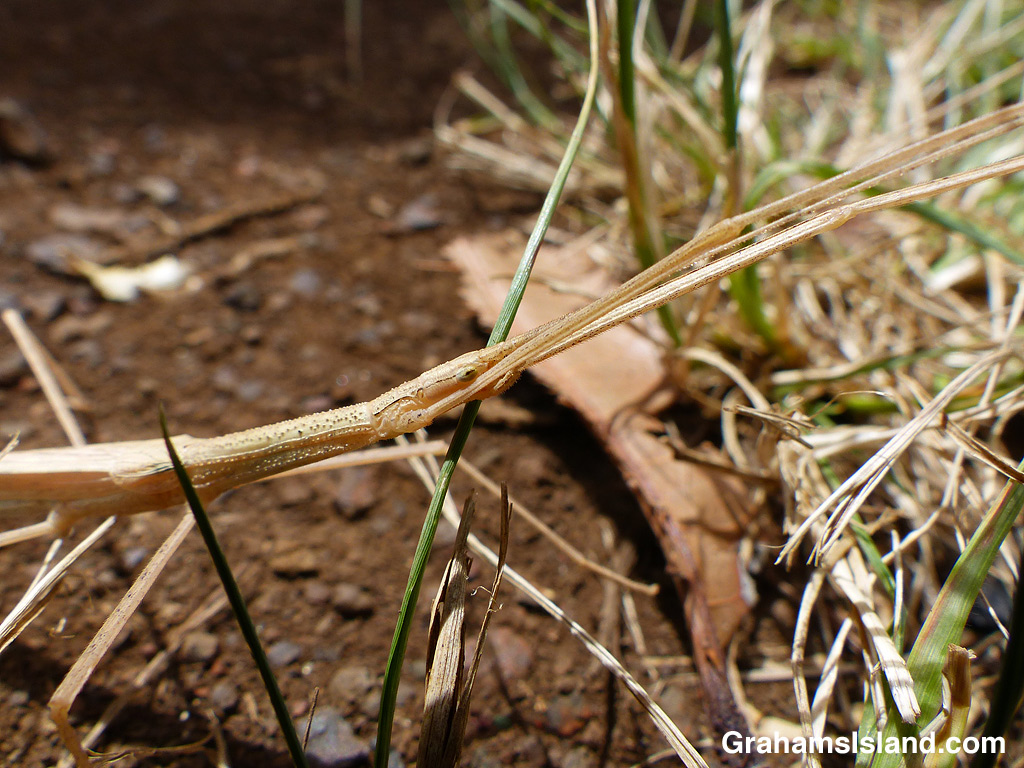

It might not be on a stick, but this stick insect blends into it surroundings of green and dry grass.

It might not be on a stick, but this stick insect blends into it surroundings of green and dry grass.


This passion vine butterfly was feeding on passion flowers, but it will feed on many other flowers, too. It gets its name because passion vines are the host plant for the passion vine butterfly’s caterpillar. Those caterpillars spend their days munching leaves, many of which have little yellow bumps on them. The bumps, which can be seen in the photos, are the plants’ way of trying to fool the butterflies into believing that there are already eggs on the leaves and so it’s not a good spot to lay more.
It’s hard to know how effective this ruse is. I’ve seen many butterflies laying eggs on these leaves, but perhaps some are discouraged. Regardless, the caterpillars will move from leaf to leaf while chowing down, but they never seem to defoliate the plant, which is, in any case, a robustly growing vine.
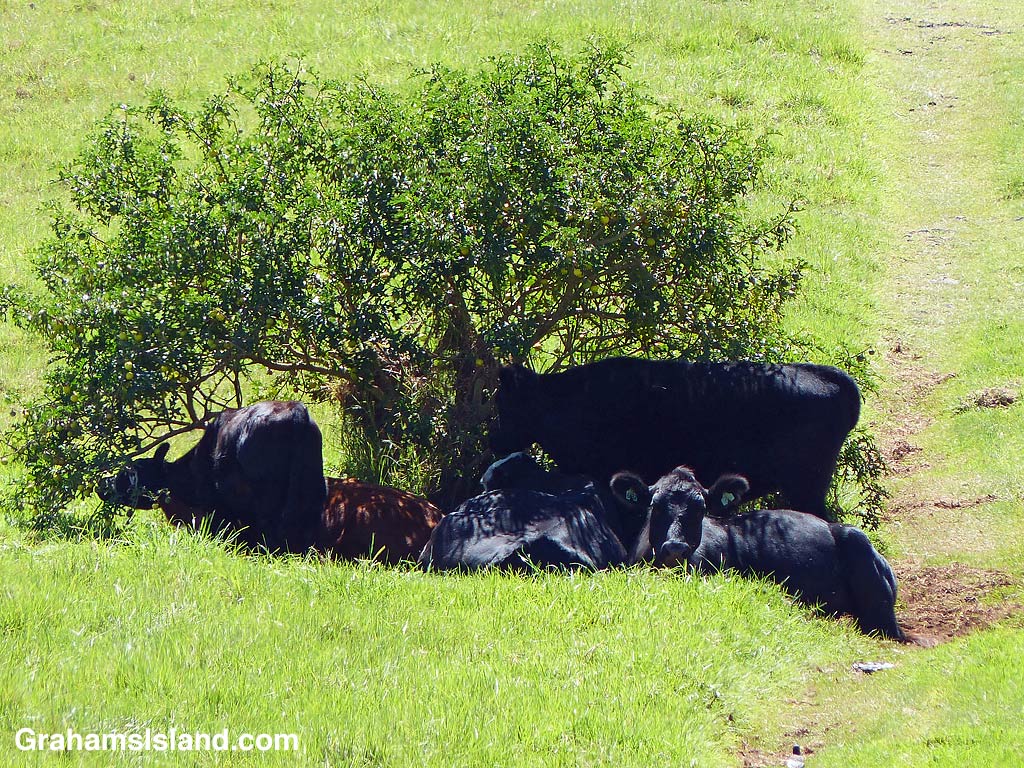
This group of cattle was crowded together beneath a small shrub on the side of Pu’u Wa’awa’a. They were making the most of the scant shade on offer and weren’t about to give it up because of my presence.
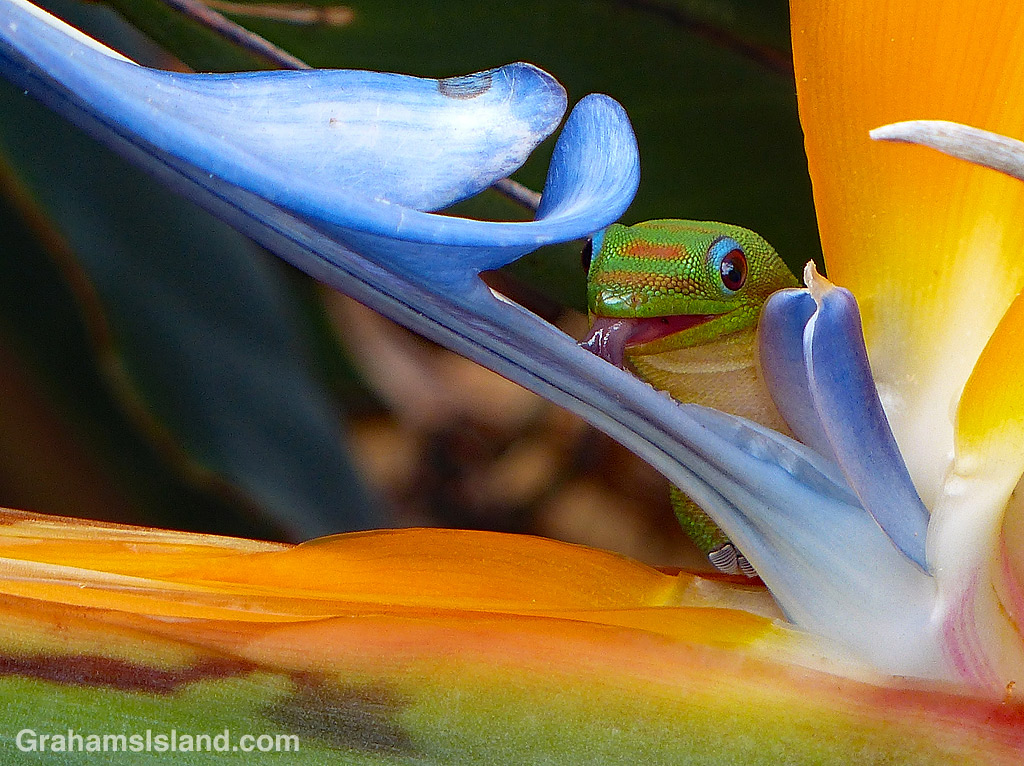
Near the entrance to Upolu Airport there is a clump of bird of paradise plants. When the plants are in bloom I make a point of checking out the flowers as they are a favorite of the geckos. I’ll often see geckos on the flowers, especially if they have not yet begun to fade.
In this case, I saw this smaller gold dust day gecko licking nectar off a flower. The gecko noticed me after a few moments and fixed me with its gaze. It never took its eyes off me, but neither did it stop feasting on the nectar.
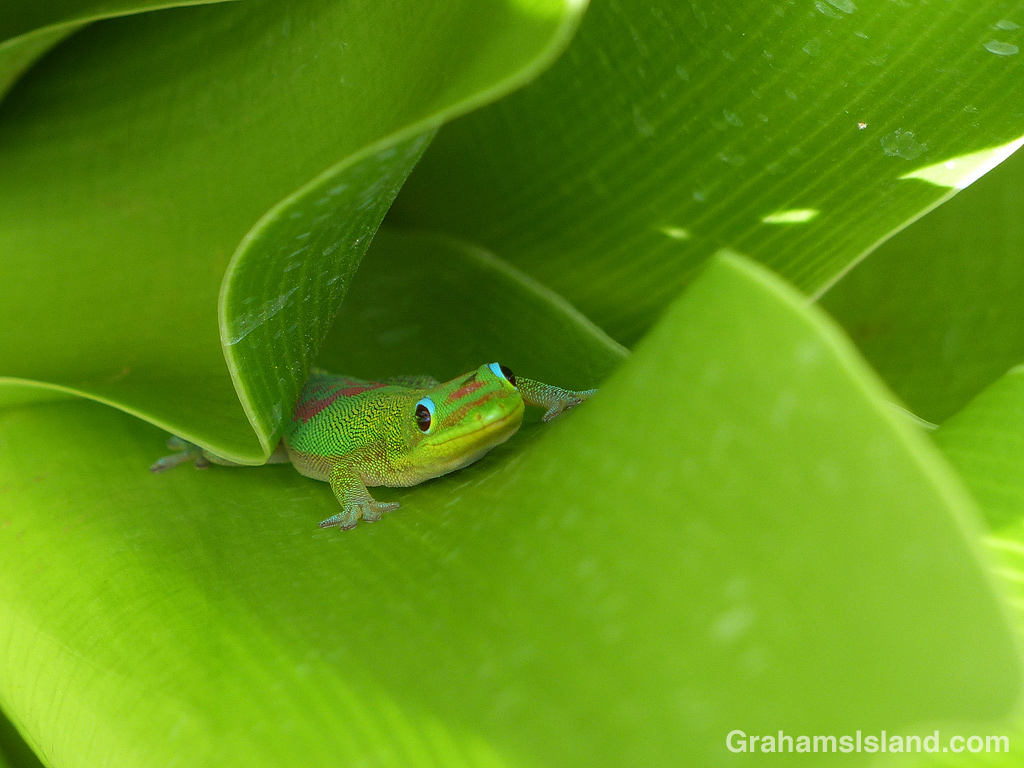
A gold dust day gecko looks up from the strappy leaves of a spider lily. Geckos are often seen on these plants. I think the leaves offer protection and shade, as well as a source of water collected at the bottom, and when it’s in bloom there’s nectar to be had too.

I think this is Pu’u Kaliali, southeast of Waimea, catching a patch of late afternoon sun on an otherwise cloudy day. Waimea is the home to Parker Ranch, the second largest ranch in the U.S.A – there’s a bigger one in Texas of course. The rolling pasture land in the area is home to a large contingent of cattle.

I was driving down Old Saddle Road when I passed this tableau. I thought they’d take off, but I pulled over, walked back up the road, and saw the three of them still there. I took a few photos before the little one wandered off, followed by the other two. It was only as I walked back to the car that I realized there was a whole herd of goats mostly hidden in the long grasses.
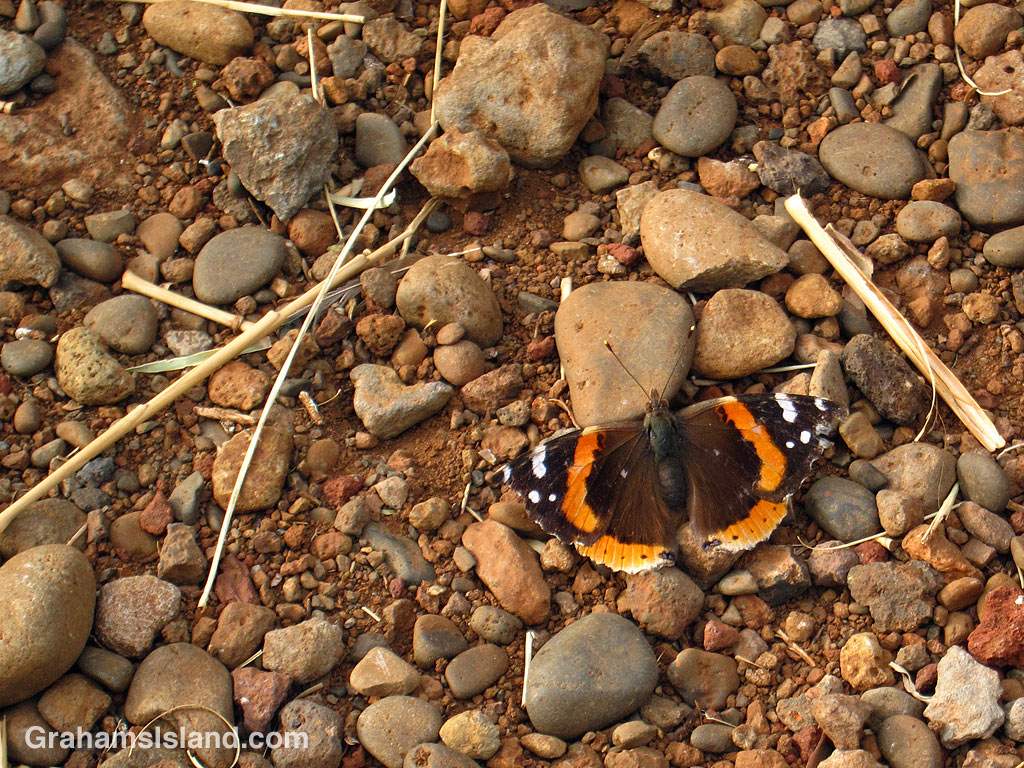
The Red Admiral butterfly is a European native that arrived in Hawaii in the late 1800s. Despite the longevity of its time in Hawaii, it’s a butterfly that isn’t seen a lot. This is the first one I’ve seen in six plus years here. I was on my way to go snorkeling when I noticed it and, of course, I was immediately distracted and snapped a couple of photos before it disappeared from view.
 Graham's Island