Category Archives: Birds

Nene pecking order

When a quartet of nene showed up at work, a water bowl was put out for them. One of the nene, the leader of the group, stepped up to drink. One of the other birds looked on with interest, but was hesitant to join in (top photo).

The reason for that hesitancy became clear moments later when the first bird reached across and pecked the the other bird’s side. It didn’t appear to hurt, but a message was clearly being given. Soon after, the first bird finished drinking and then walked through the water bowl. It wasn’t like there was nowhere for it to go, but again, a message was being sent.

After the first bird moved on, the other bird took its opportunity to take a drink, muddy footprints and all.

Ruddy turnstones

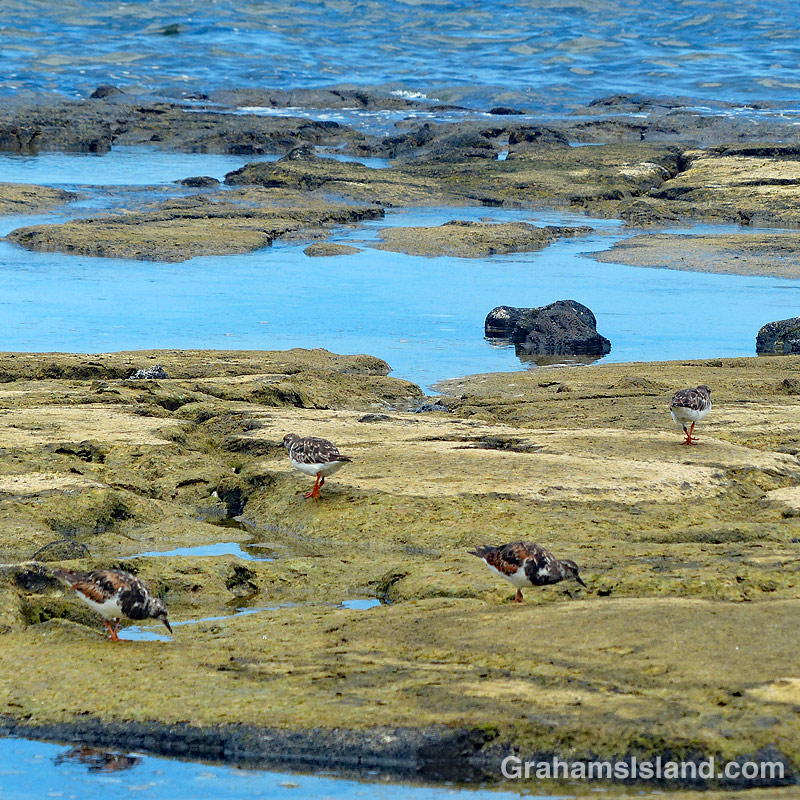
Ruddy turnstones are one of several species of birds that summer in Alaska and winter in Hawaii. Here, the bird is known as the ‘Akekeke, the name resembling its call. In the photos, this small group of ruddy turnstones was foraging along the Kona coast at low tide, looking for invertebrates to eat.

Red-billed leiothrix

A red-billed leiothrix perched on a branch in a kipuka on the Pu’u O’o trail off Saddle Road. A kipuka is an area of land that has been surrounded by a lava flow. Kipukas often contain older trees and other plants that are a haven for native and non-native birds and other creatures.

This leiothrix had an exceptionally red bill because it was carrying a bit of ripe thimbleberry, presumably to young birds in a nest nearby.

When cattle egrets have no cattle

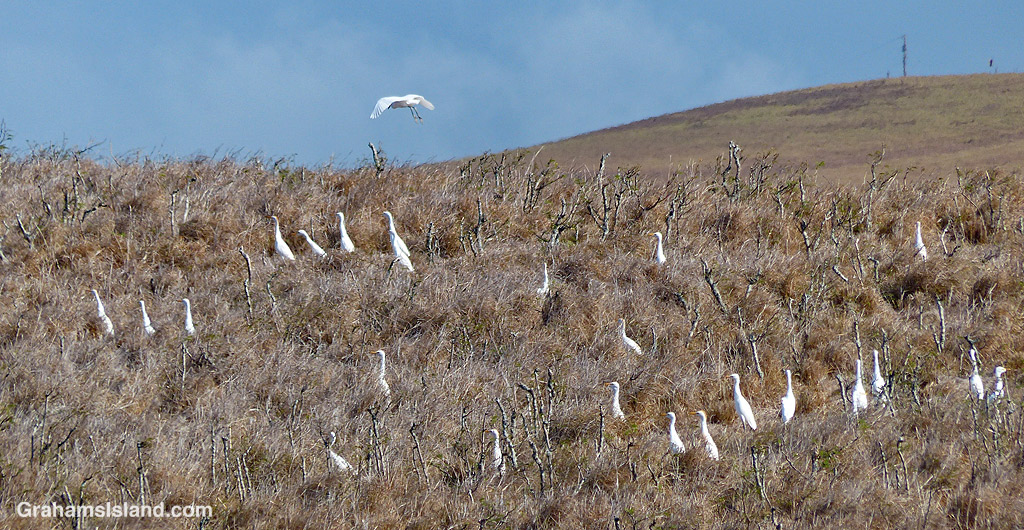
Today we tackle the thorny question of what cattle egrets do when there are no cattle (or horses, or sheep, or goats, or lawn mowers) around. They accompany these various animals and machines to feast on insects and small animals disturbed by the grazing.

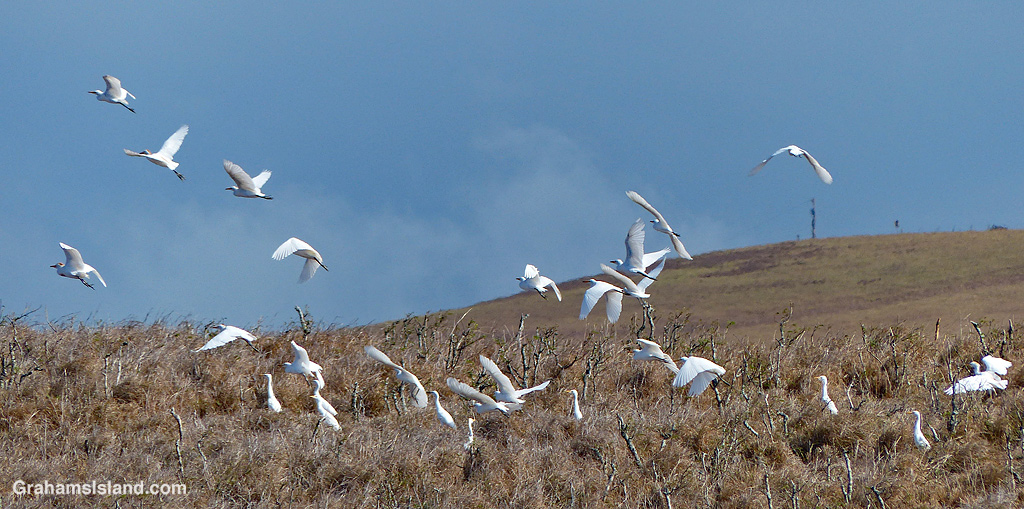
When they don’t have others to stir up these things, they do it themselves. This group of cattle egrets methodically combed a scrubby field, eating as they went. As they moved across the field, birds from the back would fly forward and take up their position at the front. By the time a line of birds ended up at the back of the bunch, they’d probably scoured their section of field of easy pickings, so they leapfrogged to the front again.

When they reached the fence at the end of the field, they moved higher on the hill and began the whole process again. Finally, they reached the top of the hill and, after a while took off, first in ones and twos, and then in greater numbers until they had all gone.

Black-crowned night heron

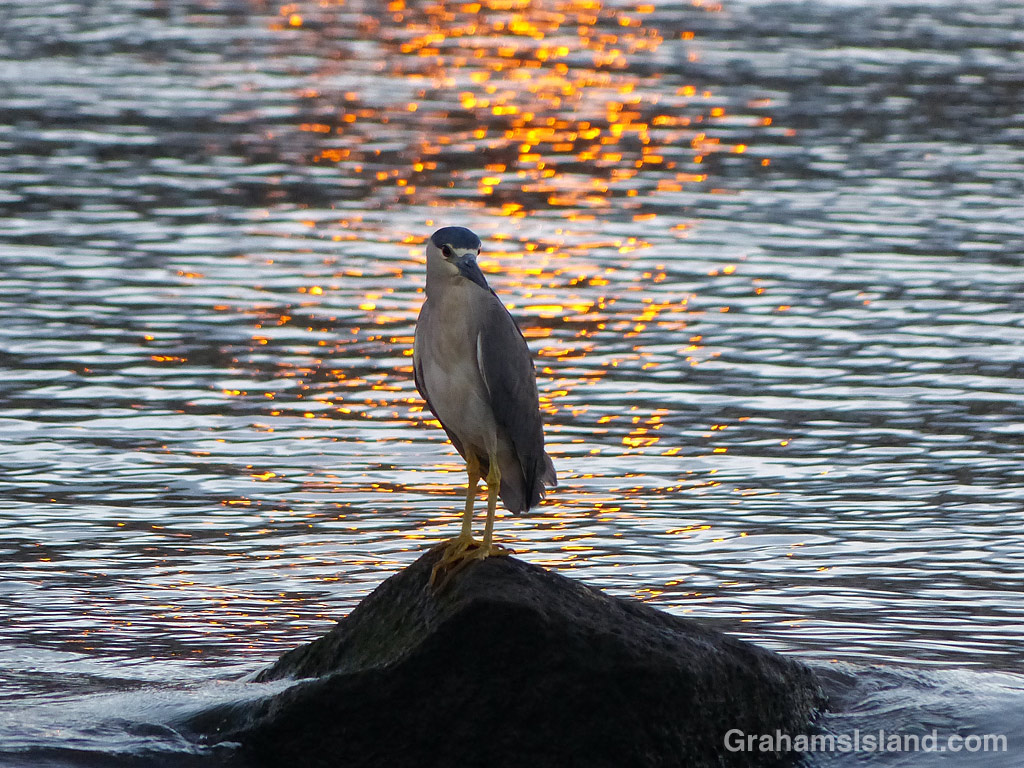
This week’s Sunday Stills challenge theme is ‘Stillness.’ (See more offerings here.) It made me think of this scene.

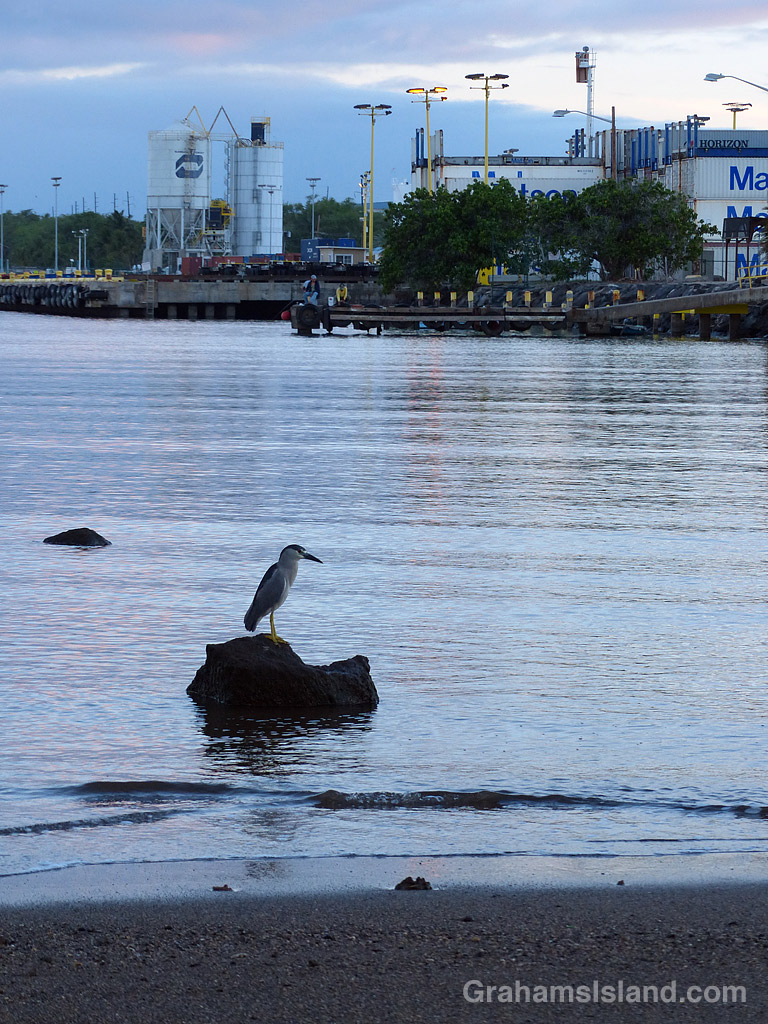
I was out early one morning and stopped by the port at Kawaihae. There wasn’t much going on, but I was happy to see this adult black-crowned night heron perched on a rock in the shallows. It didn’t seem to be actively fishing.

Indeed, the heron remained mostly still. It was just dark enough for the lights of the port to illuminate the rippled waters inside the harbor. The port itself was also quiet. No boats moving, no trucks lining up, no machinery grinding. Just a couple of men fishing off the small boat dock.

One-eyed pueo

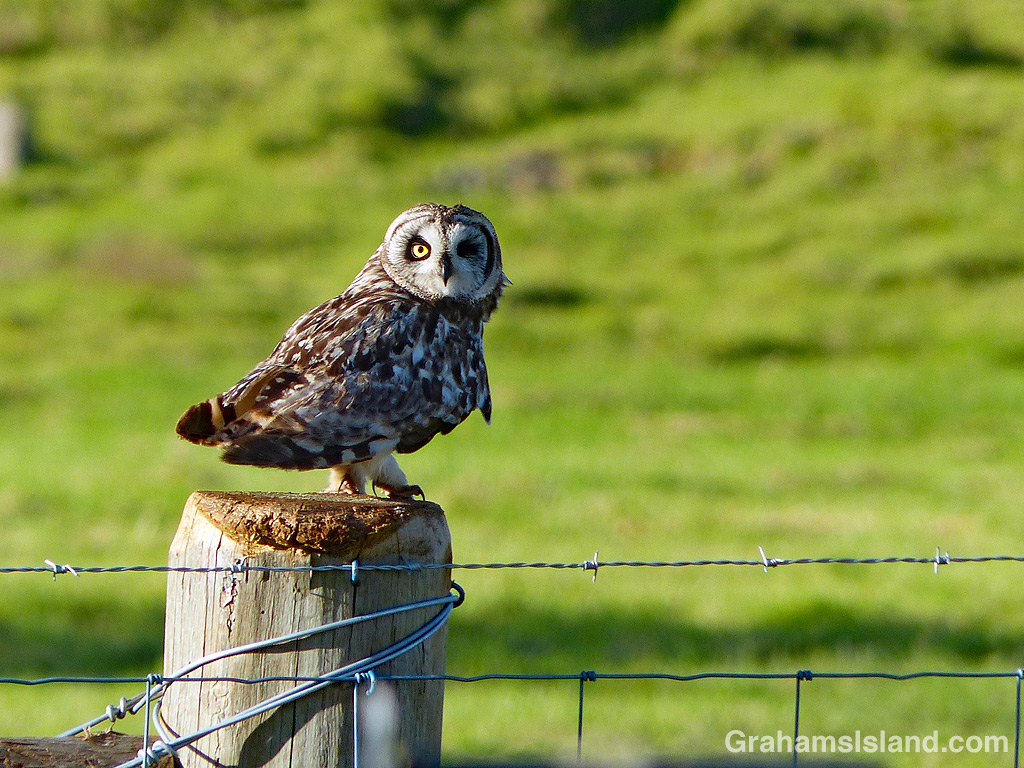
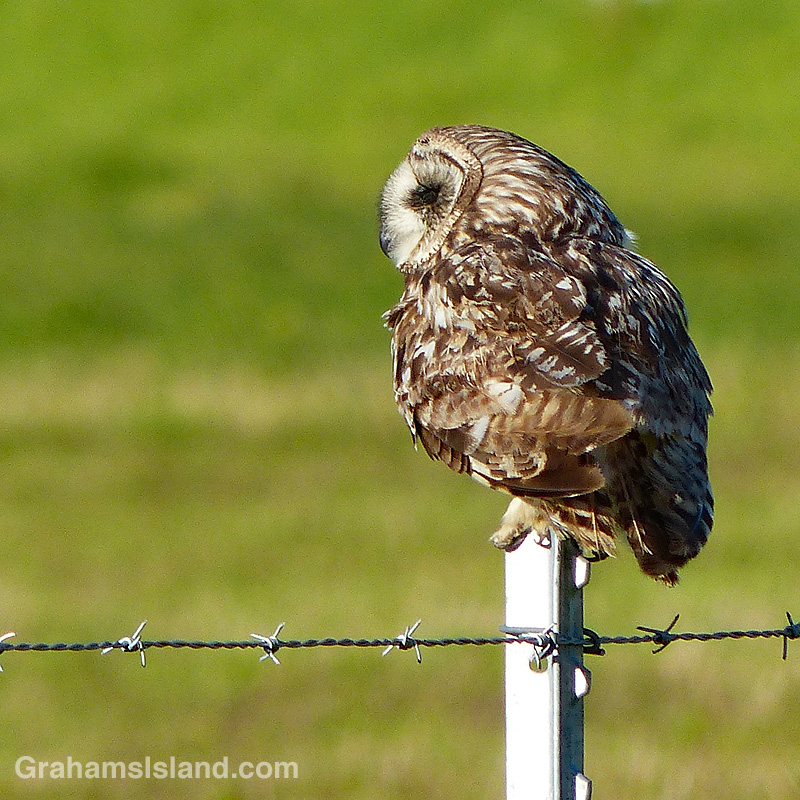
I saw this pueo (Hawaiian short-eared owl) near Waimea and pulled over to take photos. I watched and photographed it for 15 minutes or so and, at the time, I thought there was something unusual about it. Something didn’t seem quite right. But it wasn’t until I got home and looked at the photos that I realized what was up.

The pueo was missing its left eye. The eye socket seemed healed and the pueo didn’t appear to be in pain. Nor did it seem affected in its flying or behavior. In some ways this makes sense. Owls have great eyesight, but it’s their hearing that is truly extraordinary. They can pinpoint prey just by listening. However, in Hawaii, pueos are active during the day so one would think eyesight might be a more important sense than for nocturnal owls.

Either way, I felt a bit sad for the pueo, but I’m also keenly aware that nature isn’t all warm and fuzzy. And I’ve seen several creatures that have been significantly damaged in one way or another that seem to be doing fine despite their handicaps. Perhaps, from a Darwinian point of view, they’re not successful when it comes to finding a mate and breeding, so their genes are not passed on. I don’t know whether this is the case, but it’s certainly possible.

Regardless, I hope for the best for this pueo. Life for them is tough enough as it is without added challenges.

Posted in response to this week’s Sunday Stills challenge on the theme of ‘Unusual.’ (See more offerings here.)

White-faced ibis

I think this is a white-faced ibis. According to my bird book, Jim Denny’s A Photographic Guide To The Birds Of Hawai’i, it is an occasional visitor and all reports have been of juveniles or birds in non-breeding plumage. It also notes that it is very similar to the glossy ibis, but doesn’t include a listing for that bird in the book. So I’m going to stick with the white-faced ibis identity unless someone has a better idea.

This one was wading in the shallow of the lagoon behind the beach at Kaloko-Honokohau National Historical Park. The yellow float was one of several isolating an area where restoration work was taking place. The lagoon is a popular spot for many birds, both endemic and visiting.

For more information about Kaloko-Honokohau National Historical Park, go to https://www.nps.gov/kaho/index.htm or bigislandhikes.com/kaloko-honokohau-park/.