I rarely see Paletail Unicornfishes in my usual swimming spot, though it might be that they’re around and I just haven’t noticed them before. I managed to snap a few quick photos before they disappeared and this was the best of them. Ironically, the pale tail was at exactly the wrong angle! No prizes for guessing the reason for the name ‘unicornfish.’
Little fish swim in the glacier blue waters of Kiholo Lagoon.
This week’s Sunday Stills challenge theme is ‘Everything Water.’ See more responses here.
I’m going with some abstract images from my archives. No text with these except for some brief captions.
Late afternoon sun on the ocean.The runoff from an infinity pool.Wavy ripples are this color……and straight ripples are this color … sometimes.Green water in a tree-lined lagoon.Shimmering colors.Impressionist colors.Sparkling colors.Glittering colors.And before the light goes, a splash of red.
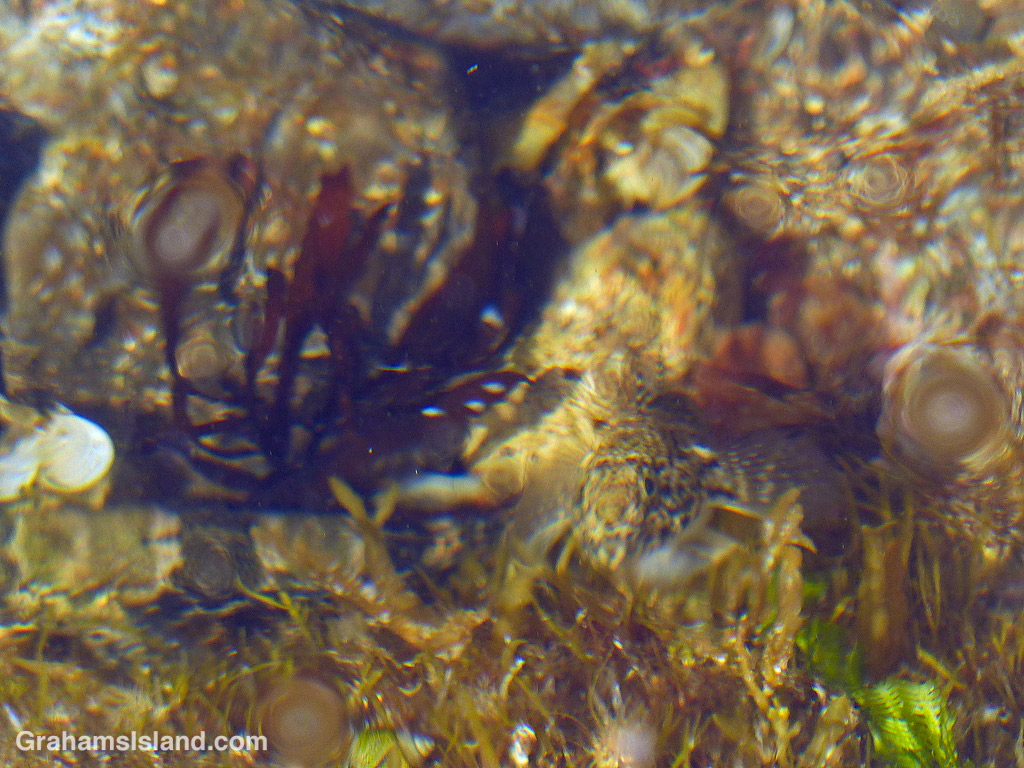
Yes, there is a fish in each of these photos! The endemic Strasburg’s Blenny is less than two inches long and is easily overlooked. It tends to move about in short, sharp bursts, blends in well when it settles, and is almost undetectable when it backs into its hole. That’s where the blenny is in the top photo.
In the second photo, it’s lying out in the open, but blending in rather well. Can you spot it?
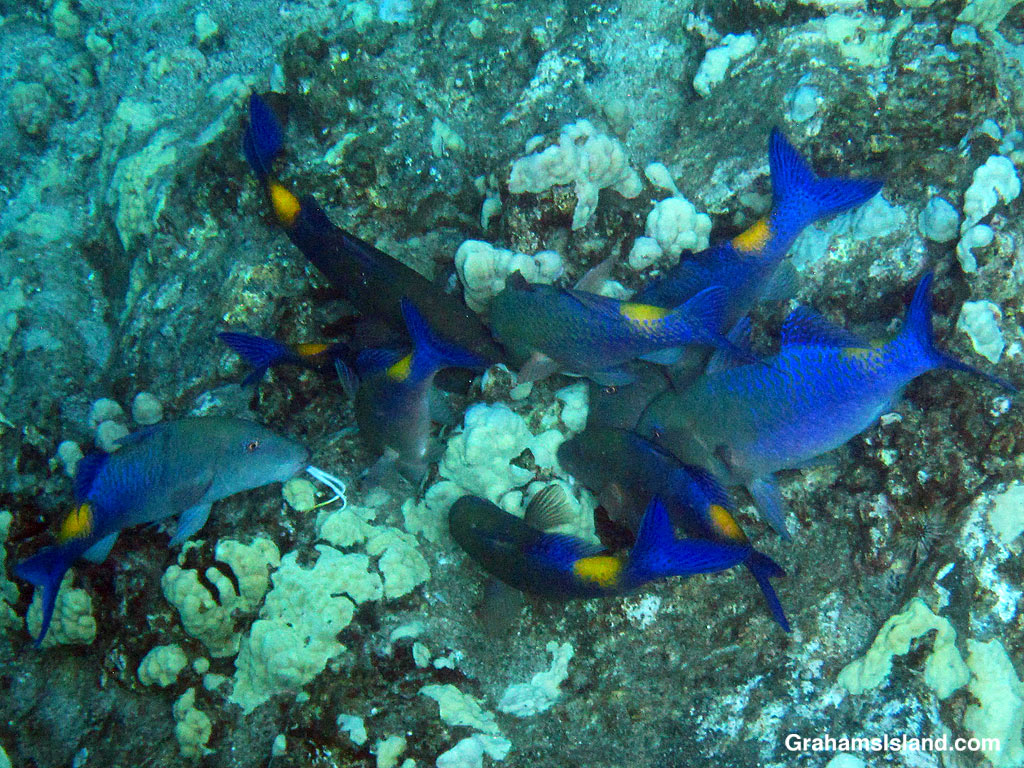
This is a scene I like to refer to as ‘gang activity.’ Blue Goatfishes are predators and hunt in packs, often in the company of other fish, such as Bluefin Trevallies and Pacific Trumpetfishes, as well as eels and octopuses.
The fish on the left is showing its barbels, which are used to ‘sense’ prey and also can be poked into tight spots to flush out prey.
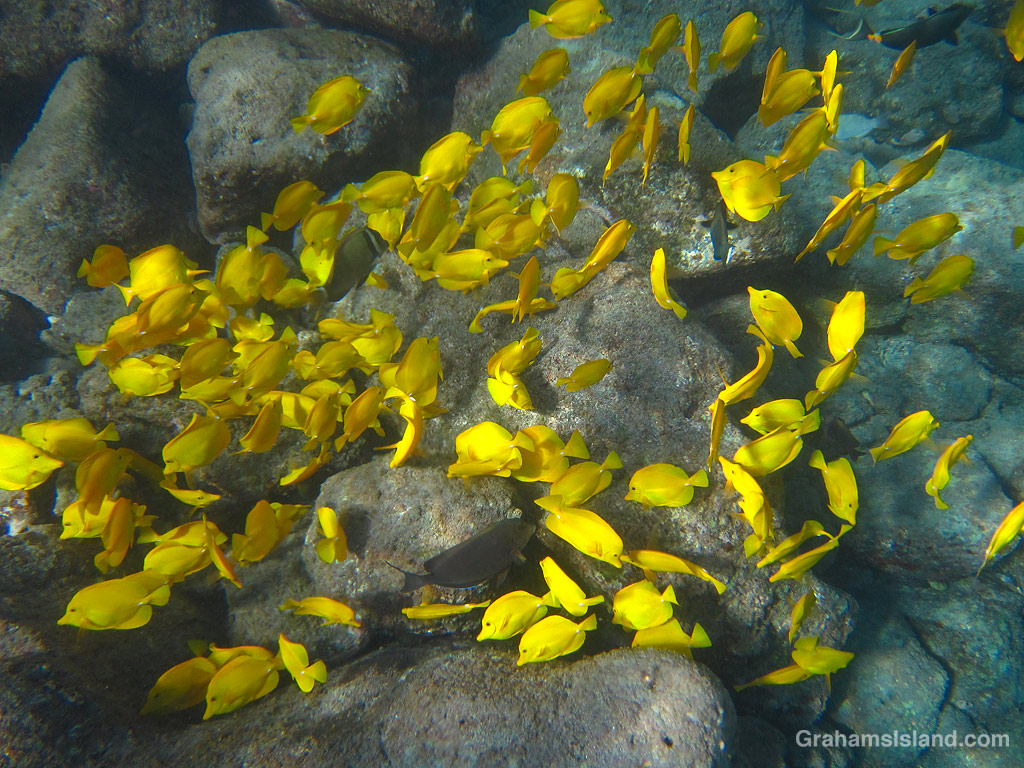
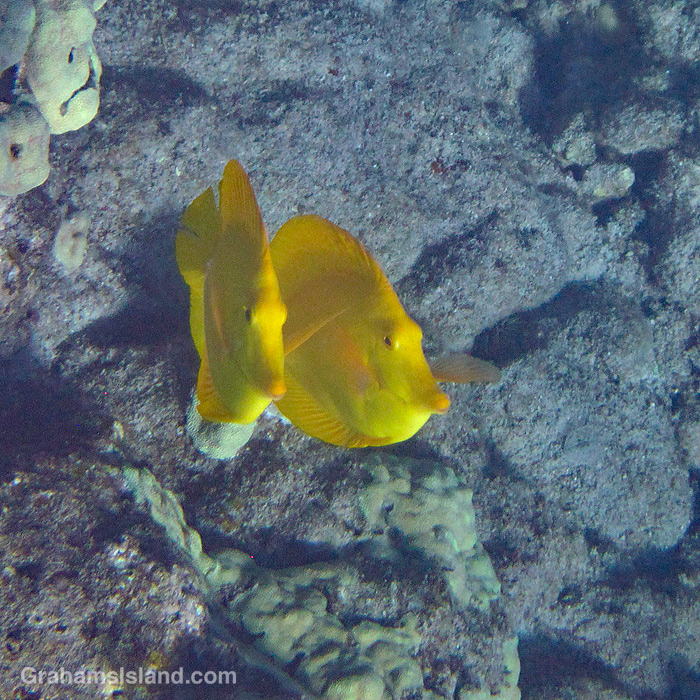
Yellow Tangs are about the most easily identified reef fish. They’re easily spotted from shore, puttering about in the shallows in large schools. In the water, their bright yellow color stands out even in murky water.
These fish are almost entirely yellow except for the white scalpel at the base of the tail. One or the other of these sharp spines can be flicked out and can inflict a serious cut on the unwary. When they spar with each other, they go round in circles trying to keep the exposed scalpel of the other fish away from them while trying to maneuver their own into a dangerous position.
Yellow tangs are a prime target of the aquarium fish industry. They don’t breed in captivity so every yellow tang in an aquarium is one taken from the wild. While these fish can been found around the Pacific, Hawaii is where they are most numerous and where most of these yellow tangs are taken. There have been a few bans on the trade in some places, affording some respite from the steady decline in numbers. Alas, our elected representatives have yet to exhibit enough backbone to impose a ban that is permanent and significant enough to allow fish stocks to truly rebound.
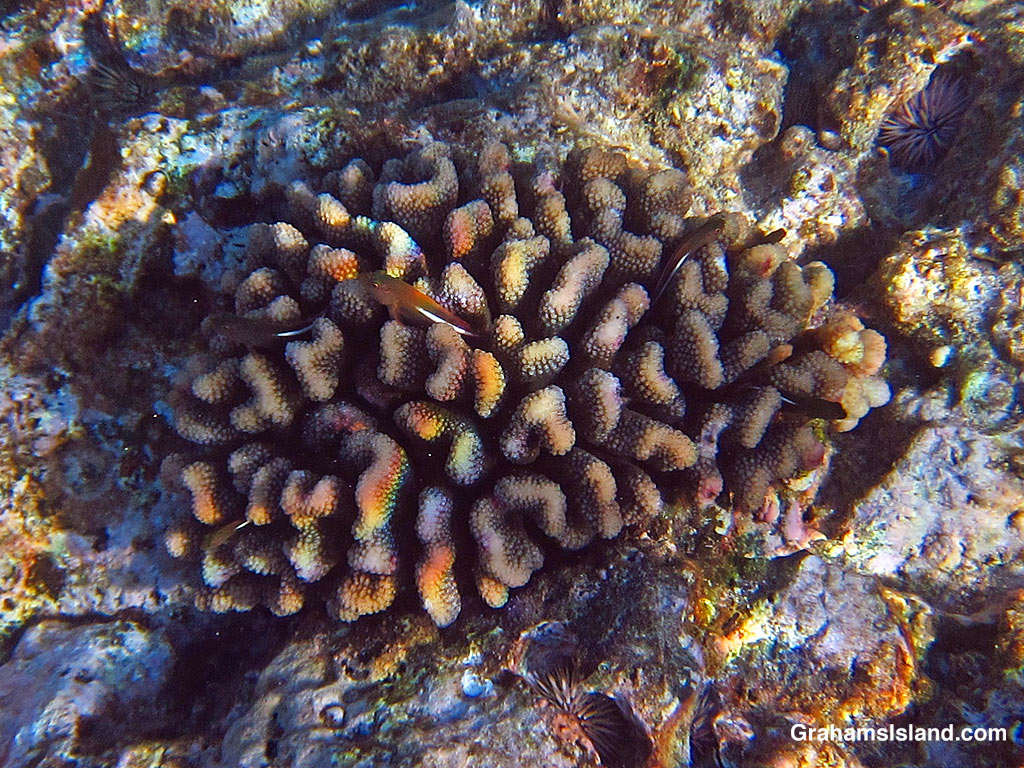
How many Arc-eye Hawkfishes can you fit in a head of Cauliflower Coral? I count six here, though there could be more, and who knows what else besides. Corals like this offer vital shelter for small fish and other creatures seeking to avoid the many predators out hunting.




 Graham's Island