
A Bluestripe Butterflyfish probes for food in the neighborhood of a Collector Urchin.

A Bluestripe Butterflyfish probes for food in the neighborhood of a Collector Urchin.

Today marks the start of the last week of this month’s Becky’s Squares challenge theme of ‘Odd.’ See more responses here. The ocean is full of oddities so I thought I’d include a few here.
Above: A Manta Ray encounter is always something special, but there’s no getting away from their odd appearance. This one has the added wrinkle of one of its cephalic flaps being damaged.
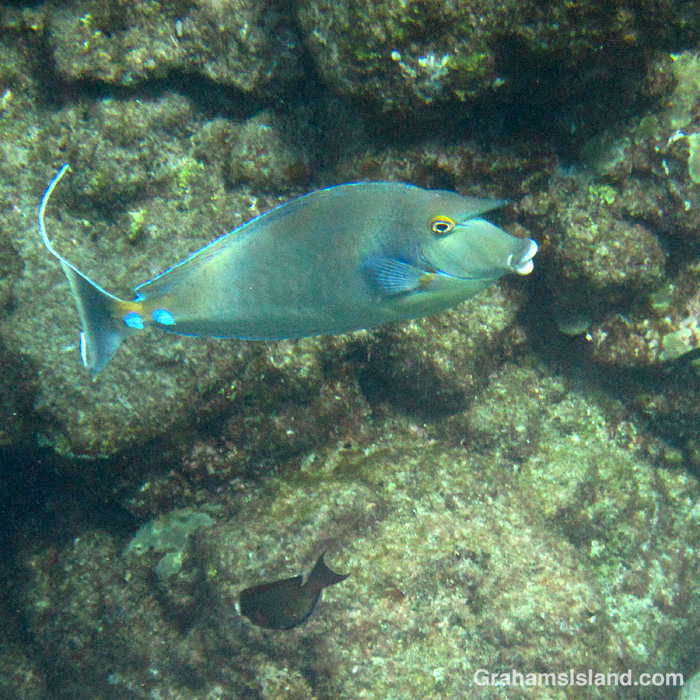


Top left: Bluespine Unicornfishes not only have a horn protruding from their foreheads, they have dayglow blue scalpels at the base of the tail and an array of expressions that are mostly odd.
Top right: Who knows how many scorpionfishes I’ve swum past? Masters of disguise, I could stare at a spot where one is perched and not see it. Even when I do see one, it’s not always clear that it’s not just a rock, as this Titan Scorpionfish illustrates.
Bottom left: Nudibranches are inherently odd looking, and this Clumpy Nudibrach is no exception. It suggests to me some top chef’s idea of an exotic entrée, but one that keeps sliding off the plate!
Bottom right: Blennies are indisputably odd, but absolutely endearing. The Hawaiian Zebra Blenny is no exception and, in addition, has an uncanny ability to launch itself into the next tidepool if someone disturbs it.
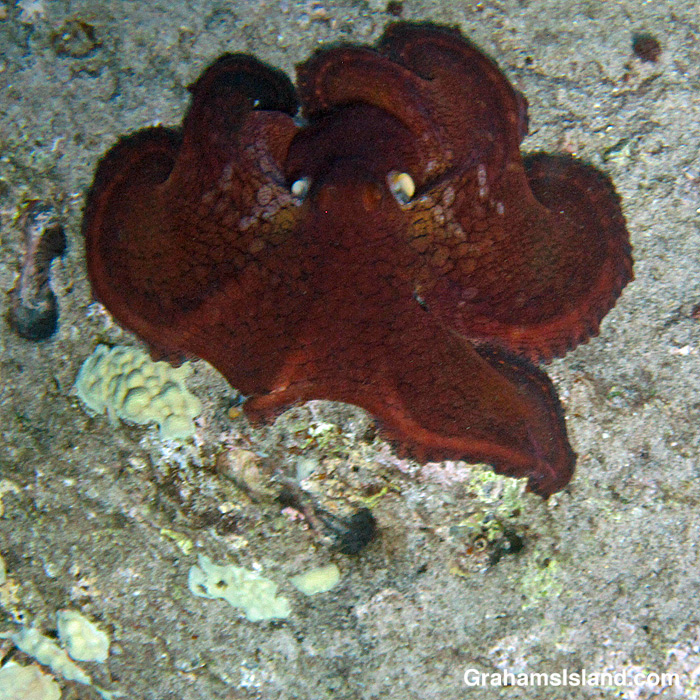
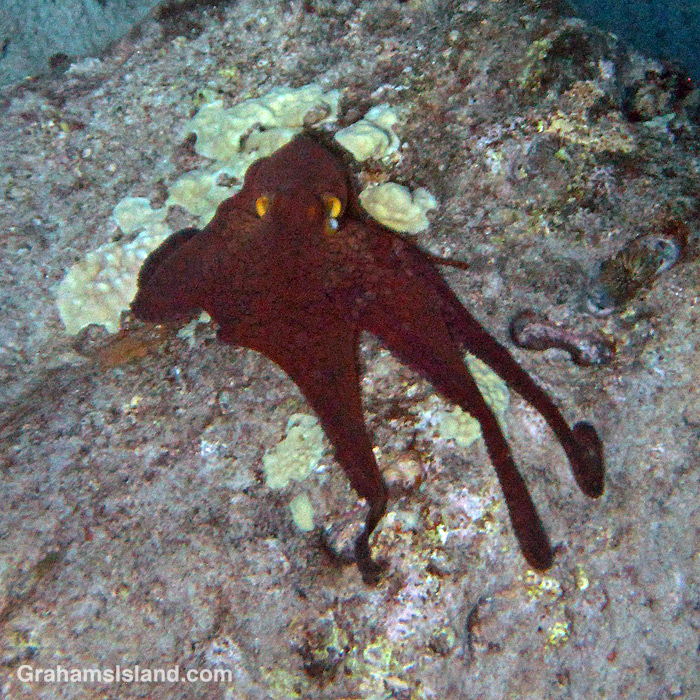
Let’s face it, octopuses are just plain odd. They change color in an instant. They disappear while you’re looking at them. They shoot off with surprising speed. They disappear into cracks where you wouldn’t think you could lose a paperclip. And, while looking right at them, they will change shape, oozing out tentacles to redistribute themselves in some other place.
Posted in response to this month’s Becky’s Squares challenge theme of ‘Odd.’ See more responses here.
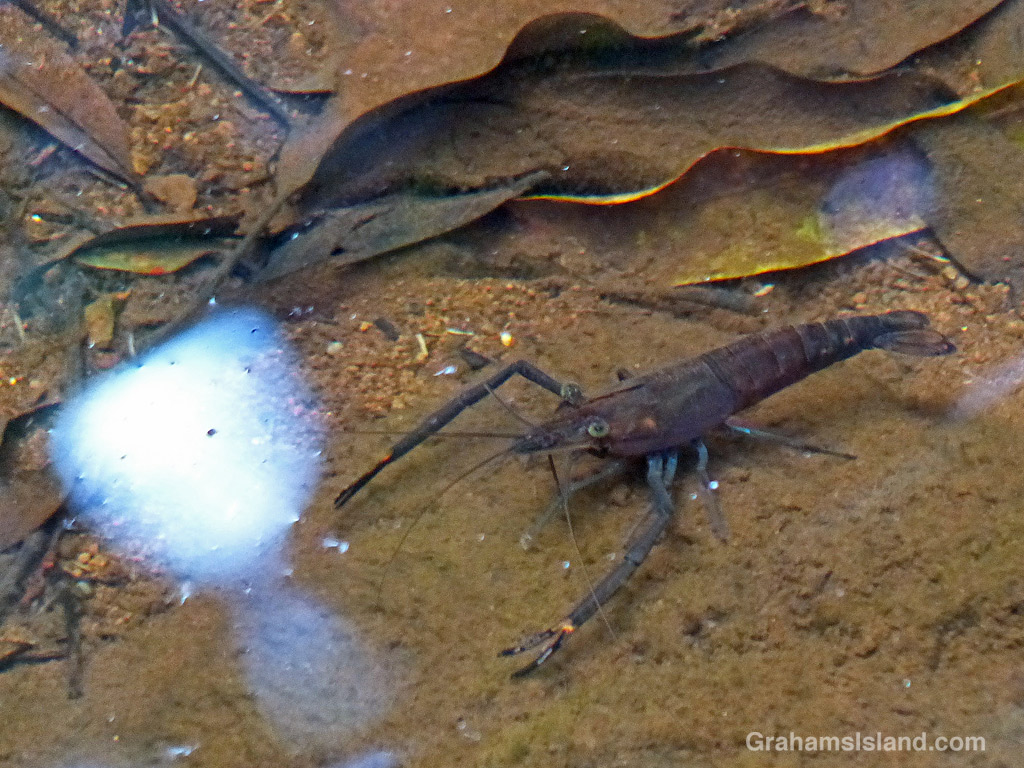

Tahitian prawns were introduced to Hawaii back in the 1950s and are now found on all the islands thanks, in part, to the fact that their life cycle includes a stage in the open ocean. The prawns have become a popular food here though, as with most introduced species, there’s a downside. They prey on native species in the streams they inhabit.
One such stream runs through Hawai’i Tropical Bioreserve & Garden, which is where I saw these Tahitian prawns. This stream is also one of several on the island where the prawns have been virtually wiped out on occasion. That’s because, while it’s legal to catch these prawns, it’s not legal to do so by dumping insecticide in the stream. Not only does this kill all the prawns, but it wipes out pretty much everything else that’s alive in there. And then there’s the small matter that these prawns are harvested for human consumption. Would you like insecticide with that?
Catching people in the act has proved difficult, but last year authorities did apprehend one man who had killed 6,200 prawns using this method. Earlier this year, he was fined $633,840 for his actions and the hope is that the big fine will discourage others. Mind you, the perpetrator looked like someone who would have trouble raising $840, let alone the other $633,000.

This is the first time I’ve seen signs like this one at Spencer Beach Park. I didn’t see any jellyfish on the beach so perhaps the signs were a warning for those getting in the water. There are often jellyfish in the water, but not in such numbers as to be a problem.
This park is popular with families with small kids so perhaps the authorities were being extra cautious with the signs.
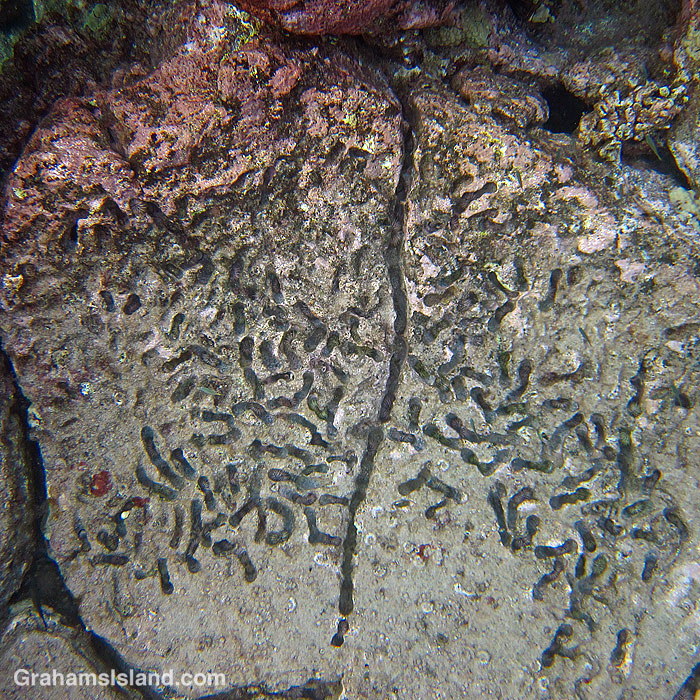
Yesterday I posted a photo of a crown-of-thorns star, with a few rock-boring urchins in it. Today’s post shows one example of the channels left by these urchins. This image initially looked like a brain to me, but then I began to see more of a tree in it.
Posted in response to Becky’s October Squares challenge theme of ‘Past Squares – Spiky/Lines.’ See more responses here.

I saw this crown-of-thorns star working its way across the rocks in shallow water. Those spiky spines are venomous so this is not something to handle. Also visible in this photo are some equally spiky, though not poisonous, rock-boring urchins
Posted in response to Becky’s October Squares challenge theme of ‘Past Squares – Spiky.’ See more responses here.
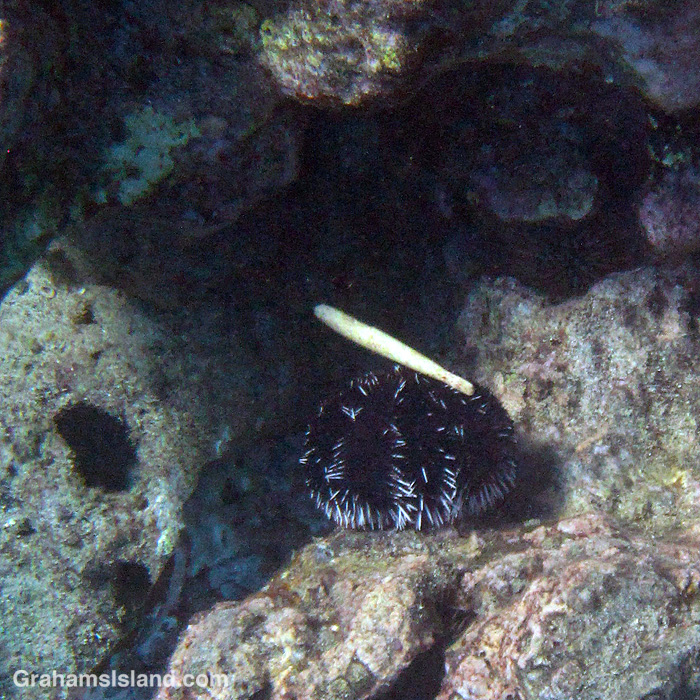
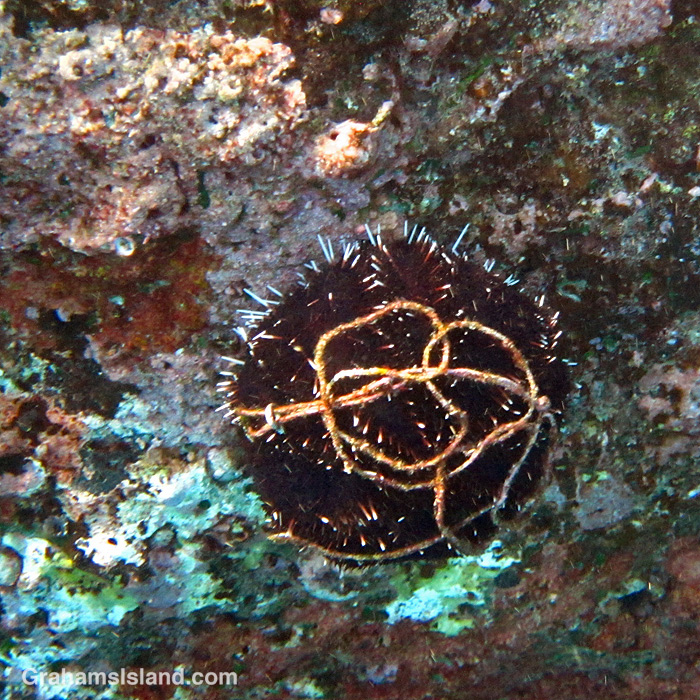
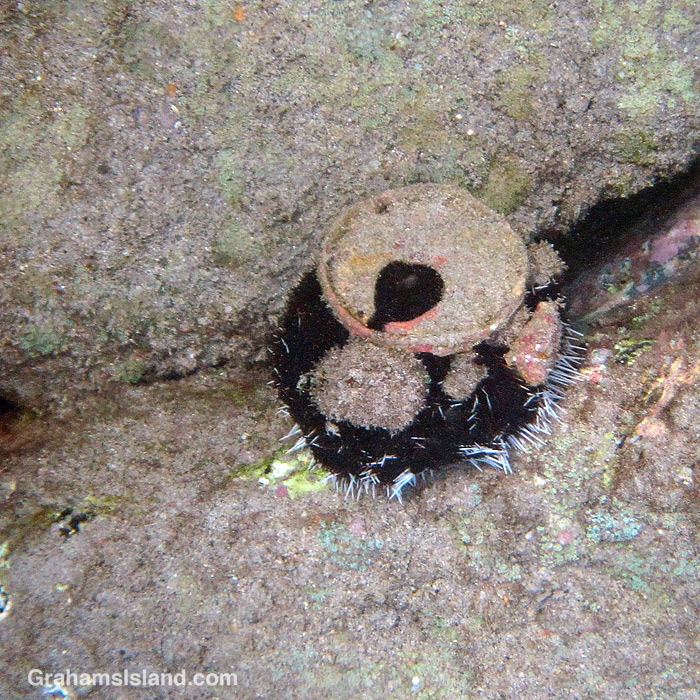
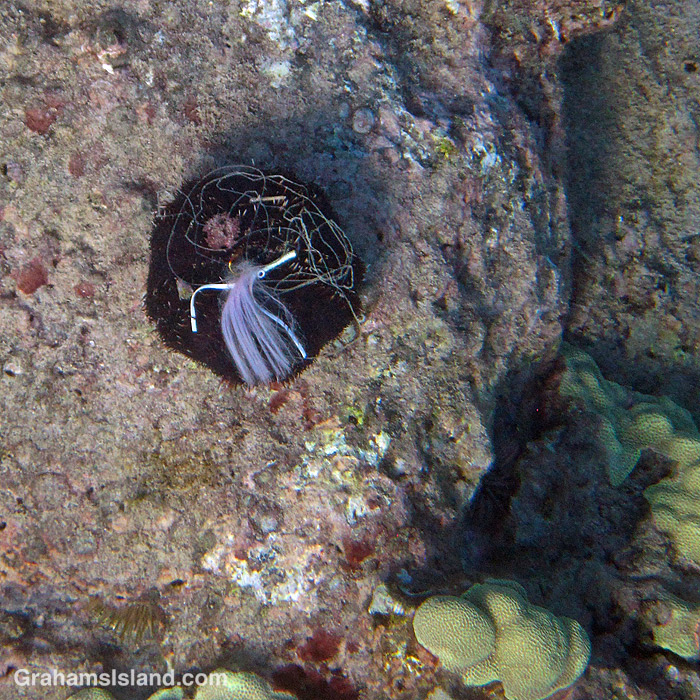
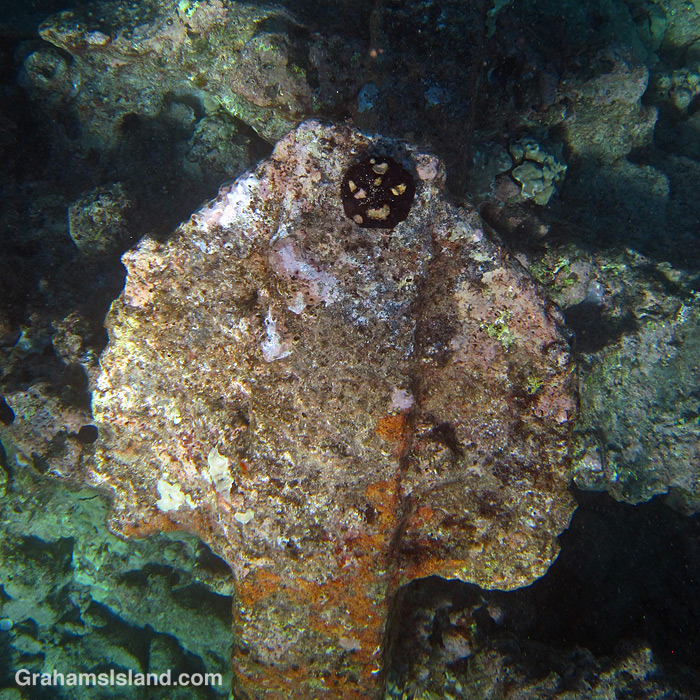
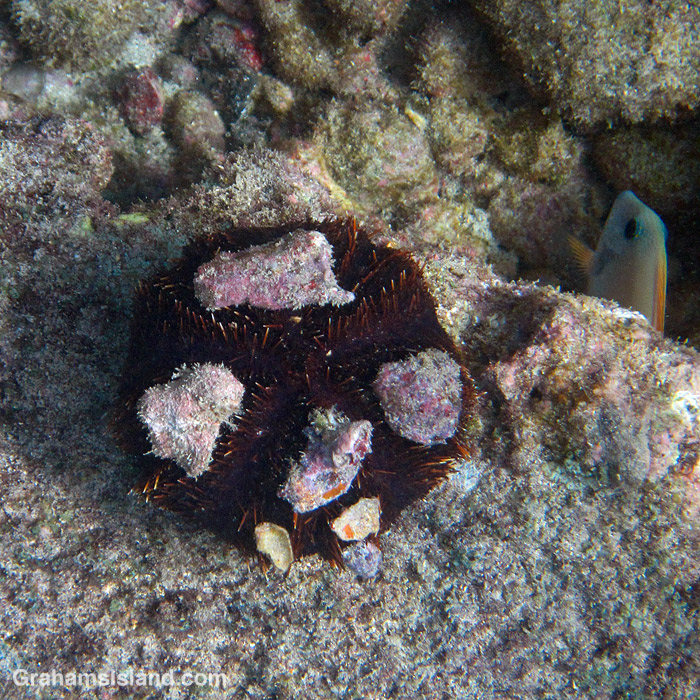


According to my marine invertebrates book, collector urchins (Tripneustes gratilla) gather algae, shells, and other material on their spines. Why they do this is not entirely clear. It might be for disguise, protection from the light, or even to store food. These urchins are quite common in the shallows and their adornments are many and varied.
Posted in response to Becky’s October Squares challenge theme of ‘Past Squares – Spiky.’ See more responses here.
 Graham's Island