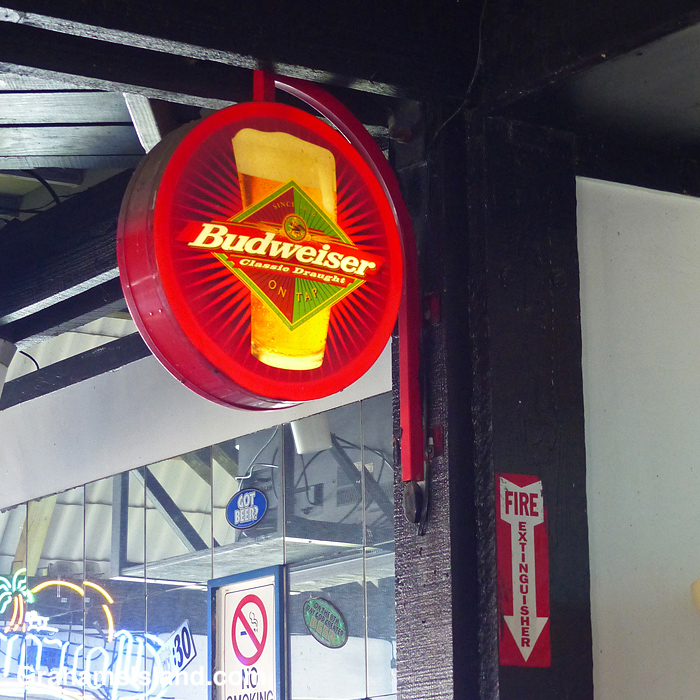
This is the first time I’ve seen signs like this one at Spencer Beach Park. I didn’t see any jellyfish on the beach so perhaps the signs were a warning for those getting in the water. There are often jellyfish in the water, but not in such numbers as to be a problem.
This park is popular with families with small kids so perhaps the authorities were being extra cautious with the signs.
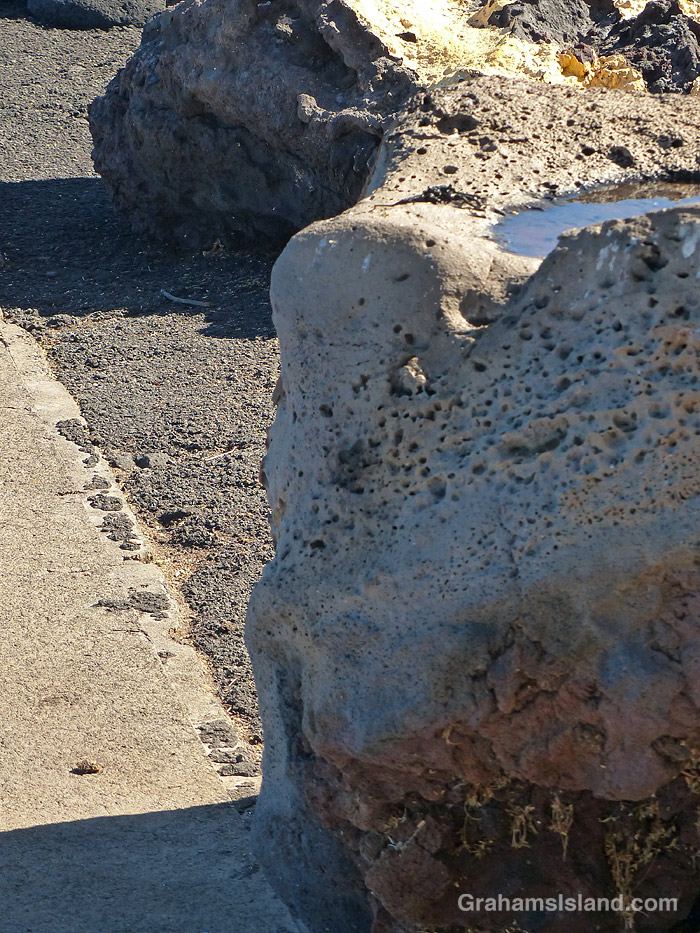
Yesterday I posted a photo of a crown-of-thorns star, with a few rock-boring urchins in it. Today’s post shows one example of the channels left by these urchins. This image initially looked like a brain to me, but then I began to see more of a tree in it.
Posted in response to Becky’s October Squares challenge theme of ‘Past Squares – Spiky/Lines.’ See more responses here.
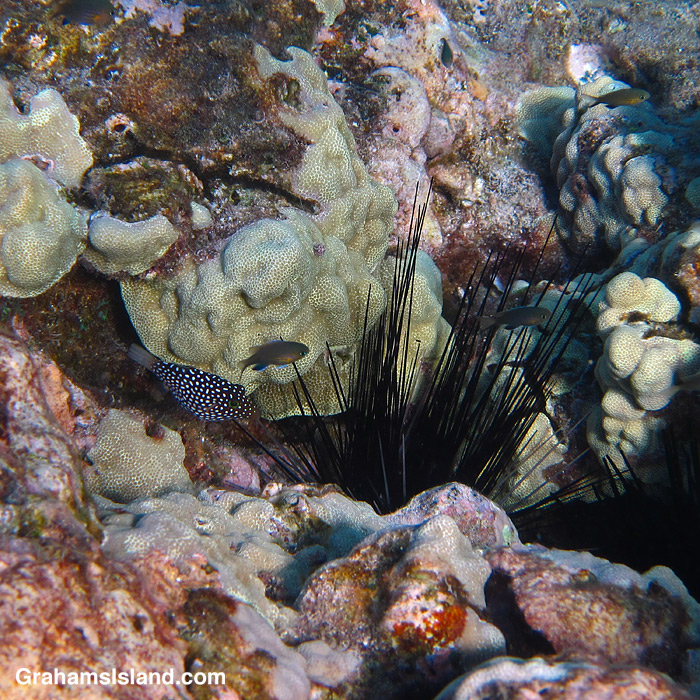
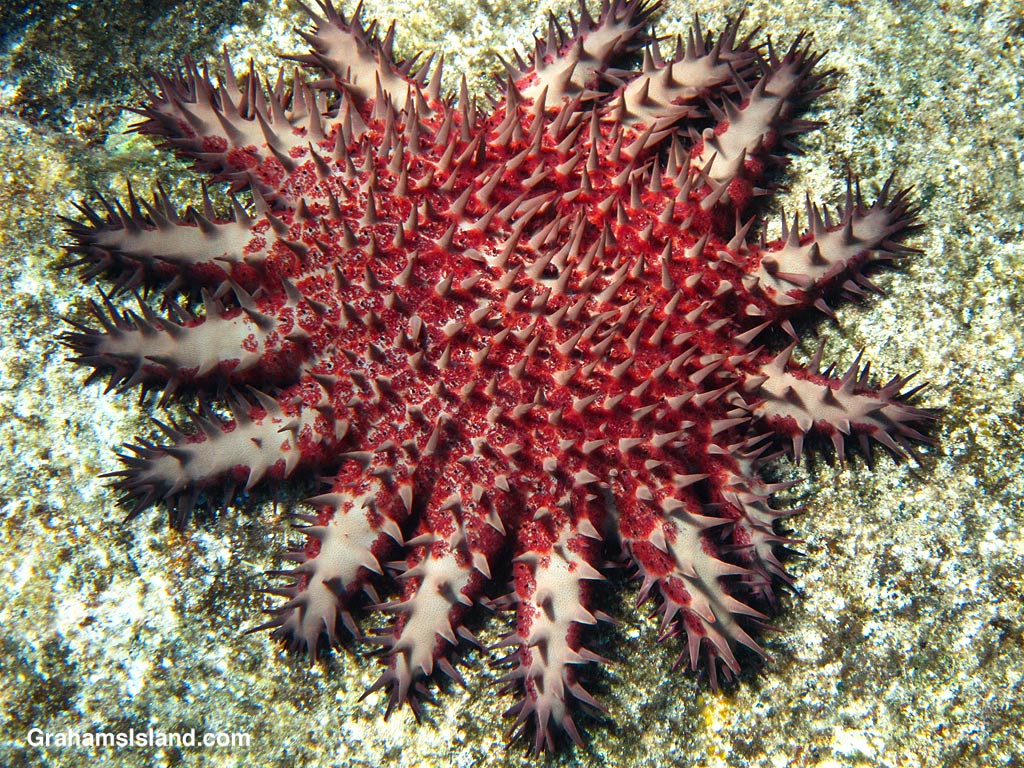
I saw this crown-of-thorns star working its way across the rocks in shallow water. Those spiky spines are venomous so this is not something to handle. Also visible in this photo are some equally spiky, though not poisonous, rock-boring urchins
Posted in response to Becky’s October Squares challenge theme of ‘Past Squares – Spiky.’ See more responses here.
According to my marine invertebrates book, collector urchins (Tripneustes gratilla) gather algae, shells, and other material on their spines. Why they do this is not entirely clear. It might be for disguise, protection from the light, or even to store food. These urchins are quite common in the shallows and their adornments are many and varied.
Posted in response to Becky’s October Squares challenge theme of ‘Past Squares – Spiky.’ See more responses here.
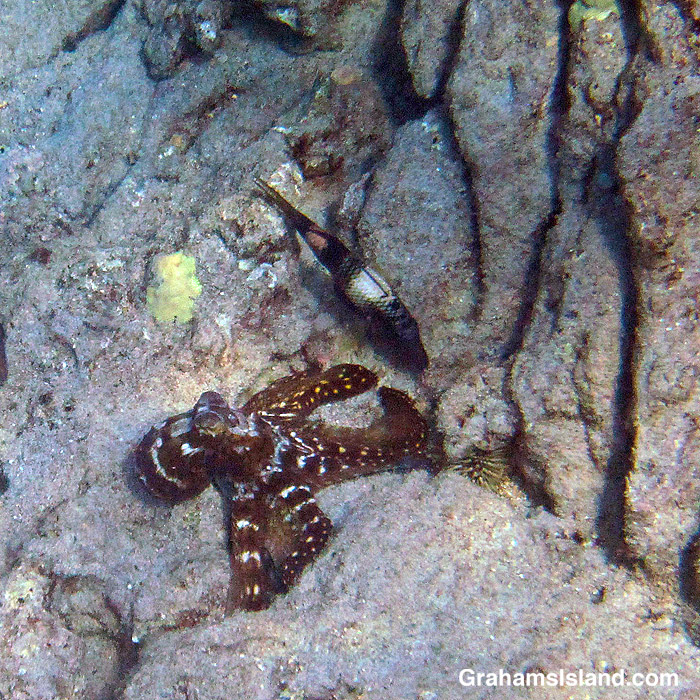
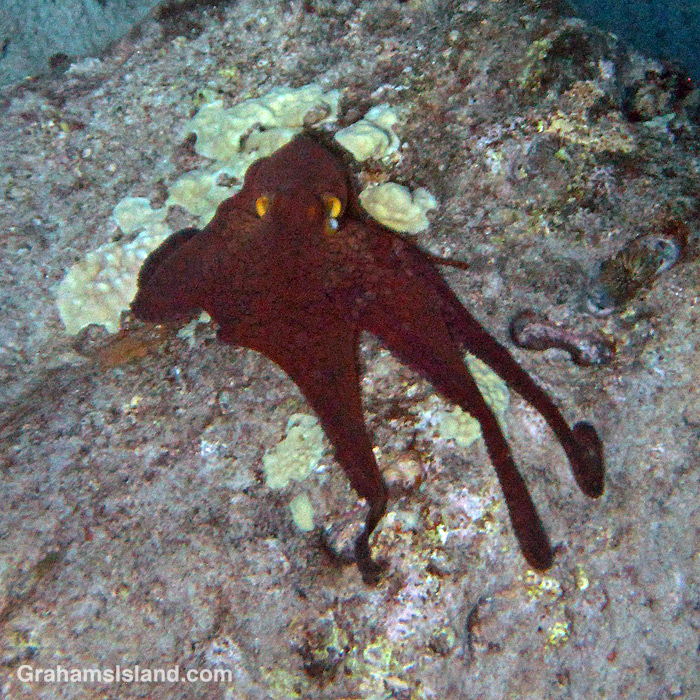
The easiest way to spot an octopus is to see it swimming (top photo). They’re not large creatures but they’re quite distinctive when they swim.
If they’re not swimming, one thing to look for is certain fish, such as goatfishes and jacks, just hanging around in a spot for no apparent reason. When these fish are hunting alone, they tend to be more active in probing the rocks and trying to disturb prey. But when they’re hunting with an octopus, they seem more content to let the octopus do the work and snapping up whatever emerges. I’ve found that goatfishes are particularly helpful as an octopus indicator.
A while back, there were videos online of an octopus apparently punching a goatfish. I wasn’t surprised by this. The octopuses I’ve seen don’t seem best pleased by the presence of goatfishes. Part of this might be down to feeling that the goatfishes are not pulling their weight in the hunt. But another factor might be that if goatfishes give away their position, for the octopus that can be fatal.
Octopus is a popular food in Hawaii and has long been so. If I’ve learned to look for goatfish as an indicator of their presence, then no doubt spear fishermen have too. These days, if I see an octopus when anyone’s spear fishing nearby, I don’t do anything to draw attention to it.
I was amused by this sign on the beach in front of the Four Seasons Resort Hualalai. Spiny urchins in the rocks are like white lines on the highway. But of course, a visitor is not necessarily aware of this and the Four Seasons wouldn’t want any of its guests impaling themselves on spiky marine life, especially if they were likely to complain about it later.
This sign wasn’t far from another one that basically said you’d die if you set foot on the beach (here). Perhaps this was why the very lovely beach was deserted when I was there.
On a morning swim with my wife a couple of days ago, we were lucky enough to see a spotted eagle ray cruising around looking for breakfast. It stopped often, to probe the sand and rocks for food, and was successful at least once, since it emerged from its efforts chewing and swallowing. This eagle ray looked a bit battered, with damage to its tail fins and a chunk missing from its right wing, but it didn’t seem to be affected by this at all.
As we continued swimming, I saw the ray heading the same way. For a while it followed us, got ahead, then we followed it. On the way we saw a couple of flowery flounders, a couple of day octopuses, a crowned jellyfish as roughed up as the ray, and an oriental flying gurnard. It’s not a great photo of that, but it’s the first one I’ve seen here.
Oriental flying gurnard
Crowned Jellyfish
Flowery flounder
Near the spot where we planned to turn around and head back, I passed over a hole in the rocks and, glancing down, saw the distinctive shape and colors of a green turtle. I think it must have chosen this spot to take a rest, but my appearance startled it and it clambered out of the hole and swam away.
Shortly after that, the turtle encountered the eagle ray. The two of them crossed paths a couple of times before going their separate ways.
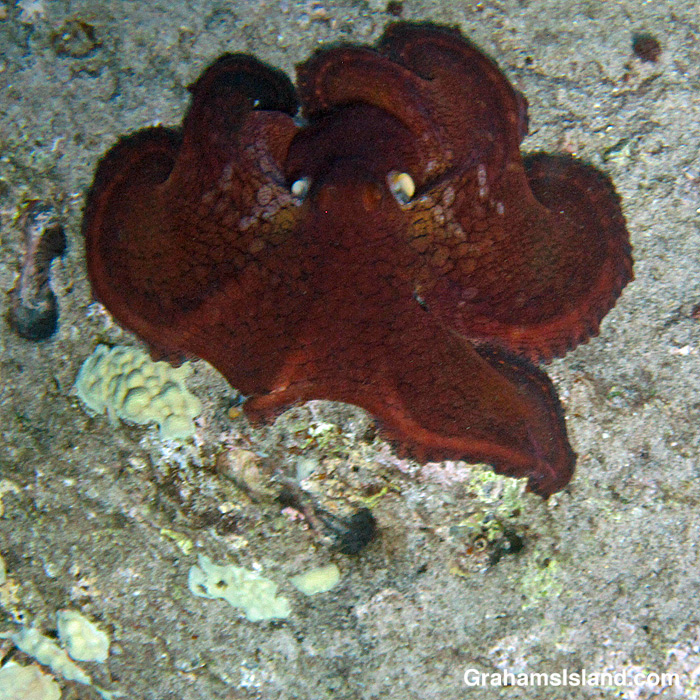
The reddish color of this day octopus is an indication that I had startled it. If it felt threatened, it would turn white. I like how the patterns on the rock it’s on looks like sucker marks from its tentacles.