
Leaves float on the surface of one of the Mauna Lani fishponds on the South Kohala coast.

Leaves float on the surface of one of the Mauna Lani fishponds on the South Kohala coast.

Sometimes one has to swim a while before seeing something of interest in the water. On this occasion, I saw two Pacific Day Octopuses within 20 feet of the entry ladder. I liked how this one caught the sunlight as it perched on the side of the rock.
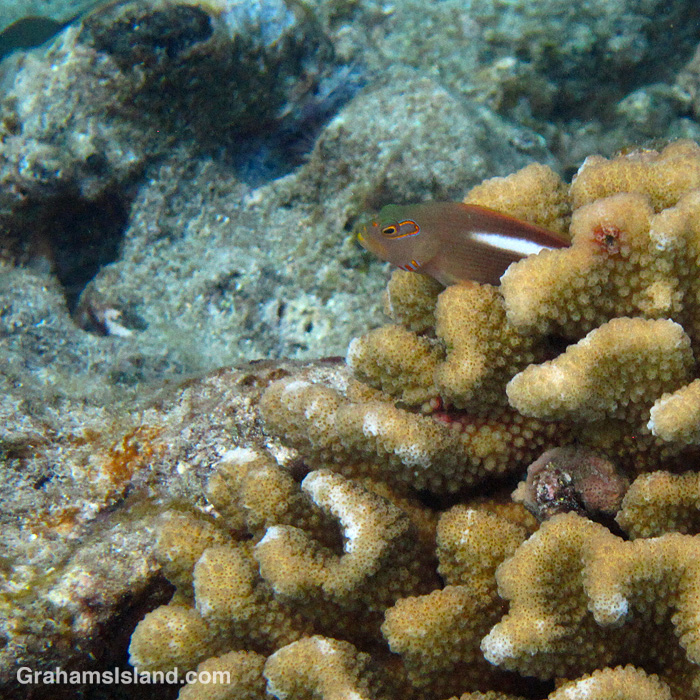

Arc-eye Hawkfishes come in two color variations. The top photo shows one that is reddish tan with a white stripe on the side. The bottom photo shows a fish that is a darker brown with no white stripe.
According to my fish book, John P. Hoover’s The Ultimate Guide to Hawaiian Reef Fishes, Sea Turtles, Dolphins, Whales, and Seals, the white stripe coloring is most common in deeper water where the coral is spaced farther apart. In shallower water, where the coral colonies are closer together, the darker coloring predominates. However, both these photos were taken in shallow water so it’s not an either/or situation.
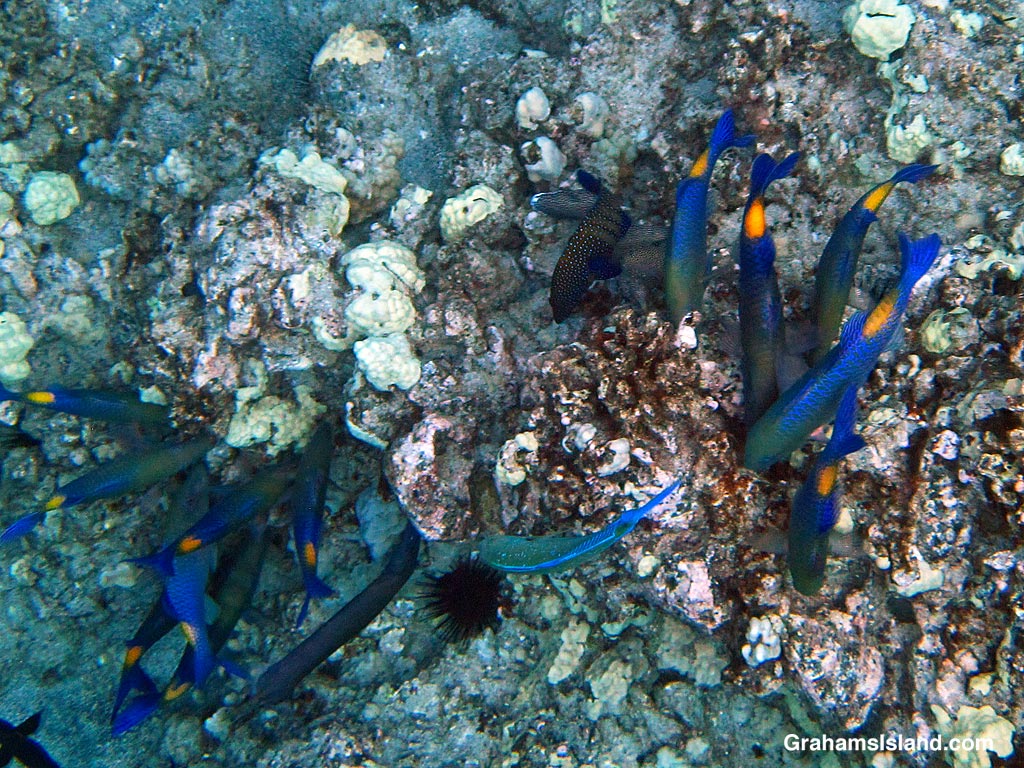
It’s not unusual to see this kind of gang activity while snorkeling, and what they’re doing is hunting. Their prey is small fish that take sanctuary in coral heads and among the rocks.
This bunch of hunters is dominated by Blue Goatfishes, easily identified by their blue bodies and yellow saddle at the base of the tail. There’s also a Bluefin Trevally and Pacific Trumpetfish toward the bottom of the photo and, near the top of the photo, a Peacock Grouper with a Whitemouth Moray Eel curling below it.
Eels are popular members of these hunting parties because they can wriggle into the smallest spaces, flushing out prey. The goatfishes perform similar work using long, white barbels below the chin to probe small spaces in the hopes of disturbing a meal. Other fish tag along hoping to be beneficiaries of this work by being the first to snag any victims that get flushed out.

This week’s Sunday Stills color challenge theme is ‘Teal or Aqua.’ See more responses here. I’m going underwater for a selection of aquatic aquas.
The top photo shows what happens when divers have too much time on their hands.
Next, we have some Square-spot Goatfishes and a few Orangeband Surgeonfishes meandering over a patch of sand. Then a Bullethead Parrotfish displaying a variety of colors. And a shoal of Hawaiian Silversides going hither and yon over a rocky bottom.


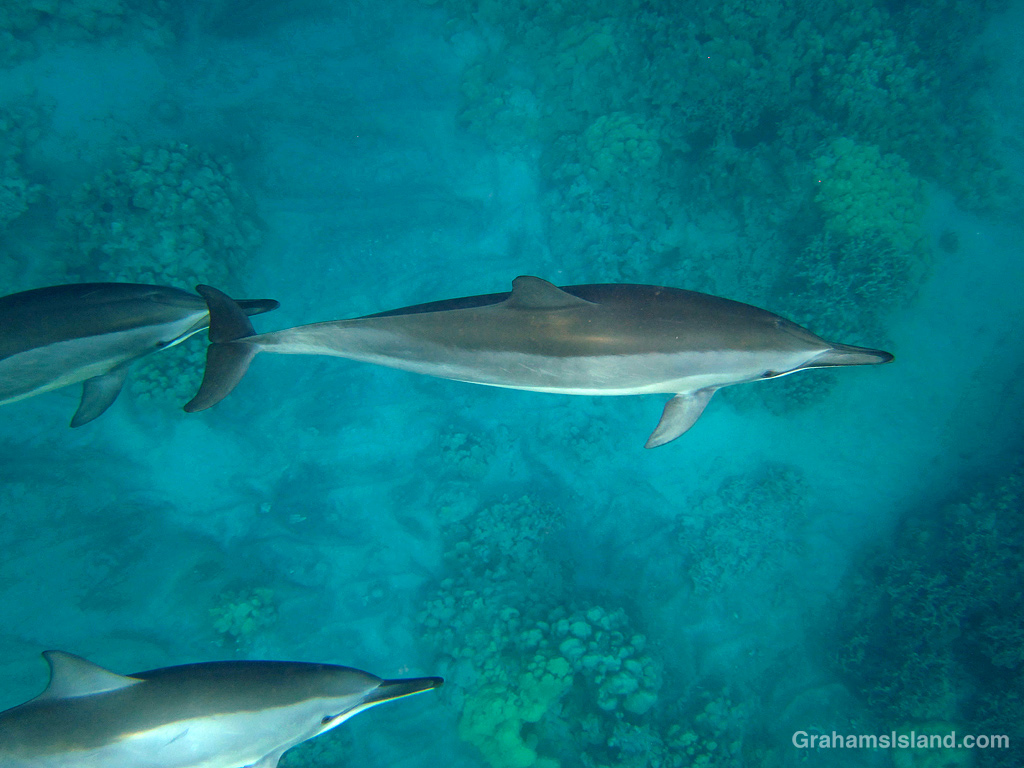
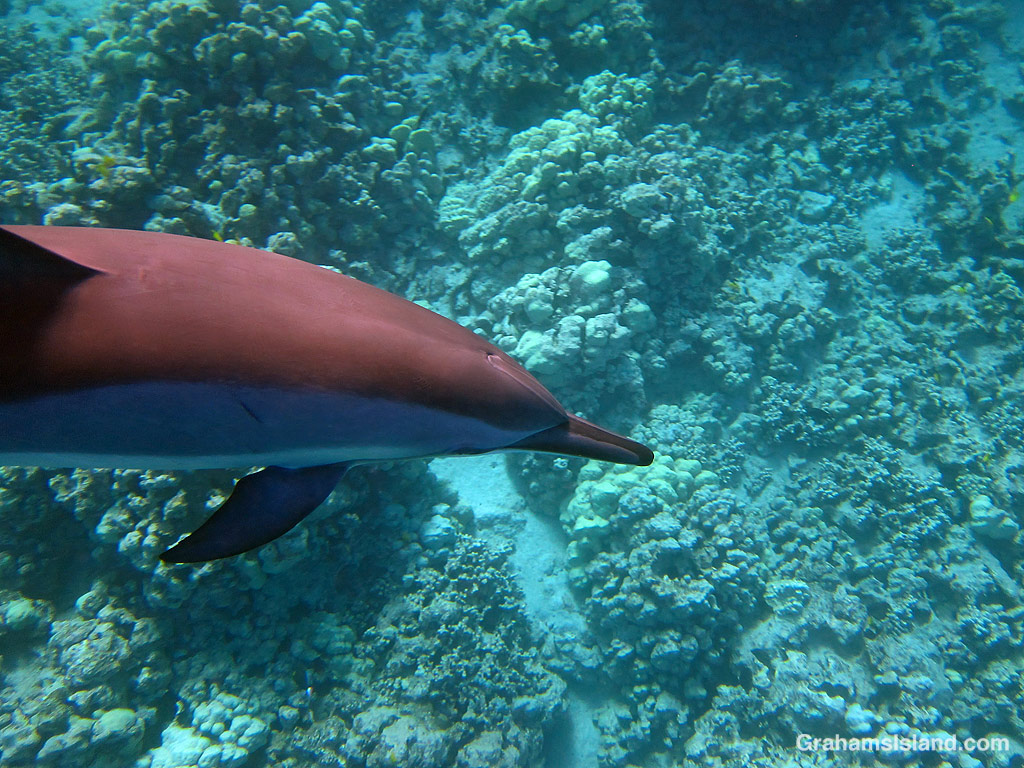
Finally, a couple of Spinner Dolphin photos, where they swam below me over an aqua background.


I was snorkeling recently in a marine reserve where fishing is prohibited and the fish there are noticeably more mellow than those in my usual snorkeling spot, where fishing of all kinds takes place.
The Raccoon Butterflyfishes there passed close by without concern. Smaller groups maintained a tight formation, while the odd one wasn’t shy about checking me out.

Needlefishes travel in one direction near the surface, while convict tangs go the opposite way on a lower level. It’s not unusual for fish to have a particular level they operate in.

I saw these fish in a small bay where the waves were rolling in and liked the effect.

