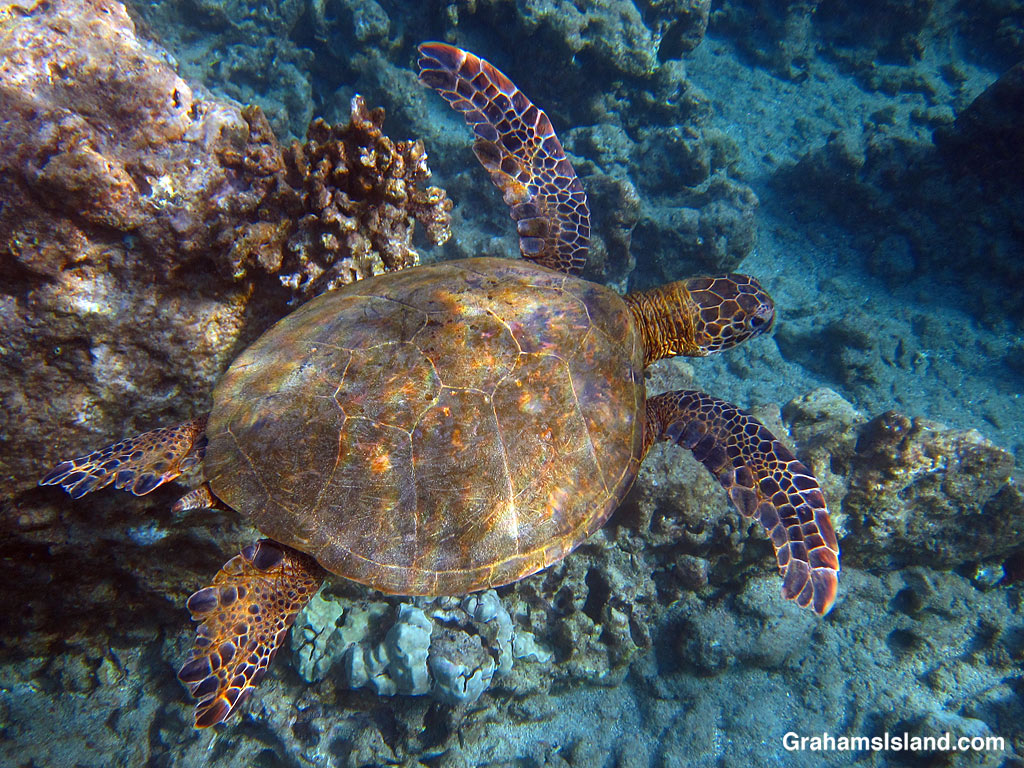
The current Friendly Friday challenge theme is ‘Green.’ See more responses here. These photos are from a recent encounter with an Hawaiian Green Sea Turtle.
I was snorkeling over a shallow area when this turtle rose up from the deeper water beyond. I reached the edge of the shallows at about the same time as the turtle which slipped below me, between me and the rocks, before disappearing in the direction I’d come from.
Adult turtles mostly eat algae and sea grasses, which turns their fat green, hence the name.
Fishponds were places where the early Hawaiians used to raise fish for consumption. Lahuipua’a Fishpond at Mauna Lani is a very large pond which holds many Milkfish. Awa is their Hawaiian name.
These Milkfish were congregated at the entrance gate, no doubt hoping for someone to open it and let them out. The gates can be used for either purpose, but the idea of the ponds is that small fish can enter, but as they get bigger, they can’t get out. The fish in the top photo are far too big to escape through the grill.
There is another way out, as the sign in the second photo notes. Jacks and barracudas sometimes manage to get into the pools and will feed on the juvenile fishes. There are supposedly a couple of very large barracudas in this pool that have so far evaded capture and they’re probably living well off the inhabitants there.
This week’s Sunday Stills Monthly Color Challenge is ‘Pink.’ See more responses here.
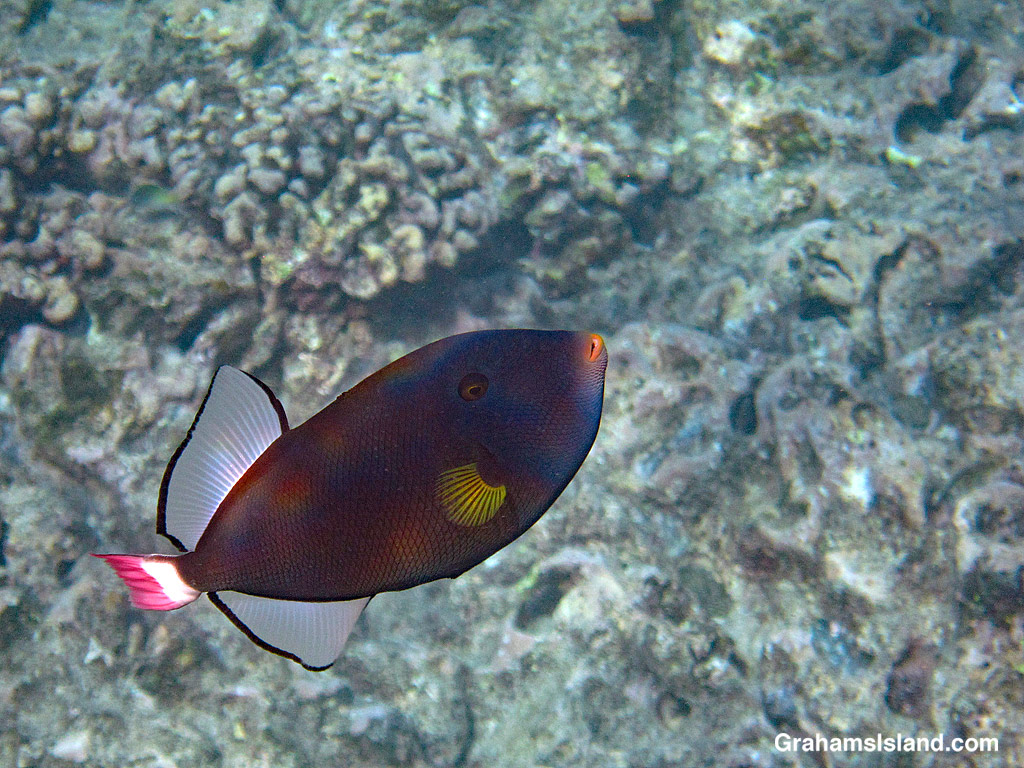
The top photo is an appropriately named Pinktail Triggerfish. Below, we have a Gold Dust Day Gecko cleaning the windows, a pink hibiscus fronting an orange tree, and an Hawaiian Stilt with an itch.
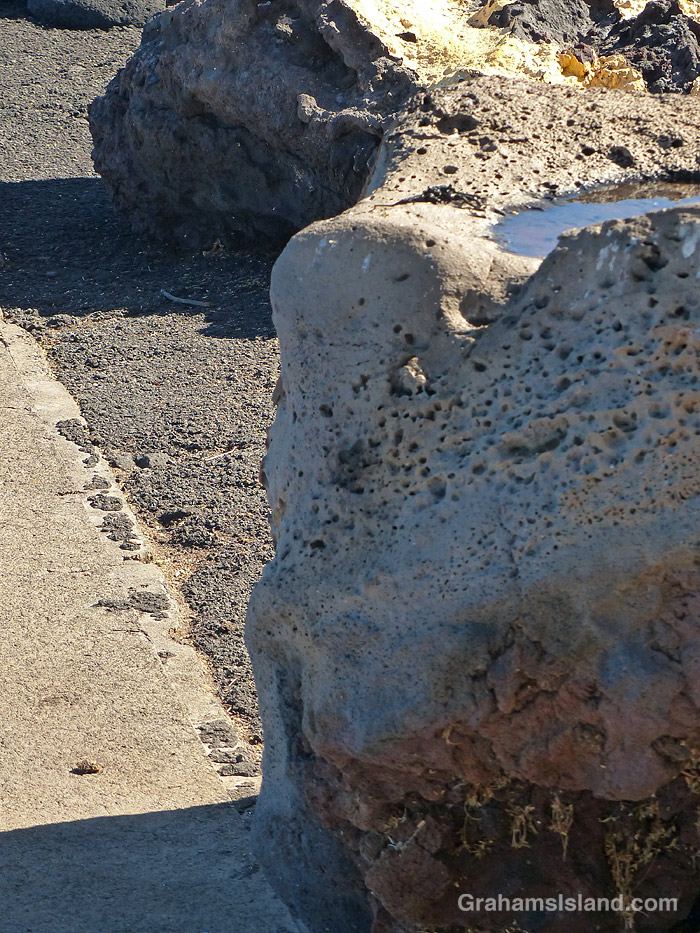
The top photo looks like a regular shot of an a’ama crab on the edge of a tide pool with the ocean blurred in the background. But the second photo shows that the ‘tide pool’ is actually a depression in a large rock, one of several placed along the edge of a parking lot, to stop people driving into the ocean (yes, they would, in case you’re wondering.).
For some reason, this encounter reminded me of the incredible climbing ability of these crabs even though I often see them skittering up or down vertical walls, in rolling surf, when I get in the water.
This week’s Sunday Stills challenge theme is ‘A Numbers Game.’ See more responses here. I put all my fingers and thumbs to work for my response, starting with ten Sheep in formation (and ten Cattle Egrets, too, as a bonus).
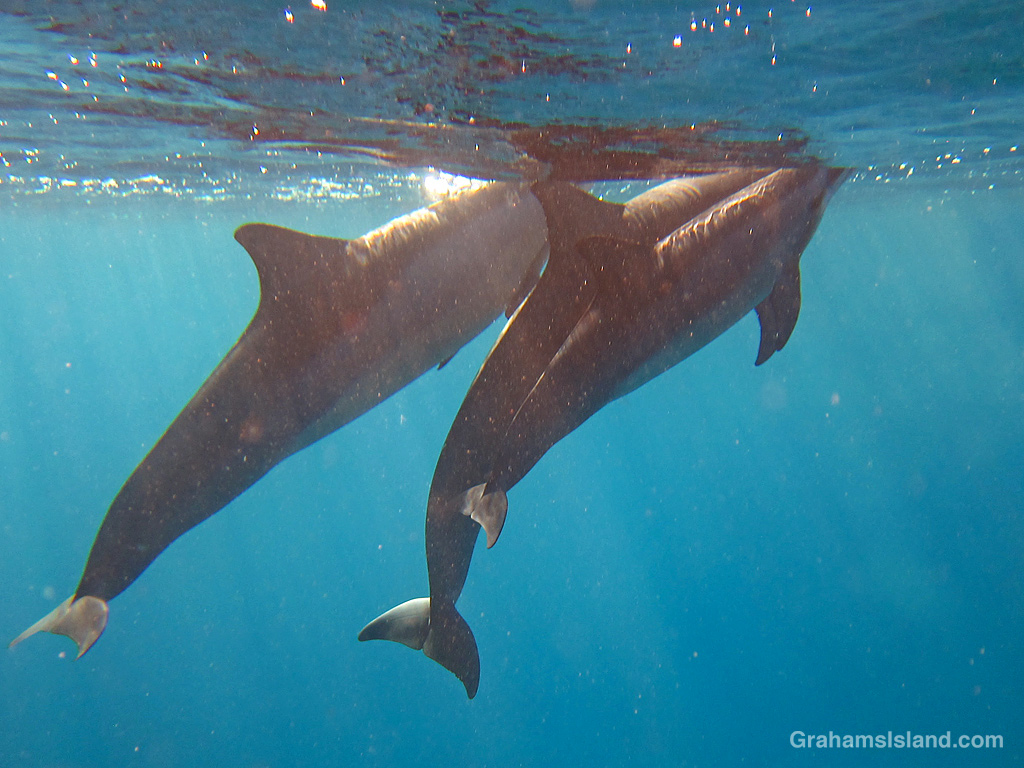
Next we have nine Spinner Dolphins playing, eight Wild Pigs foraging, seven Cattle Egrets heading to work.
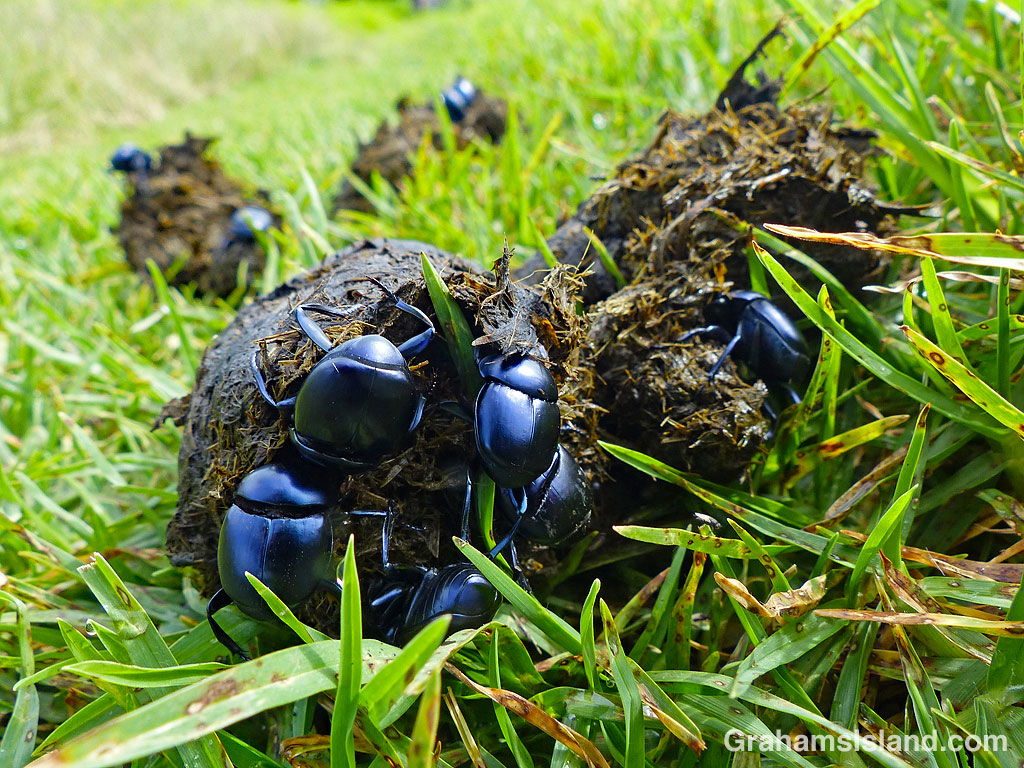
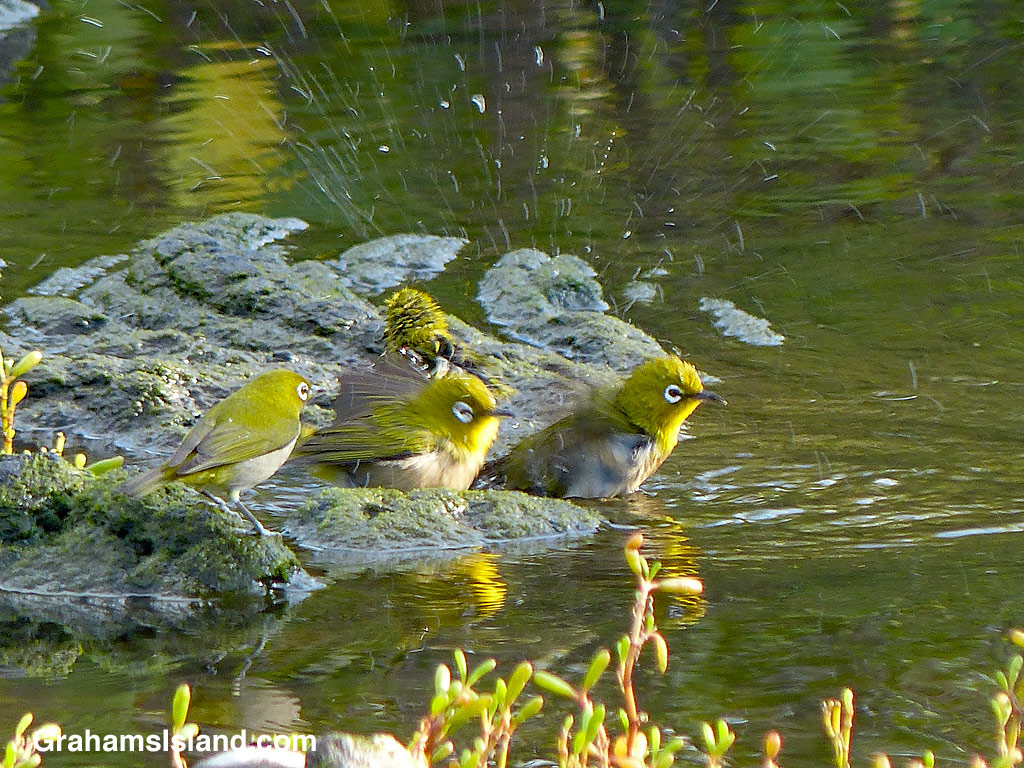
Then there’s six Dung Beetles at work, five Black Triggerfish feeling blue, four Japanese White-eyes bathing.
And finally, three Horses watching, two Hawaiian Monk Seals resting, and one Pueo anticipating zero and lifting off.
A couple of mornings ago, I was about to get in the water when I noticed something out in the bay. After a few moments, I realized they were dolphins, and they didn’t appear to be in a hurry to get anywhere. Often, dolphins zip up or down the coast and, even if I’m out there when they go by, it’s a fleeting encounter.
But when they move slowly, as they were on this day, there’s a fair chance they might hang around. So I jumped in and swam out in the general direction of where they were heading, hoping to cross paths. Each time I popped up to try and locate them, they were still there. Soon I saw the first one and then they were all around me.
After several minutes they headed back the way they came, but still in no great hurry. I followed at my own pace. There’s no way I could keep up with them and I knew my main chance of seeing them again was if they turned back my way. This they duly did.
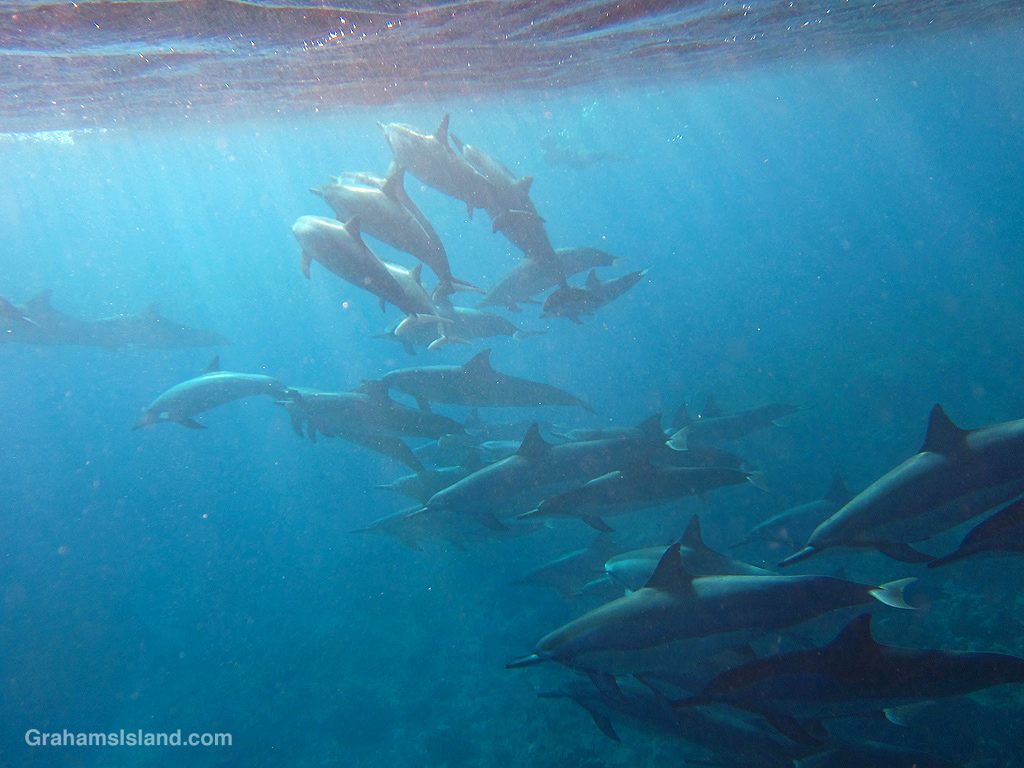
The dolphins remained in the bay for half an hour or more, going back and forth. A few leapt out of the water as spinners do, but under water they twisted and turned and just seemed to be having a good time. It was nice to see several youngsters among them. Eventually, they took off in the direction they’d been going when I first saw them and I swam back to shore.
These are some of the photos I took during the encounter. I had one photo with 45 or so dolphins in it and I know I didn’t capture all of them. I think there were probably 50 or 60 dolphins in the pod, possibly more. It’s only the fourth time I’ve encountered a pod that size and it’s a wonderful experience that will never got old.