Category Archives: In The Water

Bluefin trevally and whitemouth moray eel hunting

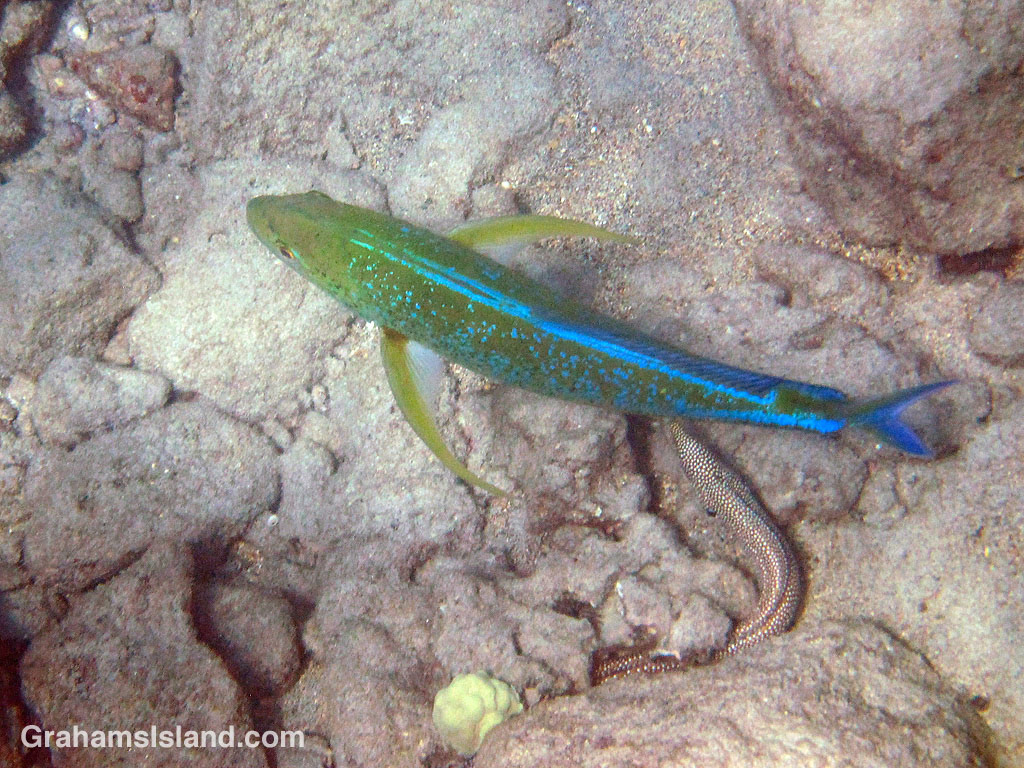
A Bluefin Trevally and Whitemouth Moray Eel hunting in the waters off the Big Island of Hawaii

There are a fair number of predatory fish in Hawaii, that eat other, smaller fish. These fish have a variety of hunting strategies, everything from ambush to outpacing their prey. Some fish team up with other predators.

Fish that employ this latter strategy include various goatfish and bluefin trevallies. These fish often accompany each other on hunts, but either or both can also be seen with other predators including eels and octopuses.

I followed this bluefin trevally and whitemouth moray eel for a few minutes and didn’t see them catch anything, but they were definitely traveling together. If the eel hung out for a while under a ledge, as they like to do, the trevally would hang around, passing back and forth or circling the spot.

This tendency is actually helpful for spotting eels and particularly octopuses. Several times I’ve seen a goatfish or two milling around a rock for no apparent reason, so I’ve waited and watched. Sure enough an eel pops its head out or, better still, the rock turns out, on careful examination, to be mostly octopus.

There you go, an actual useful tip for snorkelers.
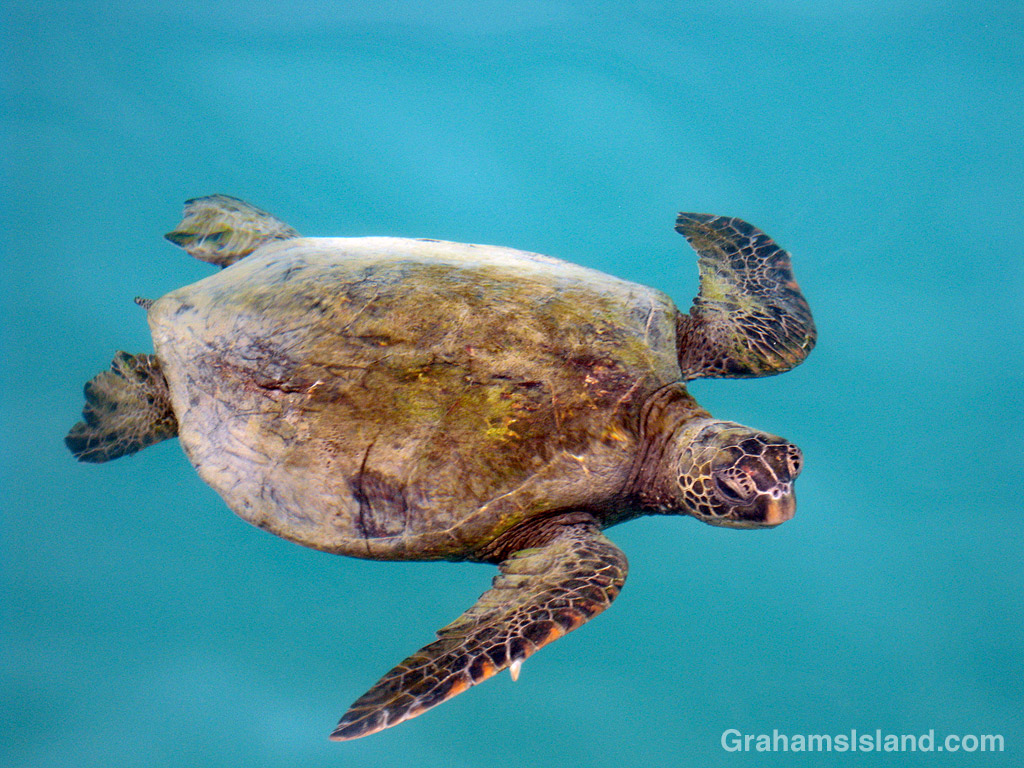
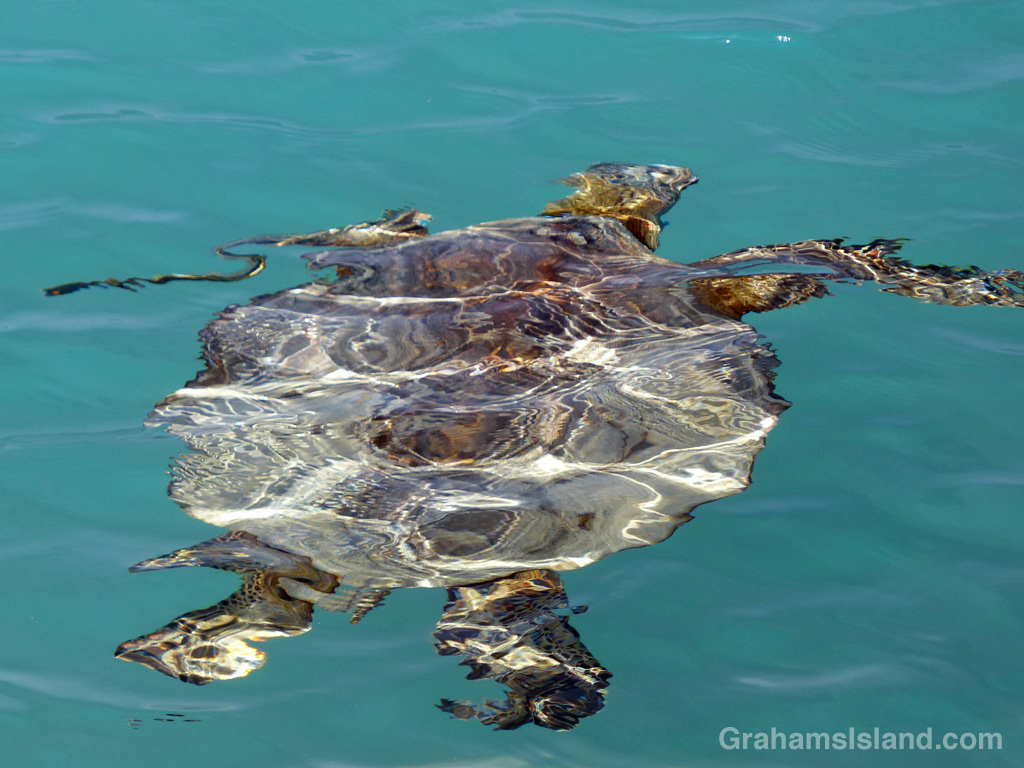
Green turtle swimming

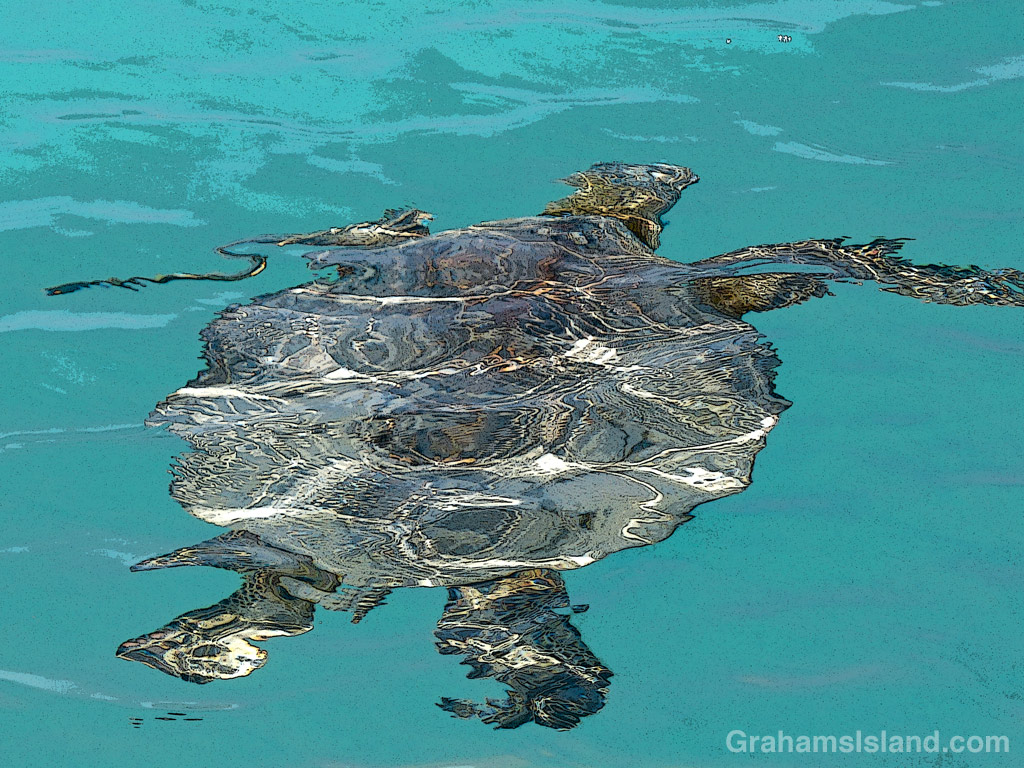
A green turtle swims in the waters of the Big Island of Hawaii.

Another post on the WordPress photo challenge theme of ‘serene.’

While waiting to board a boat to see the wonders of Hawaii’s ocean life, this green sea turtle obligingly drifted through the blue-green water alongside the quay. Green turtles generally appear to have an unflappable countenance, but the slightly surreal clear water adds a particular air of serenity I think.

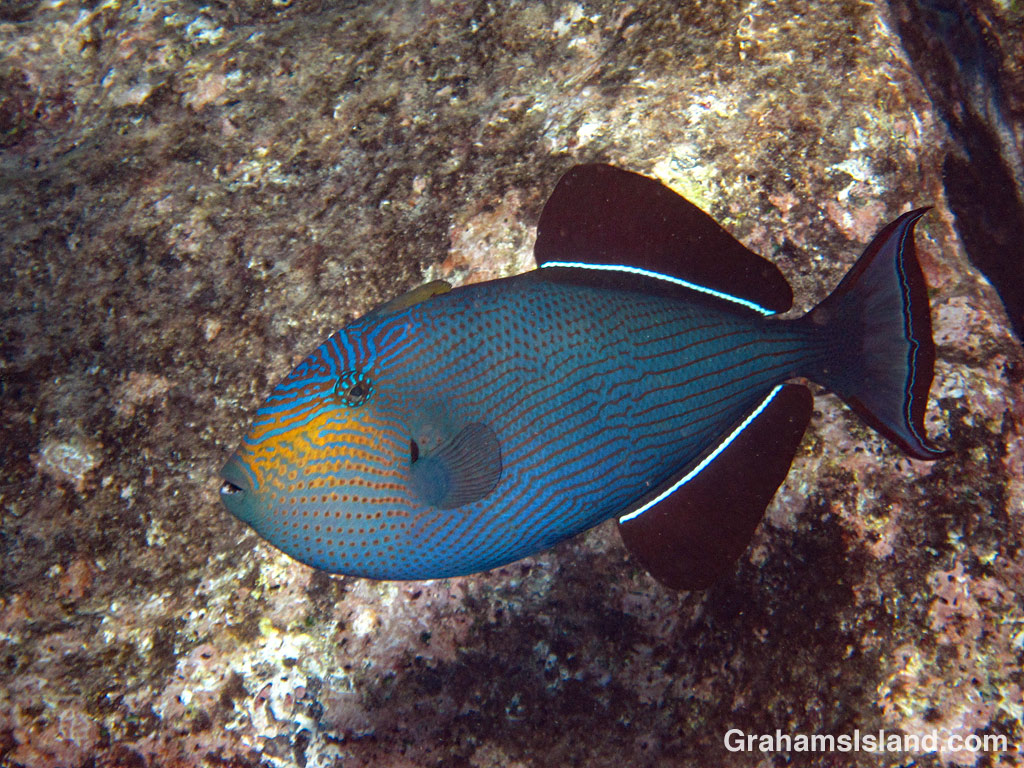
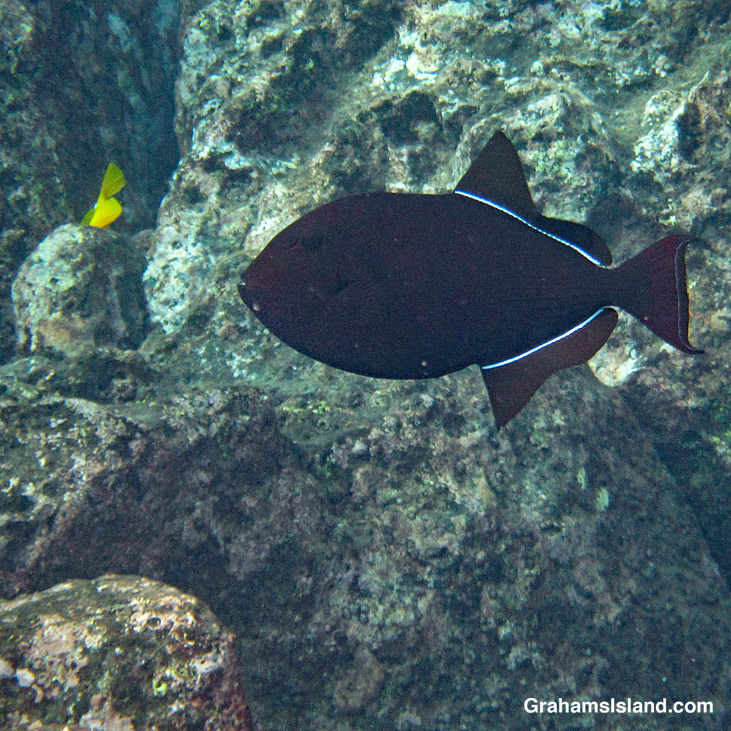
Black triggerfish transformed

A black triggerfish showing colors when it is agitated or arousedA black triggerfish with normal coloration

Most of the time, black triggerfish look like the lower photo, a fairly uniform black, apart from two bright pale blue lines at the base of the dorsal and anal fins. However, when they become aroused or agitated, their colors can change, and this color transformation can happen very quickly. Sometimes it’s just the brilliant blue lines radiating from the eyes, sometimes the flush of yellow or orange on the sides, sometimes the blue-green lines along the side.

This black triggerfish gave me the full display, and rather than swimming off, it hung around and presented a broadside view. It’s possible it was defending its territory or perhaps some eggs.

I took the photo and swam on, not wanting to bother the fish more than I apparently already had.

Waimanu and her pup

A Hawaiian monk seal and her pup.

Waimanu is a monk seal who spends most of her time around the Big Island, one of the few to do so. She has given birth three times here, and recently gave birth to her fouth pup. She won’t leave her pup to feed until it’s ready to fend for itself, usually around six weeks. Because of this, she feeds up, ahead of giving birth, and attains enormous size.

The top photo shows the contrast between the huge mother seal and her small pup. Over the next six weeks, if all goes well, she’ll steadily lose weight while the pup will grow quite quickly. Eventually, the pup will lose it’s black coloration and look similar to its mother, the transformation complete.

A Hawaiian monk seal and her pup.

A giant porcupinefish peeking

A giant porcupinefish peeks out from behind a rock

This would have been a good photo for a recent WordPress challenge, peek, but I took this after that was over. However, it also works for this week’s challenge of ‘experimental.’

My underwater photography setup is not a spiffy camera and a bank of lights, but a point-and-shoot Canon S 90 in a waterproof housing. It doesn’t have tremendous zoom capabilities so I’m constantly experimenting with ways to approach fish so I can get a decent close photo.

Taking photos in areas where fishing, spearfishing, and fish collection are banned makes things easier. Fish in those areas seem to know they have less to worry about, at least from humans, so they’re less inclined to dart off. Elsewhere it’s a different story. Often I can get reasonably close, but when I raise my camera toward them they tend to zip away, possibly thinking it’s a new type of spear gun.

The best approach I’ve found is to be as quiet as possible in the water and just drift toward something I want to photograph. In this instance, I was puttering around when I saw this giant porcupinefish headed my way. I like these fish with their big eyes and a body tapering from the huge head back toward the delicate tailfin.

This fish spotted me and dipped down behind a large lump of rock and coral. I waited, but it didn’t reappear. I eased forward, keeping the rock between me and the fish. Still no sign of my quarry, so I slid to one side and saw the tailfin fluttering. Ah ha! With my camera ready and a gentle flip of my flippers I moved to the other side where I found the fish peeking out and giving me this look. I snapped a photo and an instant later the porcupinefish pivoted and headed the other way at speed.

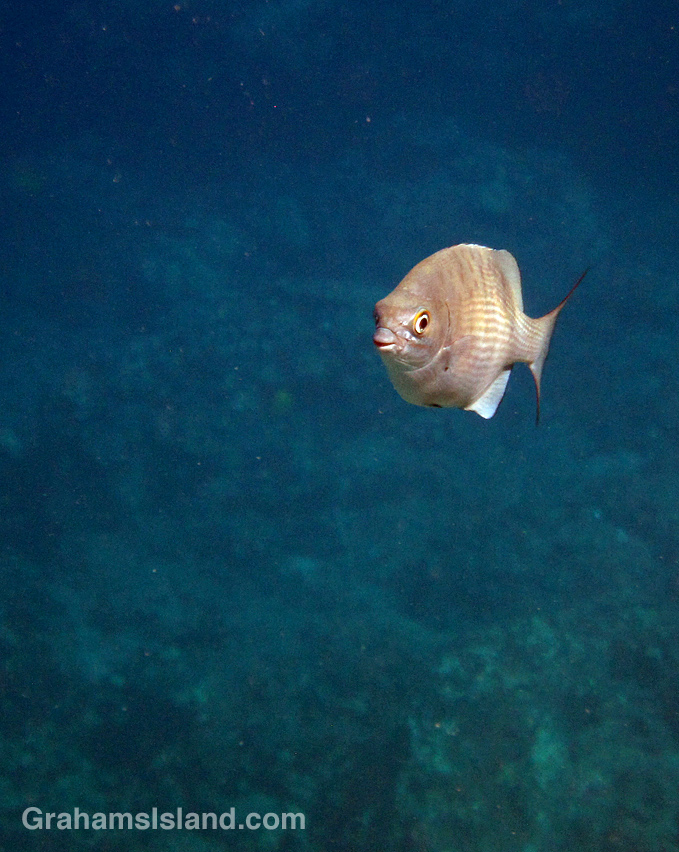
Despite their ungainly appearance, giant porcupinefish are good swimmers and it was soon a good distance away, but when I got home I was happy to find that I’d got this shot. I also like how the goldring surgeonfish in the photo looks suitably startled by the whole encounter.

Spotted pufferfish

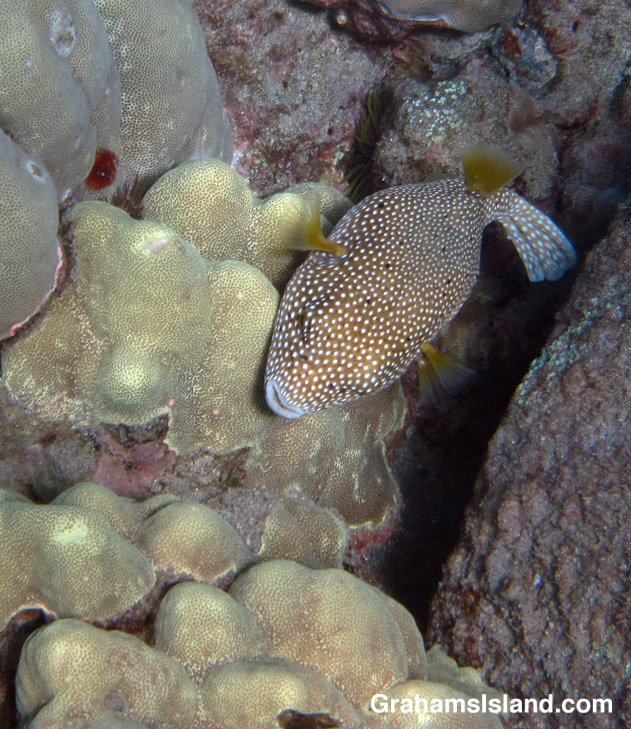
A spotted pufferfish in the waters off the Big Island of HawaiiA spotted pufferfish in the waters off the Big Island of Hawaii

Spotted pufferfish can come in a variety of colors, but around here they’re mostly black or brown with white spots. Their defensive strategy is to inflate into a ball when threatened, thus making it very difficult for a predator to make a meal of them.

Actually, they’re probably doing the predators a favor since pufferfish are extremely toxic. Even very small amounts of the toxins in pufferfish can kill a human. Not surprising then that it’s illegal to serve pufferfish commercially in Hawaii, though it’s considered a delicacy in Japan. There, “fugu chefs” are licensed by the government. The properly-prepared flesh still contains trace amounts of toxins that are supposed to give the diner a warm glow. Goodness only knows what kind of liability insurance a fugu restaurant has to carry.