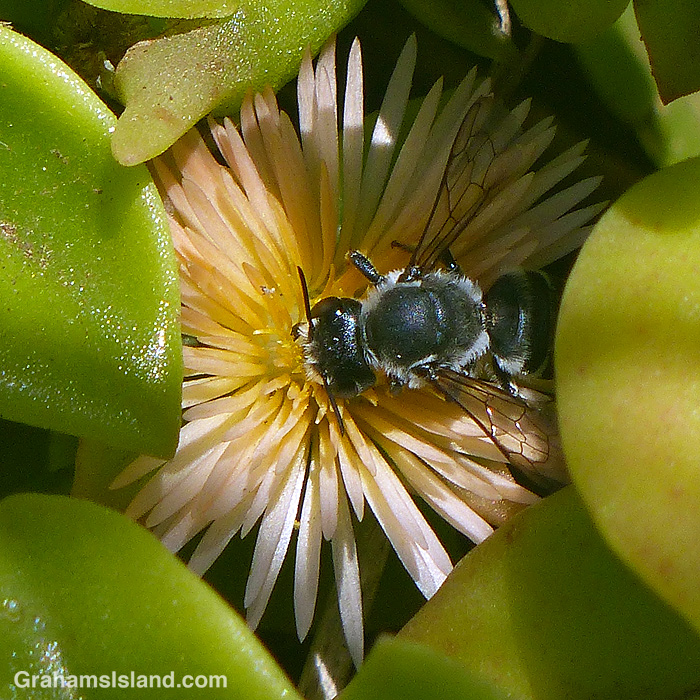
A leafcutter bee burrows down on to an Aptenia haeckeliana flower. This flower is similar to the aptenia cordifolia, but is pale yellow instead of magenta.

A leafcutter bee burrows down on to an Aptenia haeckeliana flower. This flower is similar to the aptenia cordifolia, but is pale yellow instead of magenta.
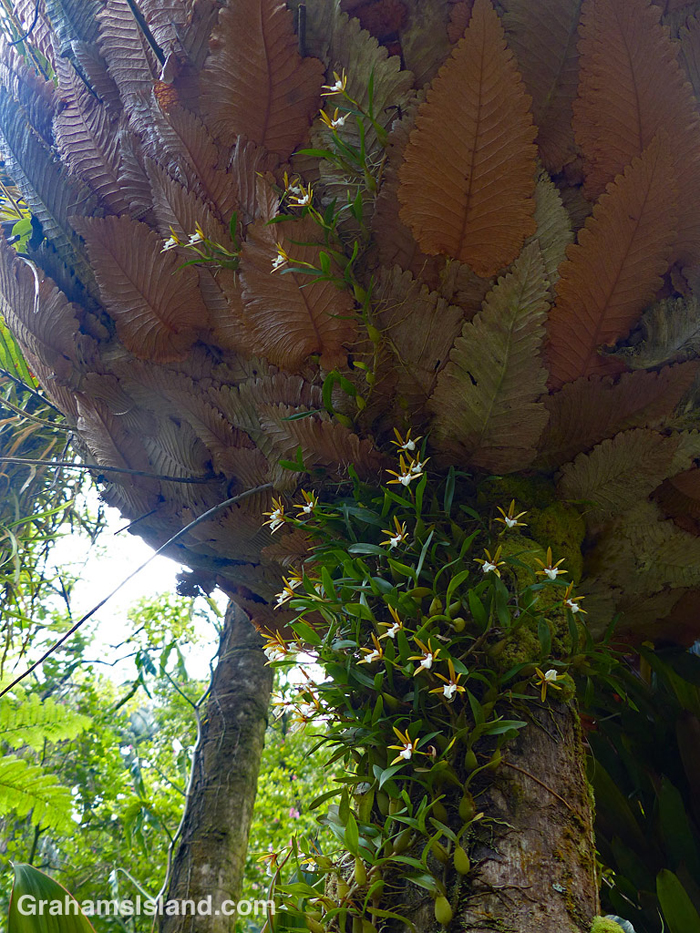
This drynaria rigidula ‘Whitei’ basket fern was growing on a tree trunk at Hawai’i Tropical Botanical Garden (which has since change its name). I like basket ferns, which look like upturned umbrellas. This fern was complemented by a dinema polybulbon orchid, a delicate and fragrant epiphytic orchid that was winding it’s way up into the fern.
For more information about Hawai’i Tropical Bioreserve & Garden (formerly Hawai’i Tropical Botanical Garden), go to htbg.com.


I see this stand of yuccas on the drive into Waimea and watch for it to bloom. When it does, late afternoons are the best time for photographs so I try to remember to stop on the way back from hiking off Saddle Road or at Hawaii Volcanoes National Park. In this instance, it was the latter, and I was passing by around 6 pm.
Look closely at the top photo and the telescopes of Mauna Kea can be seen in the distant background, which is a bit unusual for this time of day, morning being their time to shine.
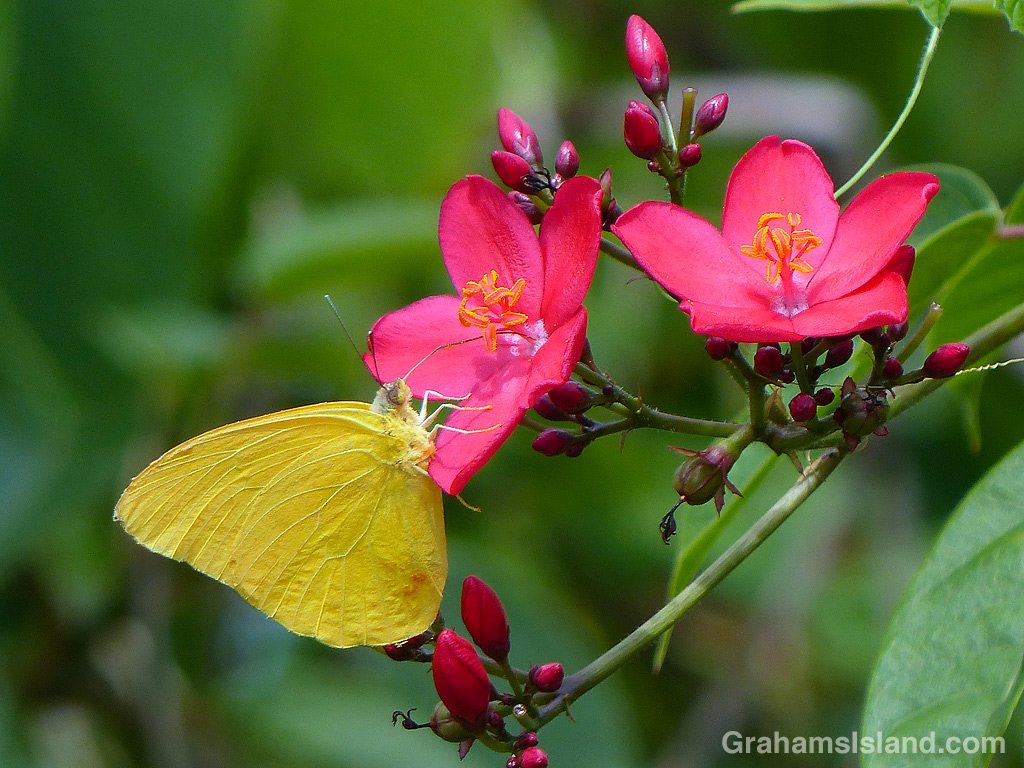
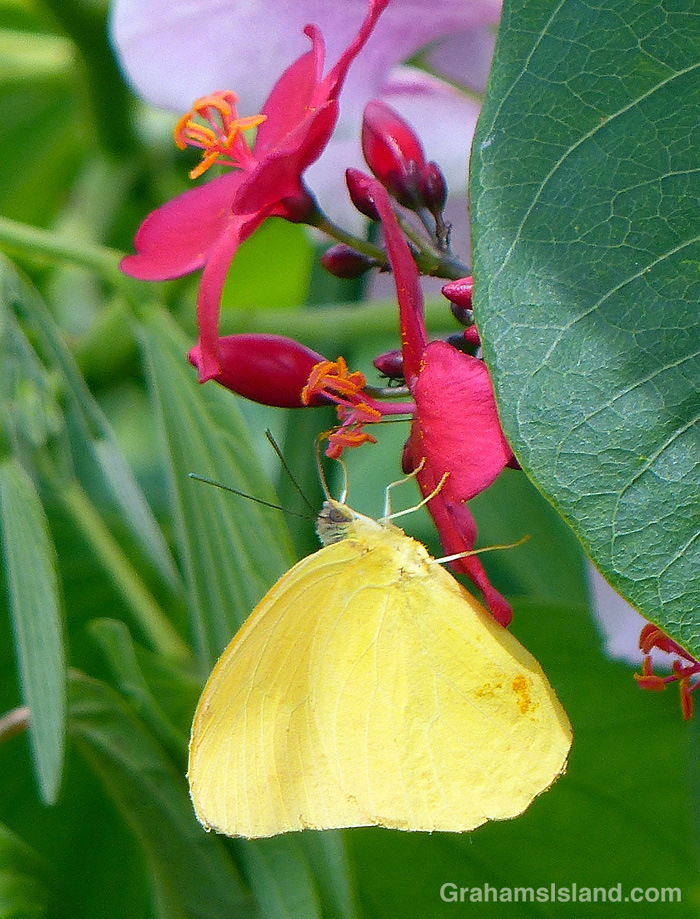
I spotted this large orange sulphur butterfly feeding on rose jatropha flowers and was struck by the vivid display of colors.
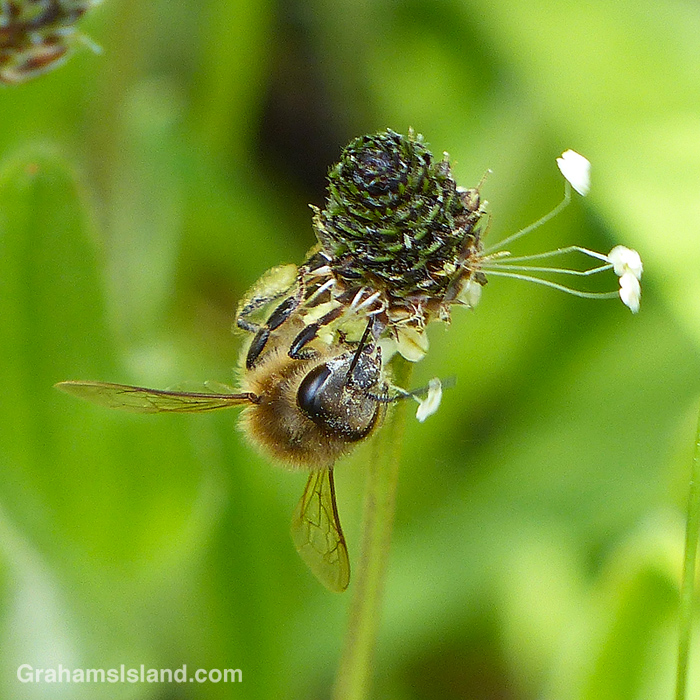
When I saw this bee I thought, I know that plant, but what’s the name of it? Well, it’s ribwort plantain, but my knowledge of it stems from many years ago when, as kids, we used to pick them, loop the stem around just below the head of the plant, and then jerk that loop forward to send the head of the plant zinging in the direction of the intended victim. It was amazing how far those heads would travel.
This bee is using the plant for more beneficial purposes.
Posted in response to Becky’s July Squares challenge theme of ‘Perspective.’ See more responses here.
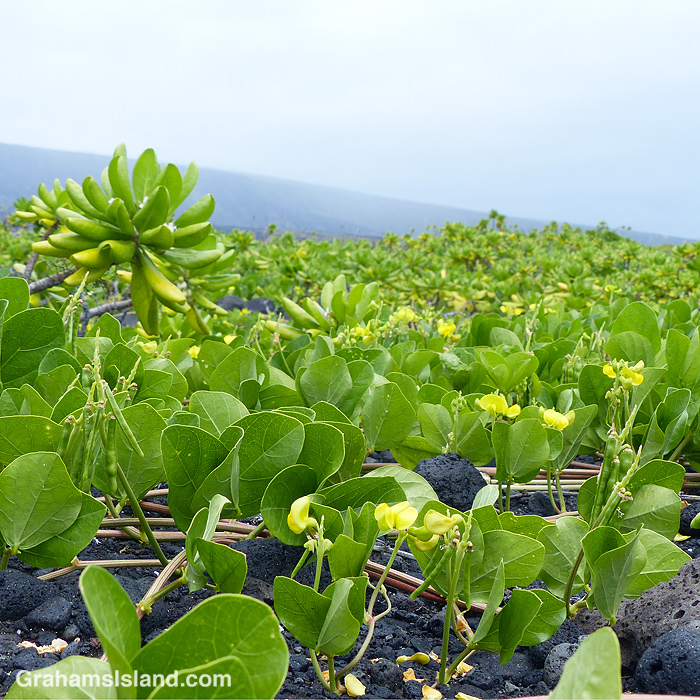
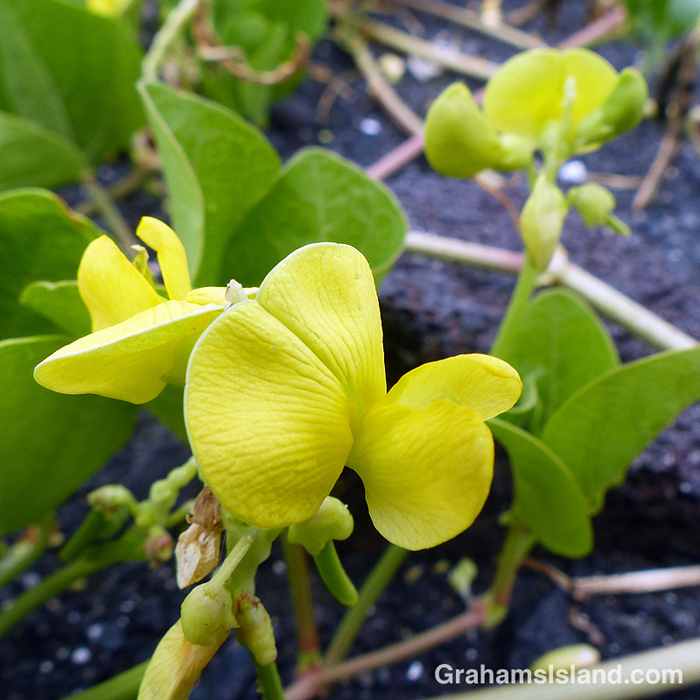
Beach pea vine (Vigna marina) is an indigenous plant with flowers and seed pods that clearly identify it as a member of the pea family. It fares well on the coast because it’s salt tolerant. It spreads, forming large swathes stretching away into the distance, as in the top photo.
Posted in response to Becky’s July Squares challenge theme of ‘Perspective.’ See more responses here.

A passion vine butterfly gets a different look at a tasselflower.
Posted in response to Becky’s July Squares challenge theme of ‘Perspective.’ See more responses here.
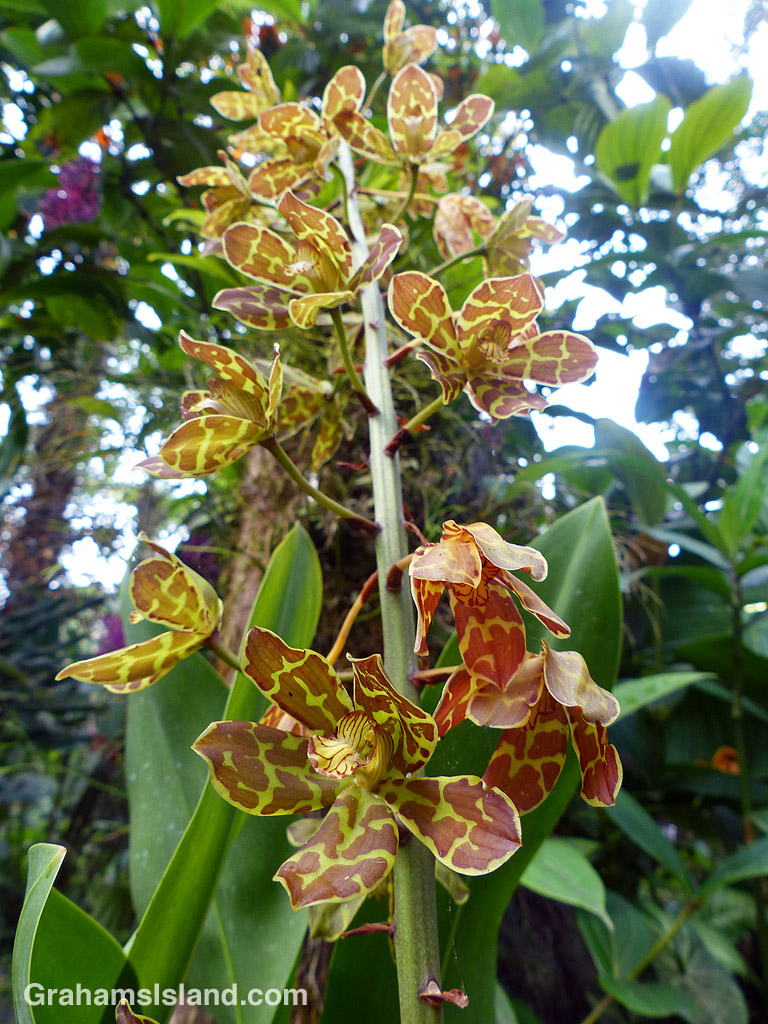
Leopard orchids (Grammatophyllum scriptum) come from the low-lying coastal areas of Southeast Asia. They produce abundant, showy flowers, but can grow to be quite large. Because of this growth habit, they’re most often seen in botanical gardens rather than domestic gardens.
This one was at Hawai’i Tropical Bioreserve & Garden. For more information about Hawai’i Tropical Bioreserve & Garden, go to htbg.com.
 Graham's Island