Category Archives: Plants

Log yard

Eucalyptus logs at the log yard at Kawaihae.
The Hamakua coast of the Big Island is the first landfall of the northeast trade winds and, consequently, gets a good deal of rainfall. Combined with warm tropical temperatures and good soil, the area is a prime growing area.

One of the crops is eucalyptus trees. The trees grow fast and straight. When they’re harvested they’re trucked to Kawaihae, the port on the west side of the island, to this log yard. They’re stored there until there are enough logs to ship to Asia, which seems to be about every couple of months at present.

I happened to be driving by late one afternoon and was struck by the light on the log ends. As can be seen from the hillside in the background, Kawaihae is one of the driest spots on the island, averaging around 10 inches of rainfall a year.

Naio

Naio (Myoporum sandwicense) grows on the lower slopes of Mauna Kea.
Naio (Myoporum sandwicense) used to grow in great abundance in Hawaii, but now is much less common. It has some similarities to true sandalwood and was passed off as the latter without much success, leading to it’s other names of false sandalwood or, less sympathetically, bastard sandalwood.

This small tree was found growing on the lower slopes of Mauna Kea.

Kahuku hike

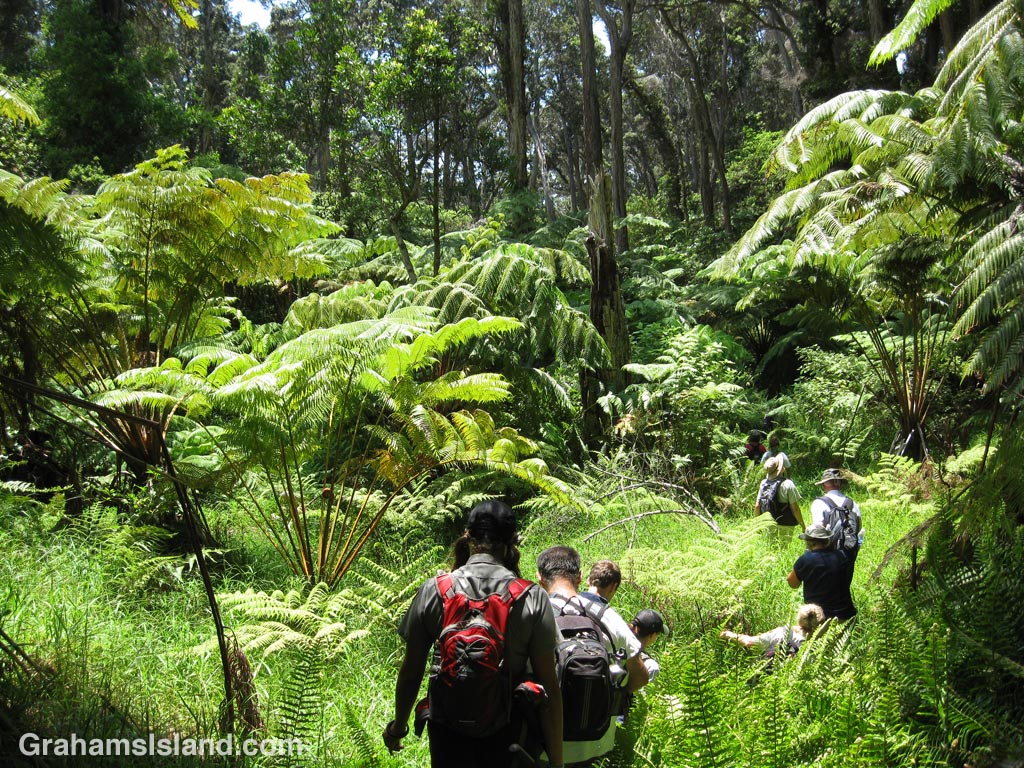
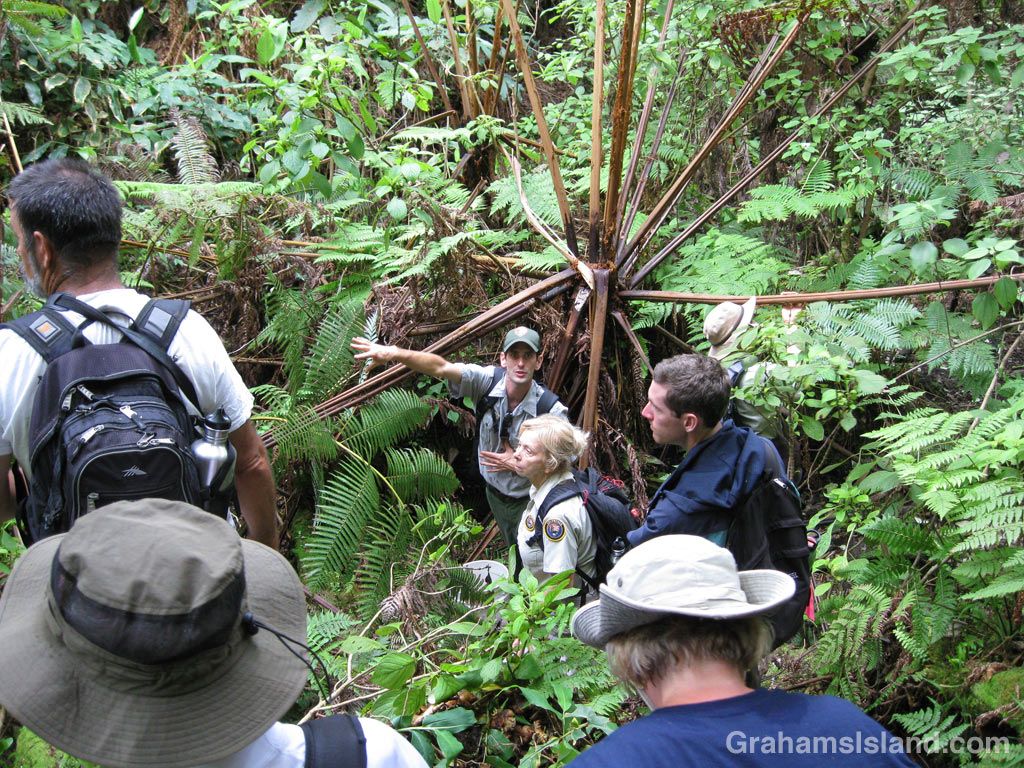
Hiking in KahukuHiking in Kahuku
Kahuku is part of Hawaii Volcanoes National Park. Its 116,000 acres was added to the park in 2003, an estate purchase of former ranch land. This purchase almost doubled the size of the park.

Not far from the southern tip of the Big Island, the entrance to Kahuku is about an hour’s drive from the main park entrance, but the two areas are contiguous, joined at the summit of Mauna Loa.

These photos are from a guided hike in Kahuku that I did a while back. The hike went through fairly dense old growth Hawaiian forest that had been spared because it was in a steep gully and thus not suitable for clearing for pasture. There was no real trail.

Currently this part of the park is closed because trees with Rapid ‘Ōhi’a Death (ROD) have been found in the lower part of the park and the goal is to prevent it spreading to other areas.

For more information on the Kahuku Unit of Hawaii Volcanoes National Park, go to nps.gov/havo/planyourvisit/kahuku-hikes.htm or bigislandhawaiitravelguide.com/places/puu-o-kahuku-at-hawaii-volcanoes-national-park.html

Hiking in Kahuku

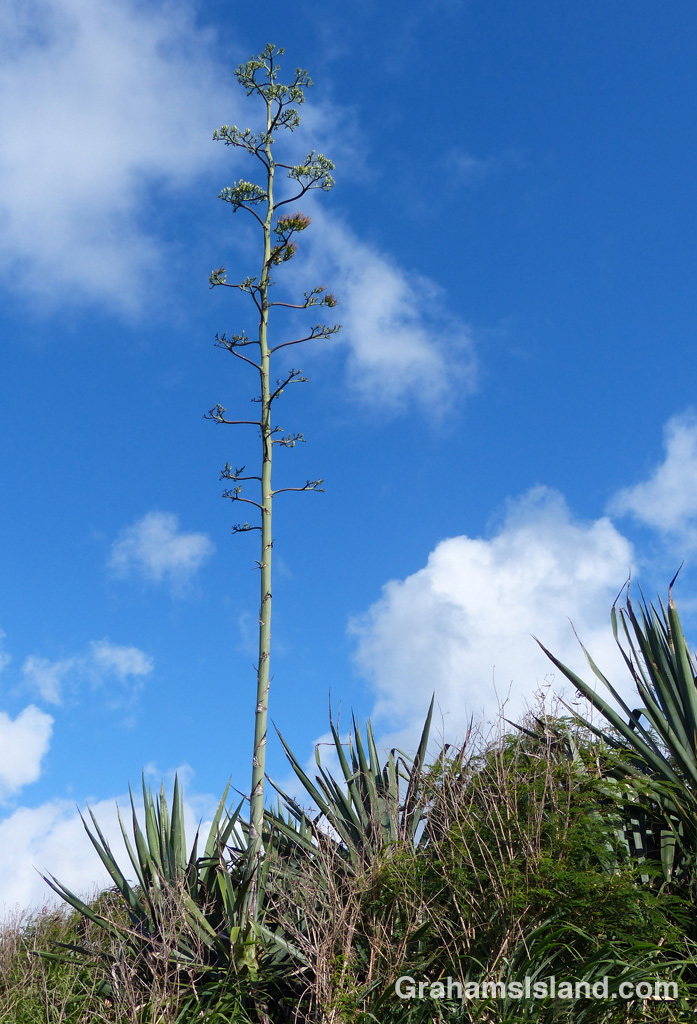
Agave sisalana

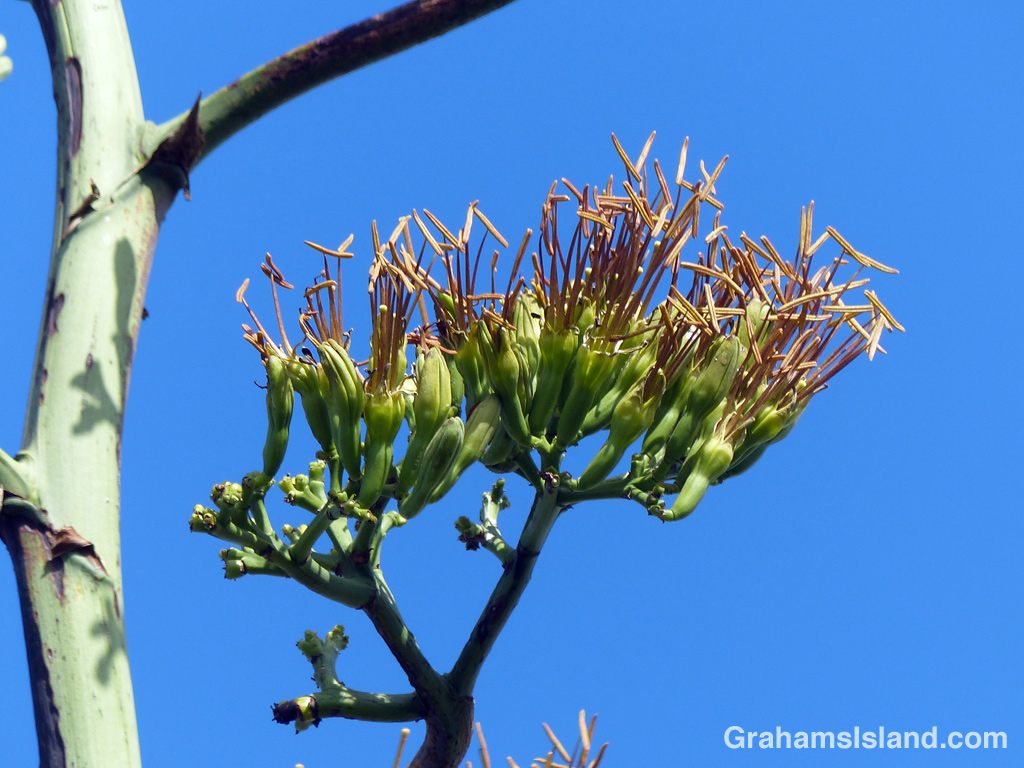
Agave sisalana flowers The flower stem of an agave sisalana
The leaves of agave sisalana are used to produce sisal fiber, which is used in making ropes amongst other things. However, what draws attention are the tall flower stems reaching 15 or 20 feet into the air. Around here, strong winds often blow the stems over, temporarily blocking roads and driveways.

Fagraea berteriana

A fagraea berteriana flower is visited by antsThe flowers and fruits of a fagraea berteriana tree
Fagraea berteriana is also known as perfume flower tree and pua keni keni. In Hawaiian, pua keni keni means “ten cent flower,” which used to be the price of a lei made from these flowers.

There’s a lot going on with these plants. The fragrant flowers start out white, then turn golden yellow. Later it will produce smooth green fruits that will become wrinkled and red.