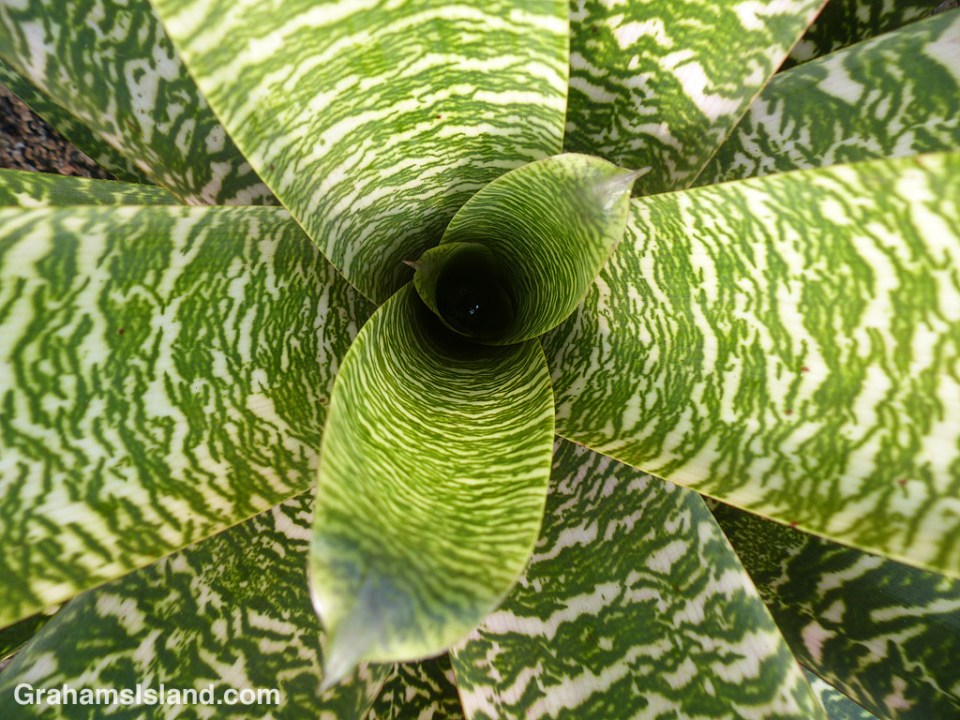
A look into the dark heart of a bromeliad plant. Is that something down there, looking back?
A look into the dark heart of a bromeliad plant. Is that something down there, looking back?
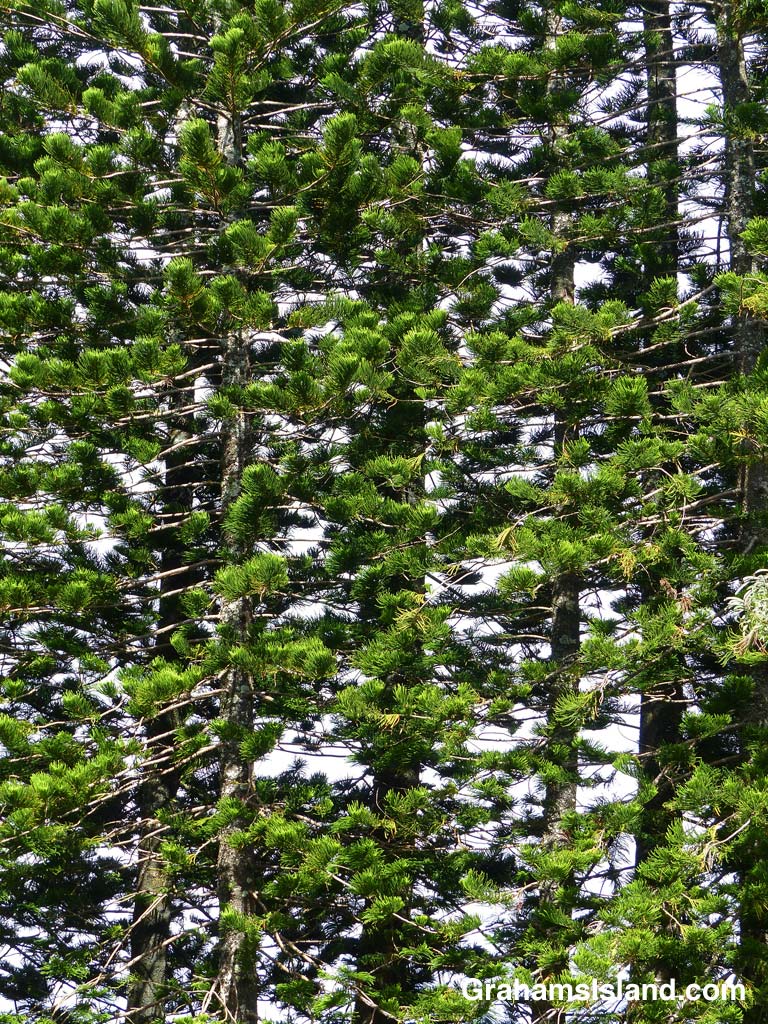
I think these are Cook pines, but what I liked was that there was a long line of extremely tall trees that formed this abstract kind of wall.
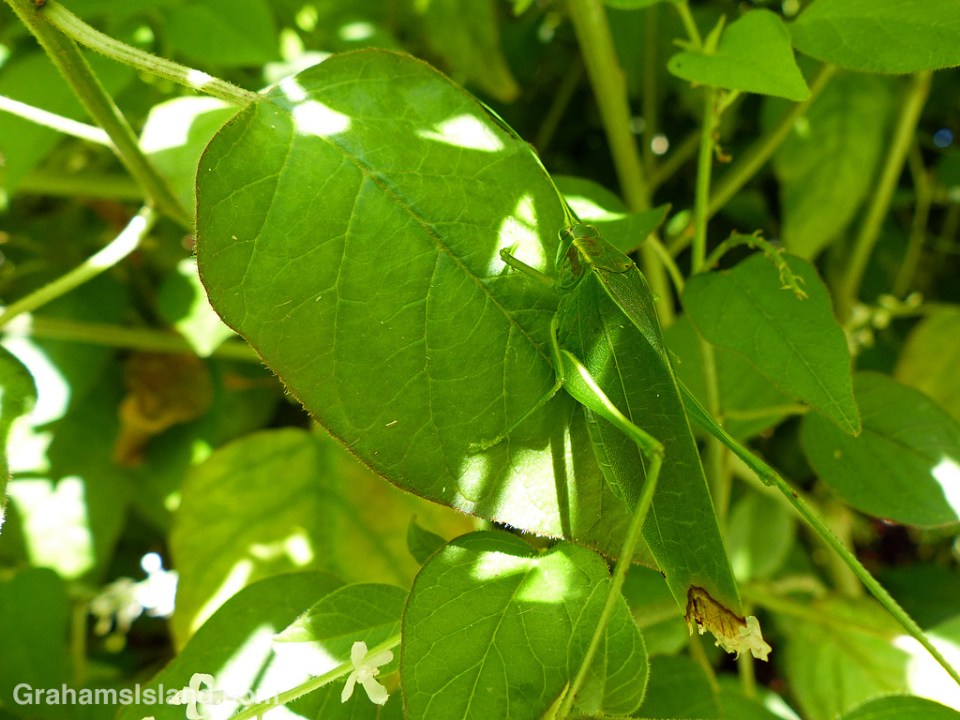
Just a straightforward ‘Spot the katydid’ photo. I was sorting some older photos and I had to look at this one more than once to figure out what was going on.
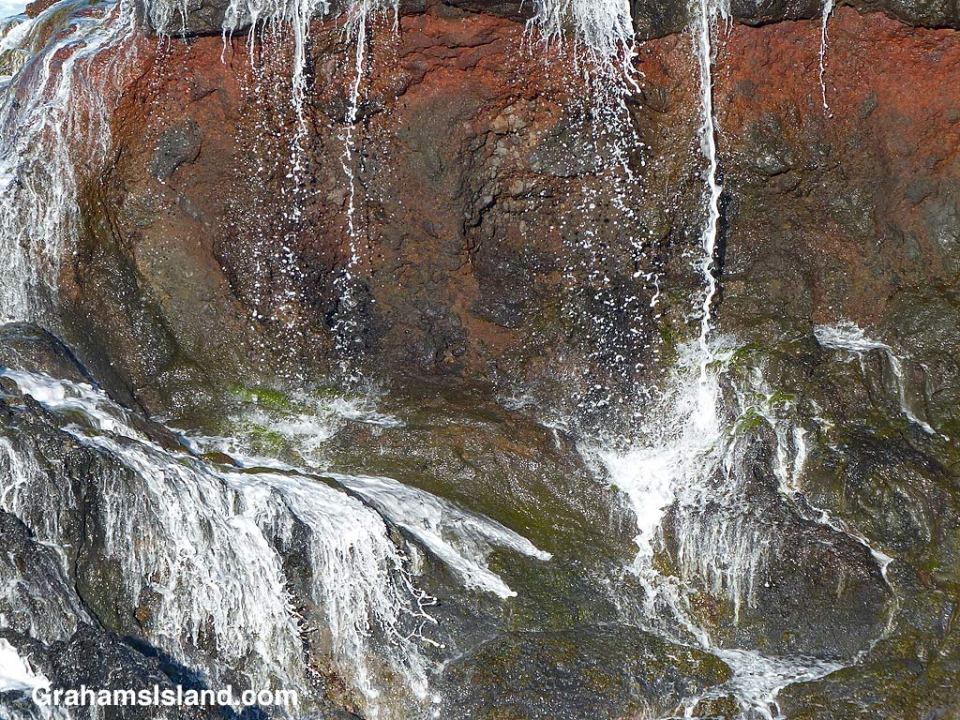
A breaking wave cascades down a colorful rock face on the coast.
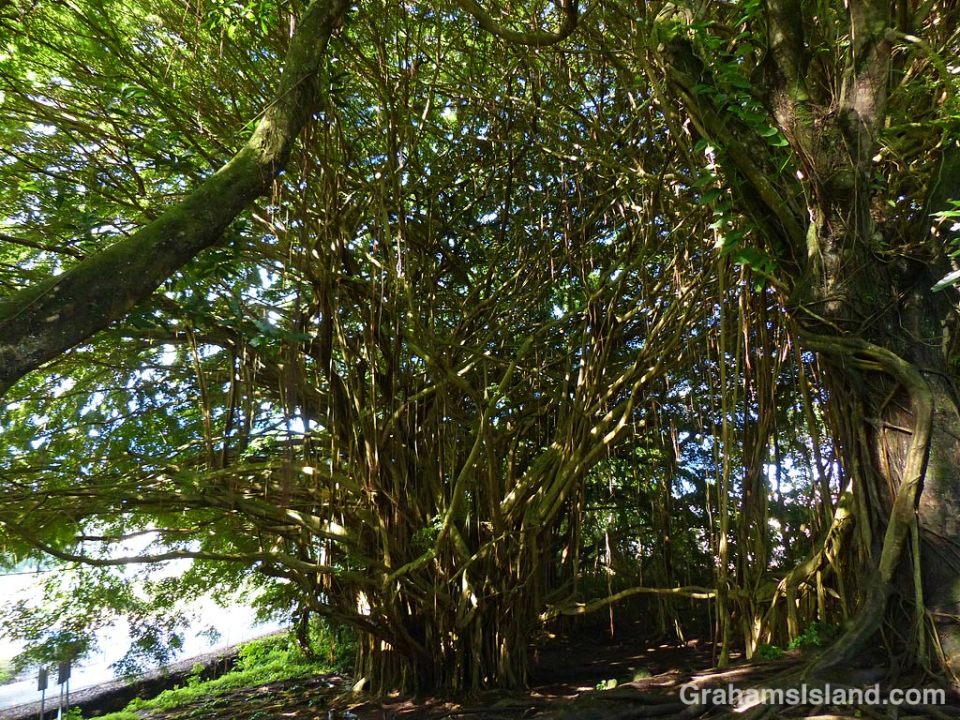
 The main attraction of Wailuku River State Park, in Hilo, is Rainbow Falls. But at the top of the hill are these huge banyan trees.
Banyans are not just a huge sprawl of branches, but a sprawl of roots, too. As epiphytes they begin life growing on other trees, from seeds dispersed there by birds. Over time, they send roots down to the ground, known as prop roots, which help support the mass of branches.
Banyan trees are also known as strangler figs because their roots and branches will ultimately overwhelm the host tree and kill it. Eventually, the dead host will decay and leave a hollow center to the banyan tree that’s left.
By continuing to send down prop roots, banyans grow out as well as up. Very old trees can cover a huge area. For example, the Great Banyan Tree in Kolkata, India is more than 250 years old. Its covers around four acres and has more than 3,500 prop roots. Here in Hawaii, the largest banyan grows in Lahaina on Maui. Planted in 1873, it now has 16 main trunks and covers two thirds of an acre.
The Rainbow Falls trees aren’t that large, but they’re coming along nicely.
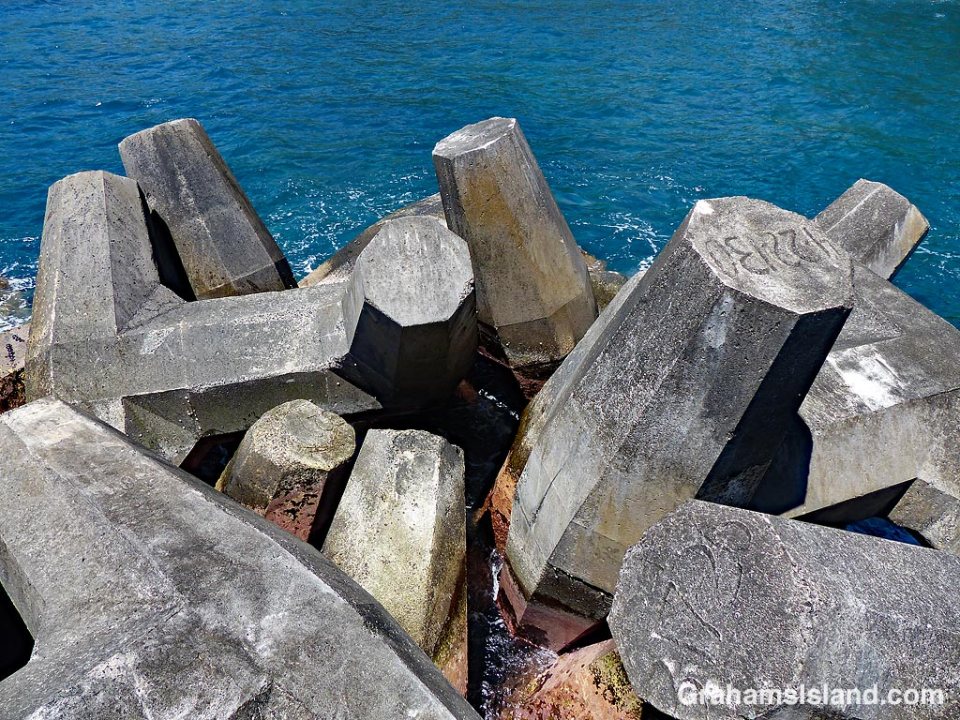
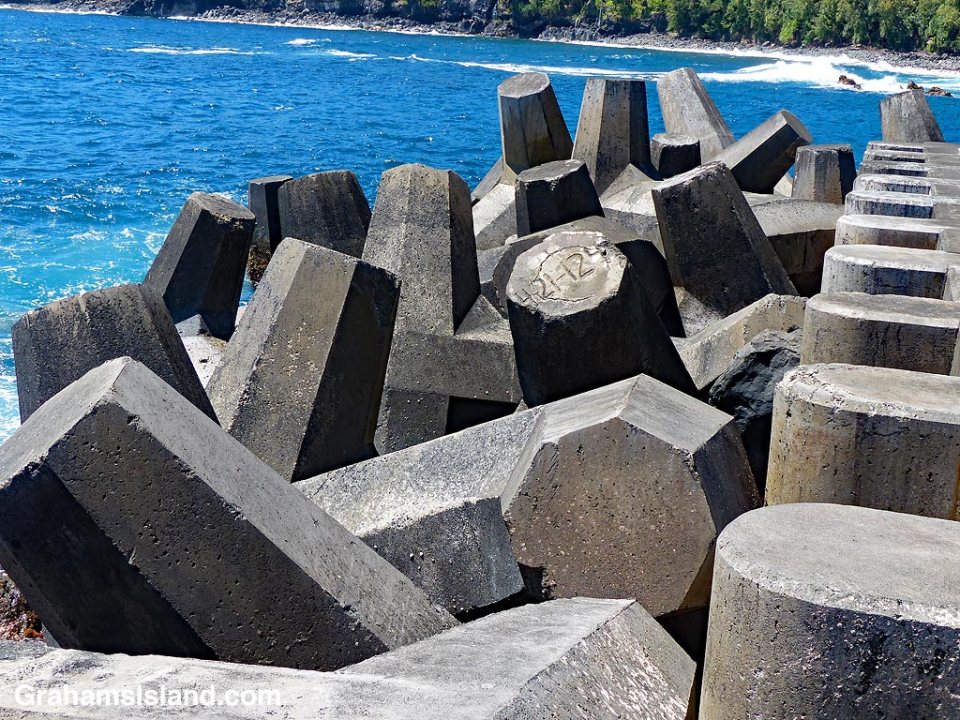
I was quite taken with these giant concrete shapes that form part of the breakwater at Lapahoehoe Point on the east side of the island. The breakwater was constructed by the Army Corps of Engineers and is needed to protect the boat launch ramp from trade-wind-driven seas.
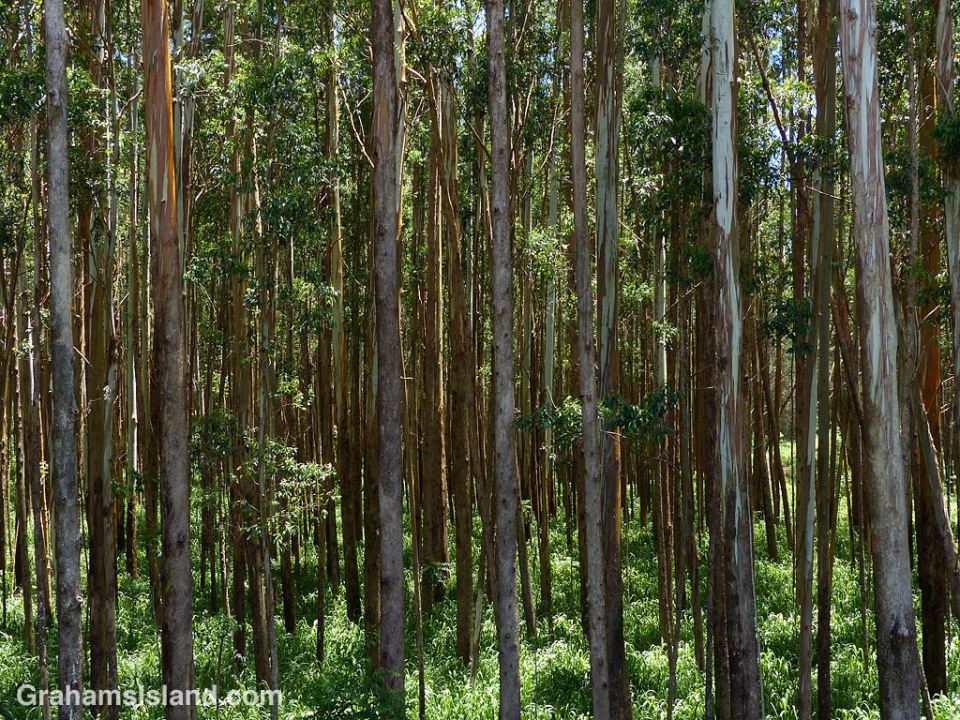
The Hamakua coast of the Big Island is the site of extensive eucalyptus forests. These tall, fast-growing trees are grown for export to Asia. Harvested trees are trucked to the west side port of Kawaihae and stored there until the next ship comes in.
However, last year, the company running the operation decided not to renew its lease. Since then, the landowners have been casting around for a new business to carry on the work, so far without success. So the trees continue to grow, making a pleasing sight with their dappled trunks catching dappled sunlight.
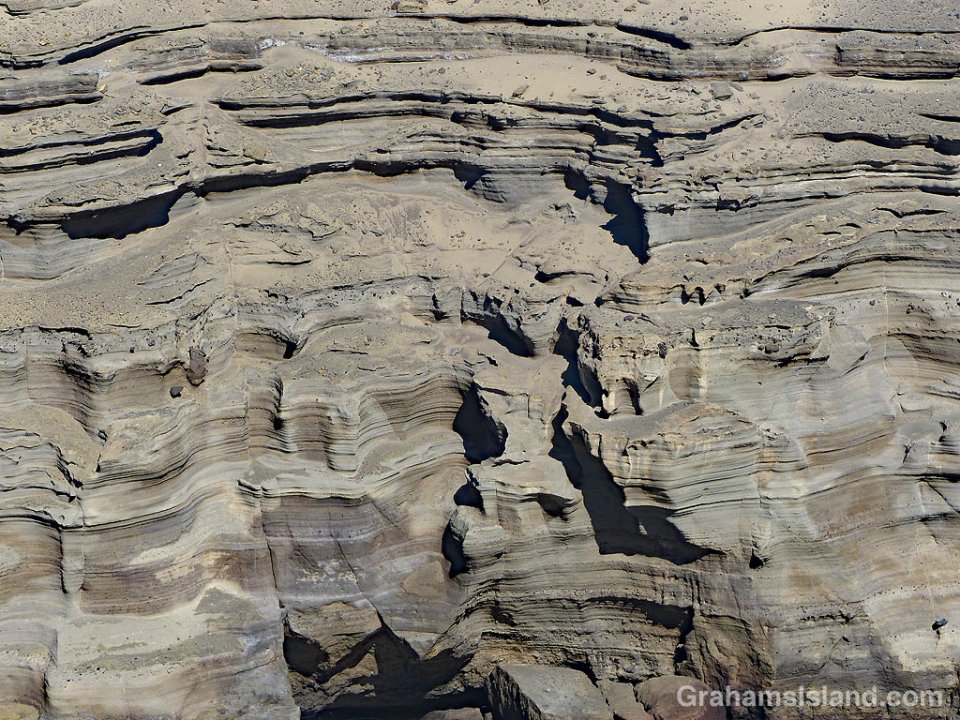 These cliffs, all layers and curves, enclose one side of Green Sand Beach near South Point.
 Graham's Island
