A maritime mystery

A Saildrone research vehicle collecting data off the coast of Hawaii

Back in May, I saw this orange boat a fair distance from shore, off the South Kohala coast. I knew it wouldn’t be a good photo, but I thought I’d be able to identify what it was from it. I was mistaken. I did some searching but turned up nothing. I put it to the side and kind of forgot about it.

Then, late last month, I was on the BBC website and there was a photo of a craft so similar, it had to be connected. The article (here) was about how seafaring drones are being used to collect data to help scientists figure out why some hurricanes become so dangerous, so fast. These drones operate without crew and are equipped to gather data from both the ocean and the atmosphere.

The company making the drones is called Saildrone, and I emailed them to ask about what the vessel I’d seen was up to. I received an unbelievably prompt response saying that the University of Hawai’i at Mānoa was using three drones around the state to collect information about climate change and ocean acidification and its effect on the health of the waters around Hawaii (here). It was also pointed out that since the drones carry no cargo or crew they are more properly called vehicles rather than vessels!

Speak up

A House Sparrow on the beach in Hawaii

I saw this House Sparrow one morning, standing over this fruit of a False Kamani tree (Terminalia catappa) at Spencer Beach Park. It didn’t seem interested in the fruit, not making any attempt to peck at it.

After a while, it raised its head, opened its beak and … silence. It did this several times and never made a sound. I assume it’s a juvenile trying to get its parents attention without otherwise drawing attention to itself. I never did see the parents, or if they came to the youngsters assistance.

A House Sparrow on the beach in HawaiiA House Sparrow on the beach in Hawaii

Planes over Hapuna

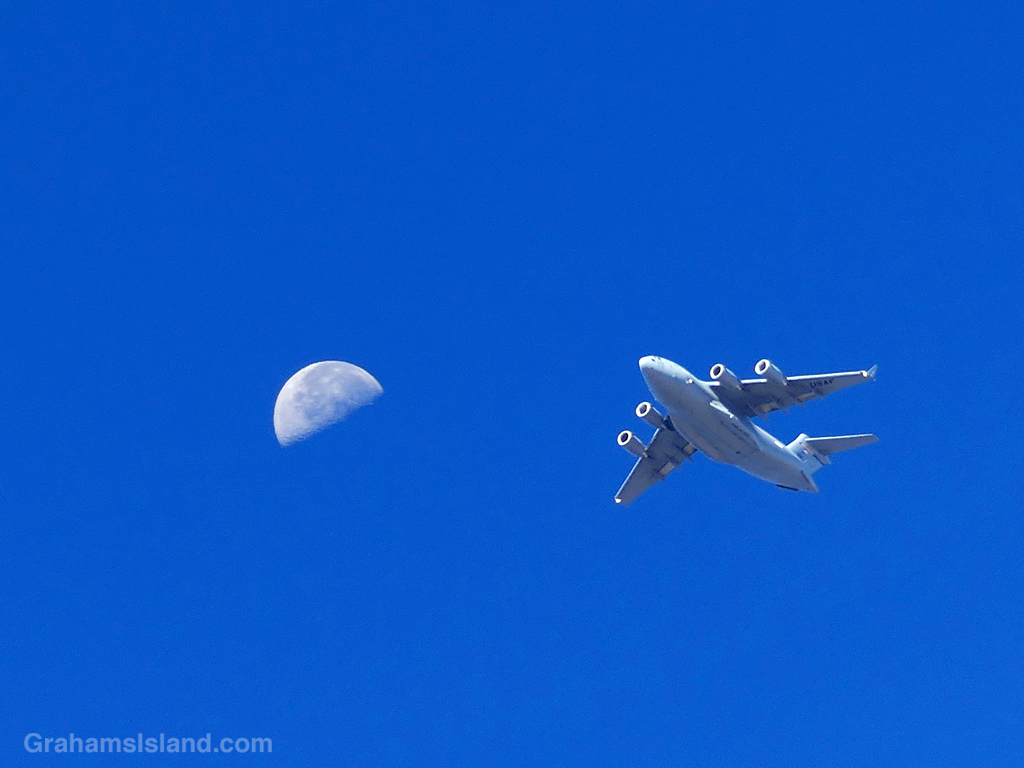
Military planes flying over the Big Island, Hawaii

Pohakuloa Training Area is a large military training area, occupying more than 100,000 acres on the lower slopes of Mauna Loa. Units from all around the country come here for training.

Recently, a series of jump operations were held over several days. As part of these exercises, formations of large aircraft were flying around the area, including over Hapuna, which is where I work.

On this day, the first flight went by while I was occupied, but when the next one came into view, I was ready with my camera. There were around 15 aircraft rumbling overhead at a relatively low altitude and I was pleased that their track took them past the half moon hanging in the sky.

A military plane flying with the moon in the background

Tropical leaves

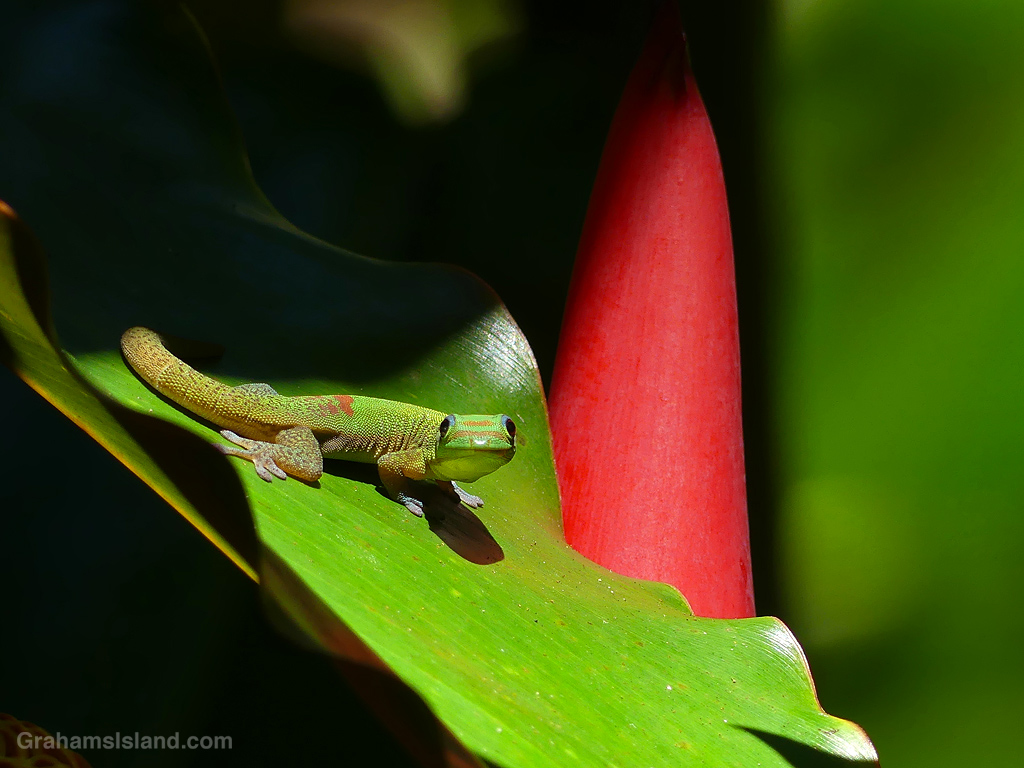
A gecko on a heliconia leaf at Hawaii Tropical Bioreserve and Gardens
A Gold Dust Day Gecko on a heliconia leaf.

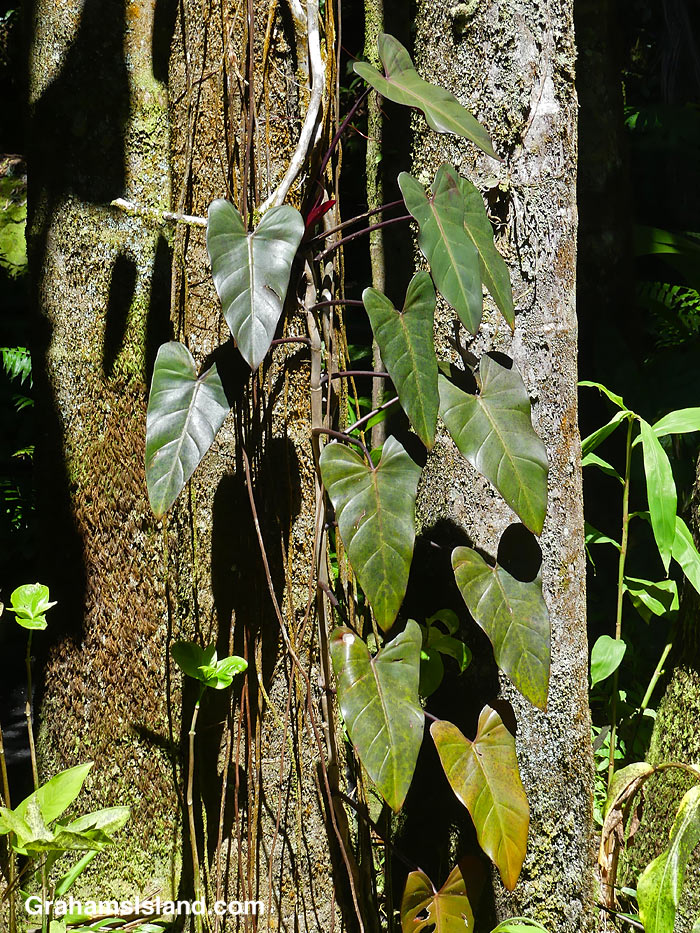
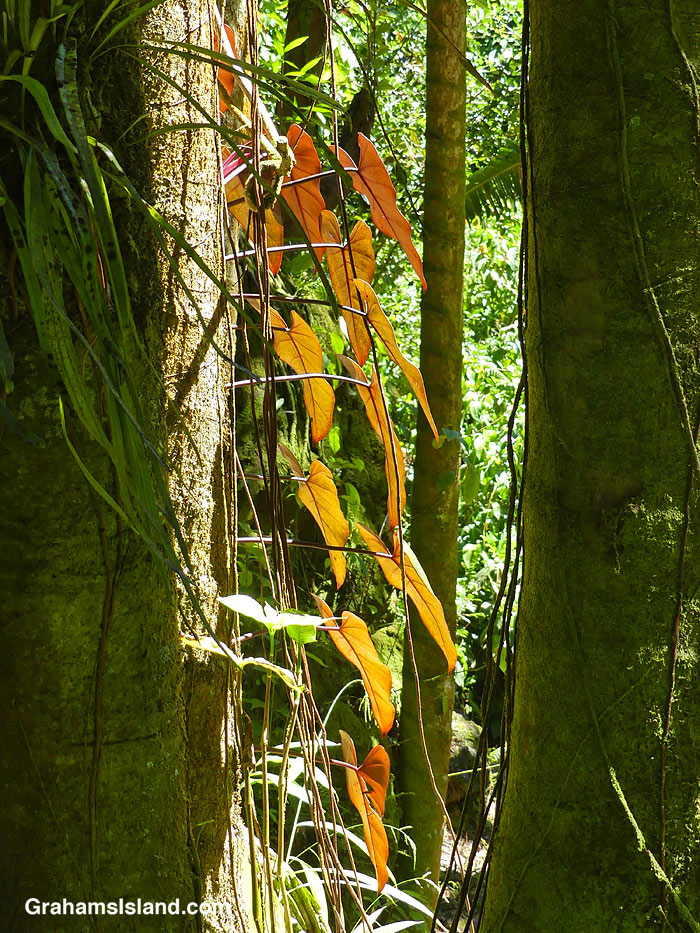
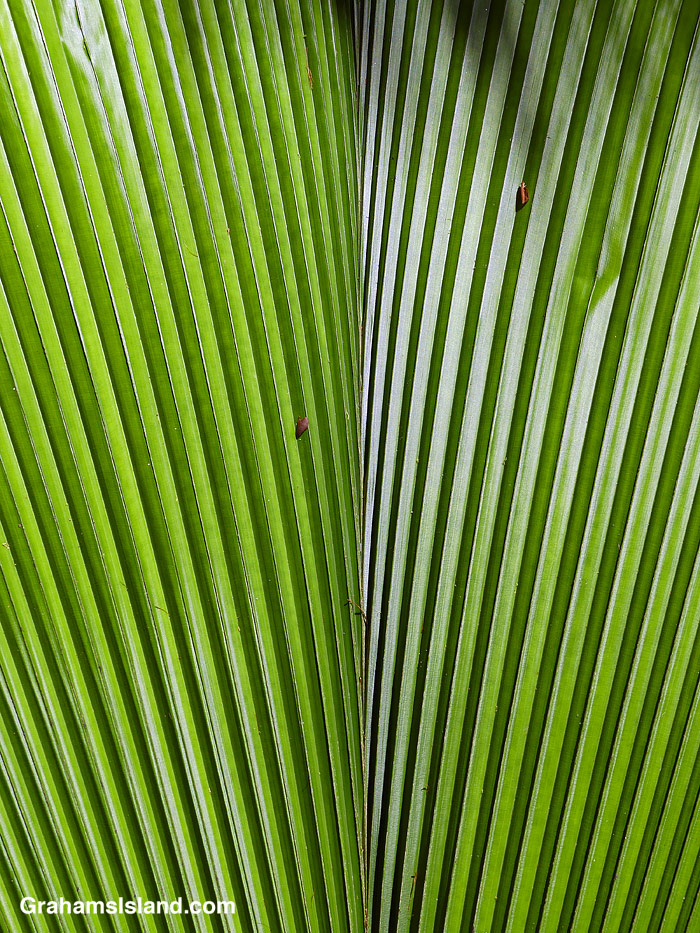
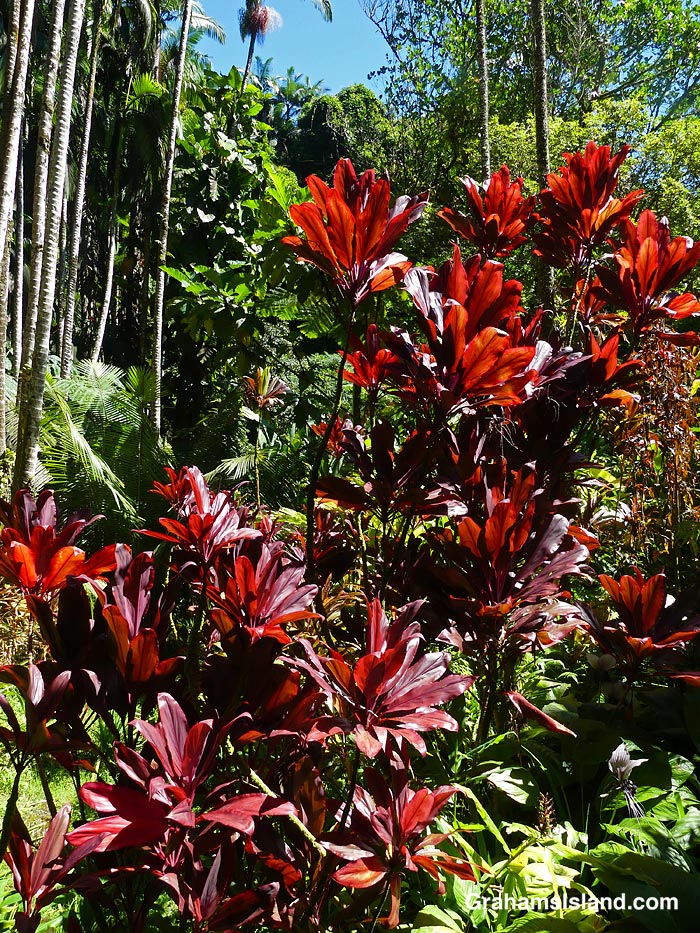
This week’s Sunday Stills challenge theme is ‘Leaves, Autumn or Spring.’ See more responses here. Here are some leaves from Hawai’i Tropical Bioreserve & Garden with captions on the photos.

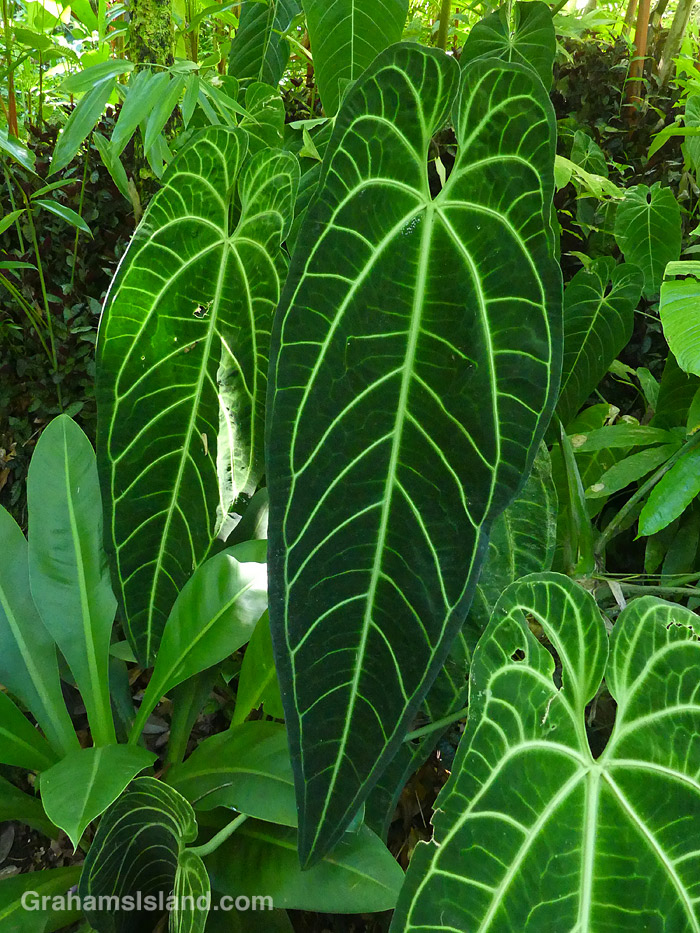
Anthurium leaves at Hawaii Tropical Bioreserve and GardensAnthurium leaves at Hawaii Tropical Bioreserve and Gardens
Anthurium leaves seen from both sides.
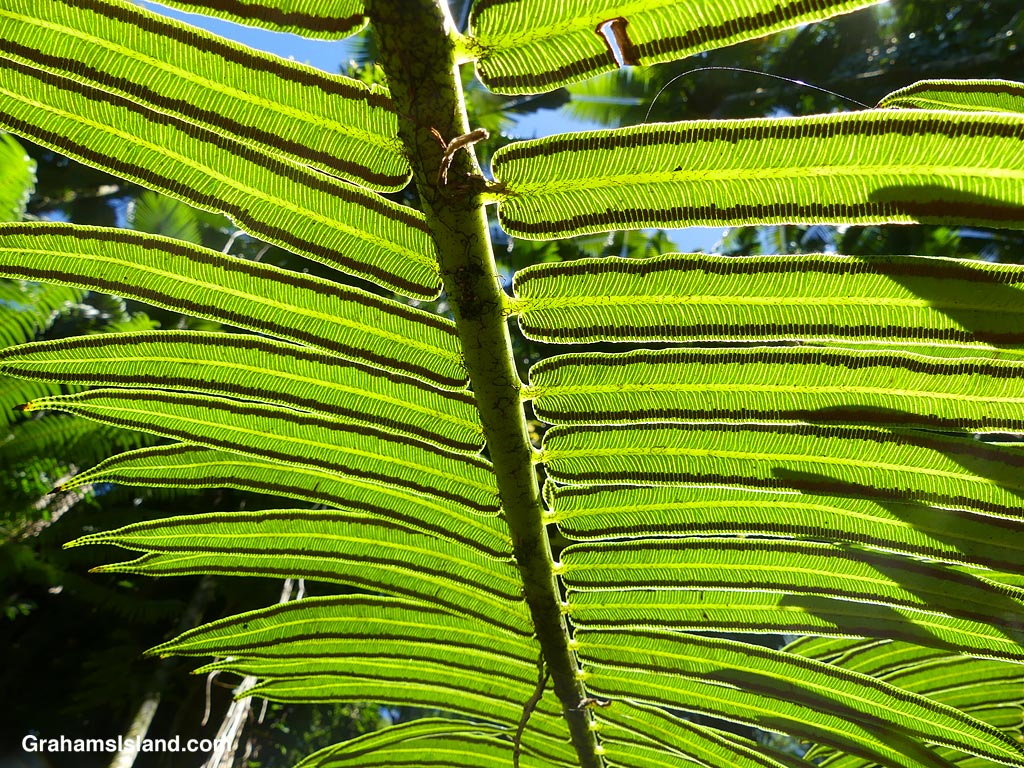
Fern fronds at Hawaii Tropical Bioreserve and Gardens
If you have ferns, you’ve always got fronds!
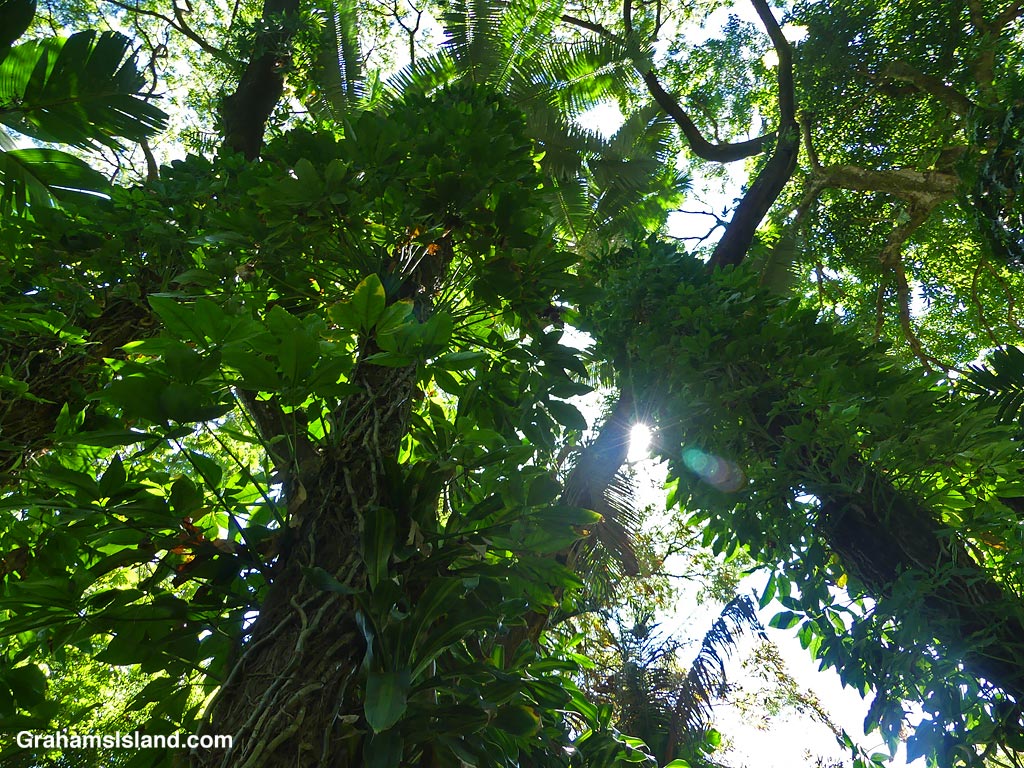
The tree canopy at Hawaii Tropical Bioreserve and Gardens
Looking up into the canopy.

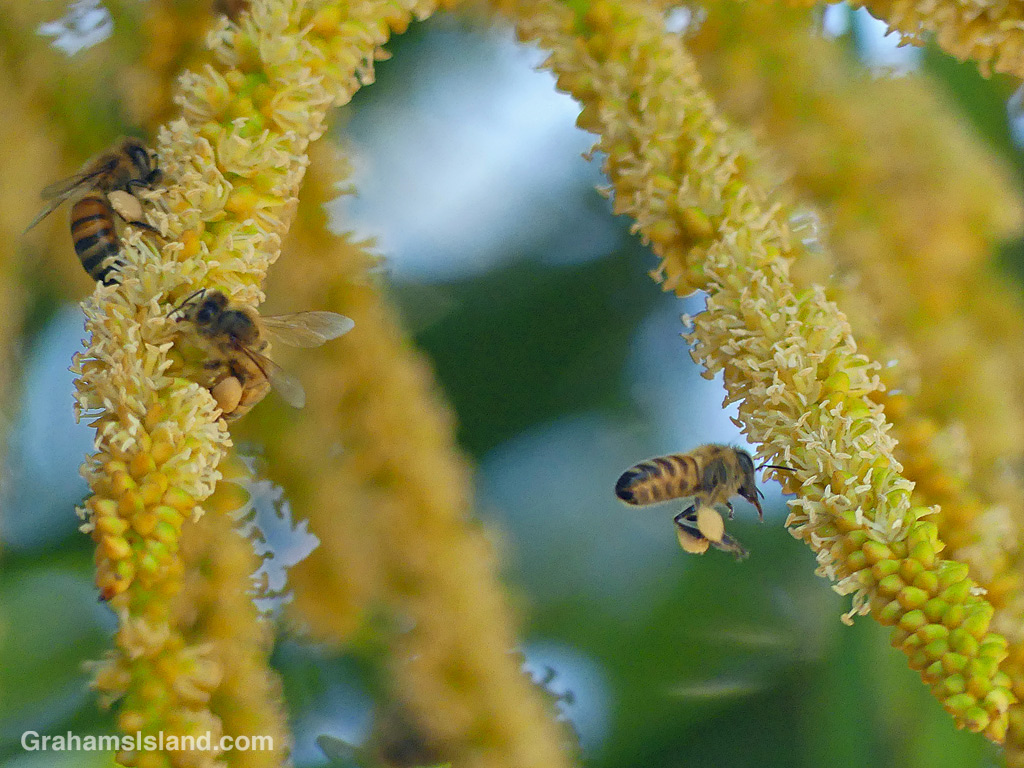
Bees on palm flowers

Bees on palm flowers in Hawaii

I was watering my coffee plants, early one morning, when I heard a loud buzzing noise. I looked up and saw bees all over the flowers of a palm tree on the edge of the yard. To be honest, I hadn’t noticed the tree had flowers as they’re rather dwarfed by the profusion of fronds. But there are a lot of these small yellow flowers and the bees obviously approve.

Bees on palm flowers in Hawaii

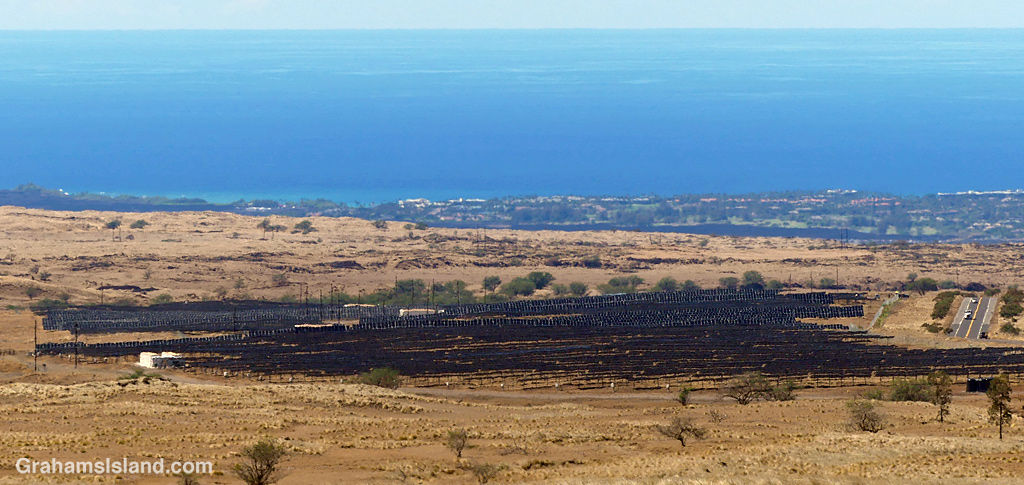
Waikoloa Solar and Storage Project

The solar farm at Waikoloa Hawaii

This photo looks a bit like a patch of land scarred by a brush fire, but it’s actually the Big Island’s largest solar power project, which began operations earlier this year. Situated just above Waikoloa Village, it occupies 300 acres and is expect to provide around 7% of the island’s energy needs.

Waikoloa is a good location for this because it’s dry and sunny. It is, however, also known as Waikoblowa because the winds are strong and the dry dirt flies, so they’ll have to keep those solar panels clean!

For more information about the Waikoloa Solar and Storage Project, go to https://www.aes-hawaii.com/waikoloa-solar-storage-project.

Spotted Coral Blenny and Stocky Hawkfish

A Spotted coral blenny and stocky hawkfish in the waters off Hawaii

These are a couple of fish that spend a good deal of their time sitting, stationary, on coral or rocks. The similarity ends there.

The hawkfish is a predator, waiting for small fish or crustaceans to come within range. The blenny feeds solely on living coral. And while this blenny is probably an adult at about 6 inches long, the hawkfish can grow to twice that size.