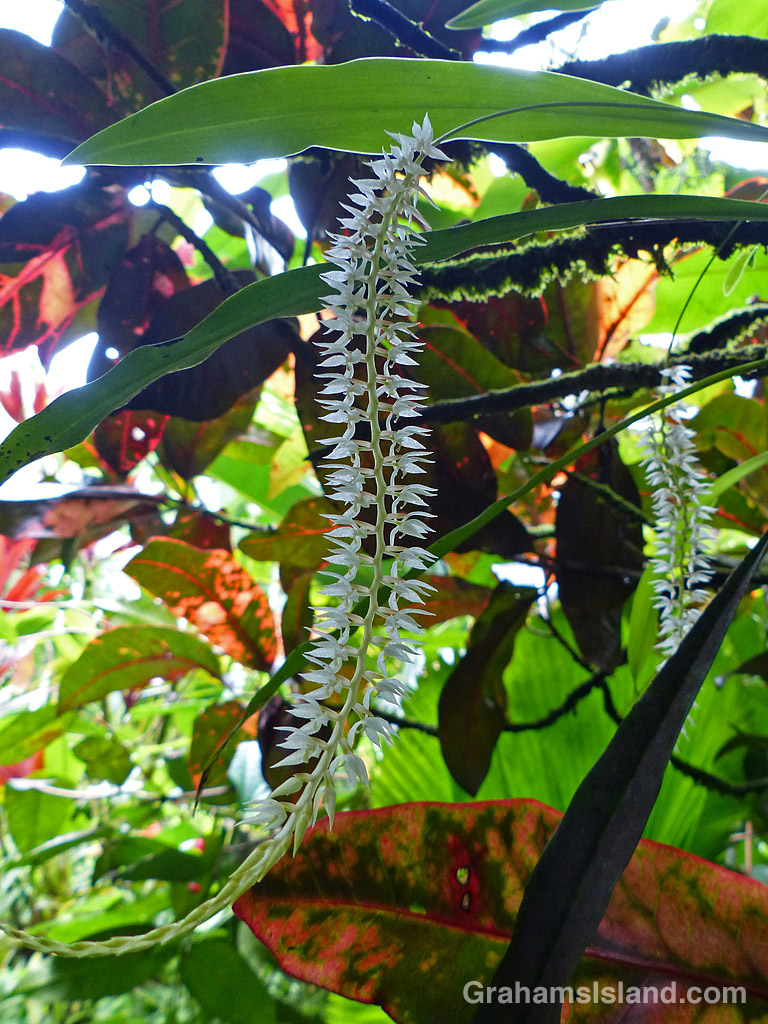
This orchid is a native of Borneo and the Philippines and has been known in the orchid world since at least 1908. This one was at Hawaii Tropical Botanical Garden. For more information about Hawaii Tropical Botanical Garden, go to htbg.com.

This orchid is a native of Borneo and the Philippines and has been known in the orchid world since at least 1908. This one was at Hawaii Tropical Botanical Garden. For more information about Hawaii Tropical Botanical Garden, go to htbg.com.
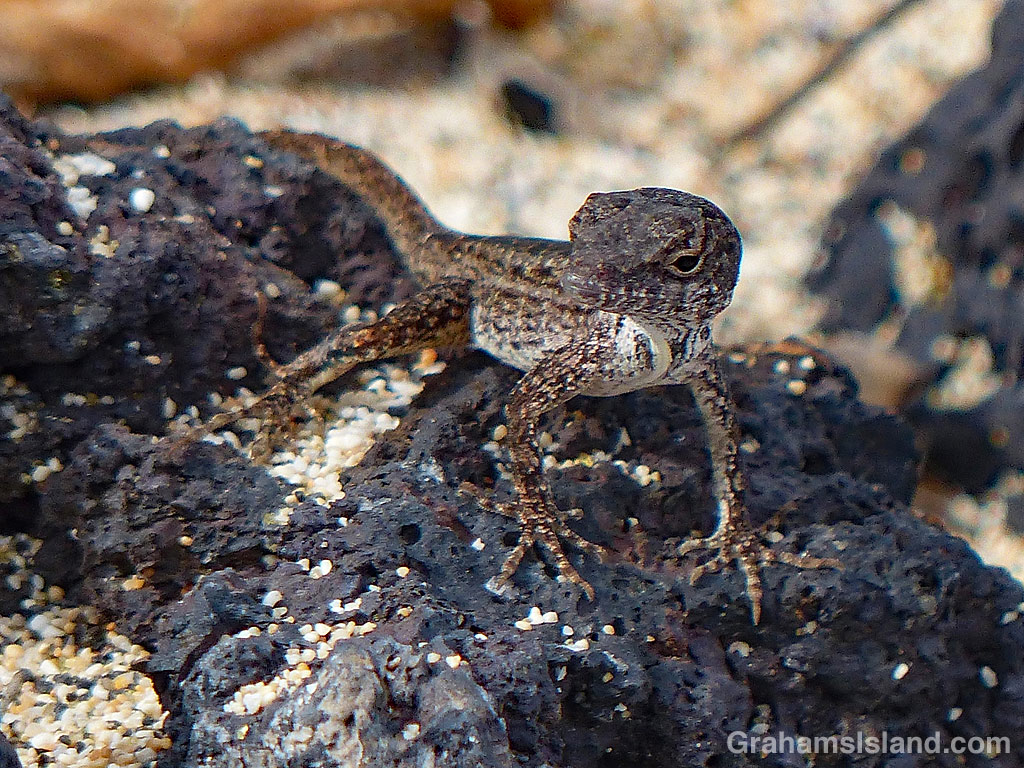
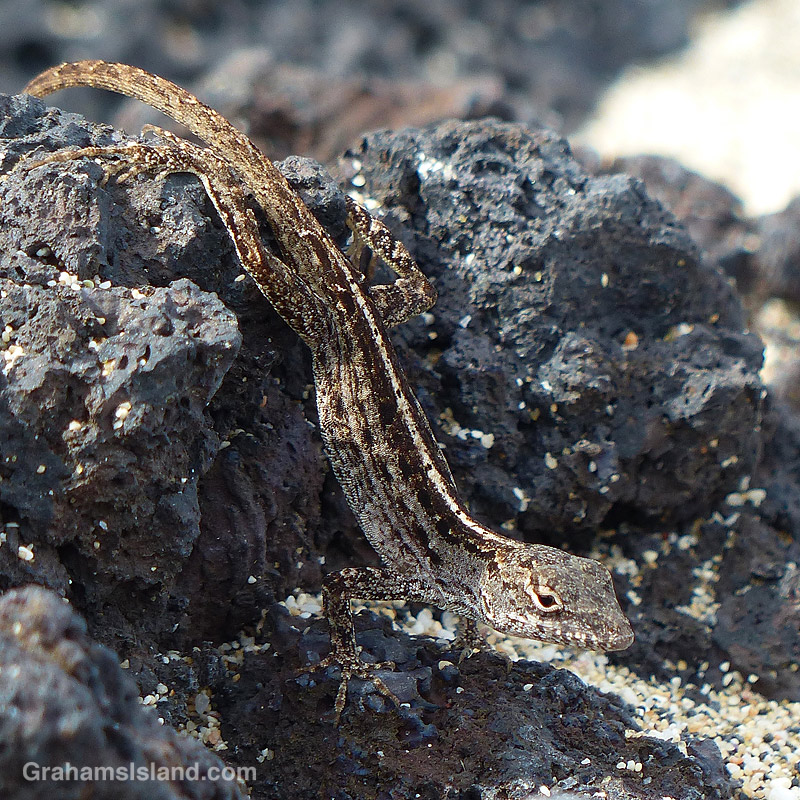
I’ve posted plenty of anole photos on this blog, but they have all been of the green anole or Carolina anole (Anolis carolinensis). Some of these photos have shown an anole that is colored brown, but that’s because the green anole can change color to brown.
It was only recently that I saw my first brown anole (Anolis sagrei), which has a quite different look and different markings to the green anole. Native to Cuba and the Bahamas, it is considered quite invasive and will outcompete green anoles for territory. This one was next to the coast path through Hualalai Resort on the Kona coast.

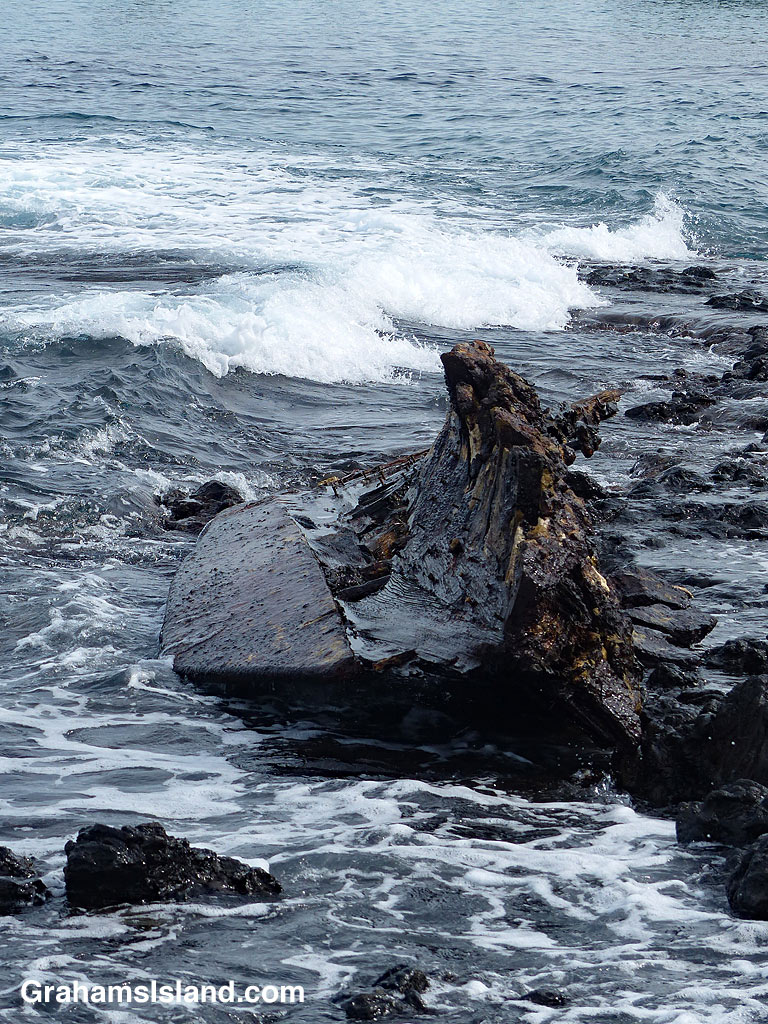
The scant remains of this shipwreck lie on the rocks of Kahuway Bay, just north of the Hualalai Beach Resort on the Kona coast. The keel is still clearly visible along with several keel bolts and the bottom part of the hull. I don’t know which wreck this is, but it’s been there a long time and will probably survive for many years to come.
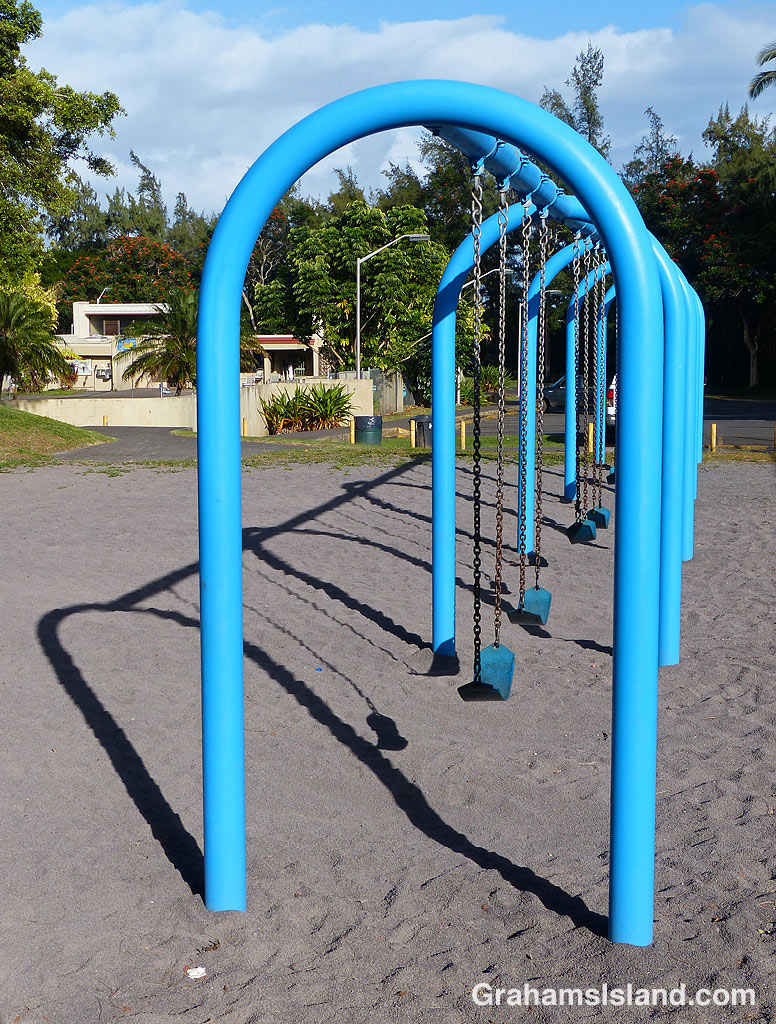
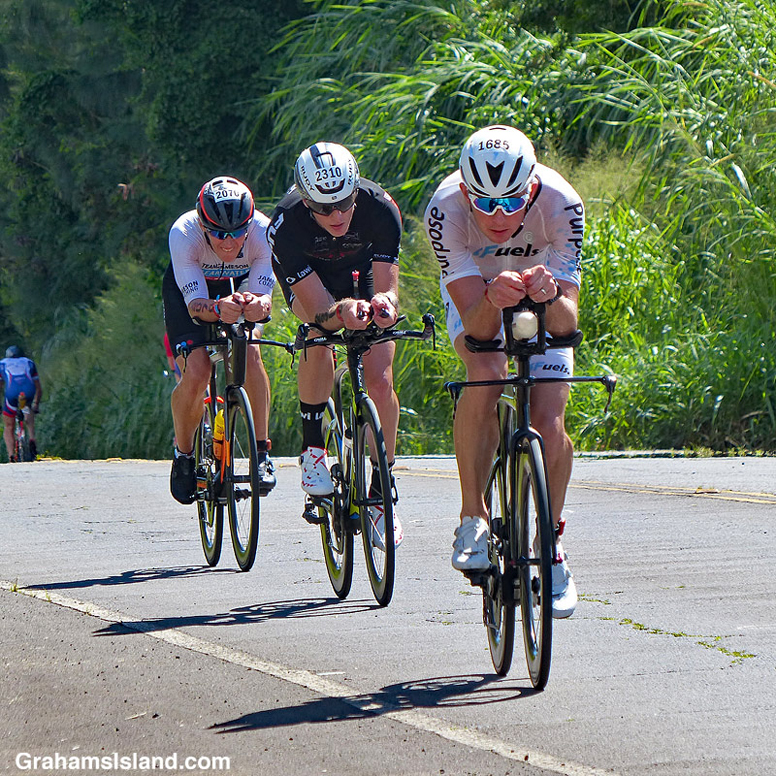
This week’s Sunday Stills challenge theme is ‘Shadows.’ See more offerings here.
The top photo is a row of colorful playground swings at Kamehameha Park in Kapaau. Below are three cyclists in line, heading out of Hawi during an Ironman World Championship race.
Also posted as a second offering for this week’s Friendly Friday challenge theme of ‘All in a Row.’ (See more responses here.) My first post for this theme is here.


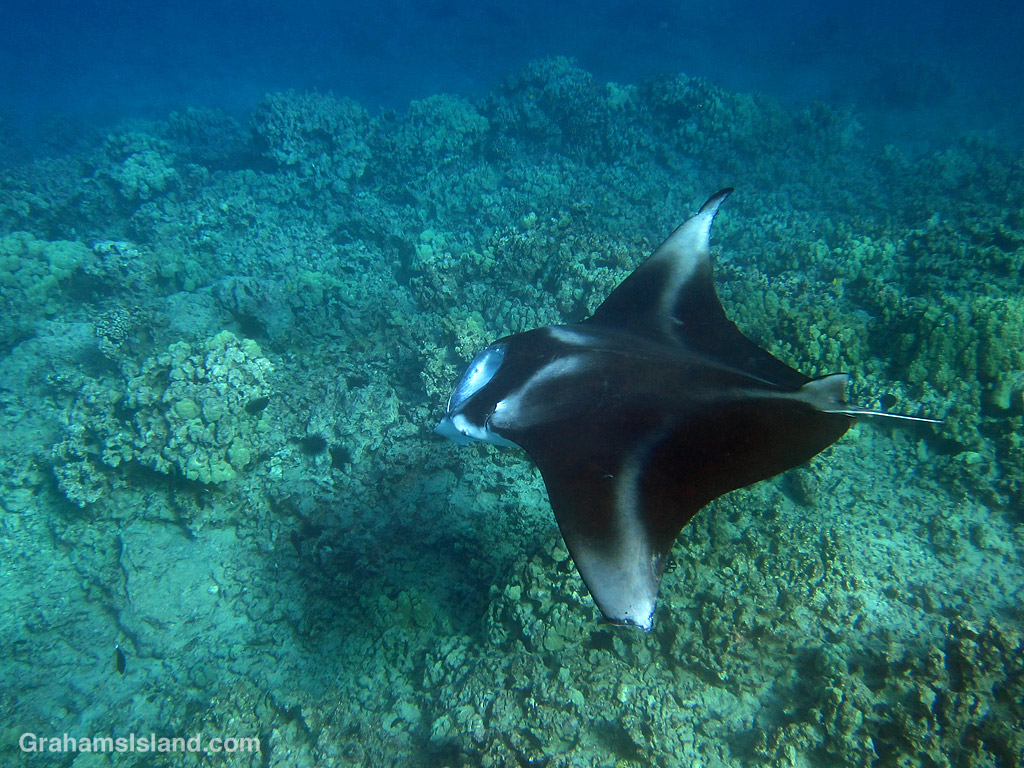

My usual posts feature a single photo or perhaps two or three, but today I wanted to give an idea of a recent encounter I had in the water with this manta ray. The photos are a sequence, top to bottom, from the time I first saw it, to it fading from sight into deeper water, about a 10 minute period. The ray swam quite slowly during that time, allowing me to keep up with it.
There are two kinds of manta rays. M. birostris, also known at the ocean manta, is the larger of the two species with a wingspan of 20 feet or more. The manta in these photos is M. alfredi, or reef manta, with a wingspan of 18 feet or less. This one was probably around 12 feet across.


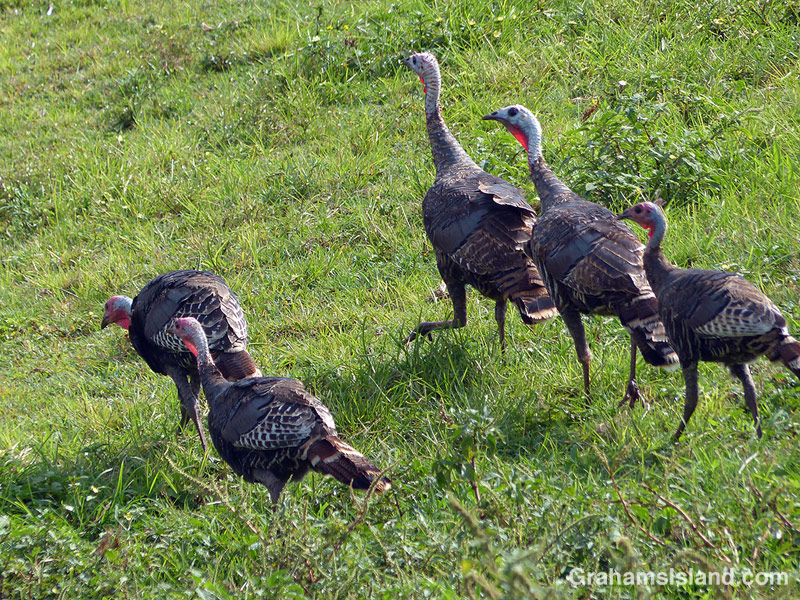
This week sees the return of the Friendly Friday challenge with a theme of ‘All in a Row.’ See more responses here.
I’ve plumped for some bird photos. Above, a trio of common myna birds stand on a railing looking severe, as they always do. Middle, wild turkeys form two lines, as if they’re performing some kind of dance routine. Below, African silverbills perch on a fence overlooking the ocean.


A dragonfly skims over a pool of muddy water.
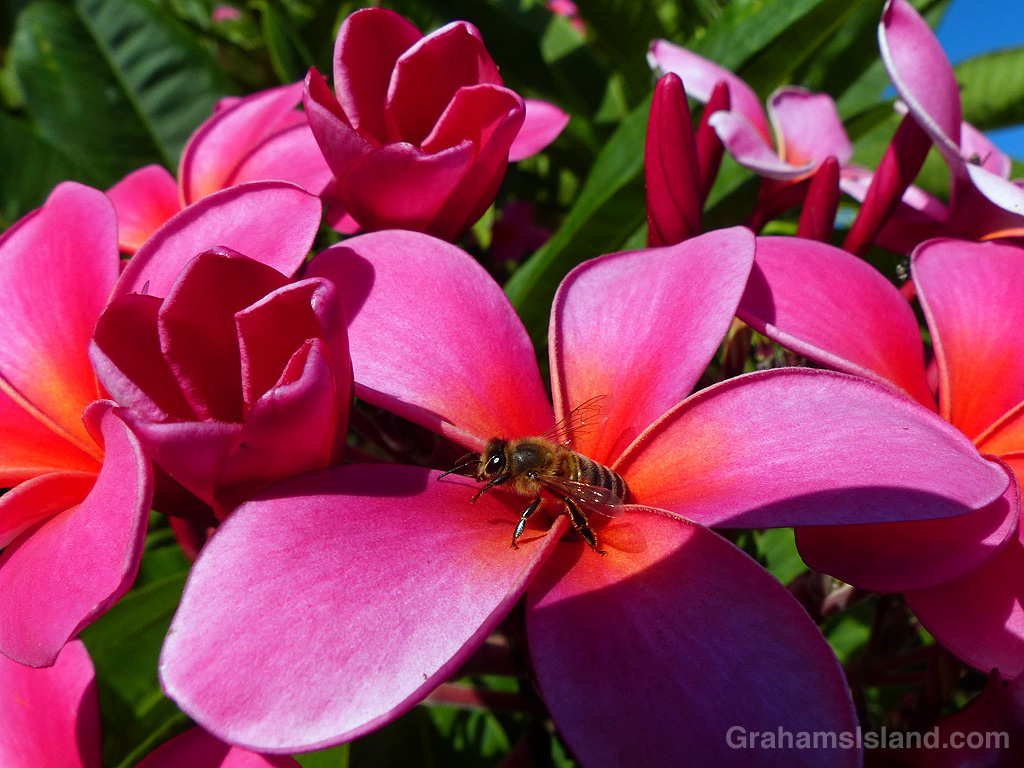
A bee forages on a red plumeria flower.
 Graham's Island