
A bee on a passion flower as another bee approaches. What I like about this photo is the one bee’s leg up in the air. A friendly wave? Get away from me? Only the bees know for sure.

A bee on a passion flower as another bee approaches. What I like about this photo is the one bee’s leg up in the air. A friendly wave? Get away from me? Only the bees know for sure.
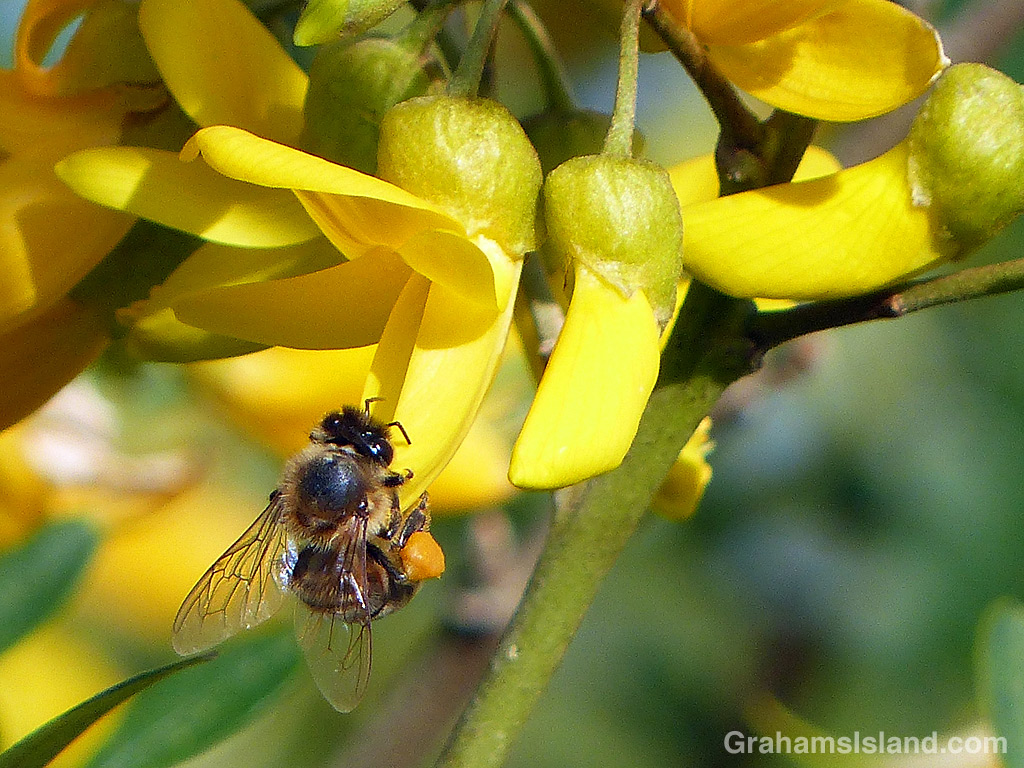
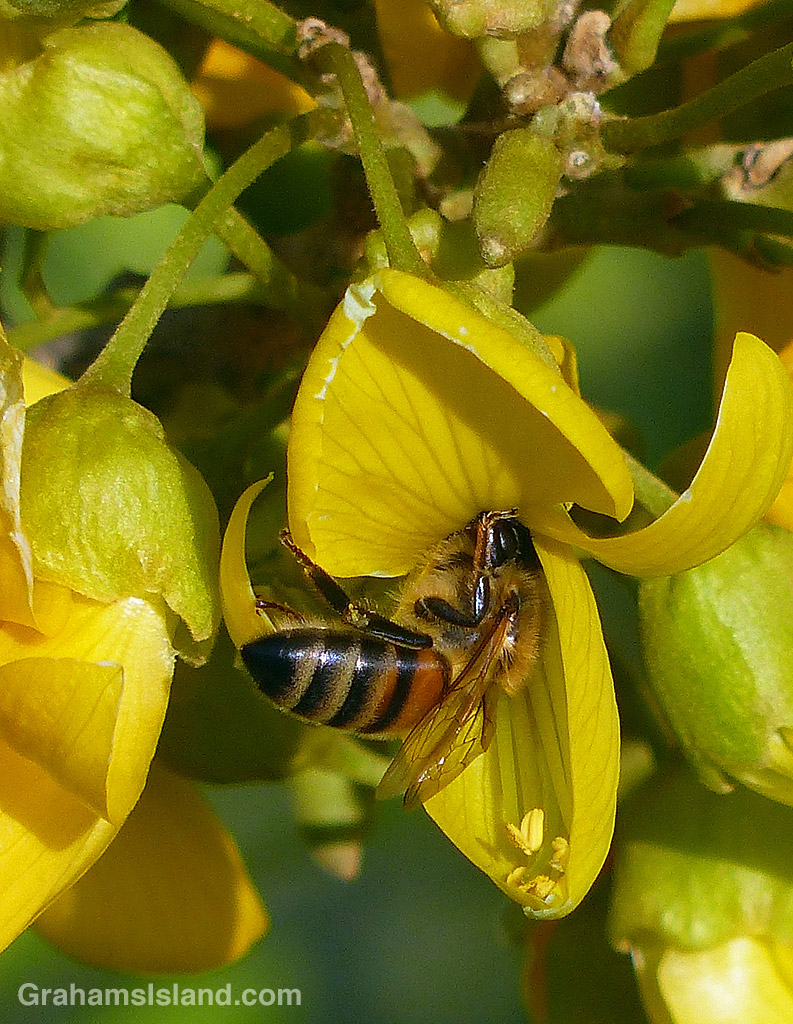
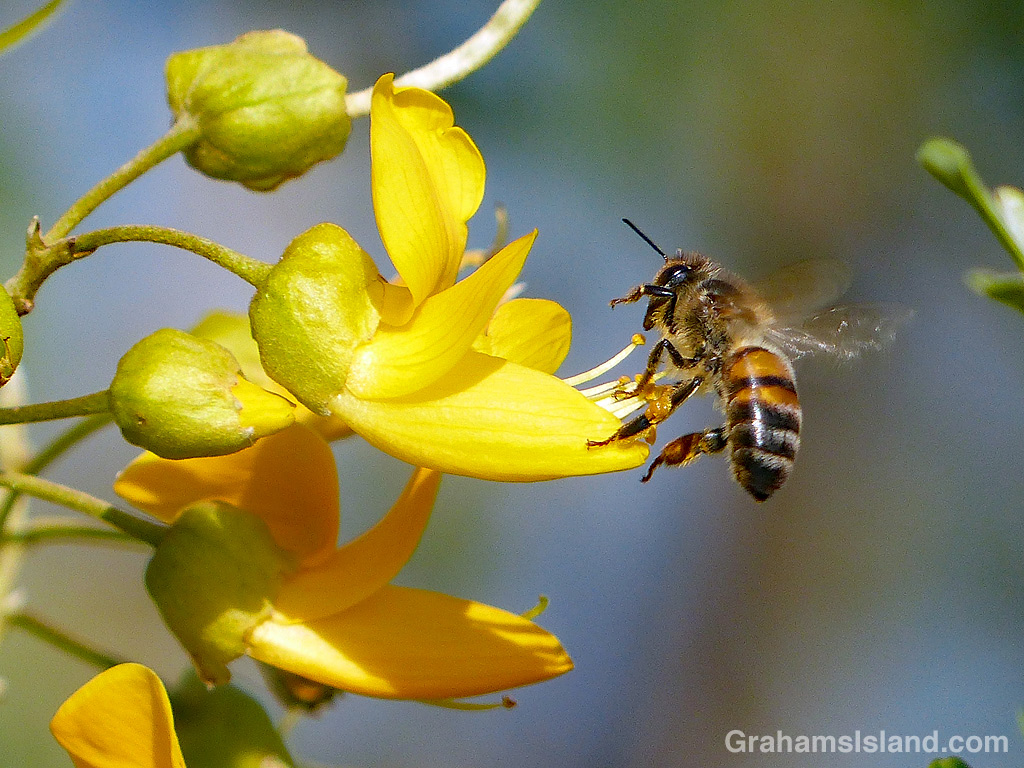
This week’s Friendly Friday challenge theme is ‘Yellow.’ See more responses here.
This is a good excuse to post more photos of bees foraging on bright yellow māmane flowers. Māmane (Sophora chrysophylla) is endemic to Hawaii, but while its flowers attract many insects, the seeds are highly toxic. The endangered palila, one of the last endemic Hawaiian honeycreepers, is a bird that feeds mostly on the māmane’s immature seed pods without any ill effect.
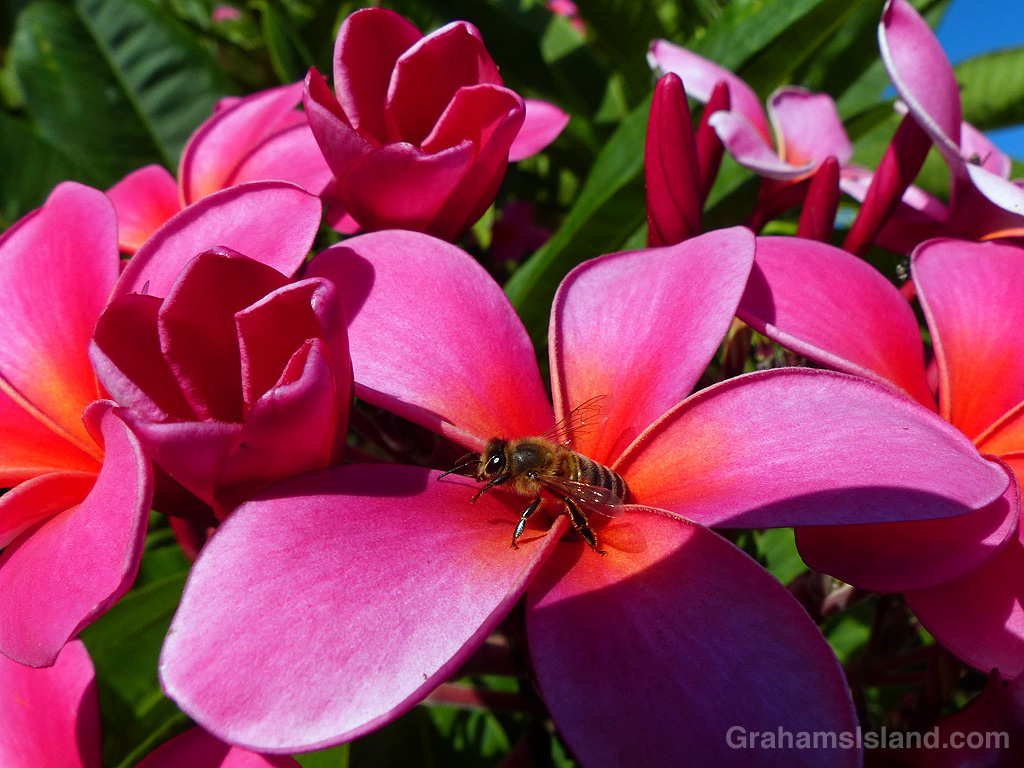
A bee forages on a red plumeria flower.

I’ve posted about agave attenuata before, in January of last year (here). The plants are blooming again and, once again, the bees are all over them. This year I wanted to focus on the bees in flight, just before they settled on the flowers to forage. This resulted in a fair number of bees buzzing around my head, but I worry less about that than I used to. I took a lot of photos, most of which were free of bees, or featured bee blurs.
These were a couple of my favorites, each capturing a bee just before plunging into the bounty within.

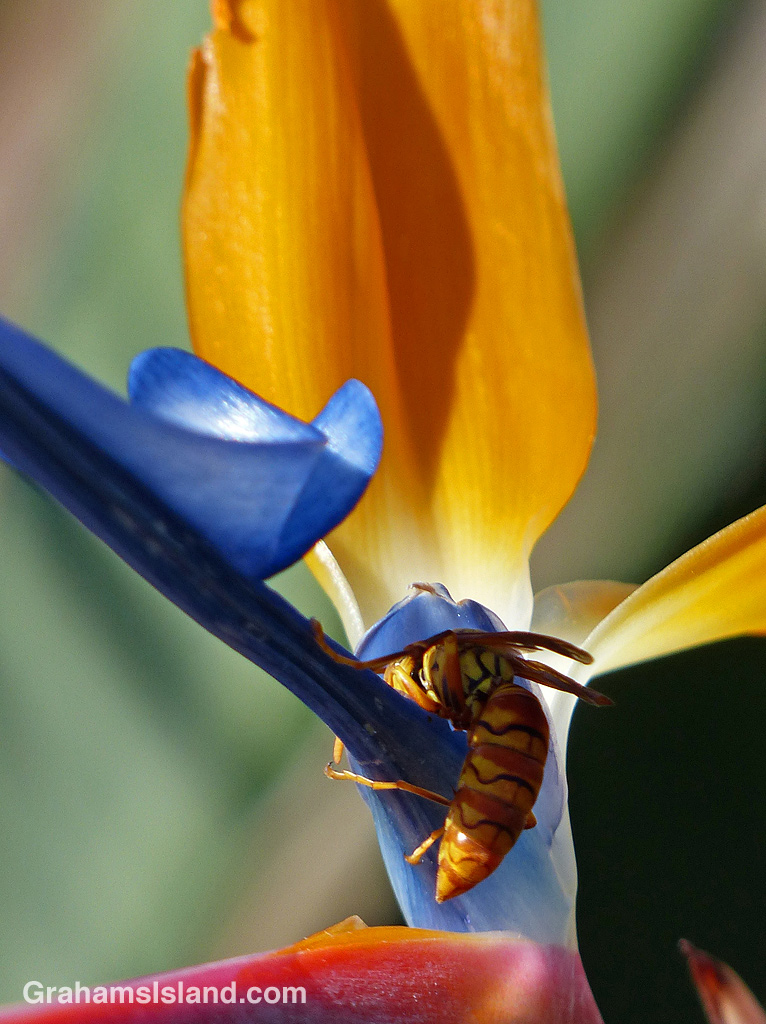
A wasp reaches in to get some of the good stuff on offer in a bird of paradise flower.

A bee forages in one of the splendid flowers of a cannonball tree (Couroupita guianensis).
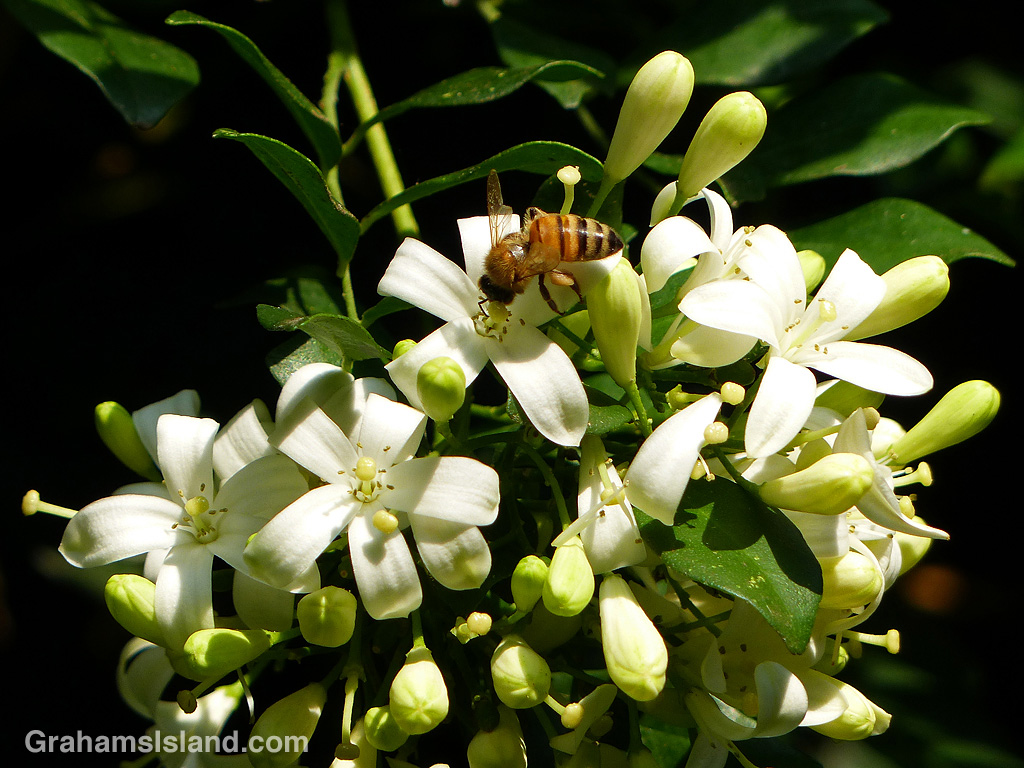
A bee forages on a mock orange. When the plant is in bloom, the aroma is thick in the air.
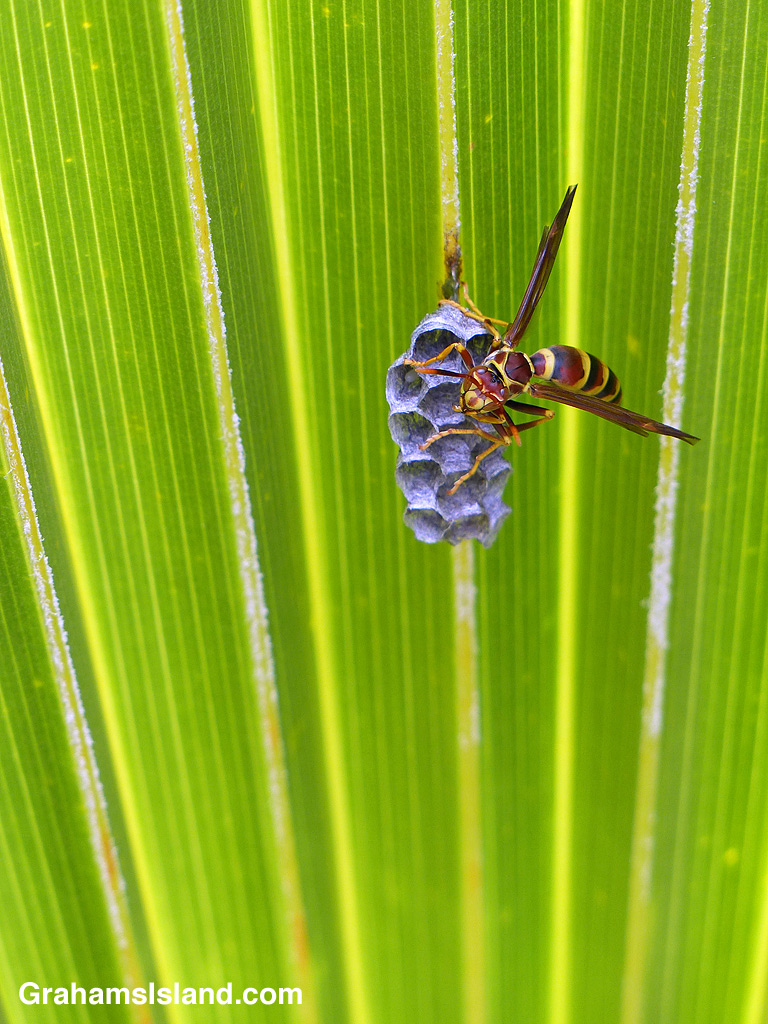
This paper wasp was working on a new nest attached to a loulu palm (Pritchardia affinis). In one of the cells – the top one of four on the left side – an egg has already been deposited.

