Tag Archives: Bees and Wasps

Naio

Naio (Myoporum sandwicense) grows on the lower slopes of Mauna Kea.
Naio (Myoporum sandwicense) used to grow in great abundance in Hawaii, but now is much less common. It has some similarities to true sandalwood and was passed off as the latter without much success, leading to it’s other names of false sandalwood or, less sympathetically, bastard sandalwood.

This small tree was found growing on the lower slopes of Mauna Kea.
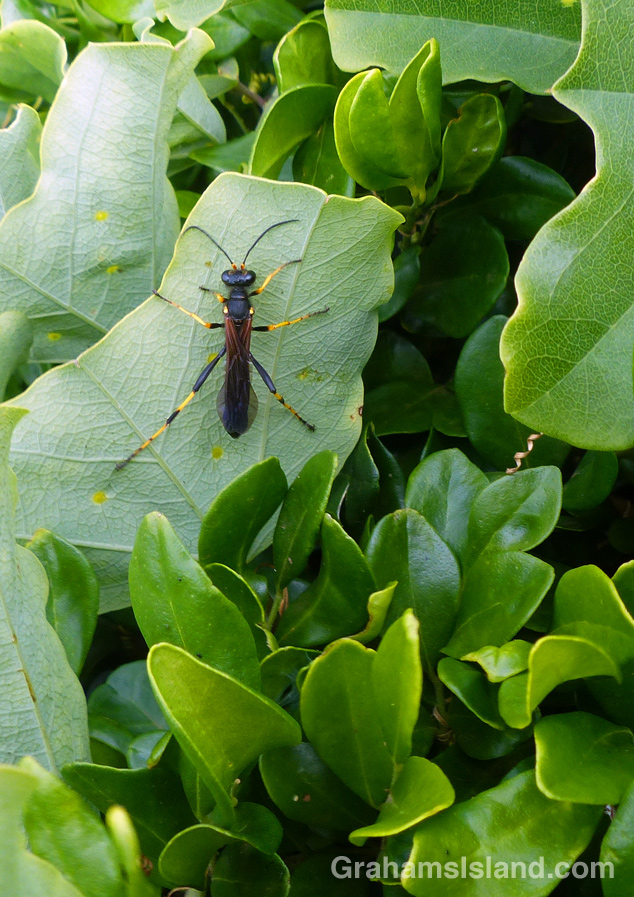
Black and yellow mud dauber wasp

A black and yellow mud dauber wasp
The black and yellow mud dauber (Sceliphron caementarium) is one of several mud dauber wasps. They’re large, quite common, and get their name from the mud nests they build. These nests are often attached to man-made structures, such as under the eaves of houses. They’re not aggressive, but are prone to startling me since they spend a good deal of time around the outside of the house.

Bee on fireweed flower

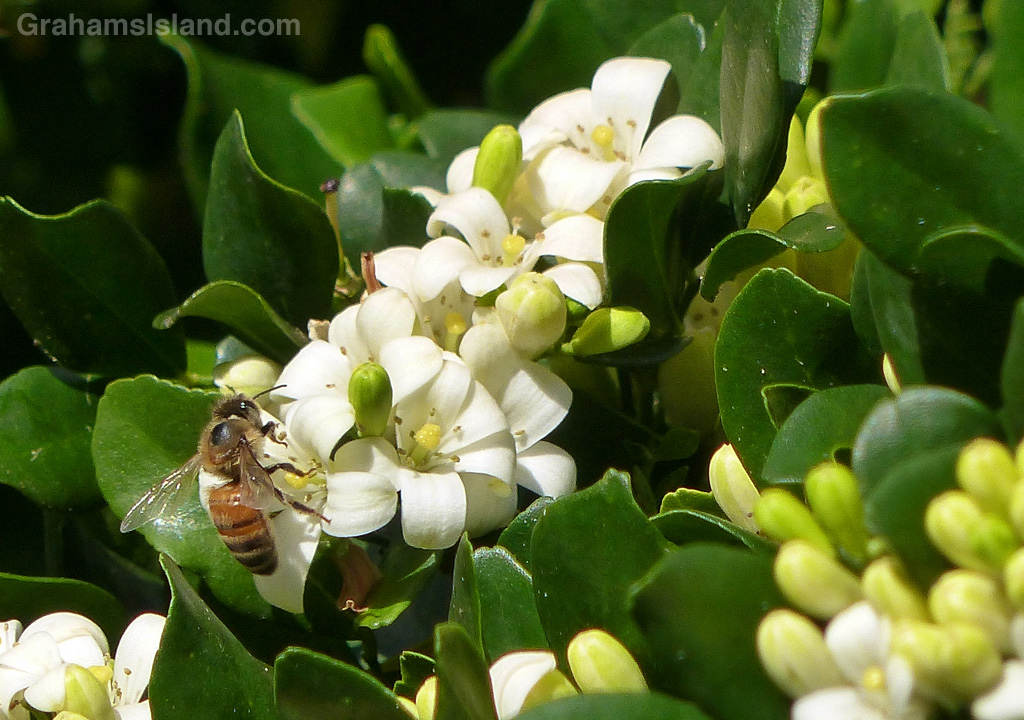
A honey bee on a fireweed flower on the Big Island

Last week I posted here about the fireweed biocontrol moth, secusio extensa, which has been introduced into Hawaii in an attempt to control the spread of invasive fireweed (Senecio madagascariensis). On that same walk I saw lots of fireweed flowers such as this one, busily being helped to propagate by this bee. Such is the battlefield.

Cuckoo wasp

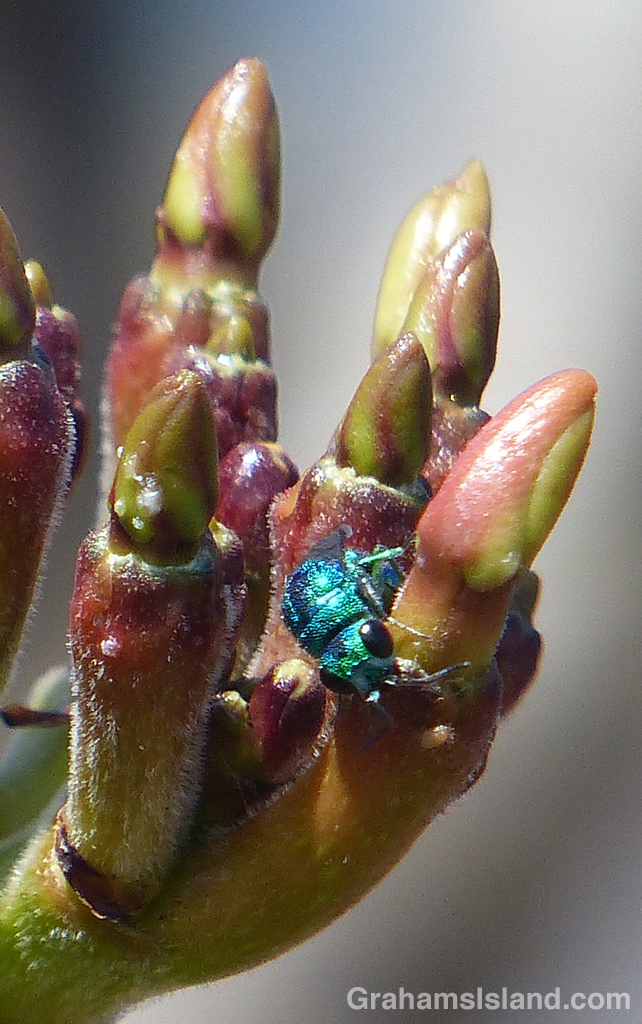
Cuckoo wasp on a frangipani.Cuckoo wasp on a frangipani.

I saw this small, bright insect flitting about on the new growth of a plumeria. The cuckoo wasp gets its name from its practice of laying eggs in the nests of other wasps and bees. Once hatched, the cuckoo wasp eats the host wasp or bee larva. Then it eats the food placed in the nest for the host’s offspring. Probably not an insect to invite to your next dinner party.

For more information about cuckoo wasps, go to bugguide.net/node/view/6946.

Tree heliotrope and potter wasps

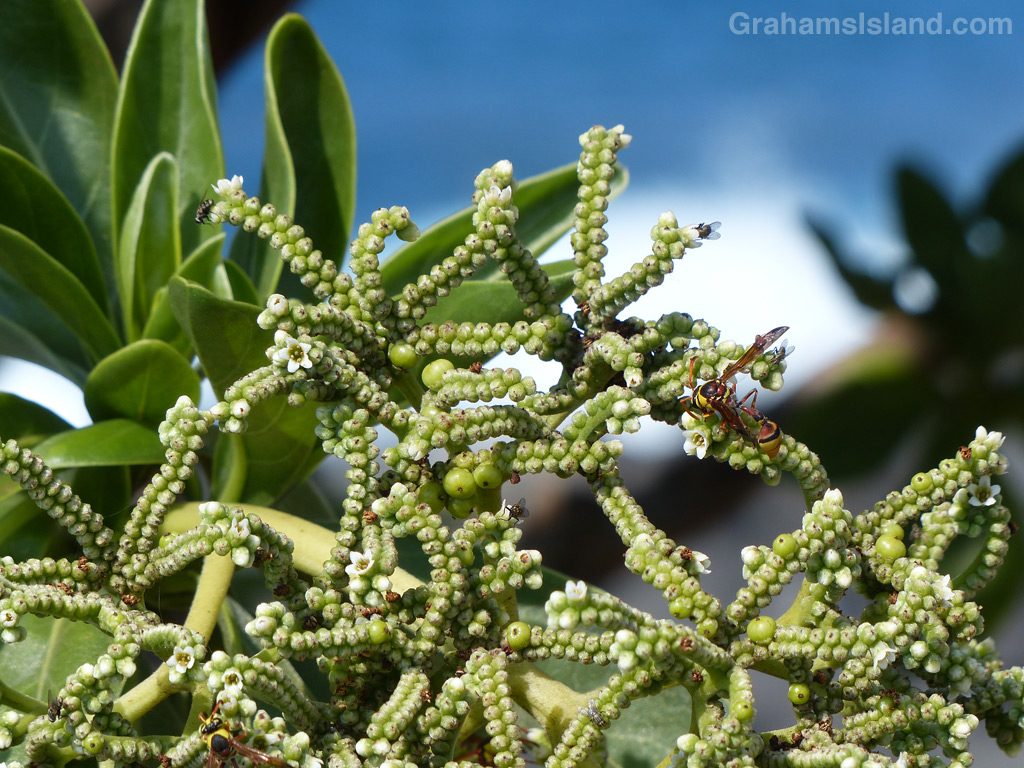
Potter Wasp Eumenes BolliiTree Heliotrope


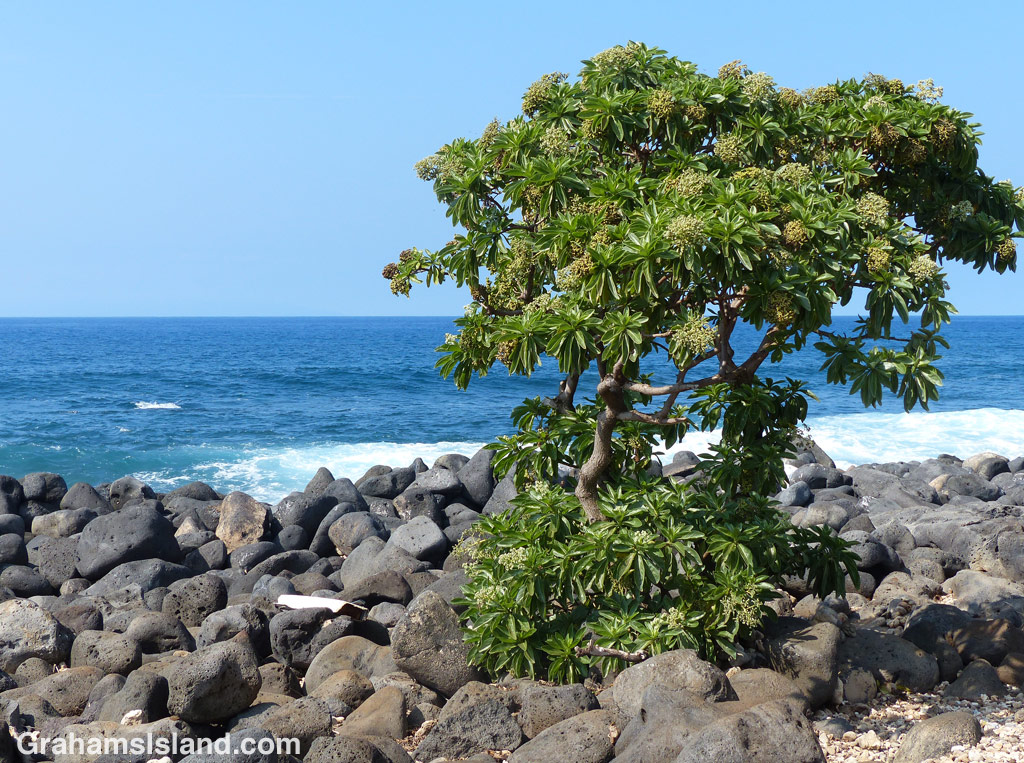
On one of my coast walks I was surprised to find a tree that I visit regularly, abuzz with wasps and other insects. The tree is a Tree heliotrope (Heliotropium foertherianum) which, as the photos suggest, is hardy and salt tolerant. This was the first time I’d seen it with striking tentacles of flowers and berries, hence it’s other common name of Octopus bush.

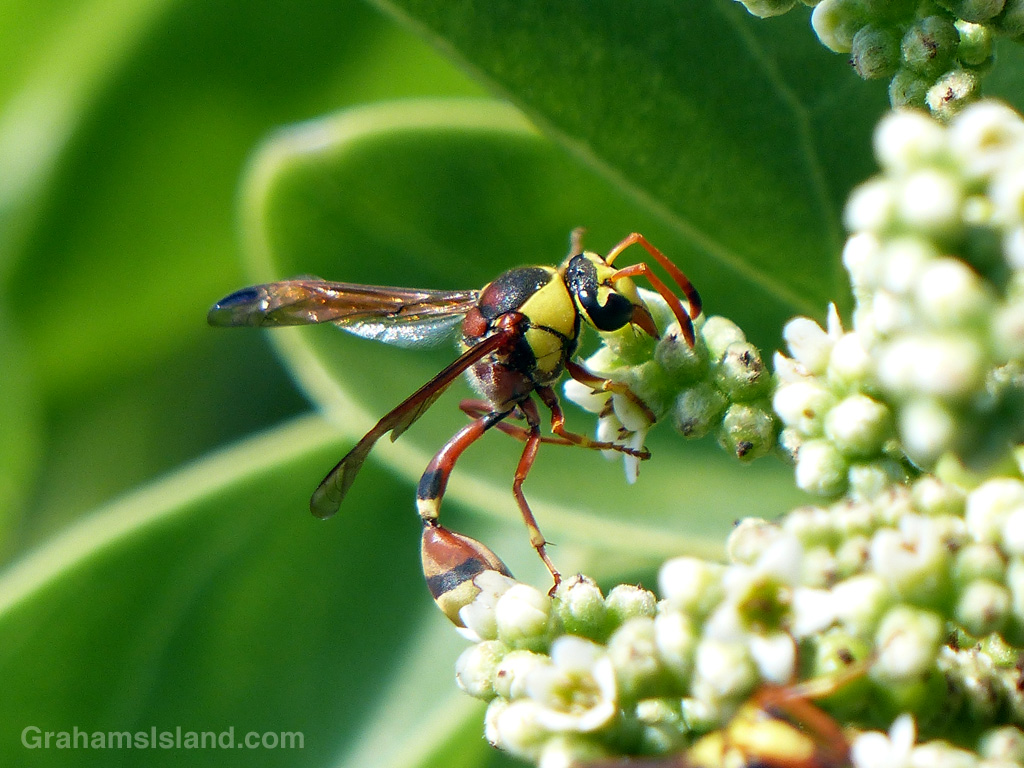
The majority of the wasps attracted to the tree were potter wasps, specifically Eumenes bollii I think. They were focused on their task for which I was grateful, since I was shoving my camera quite close to them on occasion.

Potter Wasp on Tree Heliotrope