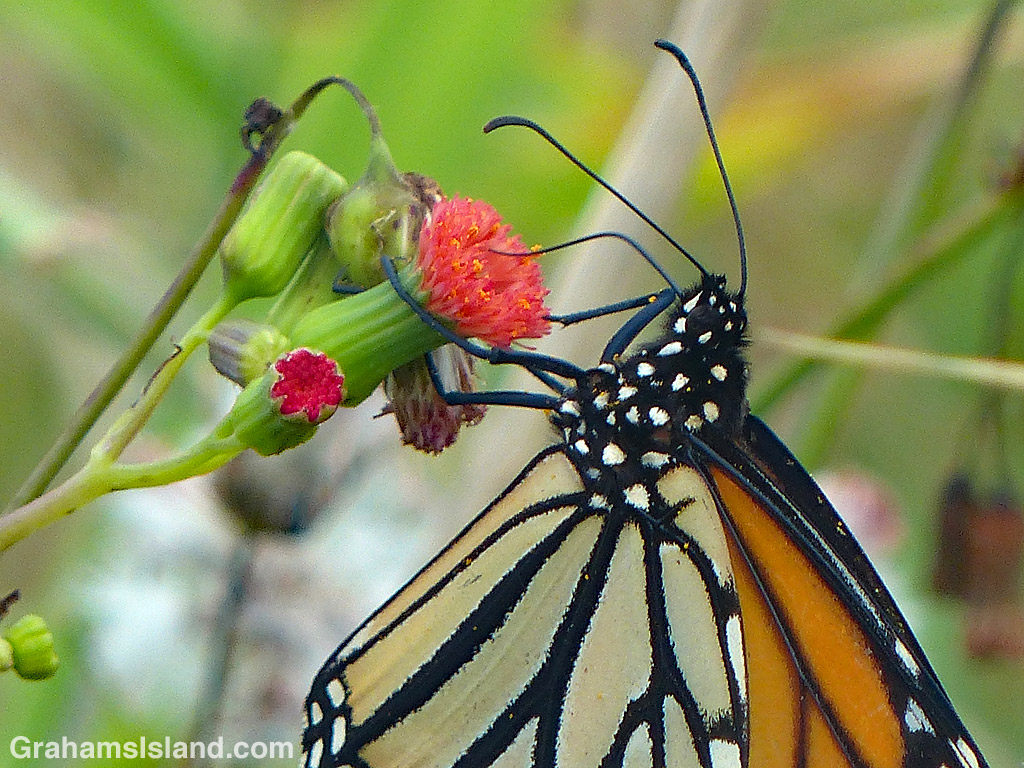
This week’s Sunday Stills challenge theme is ‘Macro or Close-up Photography.’ (See more responses here.) In response, here’s a close-up photo of a monarch butterfly feeding on a tasselflower.

This week’s Sunday Stills challenge theme is ‘Macro or Close-up Photography.’ (See more responses here.) In response, here’s a close-up photo of a monarch butterfly feeding on a tasselflower.
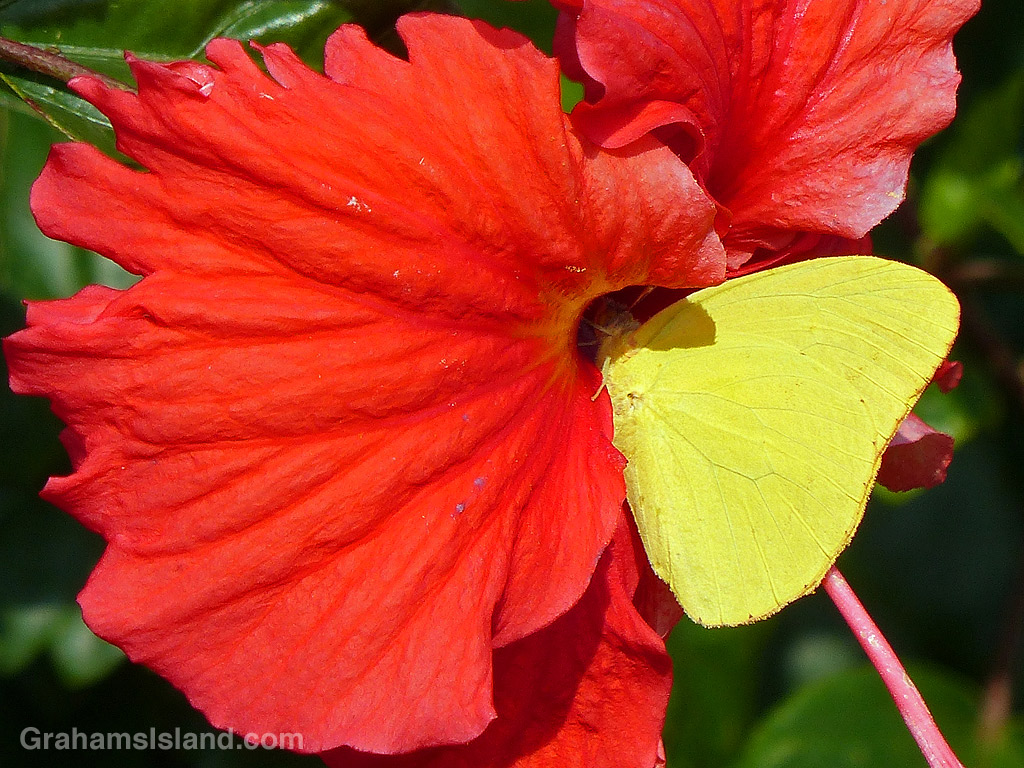
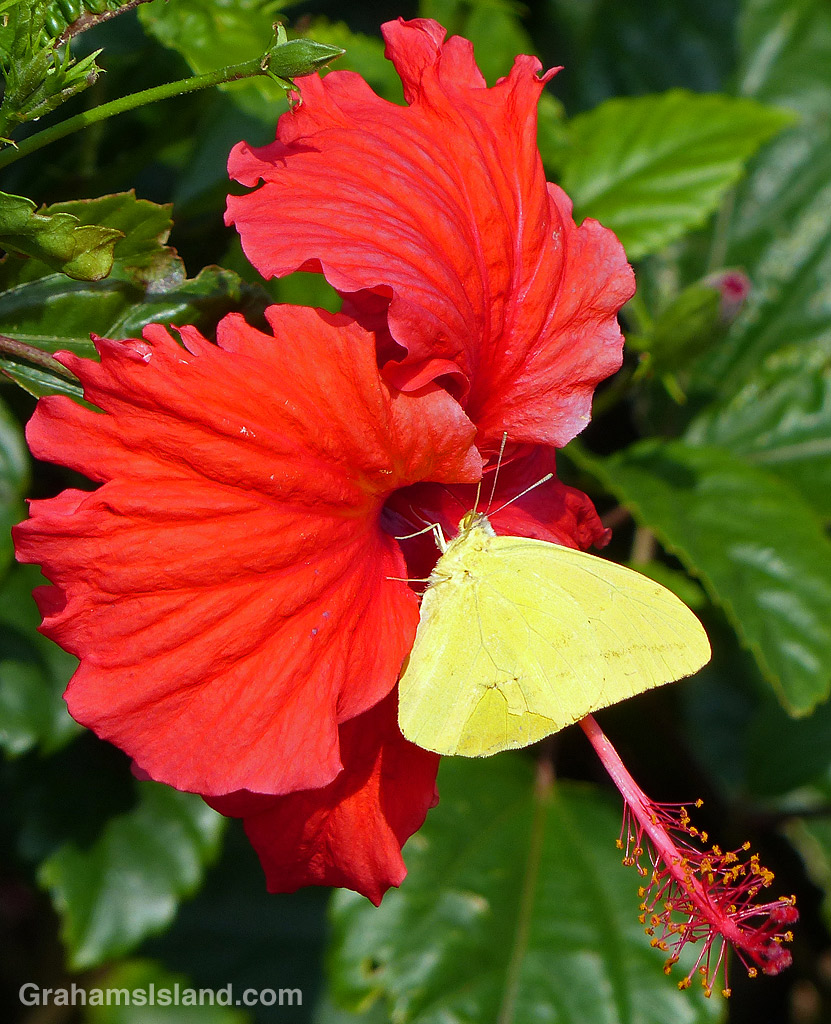
This week’s Sunday Stills challenge theme is ‘Yellow.’ (See more responses here.) Naturally, I thought of a butterfly with orange in its name on a very red flower.
This is a large orange sulphur butterfly investigating the feeding possibilities on a red Chinese hibiscus flower.
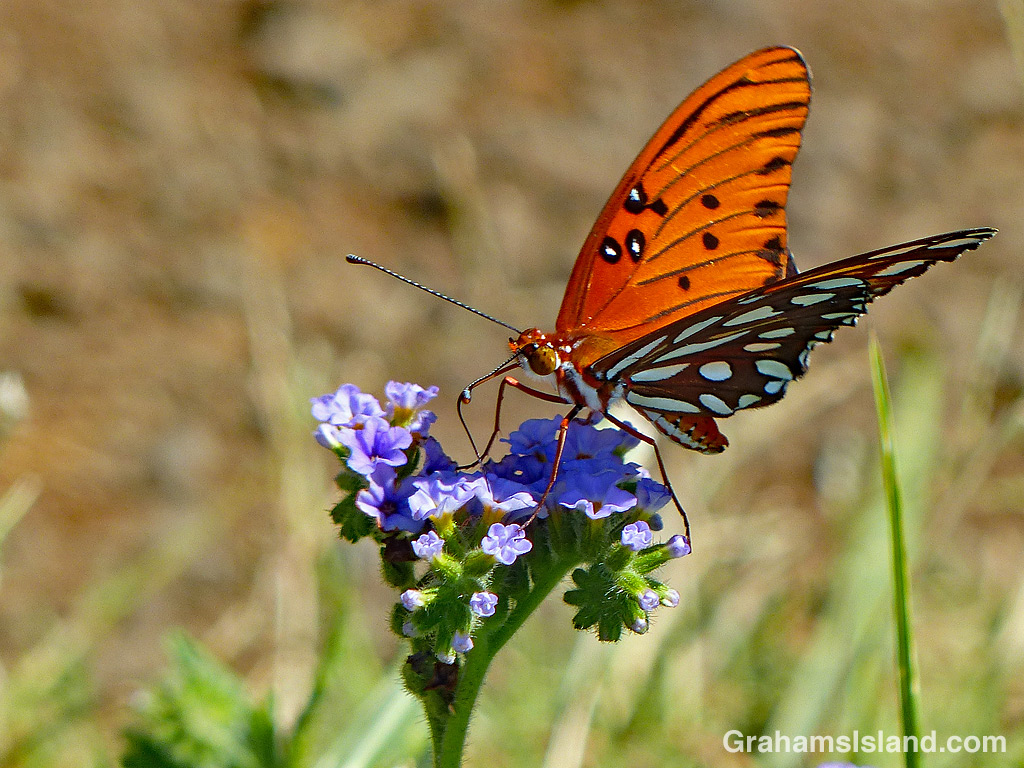
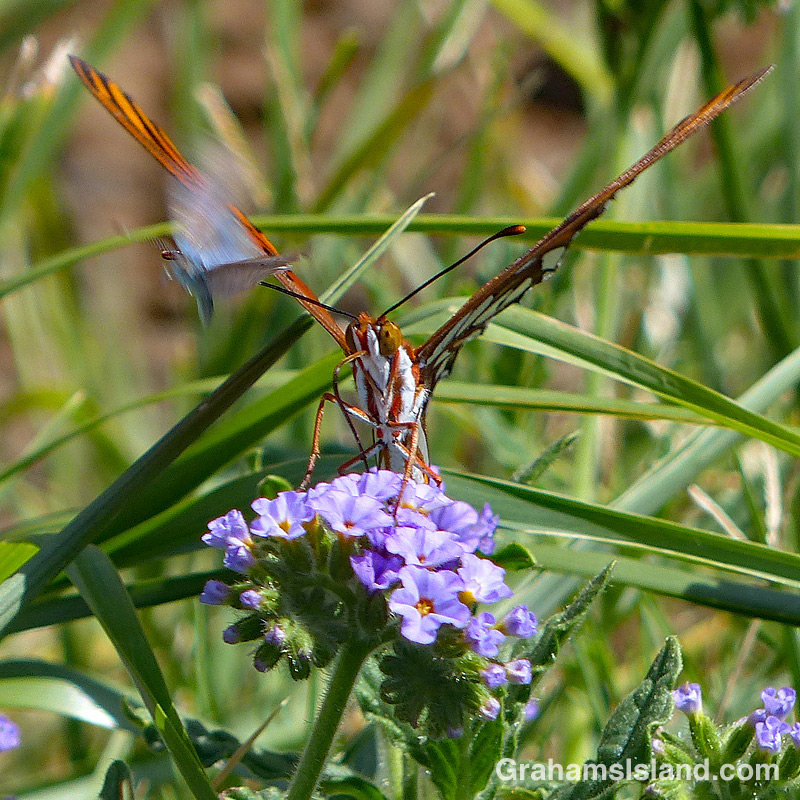
A passion vine butterfly feeds from blue heliotrope flowers. What I liked about this was the lower image where the passion vine butterfly has spooked a lesser grass blue butterfly into flight. It made me think of the Hank Williams song, Move It On Over, and in particular the line, ‘Move over little dog cause the big dog’s moving in.’

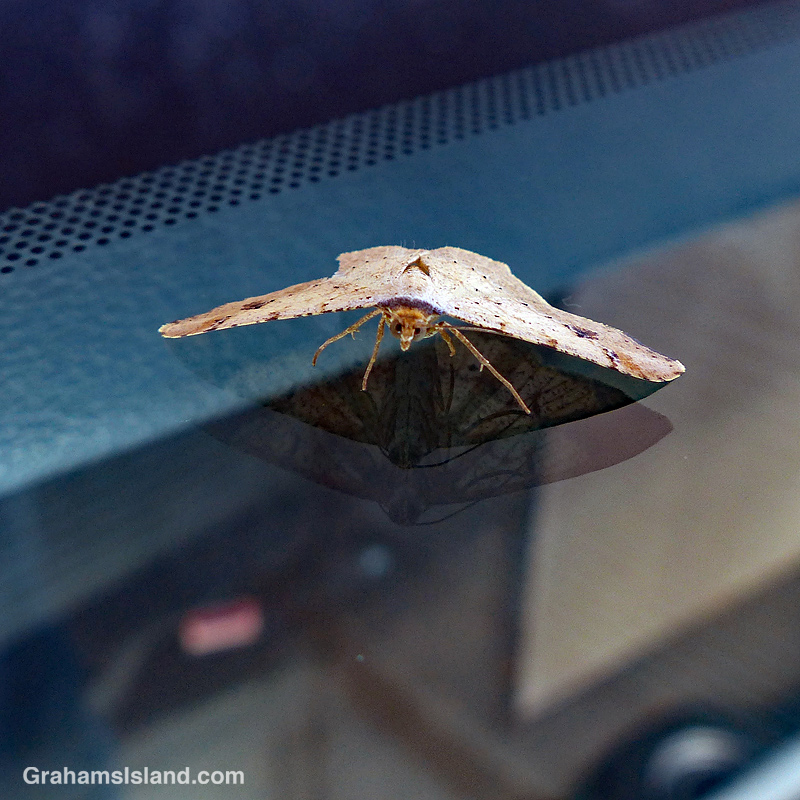
The psamatodes abydata moth is also known as macaria abydata. Its common name is dot-lined angle moth. The moth was first introduced into Hawaii in 1970 and became established on all the main islands by 1984.
This one was perched on the window of a vehicle, giving it that splendid blue background and cool reflections.
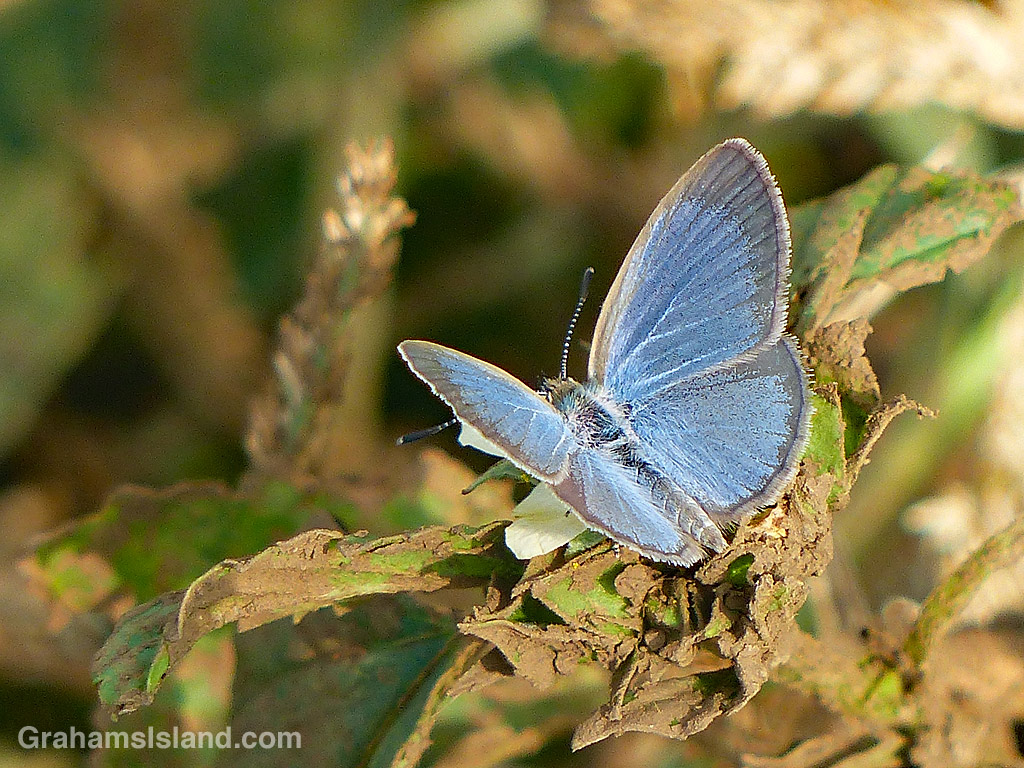
A lesser grass blue butterfly reveals the reason for its name, at least the blue part anyway.
Posted in response to this week’s Sunday Stills challenge on the theme of ‘Blue.’ See more responses here.
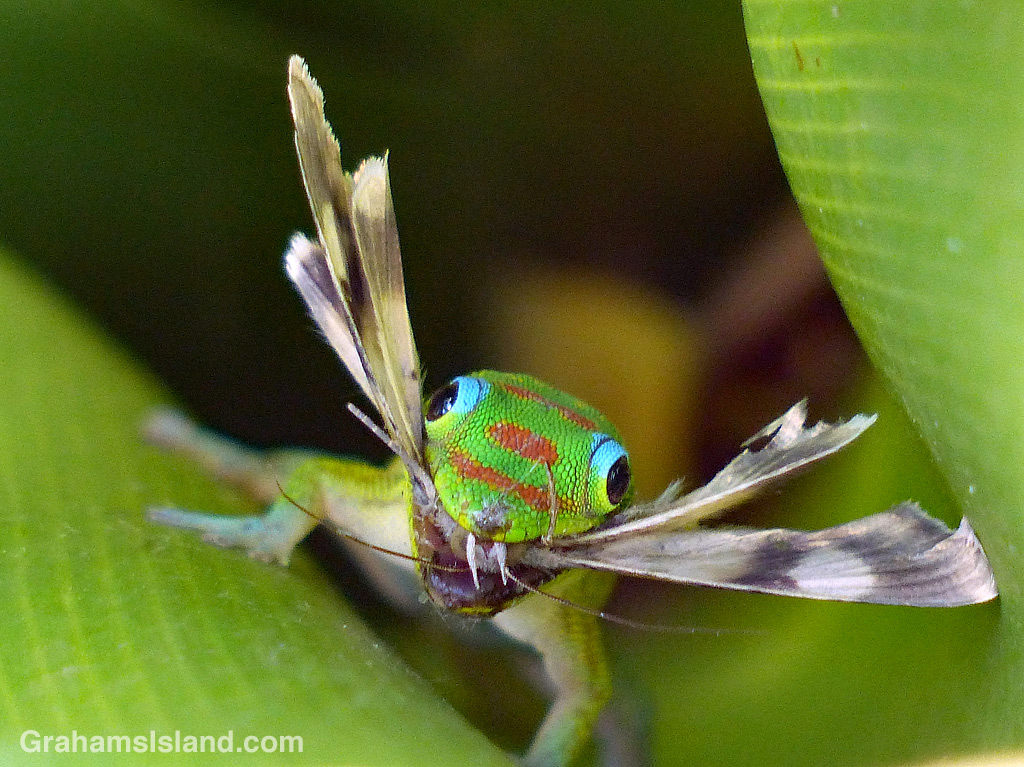
I peered down into a spider lily one day and this is what I saw looking up at me, a gecko with wings. The wings, of course, were those of an unlucky moth, which the gold dust day gecko had snagged from behind. The moth struggled a good deal, but there was only ever going to be one winner in this contest.


This passion vine butterfly was feeding on passion flowers, but it will feed on many other flowers, too. It gets its name because passion vines are the host plant for the passion vine butterfly’s caterpillar. Those caterpillars spend their days munching leaves, many of which have little yellow bumps on them. The bumps, which can be seen in the photos, are the plants’ way of trying to fool the butterflies into believing that there are already eggs on the leaves and so it’s not a good spot to lay more.
It’s hard to know how effective this ruse is. I’ve seen many butterflies laying eggs on these leaves, but perhaps some are discouraged. Regardless, the caterpillars will move from leaf to leaf while chowing down, but they never seem to defoliate the plant, which is, in any case, a robustly growing vine.
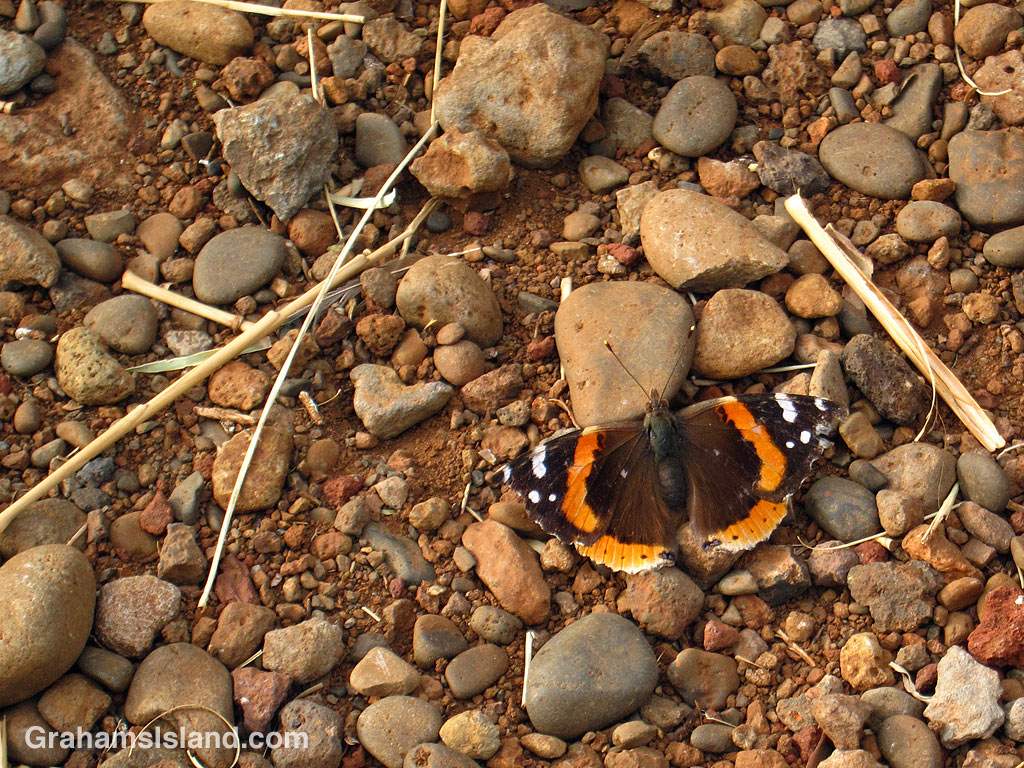
The Red Admiral butterfly is a European native that arrived in Hawaii in the late 1800s. Despite the longevity of its time in Hawaii, it’s a butterfly that isn’t seen a lot. This is the first one I’ve seen in six plus years here. I was on my way to go snorkeling when I noticed it and, of course, I was immediately distracted and snapped a couple of photos before it disappeared from view.
 Graham's Island