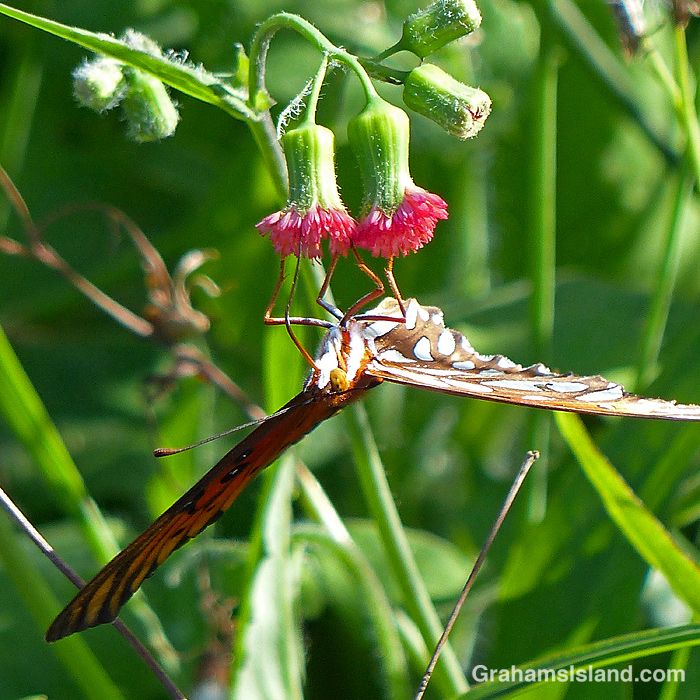
A passion vine butterfly hangs upside down while sampling the good things on offer from a tasselflower.
Posted in response to Becky’s January Squares challenge theme of ‘Up.’ See more responses here.

A passion vine butterfly hangs upside down while sampling the good things on offer from a tasselflower.
Posted in response to Becky’s January Squares challenge theme of ‘Up.’ See more responses here.
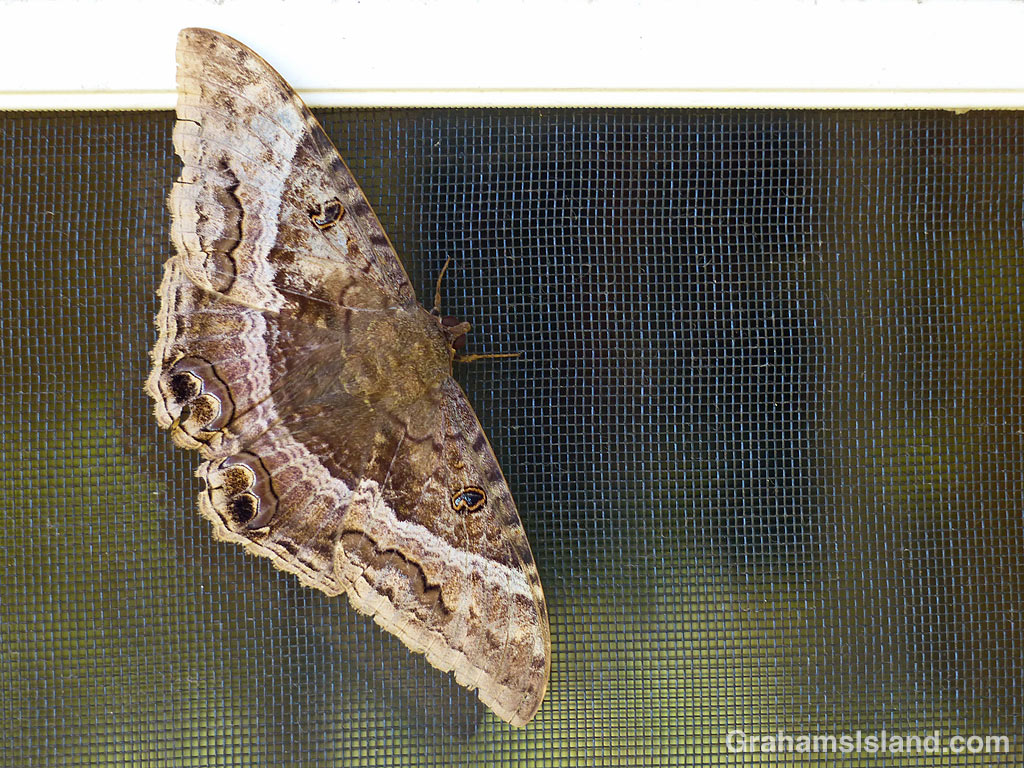
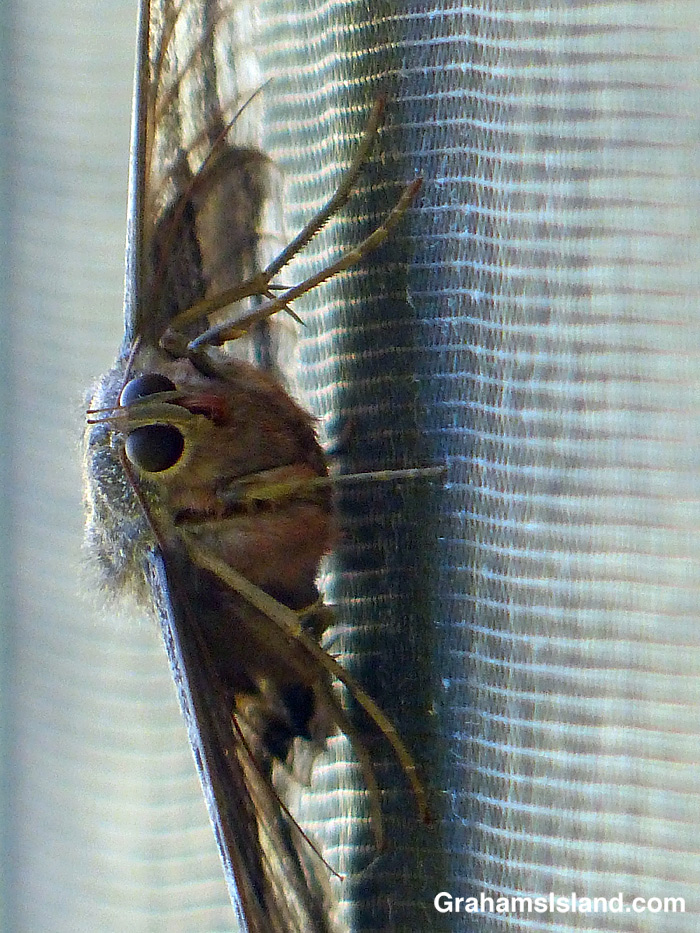
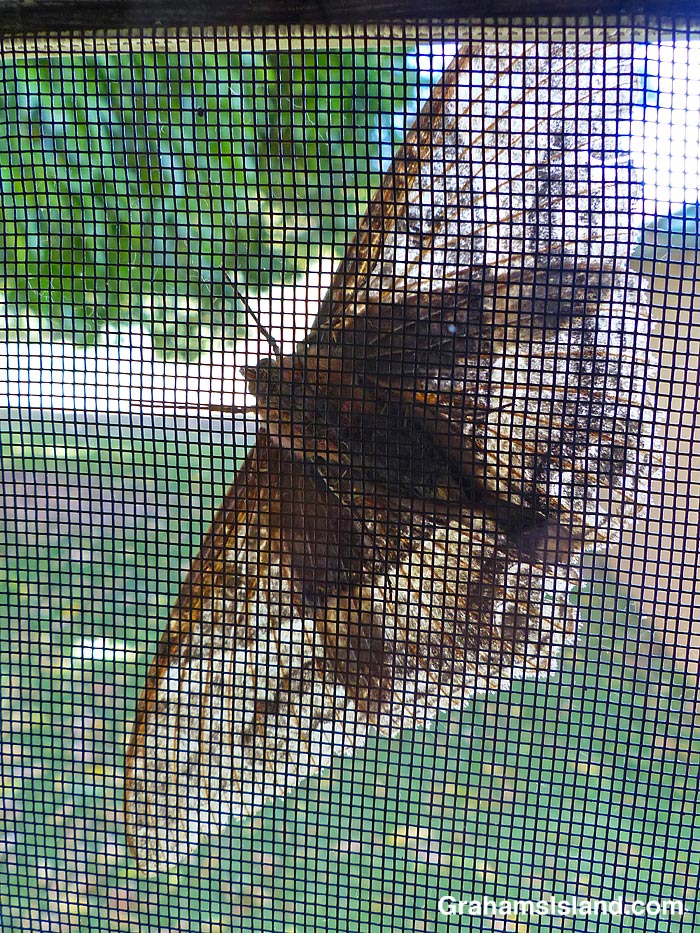
I was sitting on the couch when a large, dark shape appeared on the window screen. The bottom photo shows this first view I had of what was clearly a black witch moth. I took my camera outside and shot a few more photos.
Sometimes these moths can look very battered indeed, but this one looked in good shape, if a little faded. It remained in this spot for several hours until an ambitious gecko saw it as a potential banquet. When the gecko got too close, the moth took off.
I’ve seen a gecko go after one of these moths before (here), but I’ve yet to see one succeed in its quest.

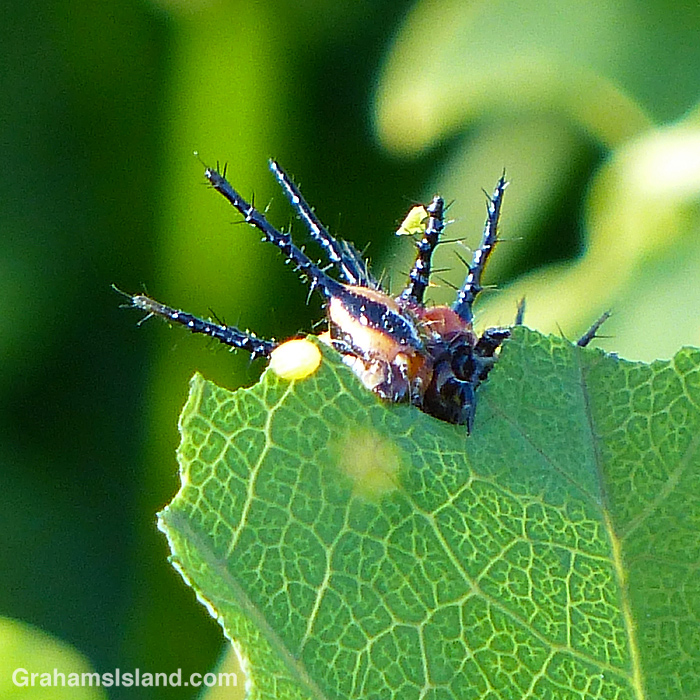

Passion vine butterflies lay eggs on passion vine leaves because that’s what the caterpillar is going to eat. Mostly, a butterfly will lay one egg per leaf so some passion vines have developed yellow spots to try and convince butterflies that the leaves are already egg laden. I haven’t seen this strategy working too well.
Once a caterpillar emerges it will begin a life of voraciously eating passion vine leaves. There’s an early video game quality about this as the mouth chomps back and forth across the leaves, cutting one arc after another.
However, despite the presence of caterpillars, butterflies continue to lay eggs on the leaves. So what happens when a caterpillar comes across an egg? It makes no distinction and down goes the egg. So long cousin Billy!
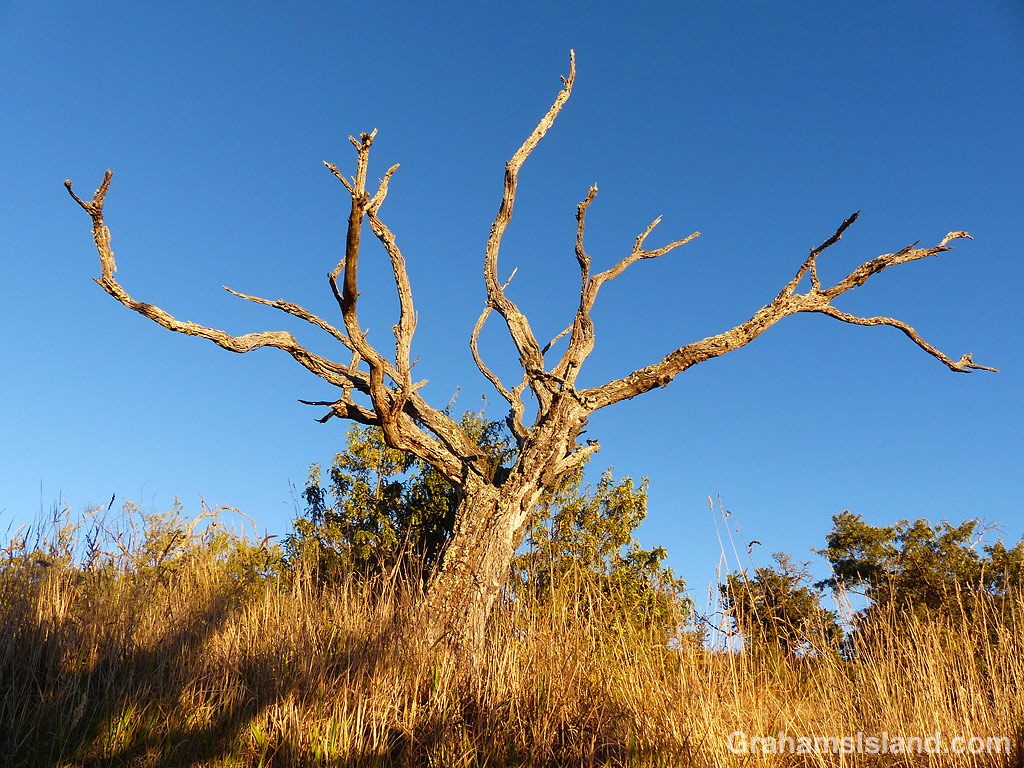

This week’s Sunday Stills challenge theme is ‘Weathered.’ See more responses here.
In the top photo, a dead tree on the lower slopes on Mauna Kea, stretches weathered branches toward the sky.
Second photo: Petroglyphs in Hawaii Volcanoes National Park have been weathered by years of sun and rain, but are still clearly visible.
Third photo: A cattle ranch alongside old Saddle Road includes this old structure bordering a stockyard.
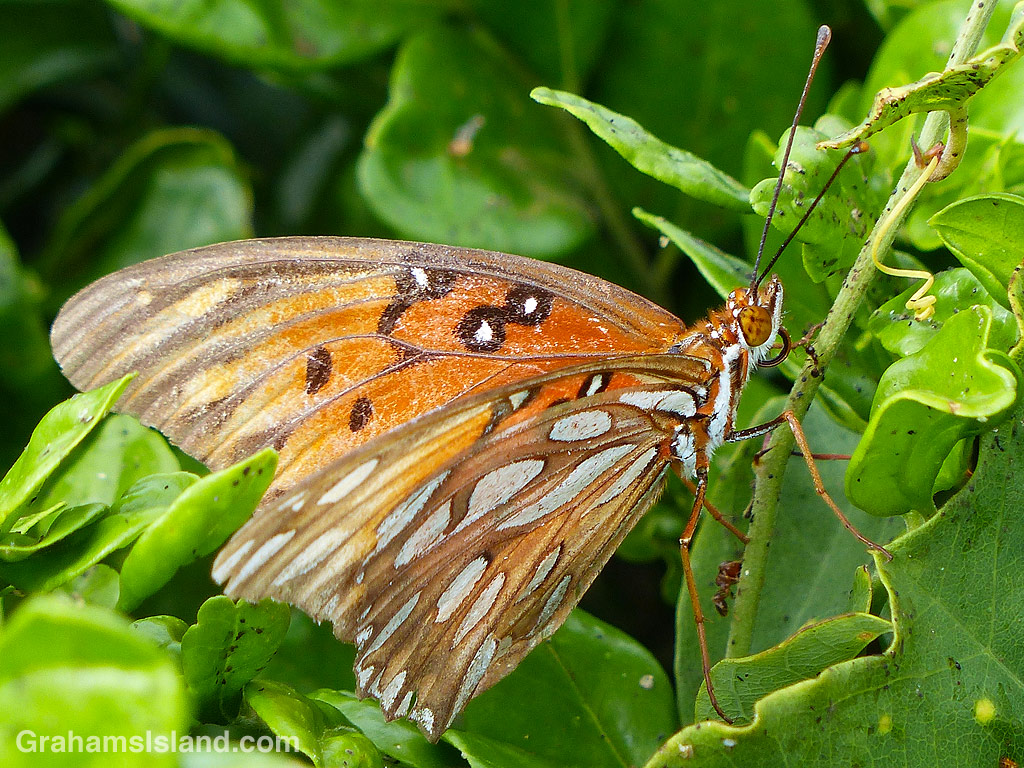
Bottom photo: Butterflies have a short lifespan, but in that time they can go from looking boldly marked and colored to very faded, with some looking like it’s a miracle they can fly at all.
For more information about Hawaii Volcanoes National Park, go to nps.gov/havo/.

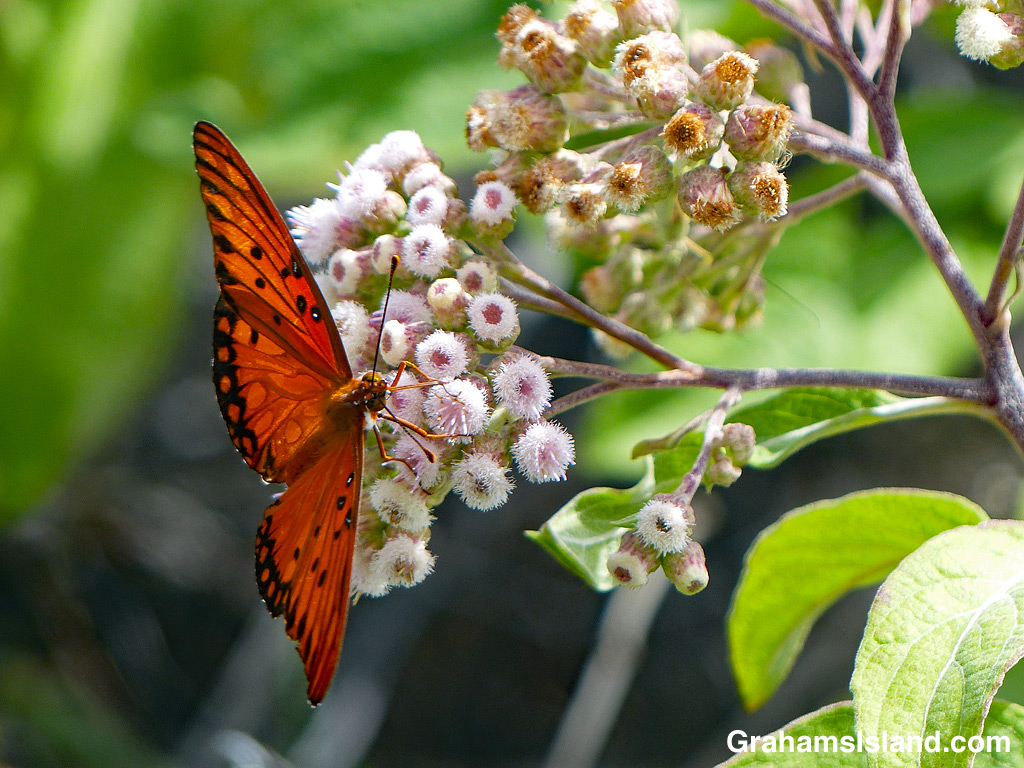
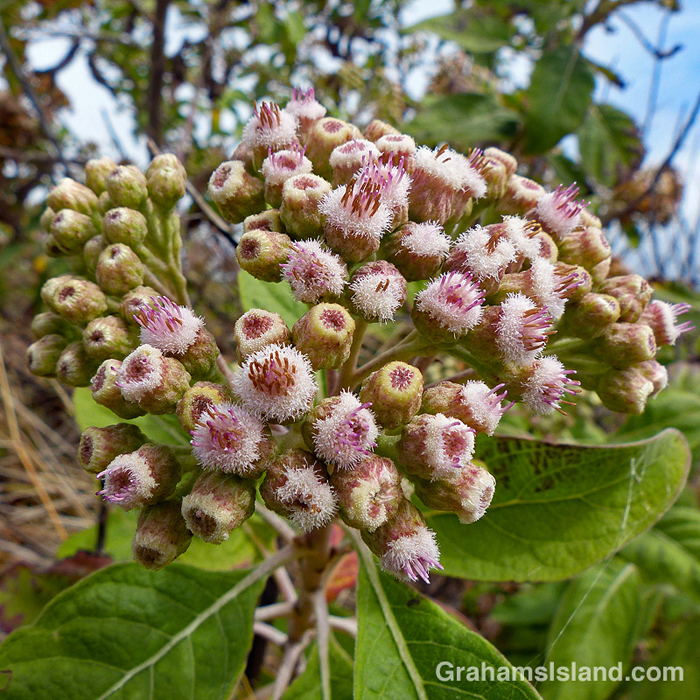
Pluchea carolinensis is also known as sourbush and cure-for-all. This latter name probably comes from its medicinal use in its native range, which is the tropical Americas. It’s a member of the aster family – Asteraceae.
The plant was first reported in Hawaii in 1931 and on the Big Island in 1933. It’s believed to be an accidental introduction, possibly associated with shipping to Hawaii and within the islands. The onset of World War II prompted the plant’s spread through the Pacific, probably in military shipments.
On the Big Island it’s most often seen in drier coastal areas, but it can tolerate a variety of climates and conditions. These photos were taken on the Puna Coast Trail in Hawaii Volcanoes National Park.
For more information about Hawaii Volcanoes National Park, go to nps.gov/havo/.
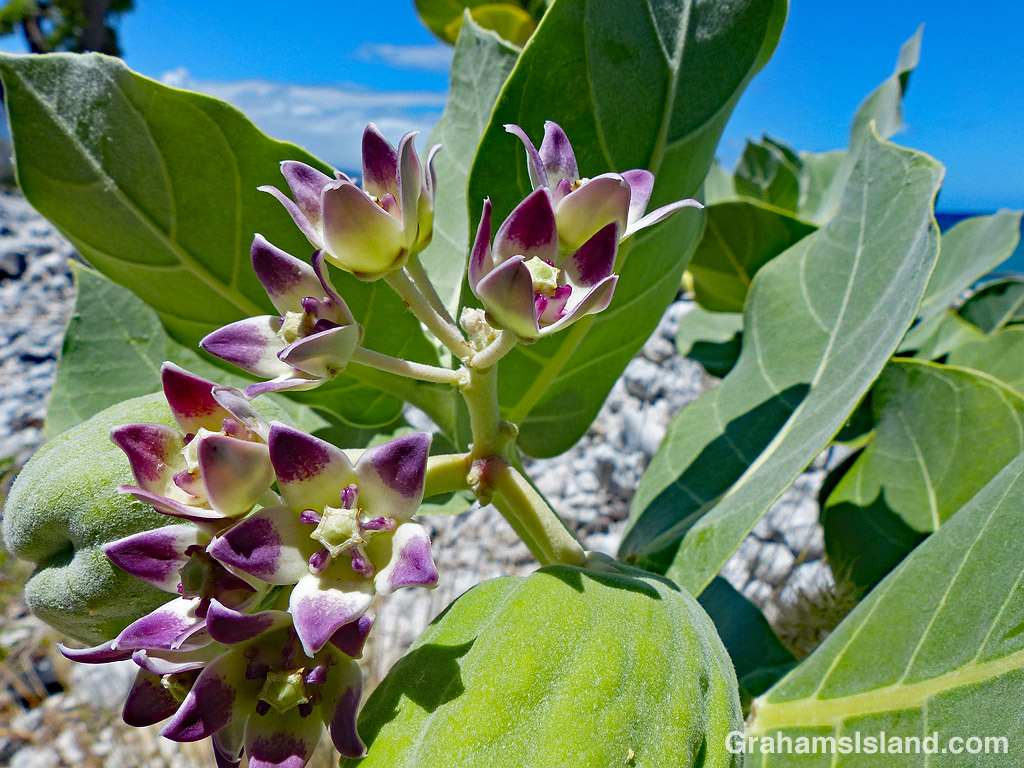
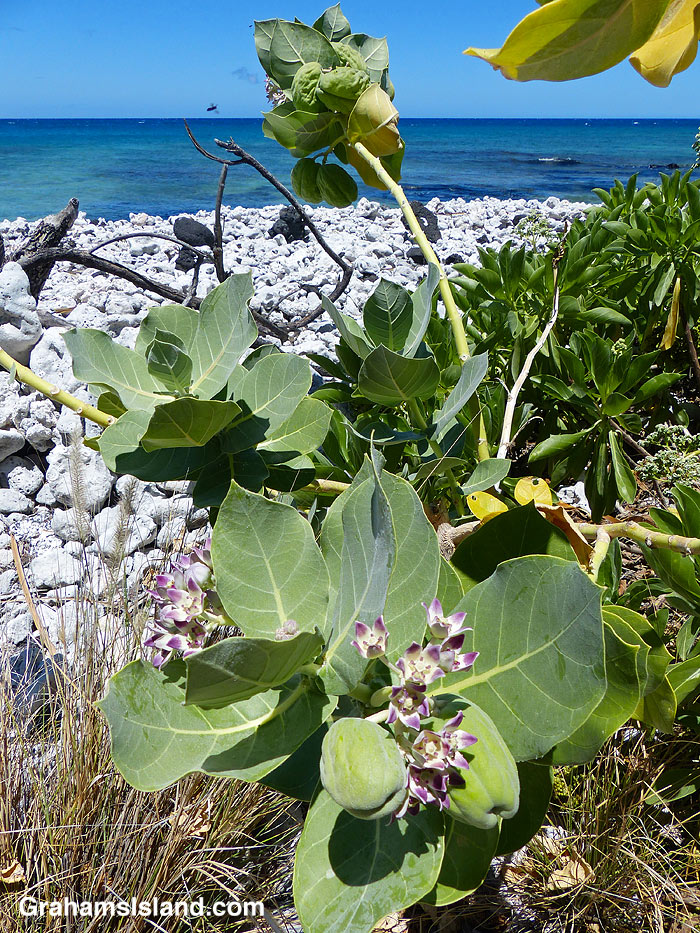
Calotropis procera, also known as Apple of Sodom, is a member of the milkweed family. A native of parts of Africa and Asia, it’s another of the many invasive plants that have found a home in Hawaii. On the plus side, it’s a host plant for Monarch butterfly caterpillars, while the butterflies themselves feed on the flowers.
In these photos, you can see the leaves, flowers, and the large green fruits of the plant.
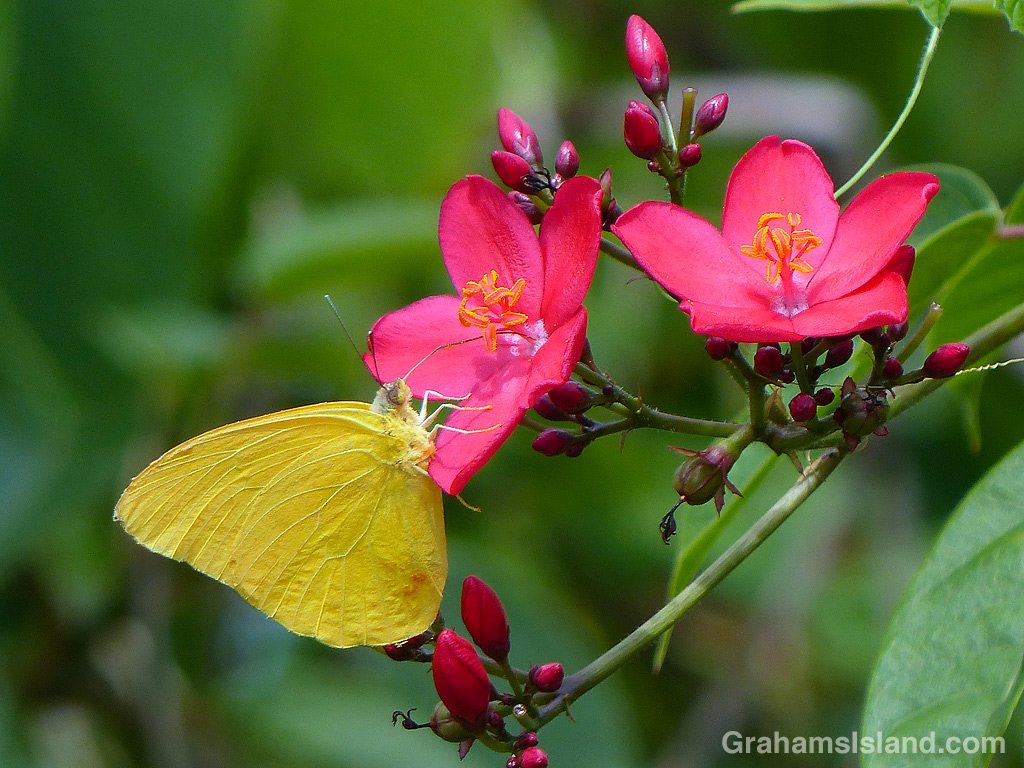
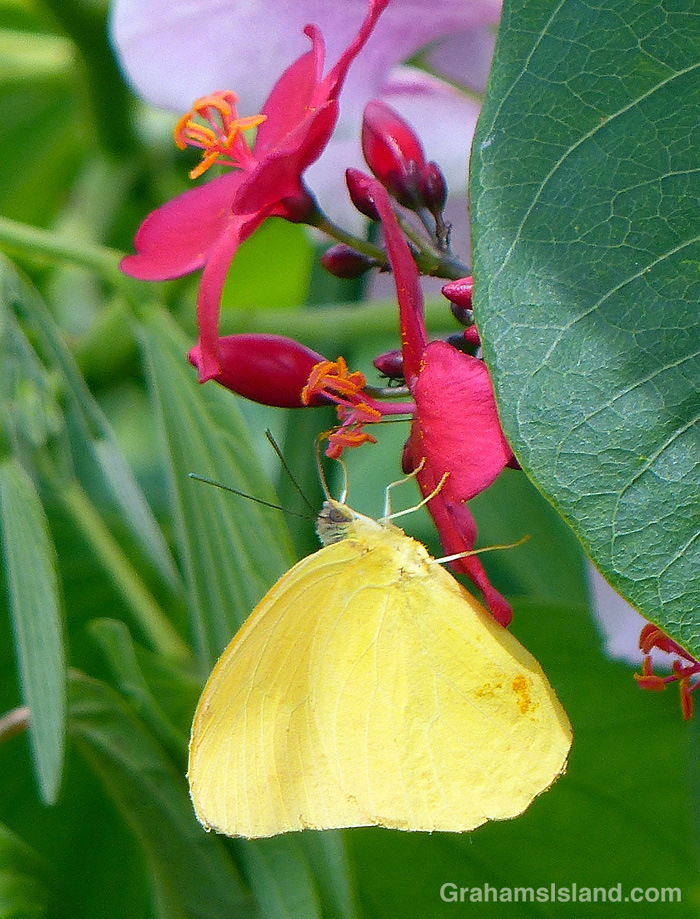
I spotted this large orange sulphur butterfly feeding on rose jatropha flowers and was struck by the vivid display of colors.

There could be any number of unseen creatures in this hedge, but the right (or wrong depending on how you look at it) color will be noticed instantly, as in the case of this passion vine butterfly.
Posted in response to Becky’s July Squares challenge theme of ‘Perspective.’ See more responses here.

