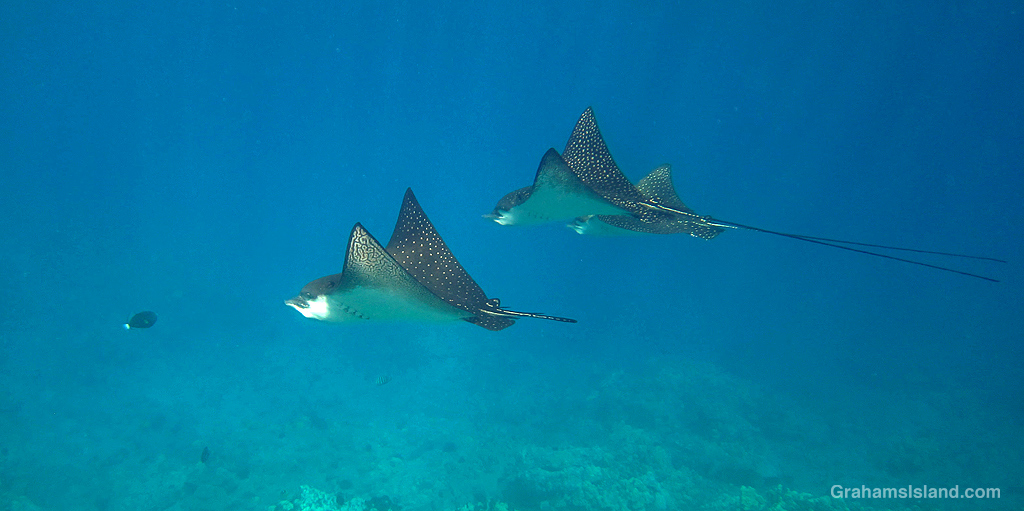
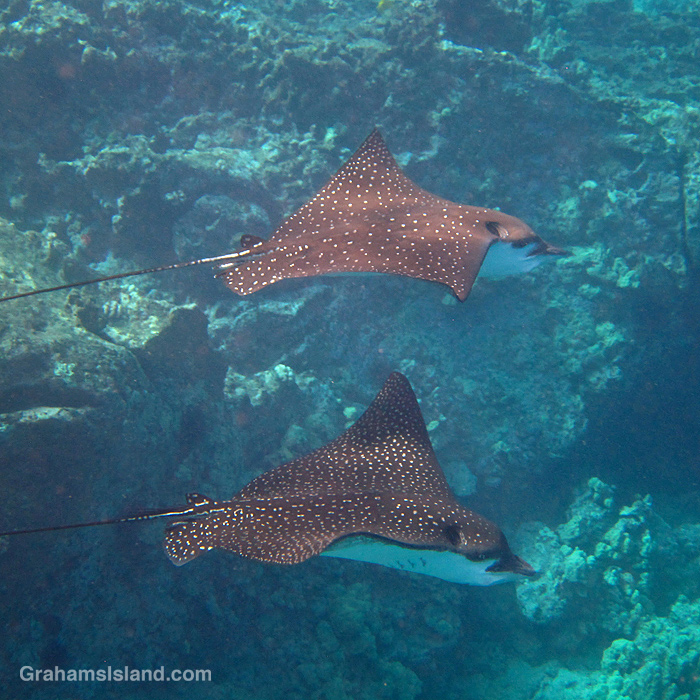
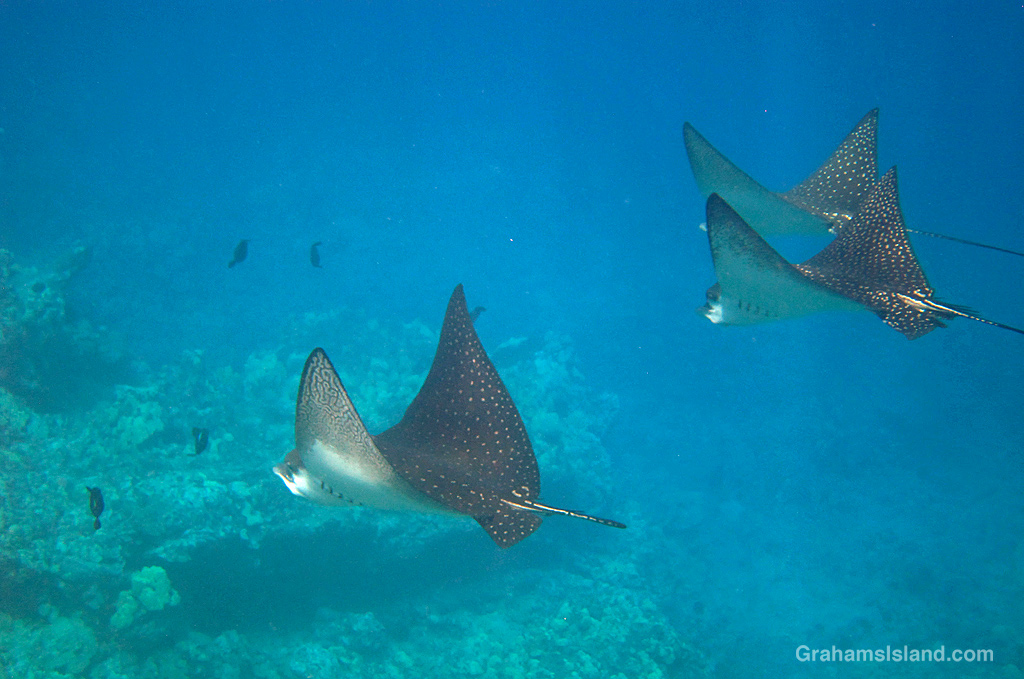
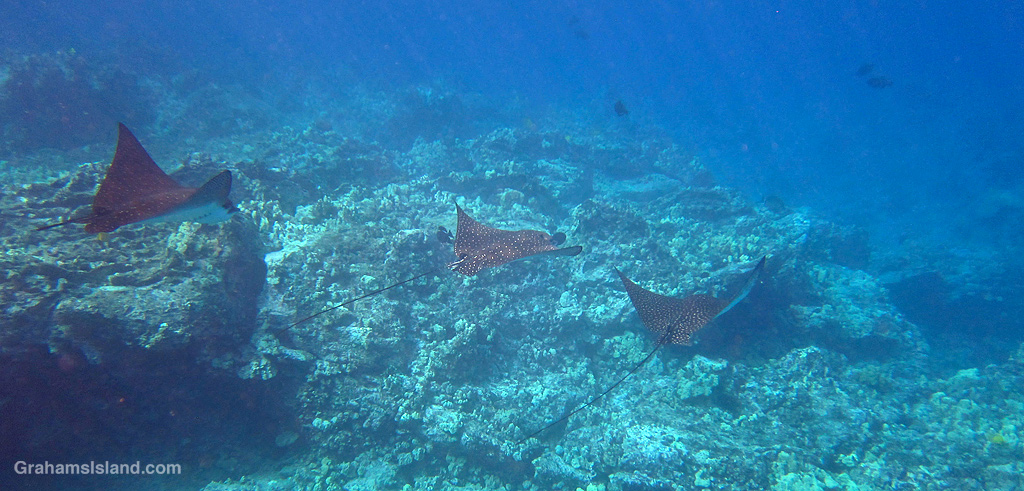
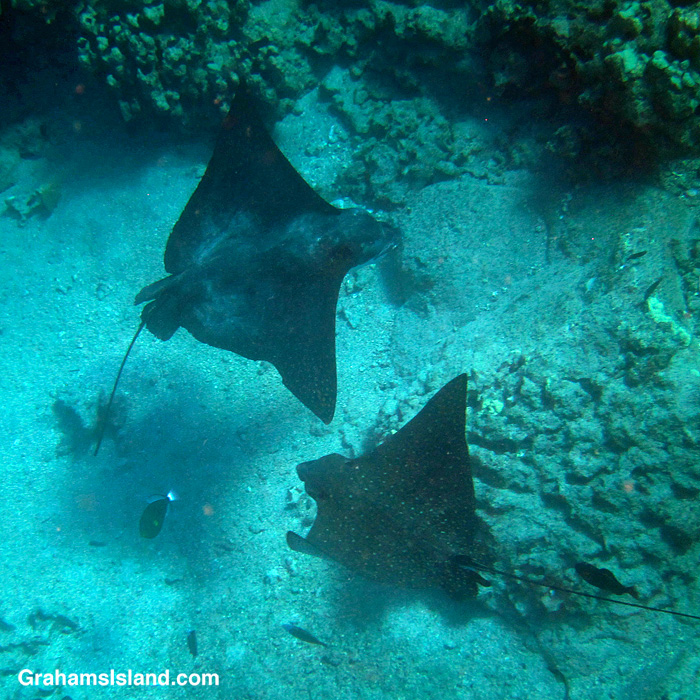
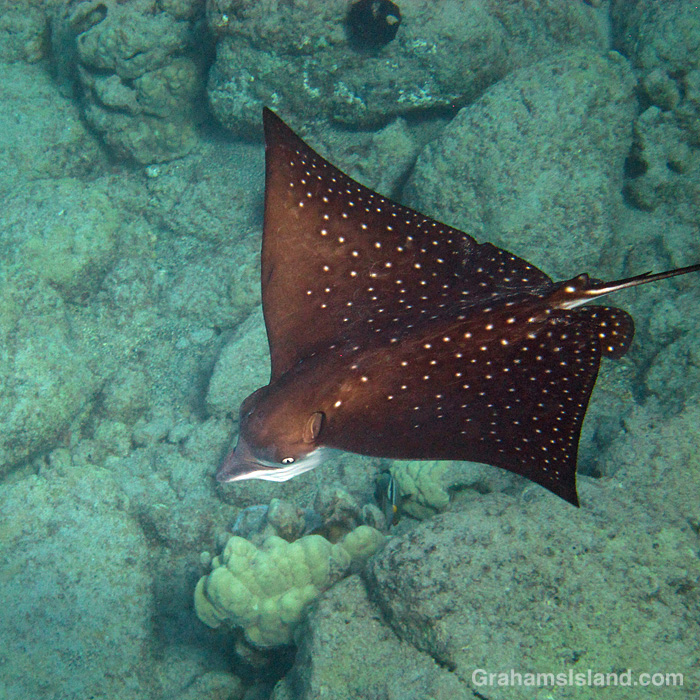
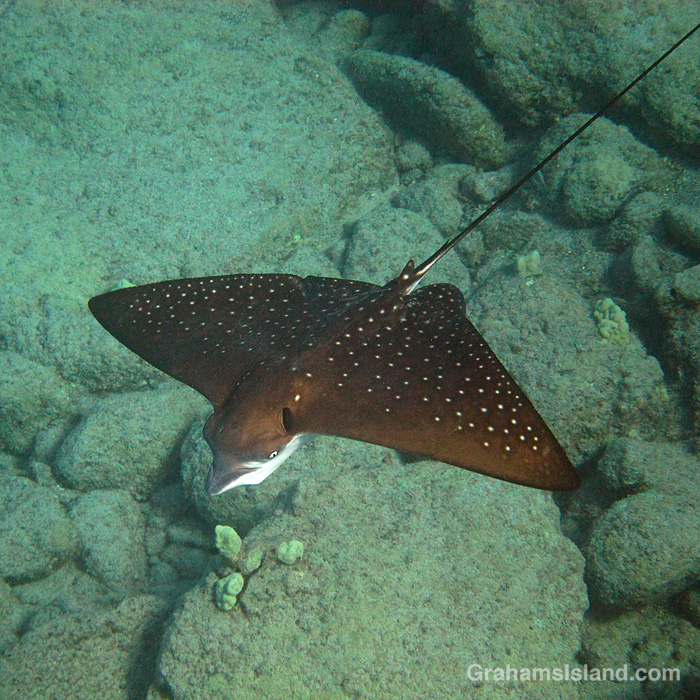
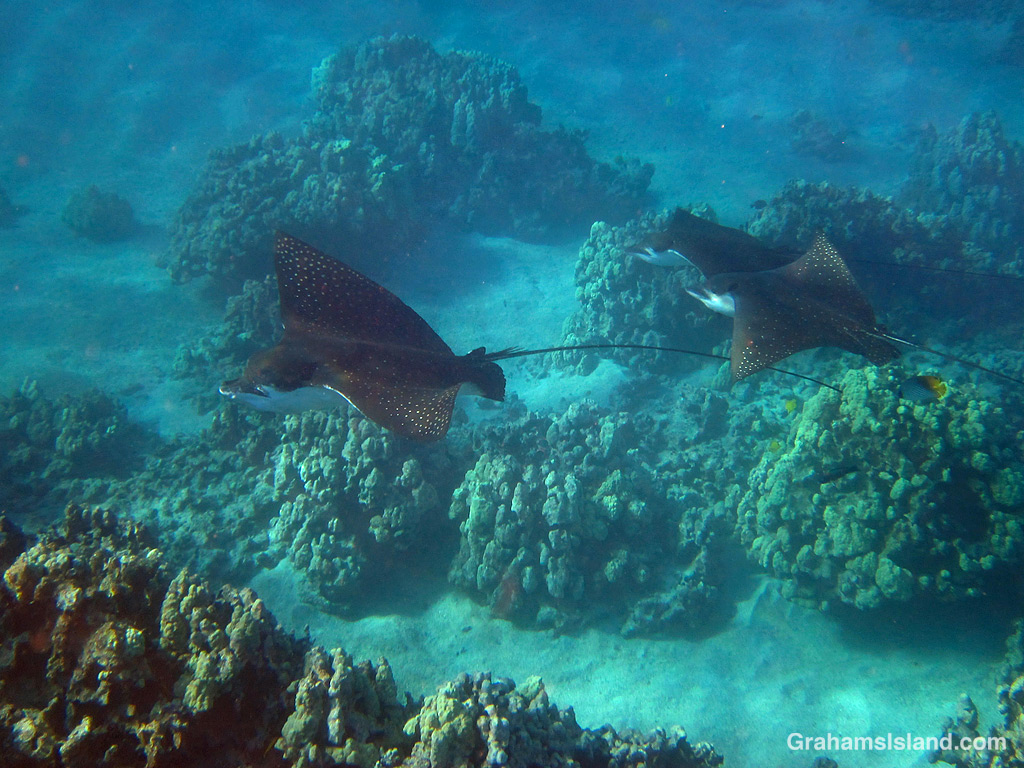
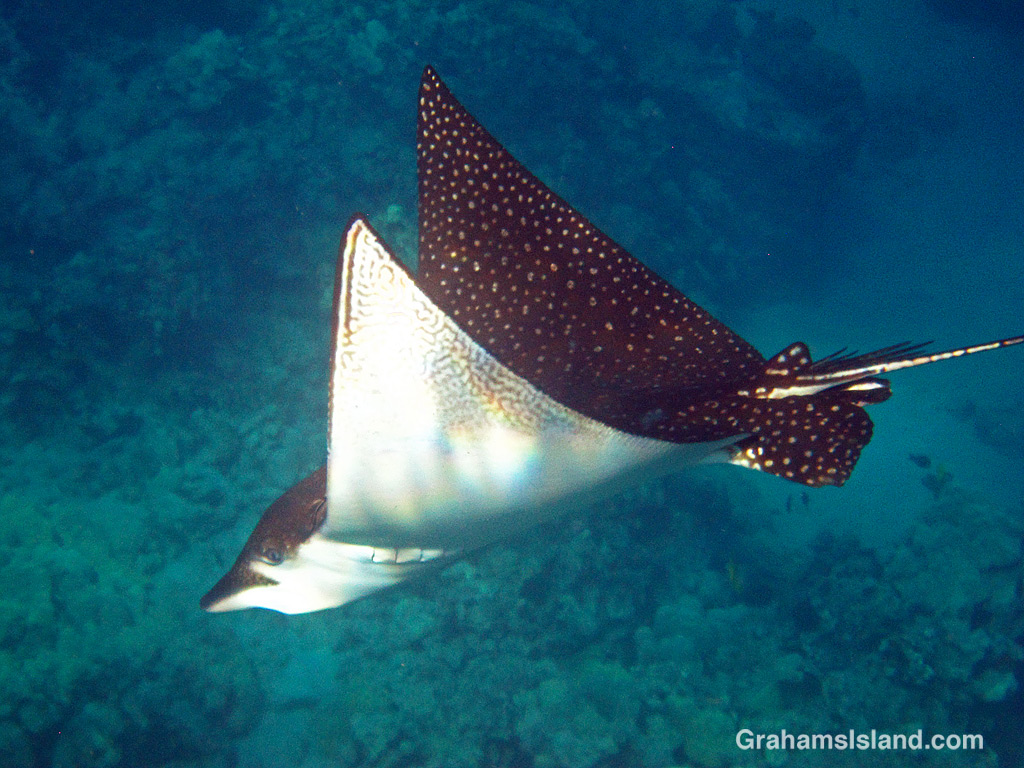
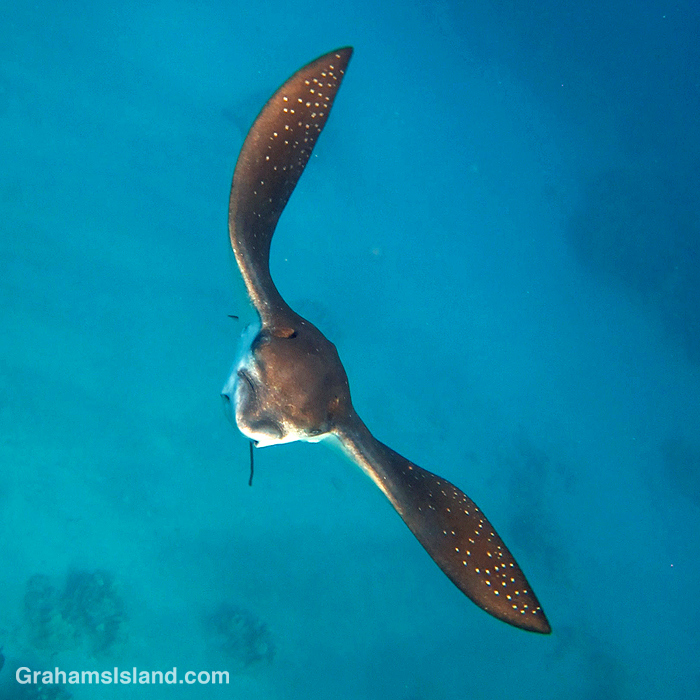
Yesterday, in the water, I saw these three Spotted Eagle Rays heading my way. They were on the smaller side, but all in excellent condition, except for the slightly larger one that had lost much of its tail. The three made several languid loops around my wife and I before they finally eased away into shallower water.
The second photo gives a good view of the ray’s spiracles. They have one on each side, just above and behind the eye. These openings allow them to pass water through to the gills, even when they are digging for prey and churning up a lot of sand.
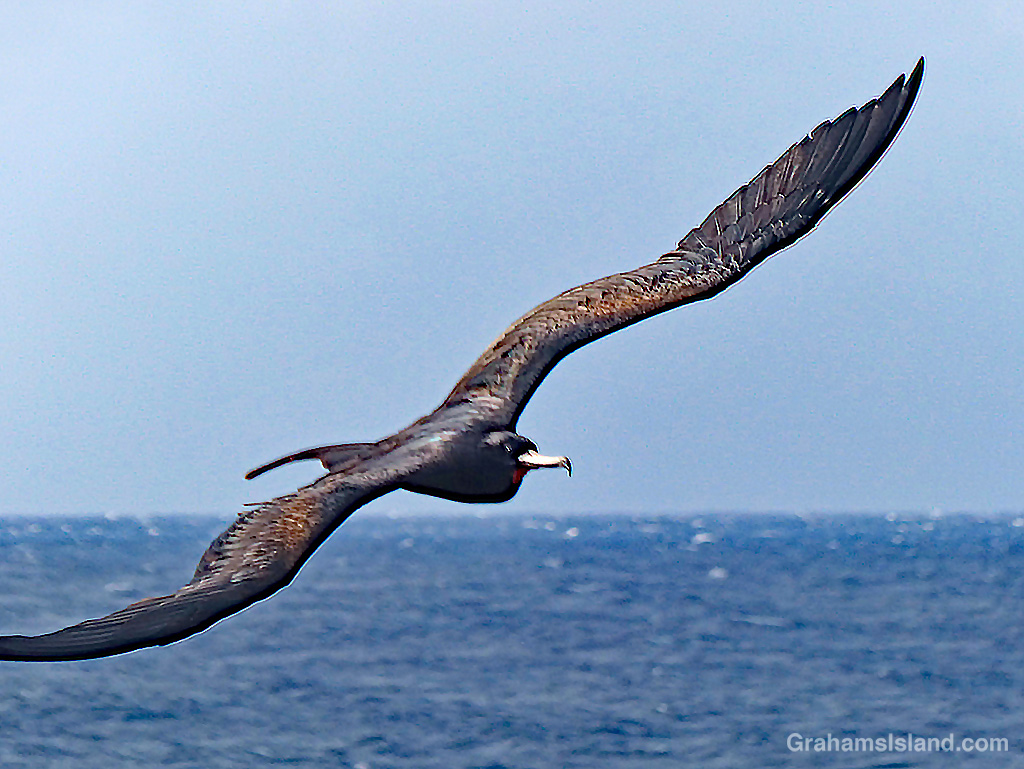
A Great Frigatebird glides over the ocean off the Kohala coast.
This week’s Sunday Stills challenge theme is ‘Wings.’ See more responses here. Let’s start with the birds.
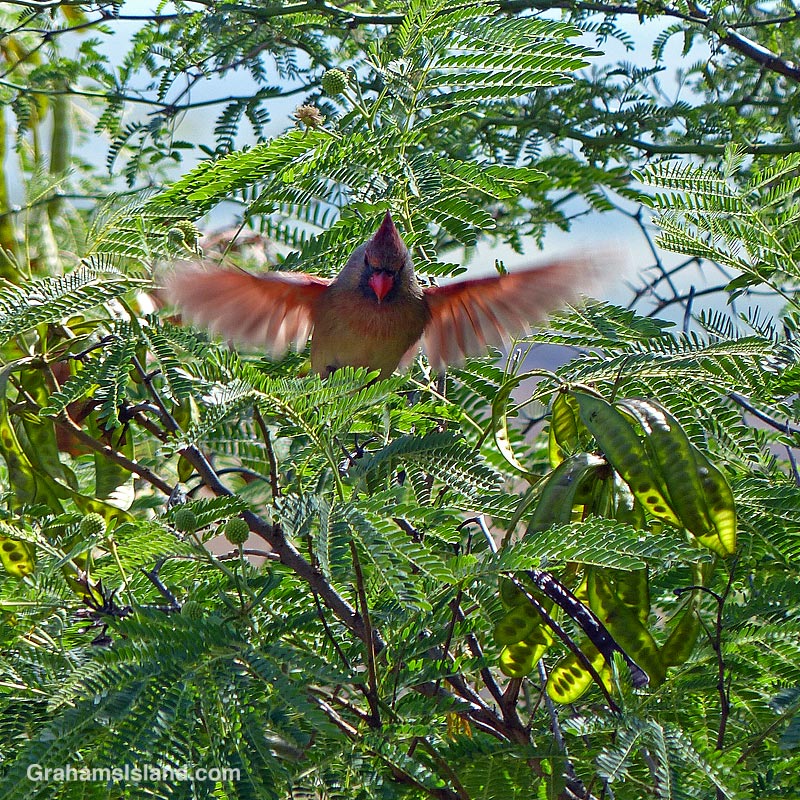
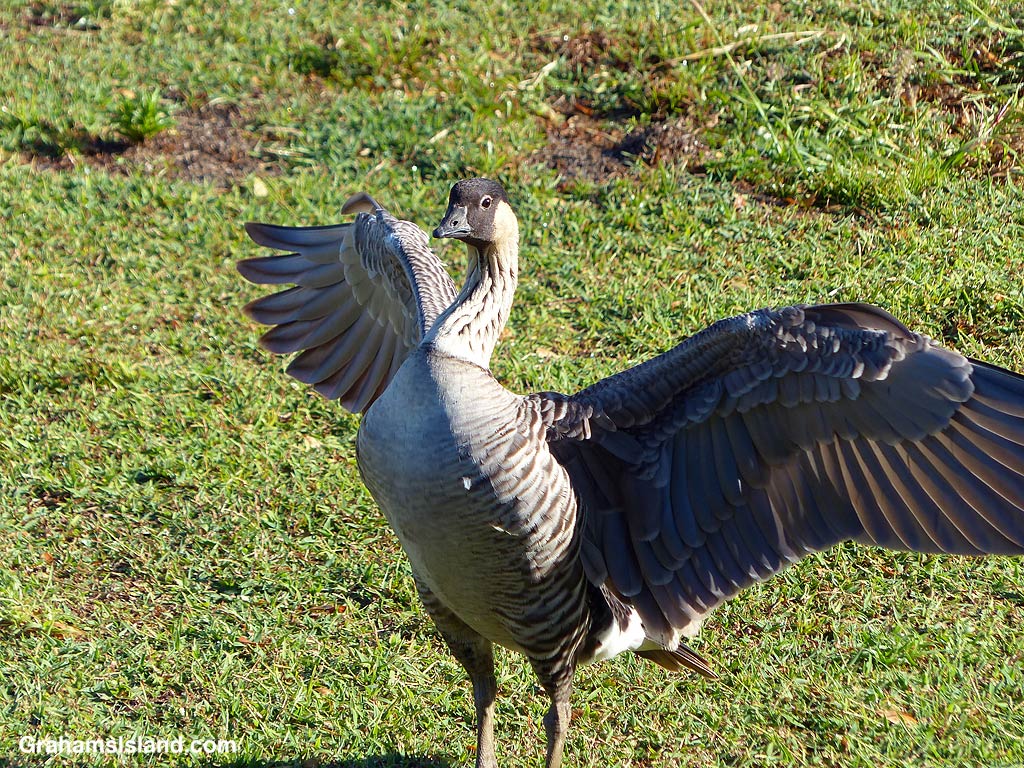
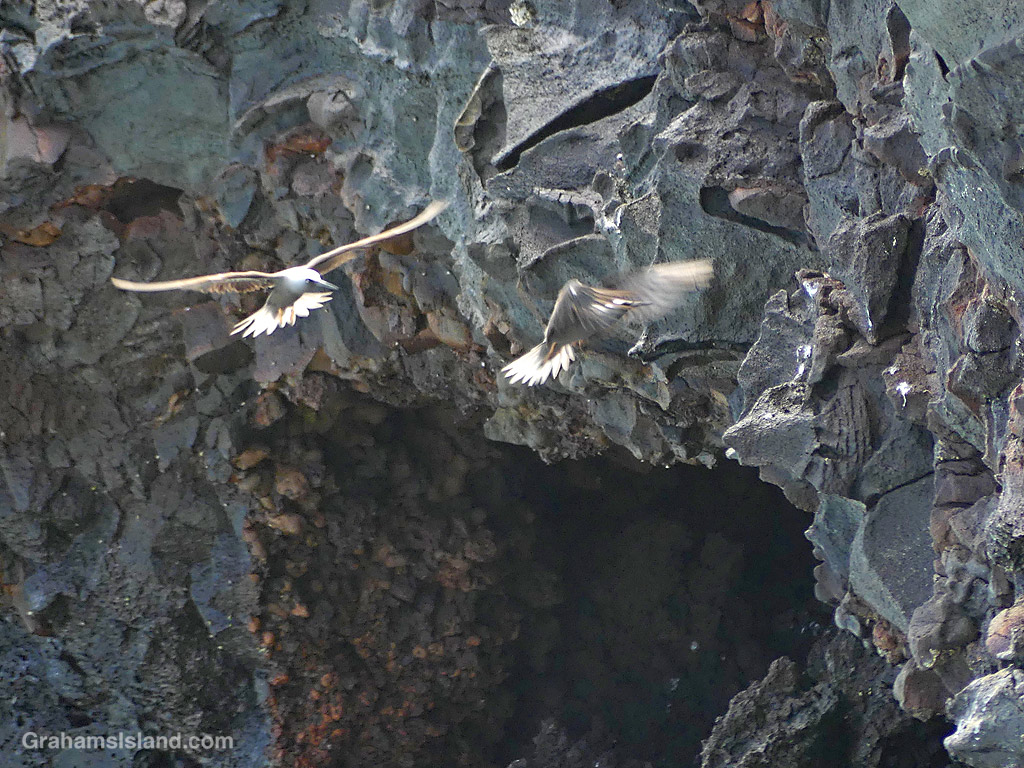
A Northern Cardinal juvenile coming to get me!A Nene displays an impressive wingspan.A pair of Hawaiian Noddies head to their roost at Whittington Park.
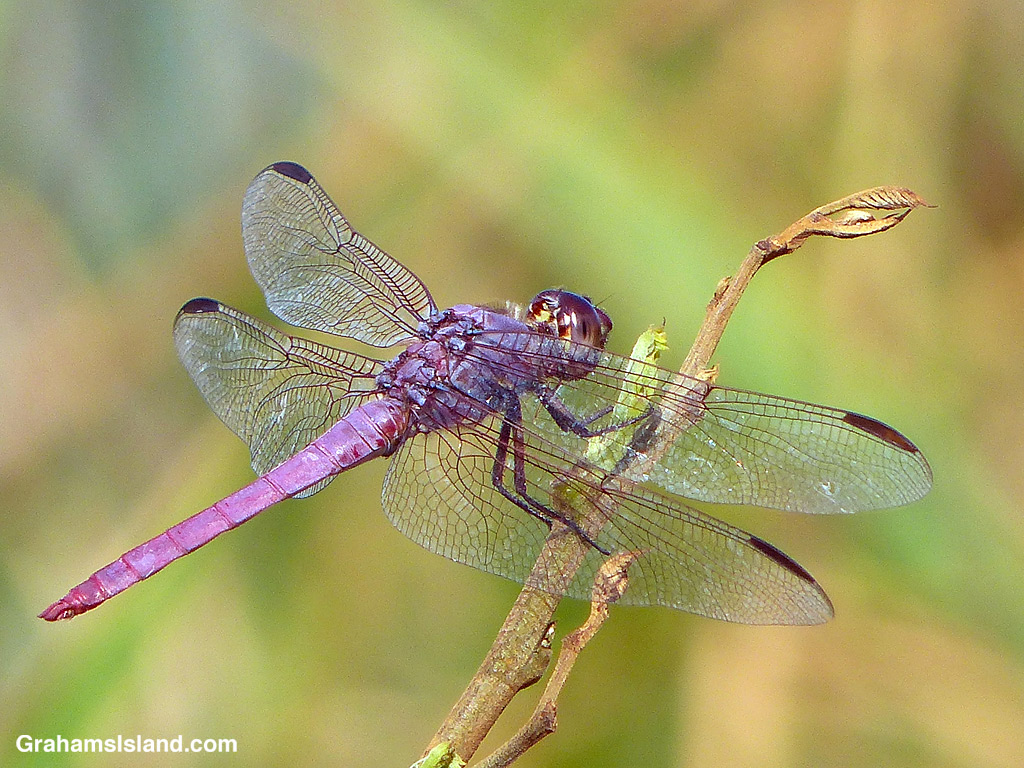
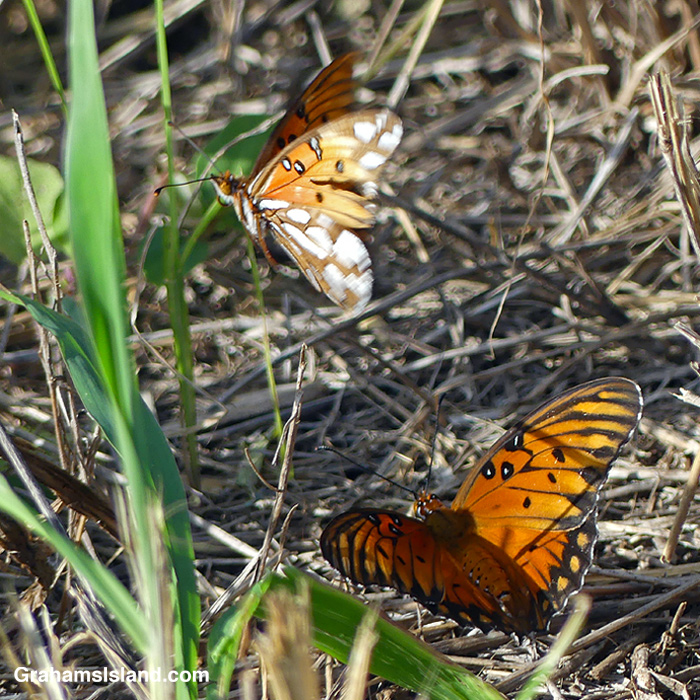
There are many winged insects too.
The delicate wings of a Roseate Skimmer Dragonfly.A pair of Passion Vine Butterflies flit about.
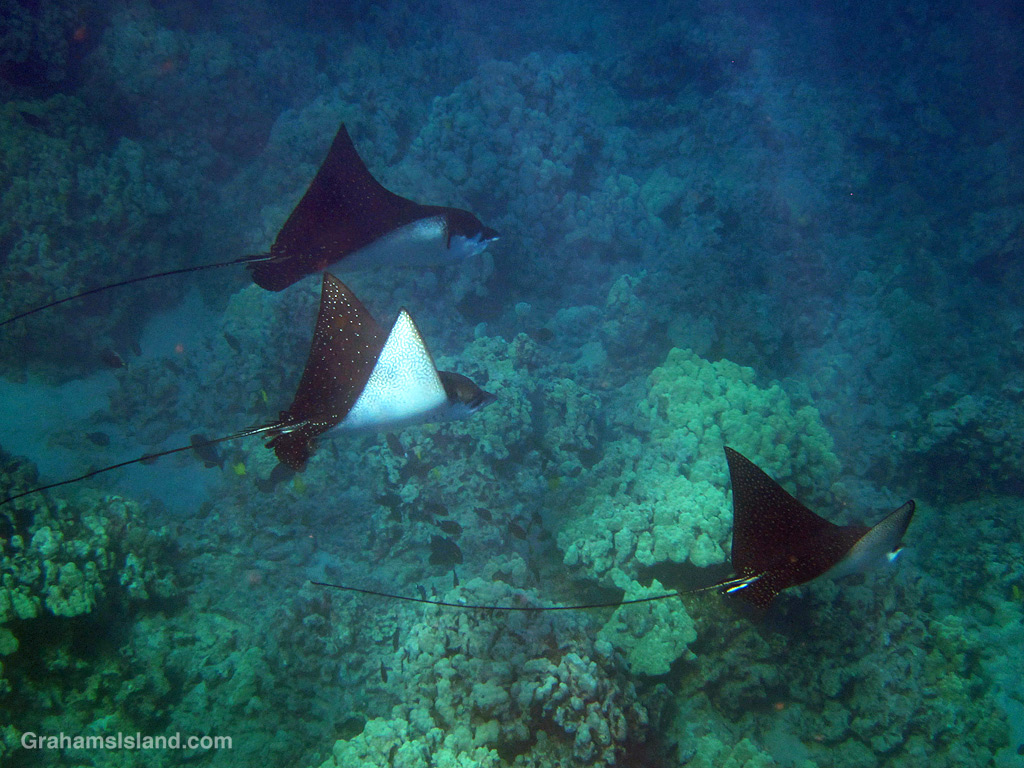
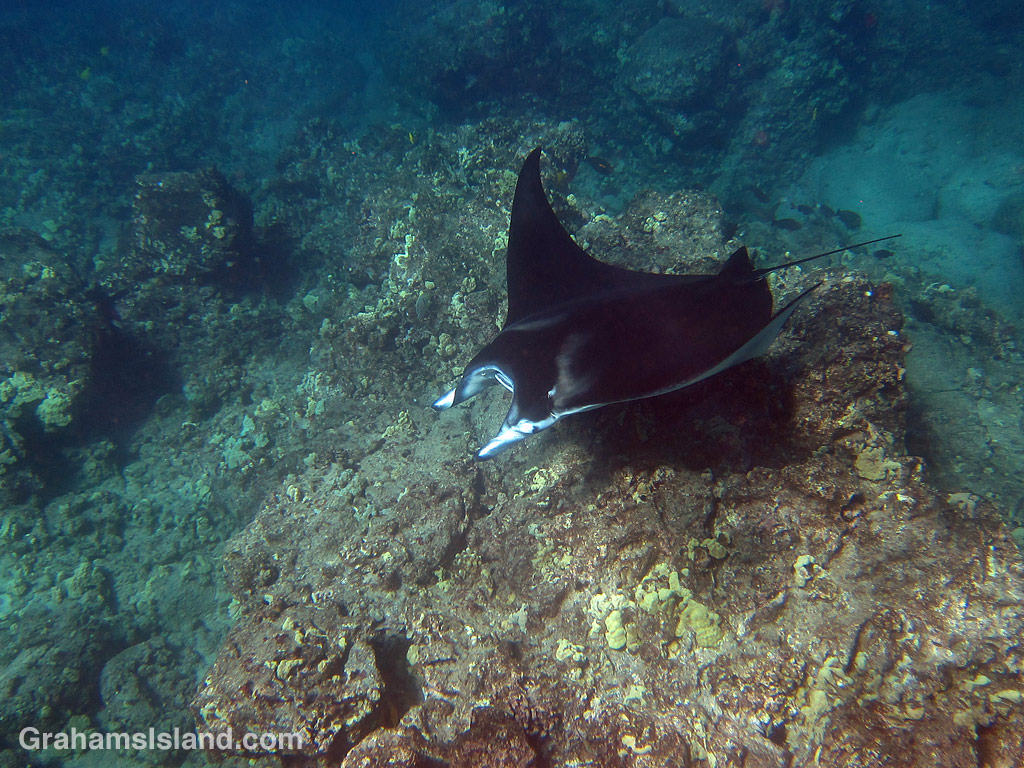
You can also find wings in the water
A trio of Eagle Rays cruise through coastal waters.A Manta Ray glides over the sea floor.
And there are other wings too.
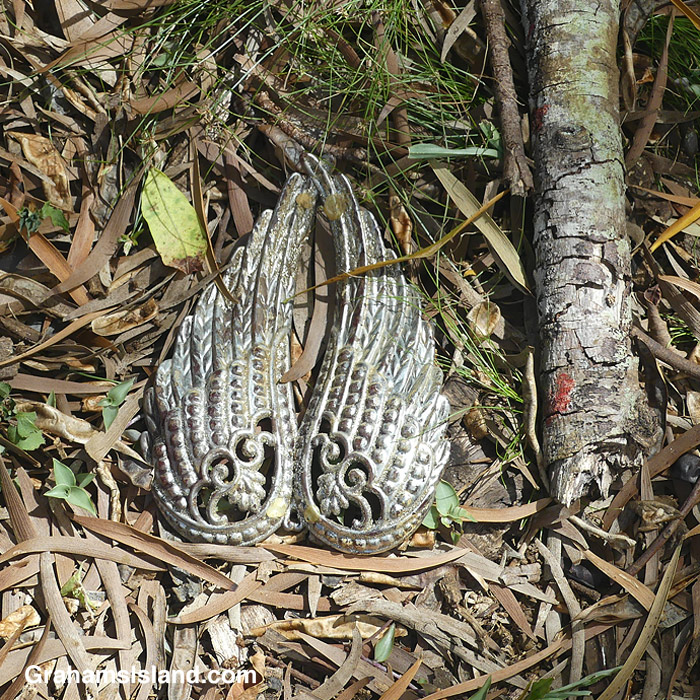
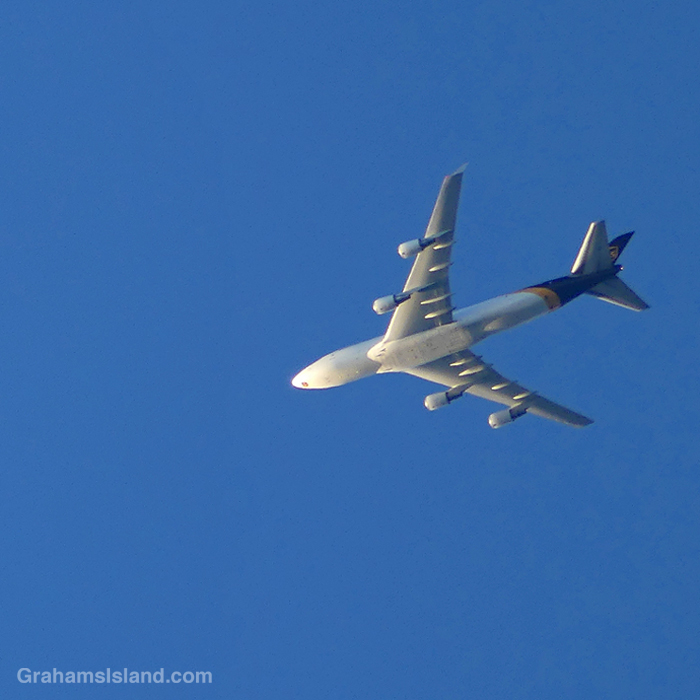
A broach of emblem found lying in the grass.A UPS plane heads for Honolulu early one morning.
During some recent swims, I’ve been lucky enough to see this small Spotted Eagle Ray. It doesn’t tend to hang about, so the encounters have been fleeting, but the ray looks in great condition, which is always good to see.
This week’s Sunday Stills challenge theme is ‘Double Trouble.’ See more responses here.
A pair of juvenile Black-crowned Night Herons spell trouble for small fish living in the pool behind Pelekane Beach in Kawaihae.
Giant Porcupinefish can inflate themselves into a ball. When they do so, long spines along the back become raised and stick out, making them an extremely unpleasant proposition for any predator. Oh, and they’re poisonous, too. Trouble, indeed.
Spotted Eagle Rays hunt for molluscs and other creatures hiding in the sand. They root out prey with their duck-like bills.
Wild pigs can dig up a garden in no time, searching for worms and the like, but they go bananas over fallen fruit. These two were slurping down fallen mangoes.
This cow looked very suspicious of these cattle egrets, especially the one on its back. But they weren’t up to any trouble, just waiting for the cow to start grazing again and stir up some insects for them.
The Gold Dust Day Gecko on the left isn’t licking the paint. He’s sticking out his tongue and leaning to make his body look bigger in a challenge to the other gecko. The other one was singularly unimpressed and chased off his adversary.
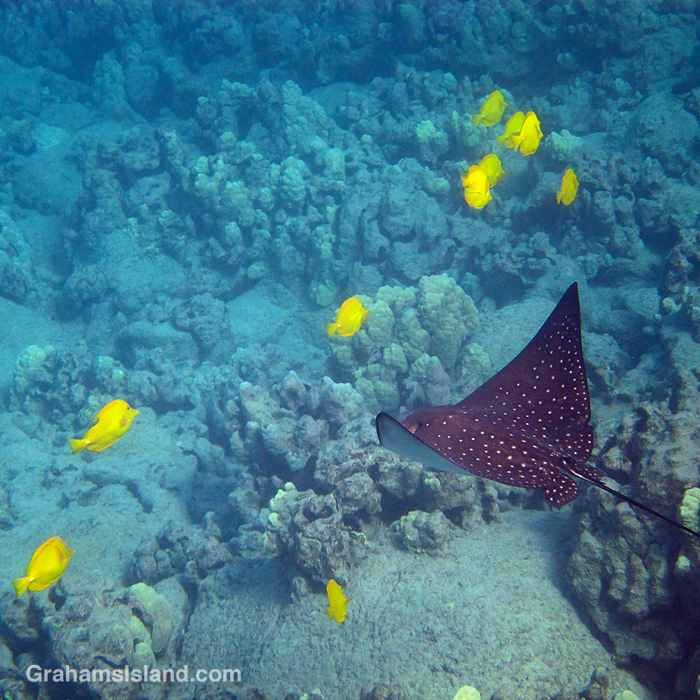
I don’t see Spotted Eagle Rays as often as I used to, but that’s true of many creatures that live in the ocean around here. This one went skimming by a small school of Yellow Tangs and out into deeper water. Happily, it looked in excellent condition with a beautiful array of white spots on its wings.
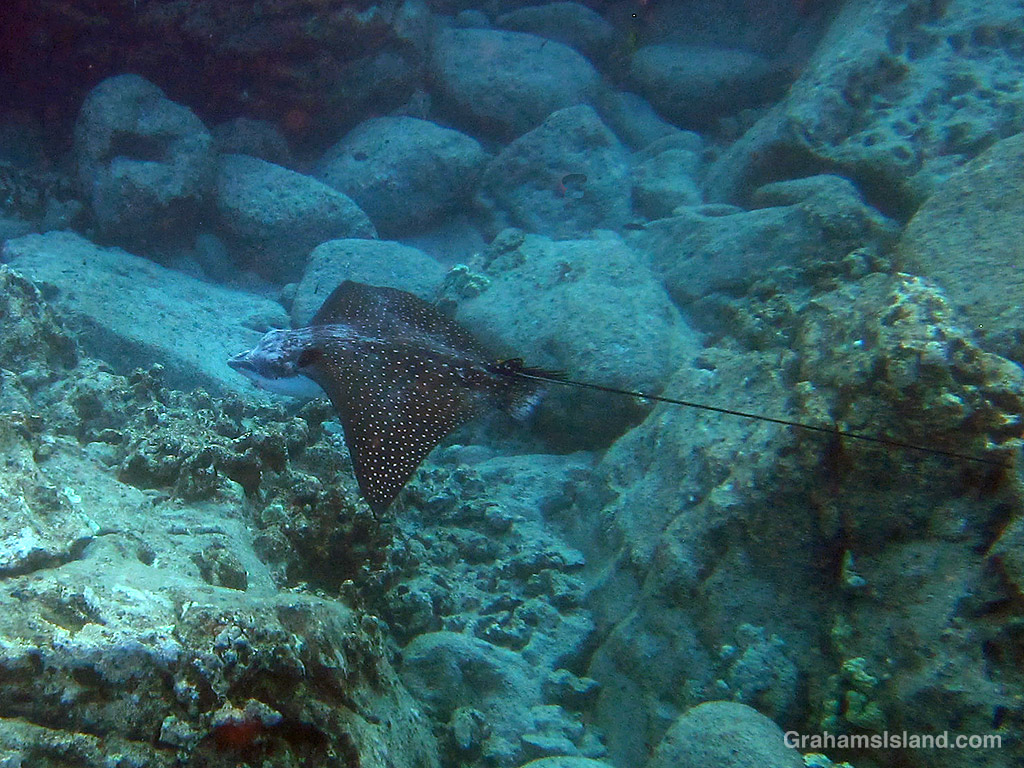
A few days ago, returning from a swim, I ran into this little eagle ray not far from shore. It’s probably the smallest one I’ve seen, with a wingspan of not more than two feet. But what really jumped out at me was it’s small beak, long tail, and clear white eyes. I hadn’t seen eyes like that before.
The ray looked in very good shape, which is always good to see. Some of them look like they’ve been in the wars. Like most rays, eagle rays have poisonous spines at the base of their tail so, as with most things in the water, it’s best to look but don’t touch.
Posted in response to Becky’s October Squares challenge theme of ‘Past Squares – Spiky.’ See more responses here.
Last week, I posted about an encounter with three spotted eagle rays (here). A few days after that I ran into one of the small eagle rays a little farther up the coast. The visibility wasn’t good – those pink spots are small organisms floating in the water – but the ray came so close that I was able to get a few photos. I’m pretty sure this was the same one that was so curious on the first encounter. This time it didn’t hang around but drifted by, disappearing into the murky water.
On a recent snorkeling outing, my wife and I hadn’t gone far when we saw these three spotted eagle rays cruising around. The one was bigger than the other two and I wondered if this was a family group.
The three went back and forth before disappearing in the direction we’d come from. Or rather two of them did. The third, the smallest of the three, looped around a few times and seemed keen to demonstrate just how quickly it could turn and swoop and soar. Eventually, it followed the others.
We swam a little farther, then turned and headed back. It wasn’t long before we ran into the two juvenile rays again. Both were zipping around, carving turns, dipping down and rocketing up. Again, the smallest one was the most demonstrative and I got the feeling it was just having a ripping good time, practicing its acrobatics.
But it was also clearly quite curious. A couple of times it came straight up to me and I could see it looking at me, probably wondering what this cumbersome creature was in the water. I like to think I helped confirm its own superior swimming skills as I splashed my way back to the shore.