
A tugboat enters Kawaihae Harbor in the early morning. The crewman, bathed in sun and casting a long shadow, waits to begin the process of maneuvering the tug’s barge alongside the jetty.
In response to WPC ‘A face in the crowd.’

A tugboat enters Kawaihae Harbor in the early morning. The crewman, bathed in sun and casting a long shadow, waits to begin the process of maneuvering the tug’s barge alongside the jetty.
In response to WPC ‘A face in the crowd.’
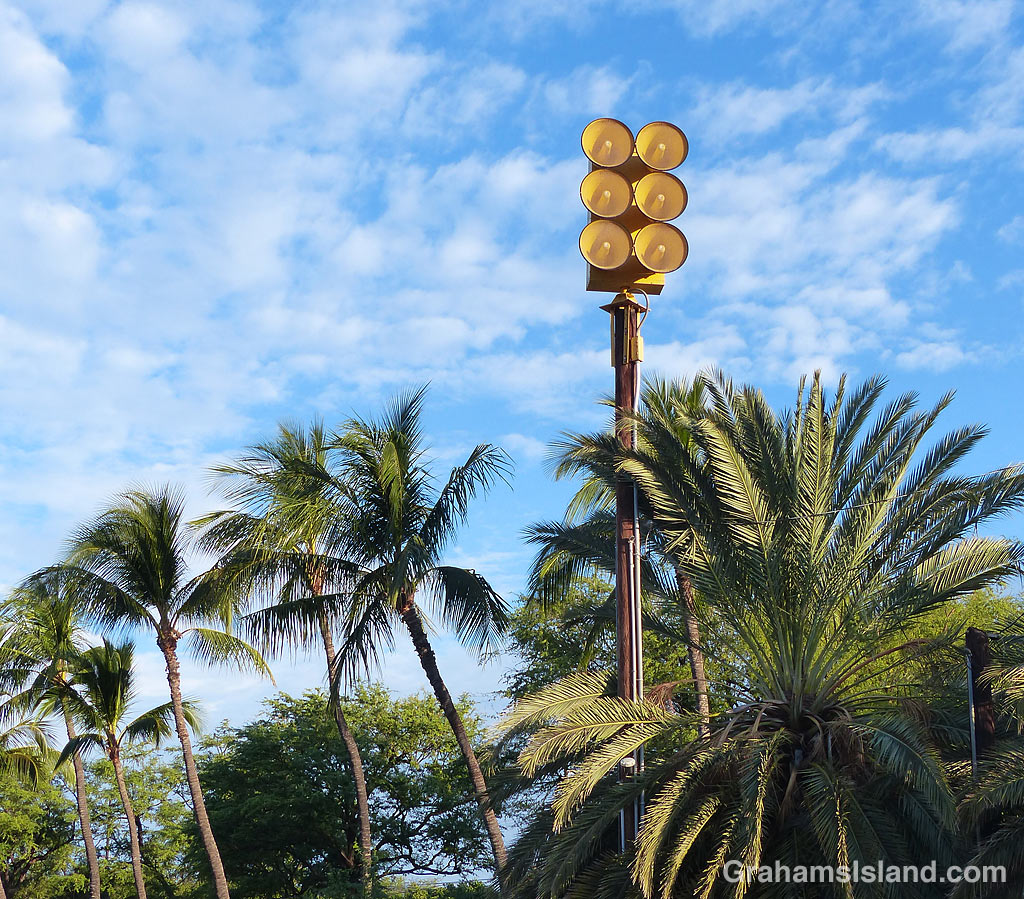
This is one of Hawaii’s emergency alert sirens. There are different styles, but I like how this one, at Kawaihae, emerges from the palm trees. The sirens are intended to warn of impending tsunamis and, these days, nuclear attack.
These sirens did not go off during the recent false missile attack fiasco. That issue concerned messages sent to residents’ phones and to radio and TV. In the aftermath of that incident, I read in a news report that “According to state officials, the watch officer had been a cause for concern to his colleagues for more than a decade and had twice before mistaken drills for real alerts. It was unclear how he had managed to remain in such a sensitive post for so long.” Not in this household. Our ‘joke’ is that a person has to kill three people here before it’s considered serious enough to be fired from a government job. I guess causing widespread panic and embarrassing the state worldwide must be roughly the equivalent.
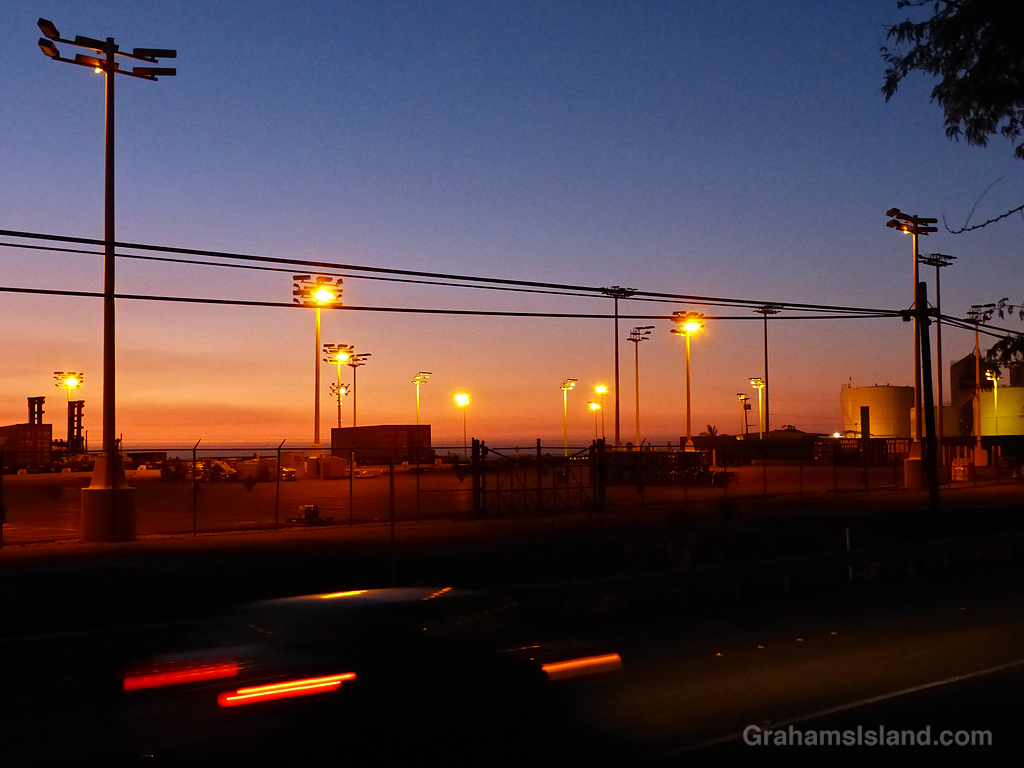
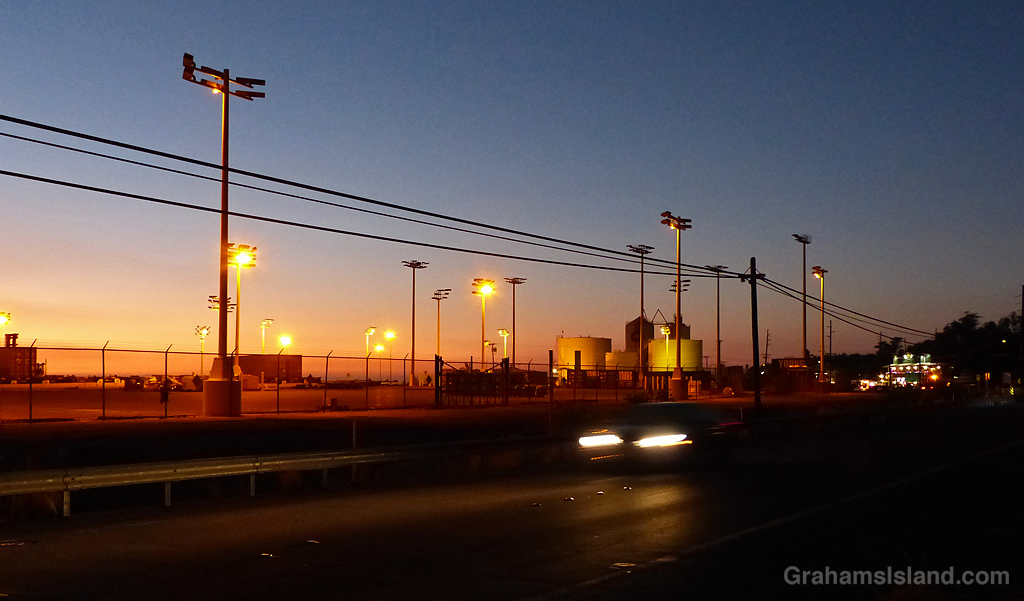
Kawaihae is the main commercial port on the west side of the Big Island. The inter-island barge visits regularly as well as commercial container ships. Here the lights of the port take effect as the sun goes down.
This week’s posts are in response to the WordPress photo challenge on the theme of ‘transient.’
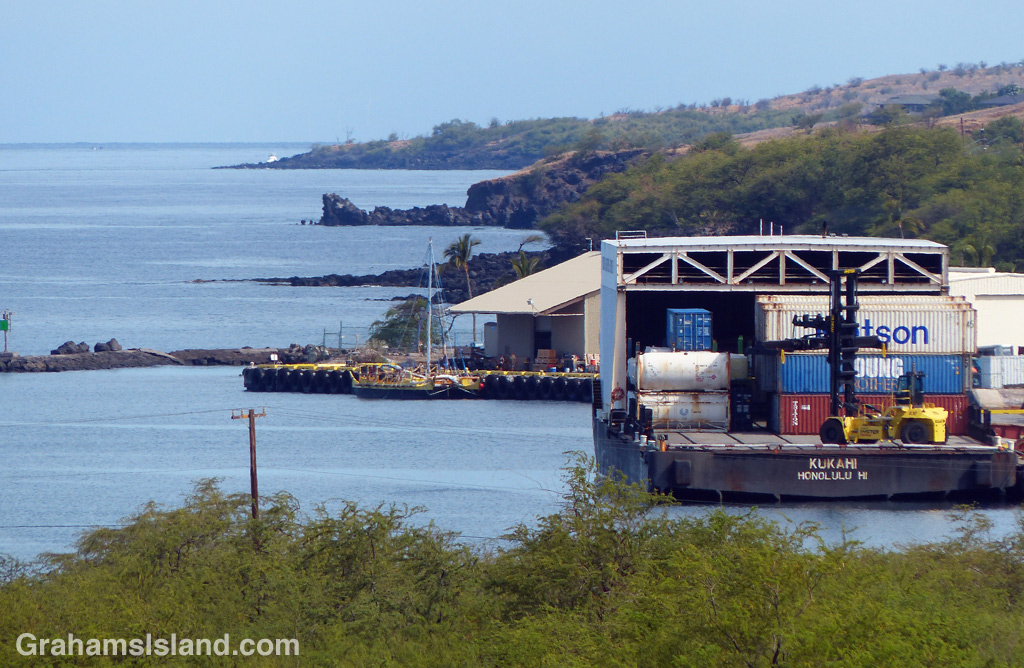
There are two commercial ports on the Big Island, Hilo on the east side, and Kawaihae on the west. This is a view of Kawaihae harbor with the inter-island barge unloading at the dockside. In Hawaii, many goods are shipped to Oahu and then distributed to the other islands on barges.
Also at the dock, beyond the barge, is the Hawaiian voyaging canoe, Makali’i. This boat had just returned to the water after a long refit on the island. The following day, it set off to join other boats in Oahu, welcoming home the Hawaiian voyaging canoe, Hokuleʻa, from its 3-year Mālama Honua Worldwide Voyage.
Two wildly different vessels, but both engaged in the very transient business of crossing open waters.
For more information about Hokuleʻa and the Polynesian Voyaging Society, go to www.hokulea.com.

The Hamakua coast of the Big Island is the first landfall of the northeast trade winds and, consequently, gets a good deal of rainfall. Combined with warm tropical temperatures and good soil, the area is a prime growing area.
One of the crops is eucalyptus trees. The trees grow fast and straight. When they’re harvested they’re trucked to Kawaihae, the port on the west side of the island, to this log yard. They’re stored there until there are enough logs to ship to Asia, which seems to be about every couple of months at present.
I happened to be driving by late one afternoon and was struck by the light on the log ends. As can be seen from the hillside in the background, Kawaihae is one of the driest spots on the island, averaging around 10 inches of rainfall a year.
 Graham's Island