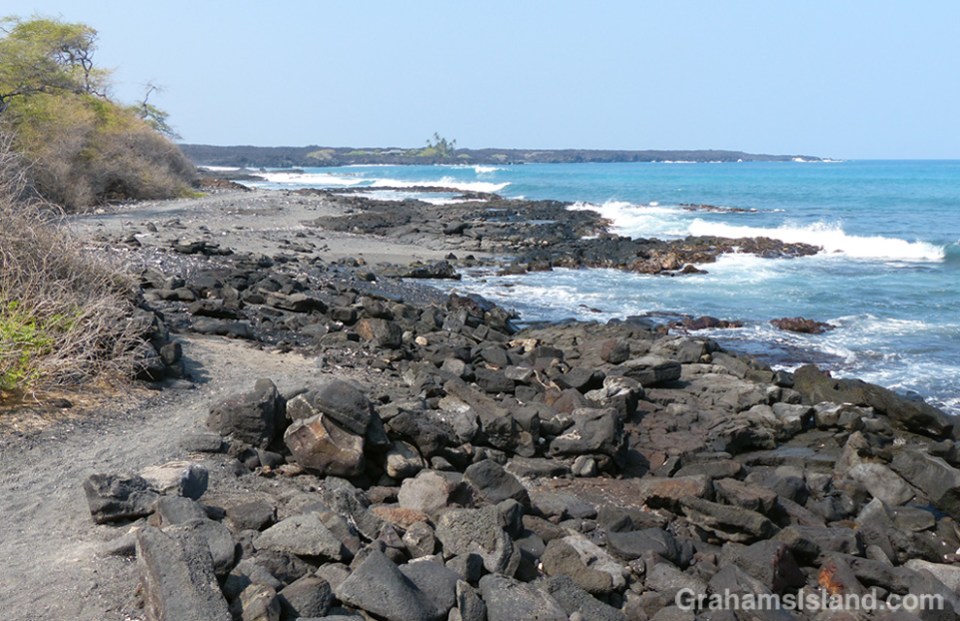
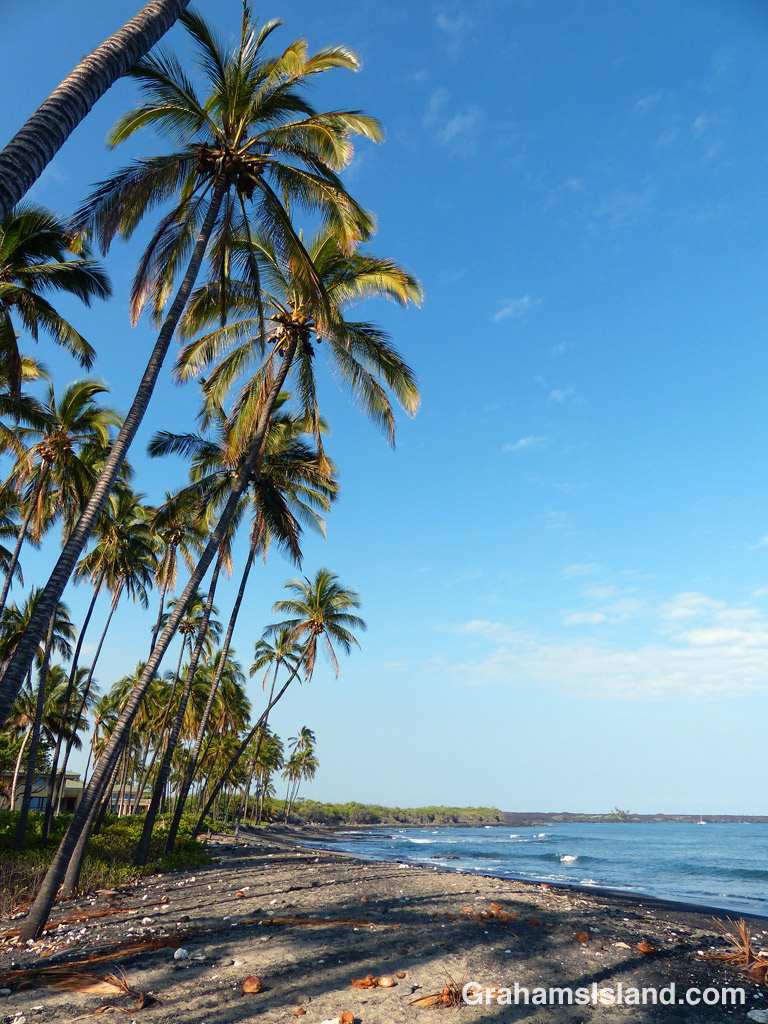
The start of the trail below the parking area at Kiholo.
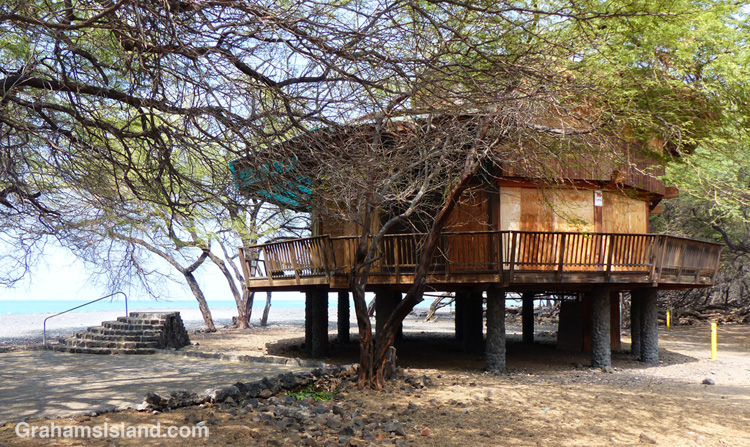
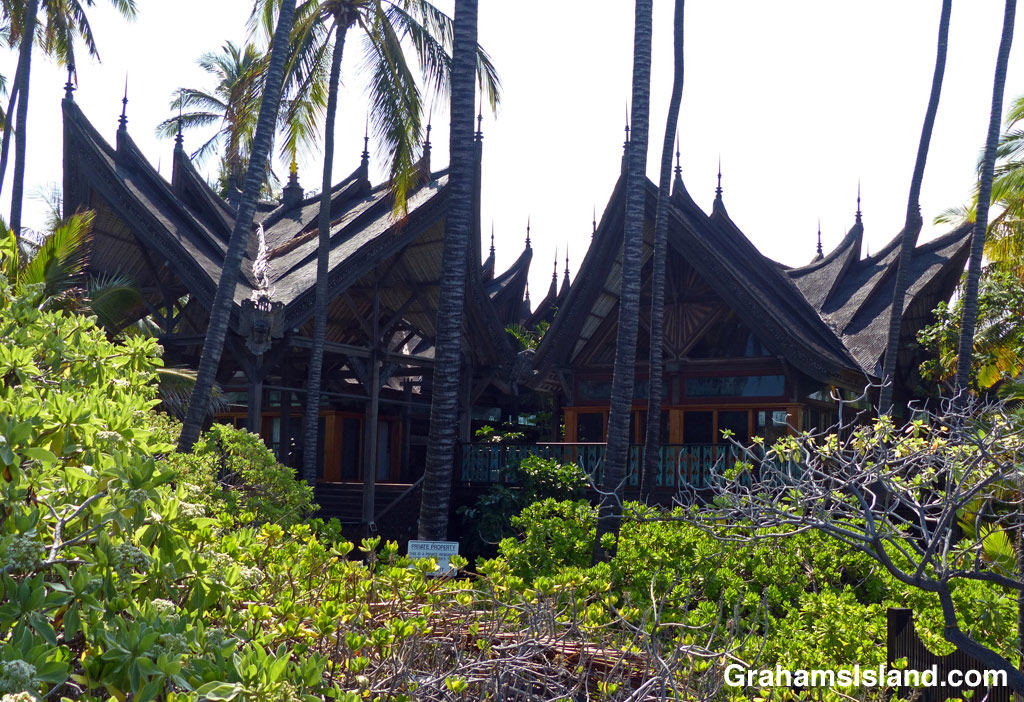
The house built for Loretta Lynn at Kiholo.
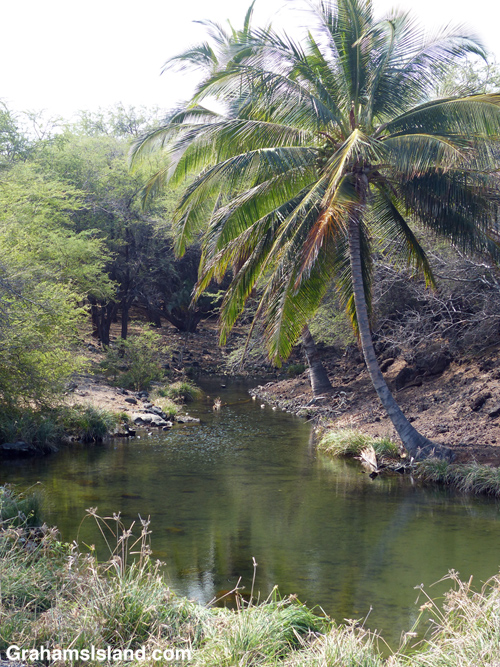
The anchialine pool at the south end of the first beach.
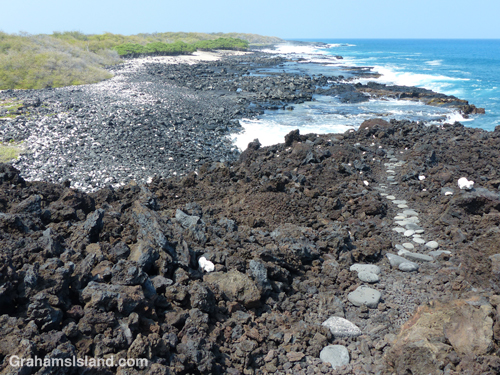
The trail winds down to the bench before Mano Point.
This hike is a not-too difficult, out and back, 4-mile round trip. Aside from wanting to check out this part of the coast, I also wanted to try out a new pair of shoes, more suited to hiking, rather than the old pair of walking shoes I’d been flogging my toes in recently.
The access road to the trailhead can be rough, but on this occasion had been recently graded, at least down to the private road near the bottom. The hike follows the coast south from the Kiholo parking lot. There’s camping here Friday through Sunday, but on this day it was much quieter – three people on the beach when I set out, not many more when I returned. The day was hot, as it usually is on this coast, and the vog was thick enough to chew on.
The hike starts out crossing the first of three black sand beaches. It’s part of Kiholo State Park Reserve, which means it’s a park for which the plans have not yet been finalized. Behind this first beach is a house built by country singer Loretta Lynn back in the 1980s. It’s boarded up now, but is tabbed to be some sort of visitor/cultural center in the new park. Check back in 10 years or so to see how things are going!
At the south end of the beach is an anchialine pool. After the pool, the trail winds up and over a’a lava to another smaller black sand beach. There’s another up and over to the third beach, Luahinewai, which is backed by a large private residence, overlooking another anchialine pool and surrounded by vegetation. The second and third beaches were deserted, the a’a lava lumpy, the new shoes doing a splendid job of cushioning my feet.
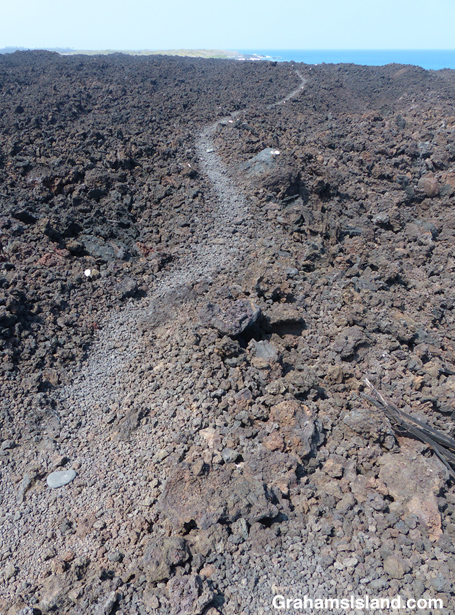
After this third beach the trail heads up onto the lava for a while and crosses inland from Nawaikulua Point until it reaches a lava bench backed by vegetation. The trail, which is marked by some rounded stones in the trail and white coral markers on the edges, ends here. Mano Point is reached by crossing the lava bench, which is not difficult but, as always, requires keeping an eye on the ocean. On this day the waves were thudding against the edge of the bench, sending spray into the air and some whitewater onto the bench.
It was a day for keeping toward the back of the bench. A couple of days earlier, when the surf was higher, it would have been a place to avoid altogether. On a calmer day one could walk along the edge of the bench. This is an area of tide pools, arches, and collapsed lava tubes that have become surging inlets.
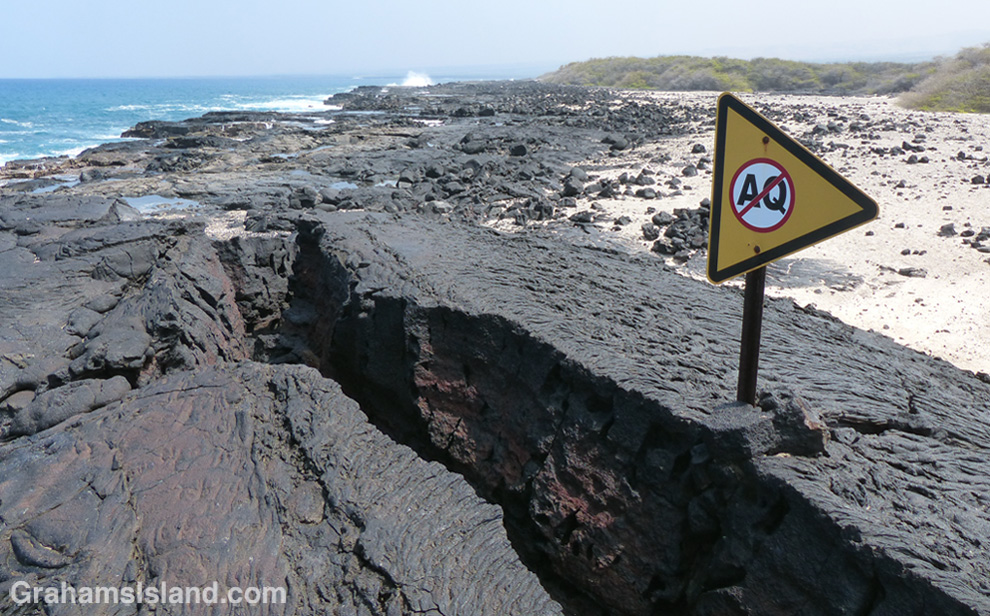
Mano Point itself is not much of a point, but it is easy to identify because it’s where most of the vegetation ends. It’s also marked by a black-bordered, yellow sign (only the back of which is seen from the land), which I think means that no aquarium fish collection (a contentious issue here) is allowed south of the sign. The return is back the same way. I took a dip in the water at one of the beaches on the way back, but the surge was fierce and I ended up discovering black sand in unlikely places for a couple of days afterwards.
It’s not an earth-shaking hike, but enjoyable in its own way. There was a breeze on the coast as there usually is, some whales to be seen offshore, and my new hiking shoes performed admirably. That said, crossing behind the last beach en route to my truck, I felt a pricking in my foot and took off my shoe to find a kiawe thorn that had penetrated the sole. Not the fault of the shoe though, just an occupational hazard of hiking here.
For more information about the Kiholo to Mano Point hike, go to bigislandhikes.com/kiholo-to-mano-point.

The trail heads across a’a lava after the third beach.
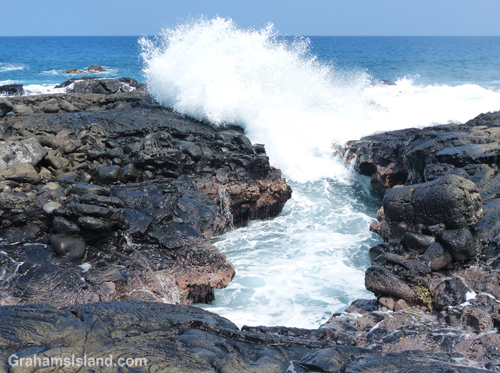
The water surges into a small inlet, probably an old lava tube.
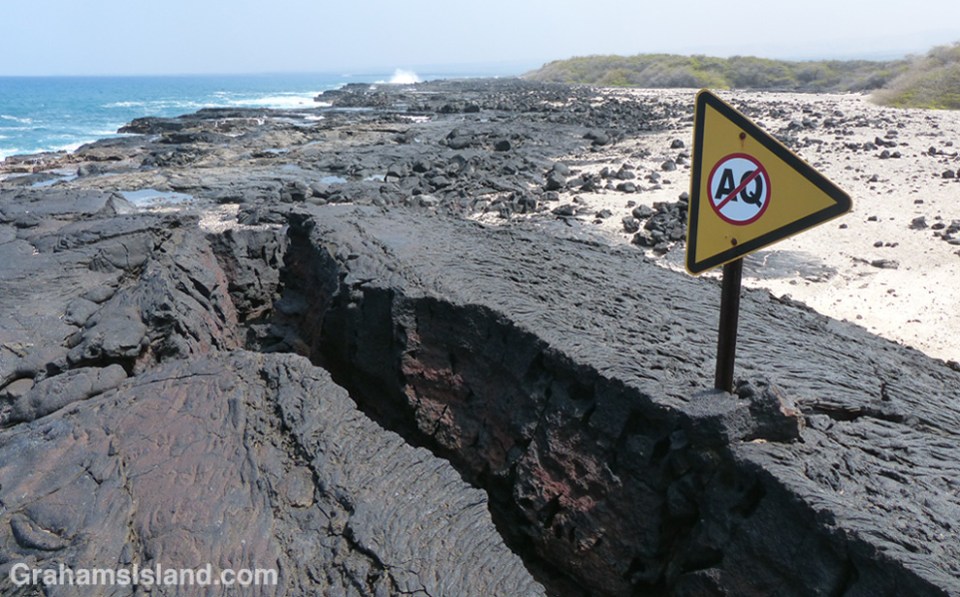
The sign at Mano Point which I think means ‘No Aquarium Fishing.’






 Graham's Island