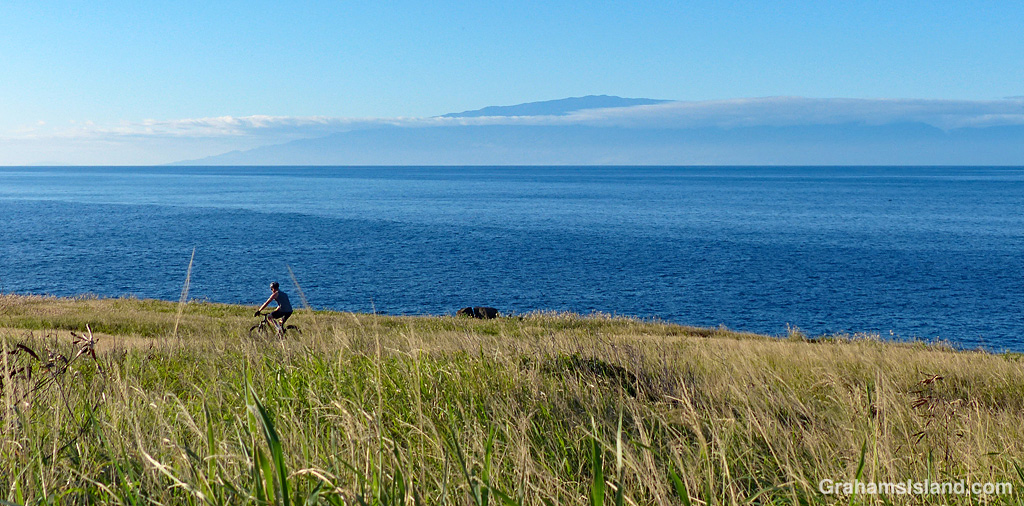
A cyclist rides along the North Kohala coast, with ʻAlenuihāhā Channel and Maui making a scenic backdrop.

A cyclist rides along the North Kohala coast, with ʻAlenuihāhā Channel and Maui making a scenic backdrop.
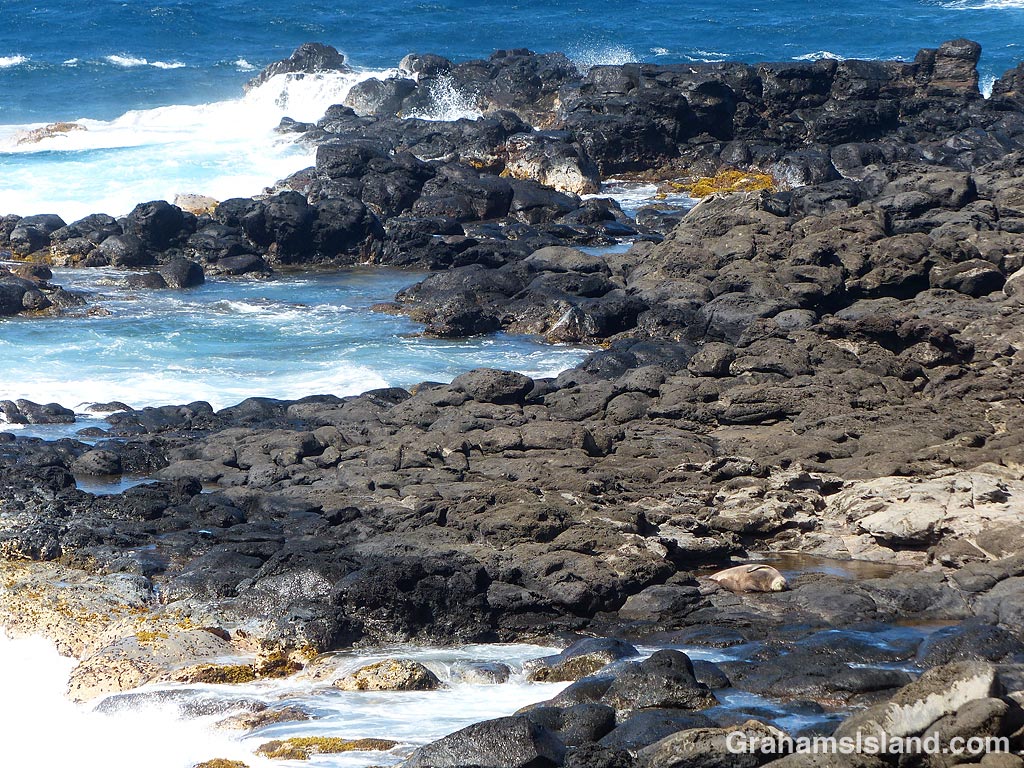

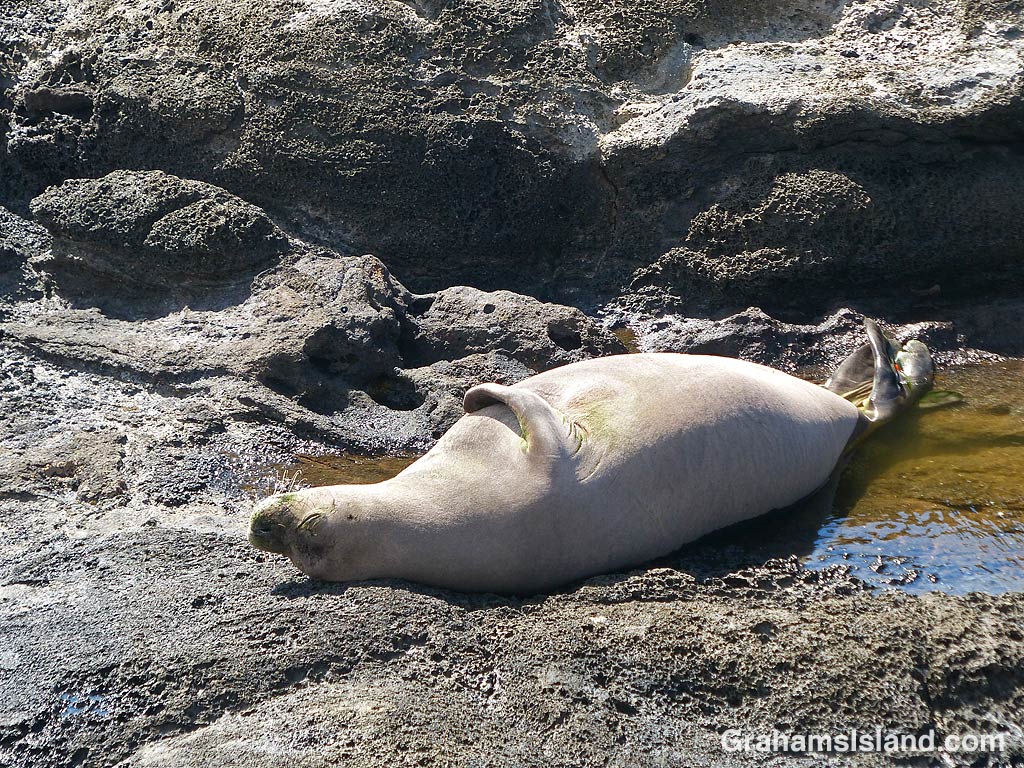
When I first saw this monk seal on the North Kohala coast a couple of days ago, I thought it was IO5. He’s the seal I see most often in this part of the island. But as I got closer, I saw this one was a female. I took photos, including some of the red ID tag. I wasn’t sure if, at that distance, I’d be able to read it, but luckily I could make out ‘A2’ in a couple of photos. There was space after the ‘2’ as if a number had rubbed off, so I wondered if this was RA20, the monk seal who raised pups on a Kona beach in 2018 (here and here) and 2019 (here and here).
I sent the photos to the Big Island Hawaiian monk seal response network, which tracks the movements and welfare of the monk seals. They confirmed this was RA20 and was the first sighting of her since she was released from Ke Kai Ola Hawaiian Monk Seal Hospital after suffering from a bacterial infection. The hospital’s veterinarians think RA20 recently lost a pregnancy and that the infection may have caused, or resulted from, the loss.
The good news is that she certainly appeared healthy and in good shape when I saw her.
For more information about Hawaiian monk seals and Ke Kai Ola Hawaiian Monk Seal Hospital, go to www.marinemammalcenter.org/hawaii.
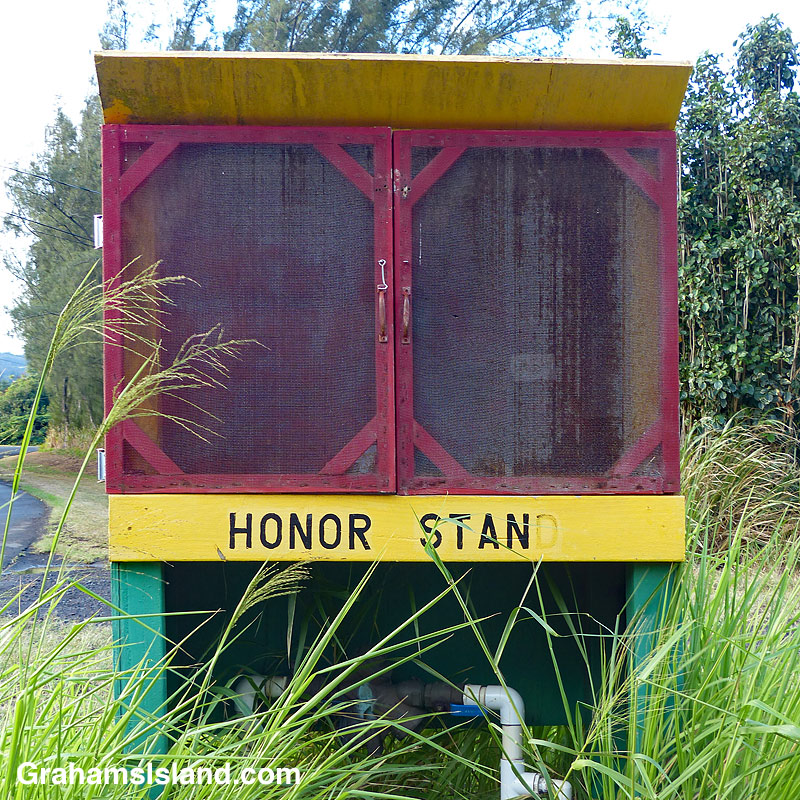
Every time I see this vegetable stand I’m moved to say, “We salute you, Stanley.” I’m easily amused.
Posted in response to Becky’s April Squares challenge theme of ‘Top.’ See more responses here.

This week’s Sunday Stills challenge theme is ‘Early.’ See more offerings here.
So here’s a sunrise over Kohala Mountain. Enough said.
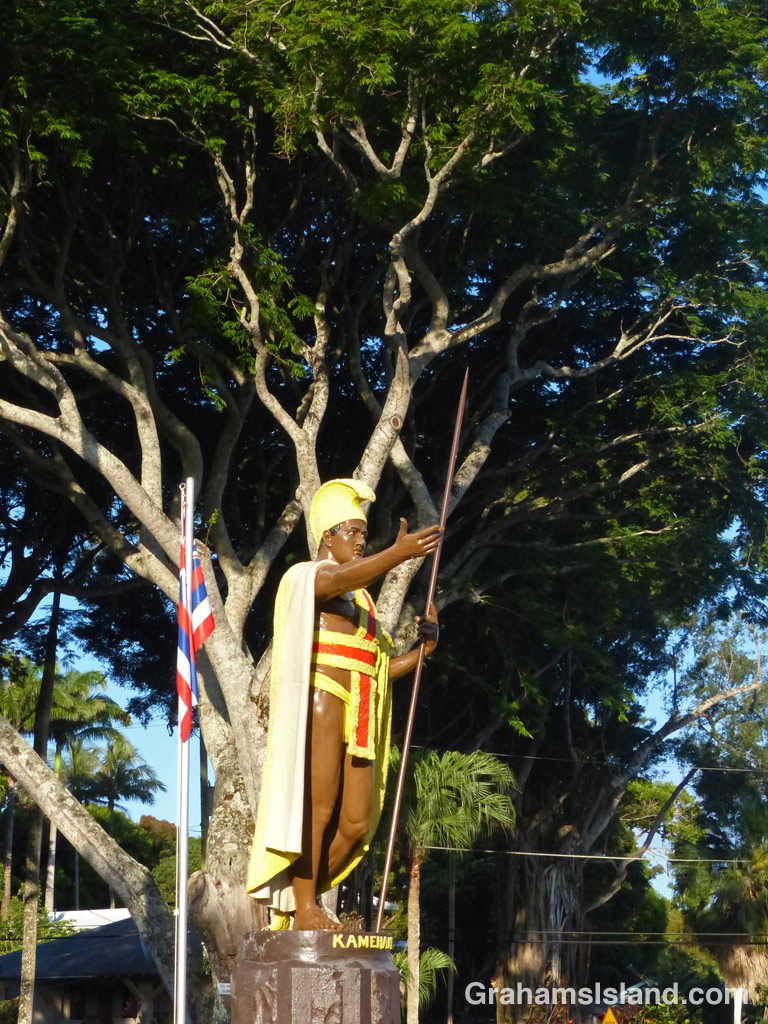
This week’s Sunday Stills challenge theme is ‘Old.’ See more offerings here.
This is the original statue of Kamehameha 1, the king who first united the Hawaiian Islands. The statue was commissioned in 1878, but was lost off the Falkland Islands. A new statue was made, but in the meantime, the original one was salvaged. The new statue was put up in Honolulu and the original shipped to Kapaau.
Not long after I took this photo, the trees in the background were badly damaged during a windstorm and had to be cut down, so this scene looks quite different today.
Find more information about the statue here. For more information about King Kamehameha’s history, go to nps.gov/puhe/learn/historyculture/kamehameha.htm.
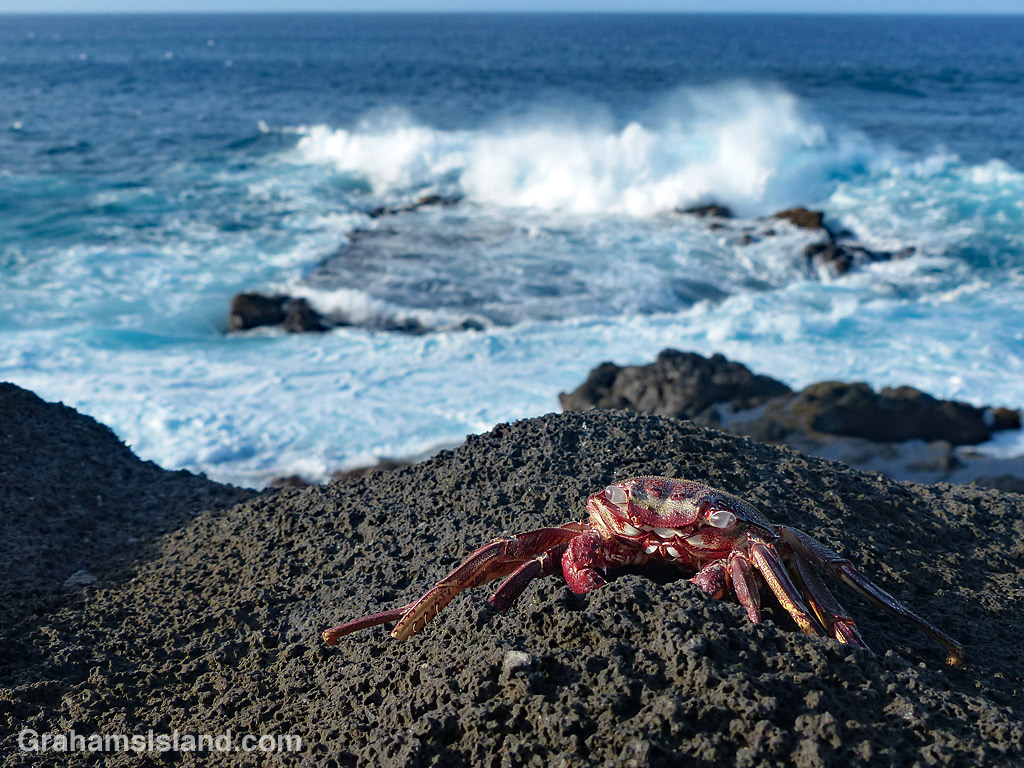
This is the molted shell of an a’ama crab, seen on the North Kohala shore. A’ama crabs are numerous around the Big Island and they scuttle away when disturbed. But while these crabs are black, their molted shells turn red in the sun, as this one has.


On a recent foray into Hawi to get photos for last week’s Sunday Stills challenge (here), I took these photos of the Kohala Welcome Center. This is the place to get information about North Kohala for visitors en route to Kapaau and Pololu, which marks the end of the highway.
On this particular evening, the welcome center was illuminated by its Christmas display and a full moon, which also highlighted the palm trees that tower over that location.

This week’s Sunday Stills challenge theme is ‘Holiday Decor.’ See more offerings here.
This theme forced me outside after dark, something of a rarity these days. As usual, when I walked into Hawi, I thought, ‘I should do this more often.’
Here are a couple of the downtown buildings illuminated for the season. In truth, this was pretty much it for holiday trappings, but it’s still a good deal more than at my house!
Also posted, belatedly, in response to the last Friendly Friday challenge theme of 2019, ‘Christmas Preparations.’ See more responses here.

 Graham's Island