

Ulei (Osteomeles anthylidifolia) has lovely, fragrant flowers. It’s indigenous to Hawaii and is a member of the rose family. Speaking of which, correct pronunciation is important (oolayee). Otherwise, it will likely sound like the aforementioned part of the male anatomy!
Tag Archives: Macro
Hawaiian Upland damselfly
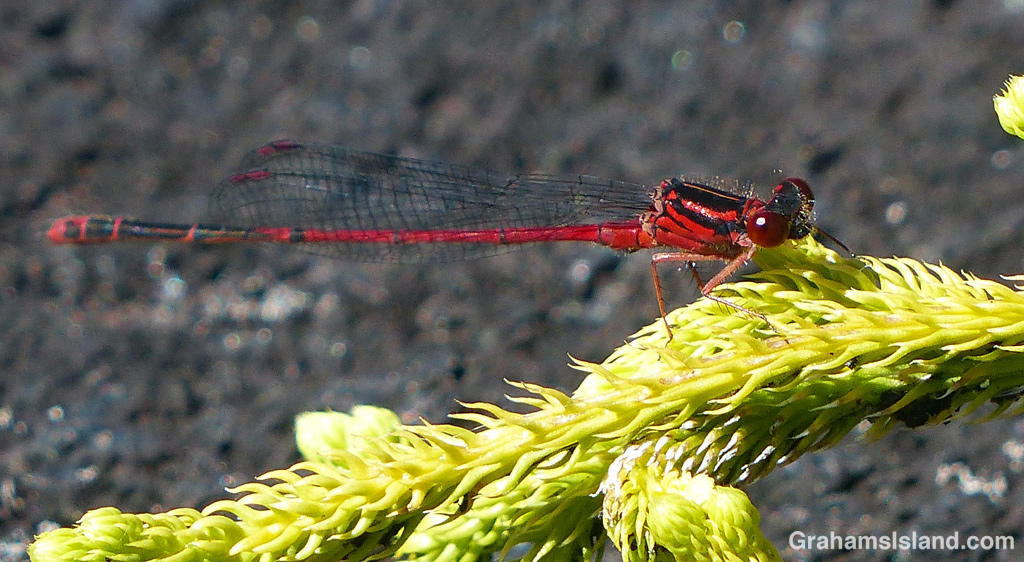
The Hawaiian Upland damselfly (Megalagrion hawaiiense) is endemic to the state. Hawaiians called dragonflies pinao and damselflies pinao ‘ula. I’ve never been sure what the difference between the two is but I have learned that, among other things, damselflies tend to be smaller, have eyes on the side of the head that are clearly separate, and can fold their wings behind them.
This one was on the Kaumana Trail off Saddle Road (officially the Daniel K. Inouye Highway) at an elevation just over 5,000 feet.
Sleepy orange butterfly
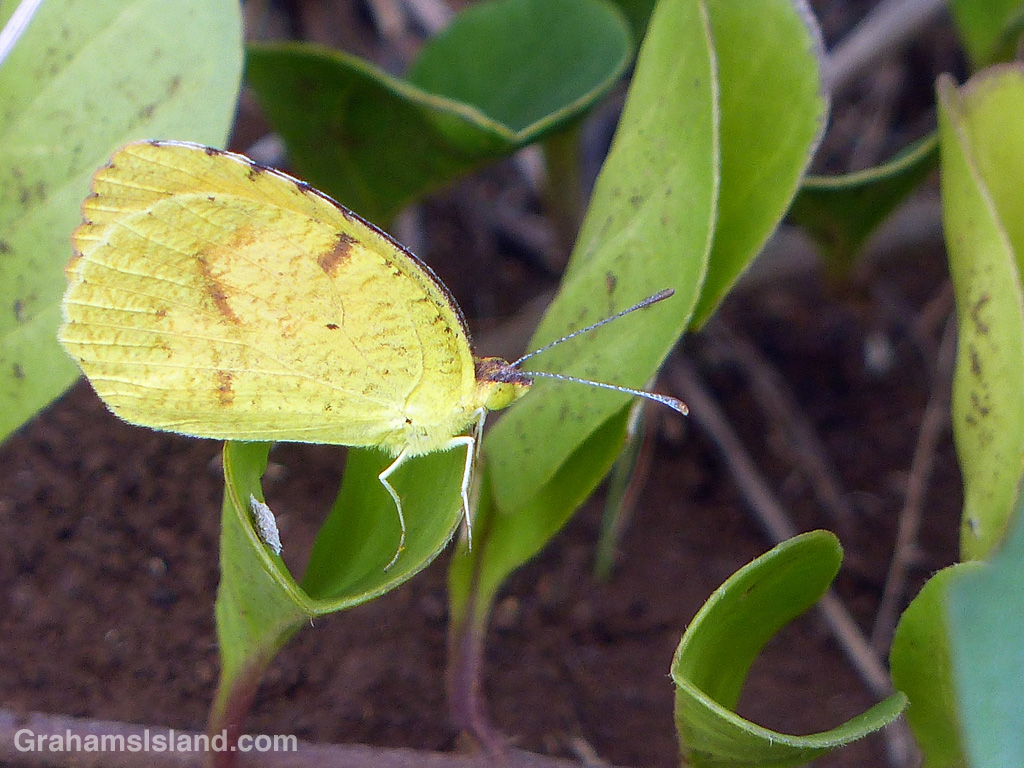
The sleepy orange butterfly (Abaeis nicippe) is one of the newest introductions to Hawaii. It was first seen on Oahu in December 2013 and is already established on all the main Hawaii islands, an unusually rapid spread. Part of its success in thriving here might be that has a wide range of habitats where it can live. It’s been spotted from sea level all the way up to 6,800 feet.
While its name is sleepy orange, like most of the butterflies I see here, it’s a rapid flier, jitterbugging around in such a way that it’s hard to capture in flight. Fortunately for me, this one was jitterbugging in 30 m.p.h. winds and seemed happy to take any opportunity to find a sheltered spot to rest.
Baby praying mantis
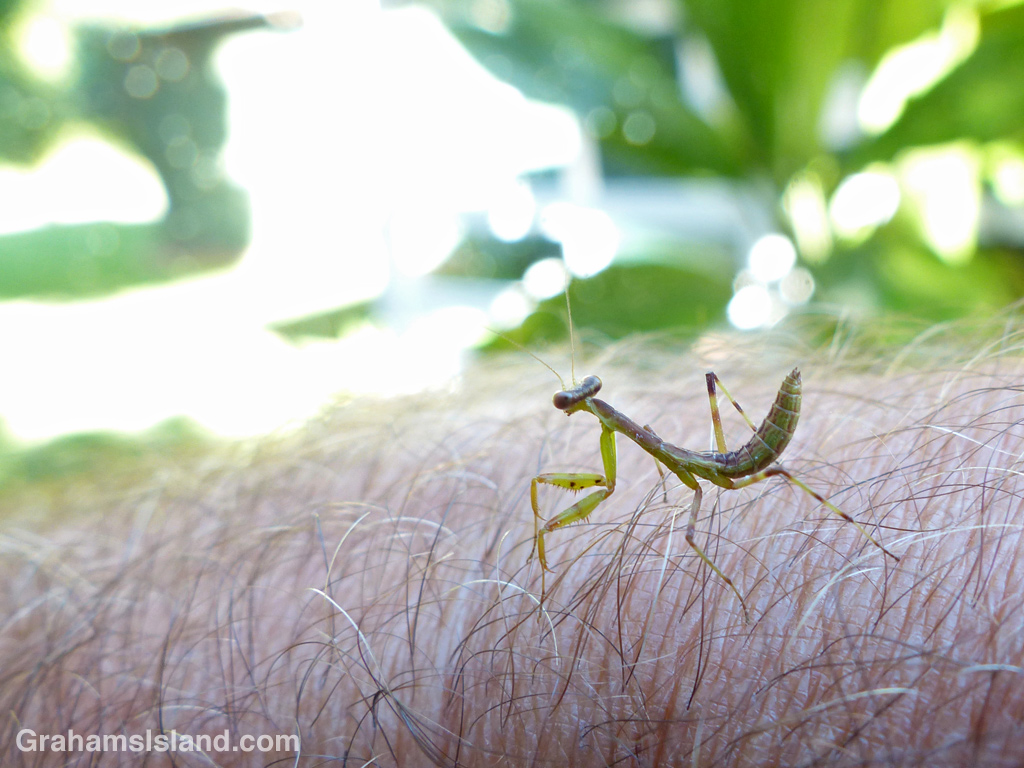
I was out in the yard taking photos on a windy day when I felt something tickle my arm. I thought it was a leaf, but looking down found this baby praying mantis on the move. I watched it for a while before setting it down on a leaf in a sheltered spot.
Cane spider

The official unit of measurement for cane spiders is the tuna can as in, ‘that spider is the size of a tuna can.’ In the case of this particular cane spider that statement is true – the trim it’s resting on is a 1×4.
While large, cane spiders aren’t particularly aggressive. If threatened, they prefer to run off – and they are fast. If one does bite, it can inject venom, but it isn’t considered dangerous. On the plus side, cane spiders are hunters and include cockroaches amongst their prey. While I heartily endorse this activity, it’s a bit much for me to have a mobile, hairy tuna can scurrying around the house and leaping out at inappropriate moments.
The first time I saw a cane spider was while reading in bed, which was startling to say the least. There then followed a merry chase, involving moving furniture, before I was able to trap the beast and release it outside. That’s where I prefer to see them and I was happy to see this one on the side of the house. It stayed in this spot for quite a while until one time I went to look again and it was gone. At that point, the trick is to carry on as usual and not start wondering whether it followed me inside after the last time I saw it.
Ground beetle fine dining

This ground beetle, possibly Carabus nemoralis, might not have anticipated finding a butterfly or moth squashed on a dirt road, but it wasn’t about to pass up a free meal.
Cast a giant shadow

This rusty millipede cast a giant shadow as it wandered back and forth on a dirt track. Every so often the strong, blustery wind would blow it over like a many-legged tumbleweed.
Sphecid wasp
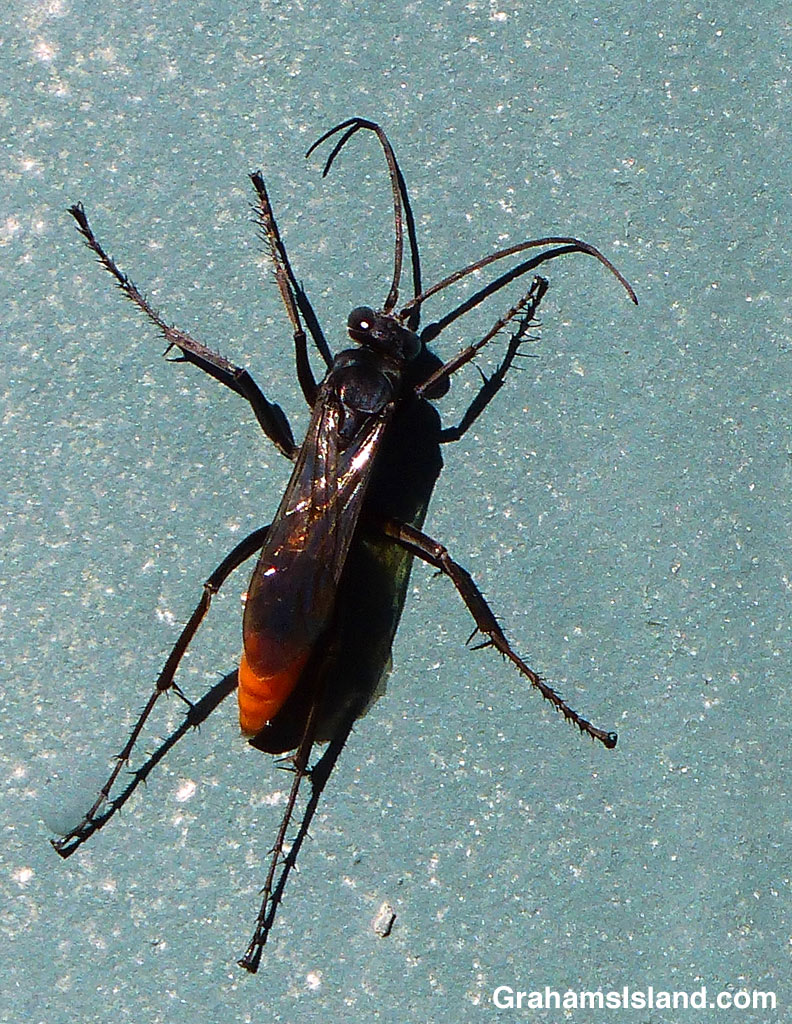
I saw this creature on a wall being eyed by a gold dust day gecko as a possible meal. Eventually the gecko thought better of it, which is probably just as well. This is a sphecid wasp and they can pack a sting, though they aren’t aggressive.
From searches on whatsthatbug.com and bugguide.net, it appears that this sphecid is in the genus Prionyx, probably P. fervens.

